When launching a new denim collection, brand founders often face a dilemma: Should you cater to the purists with rigid, vintage-inspired denim, or should you prioritize the mass market’s demand for ultra-stretchy, modern comfort?
On the factory floor at Xinen Garment, we see the tech packs for both. We know what gets ordered, what gets re-ordered, and what sits in a warehouse. Understanding the technical differences—and the market demand—between vintage and modern denim is the key to a profitable collection.
Here is a factory-level breakdown of Vintage vs. Modern denim, and what your consumers are actually willing to pay for.
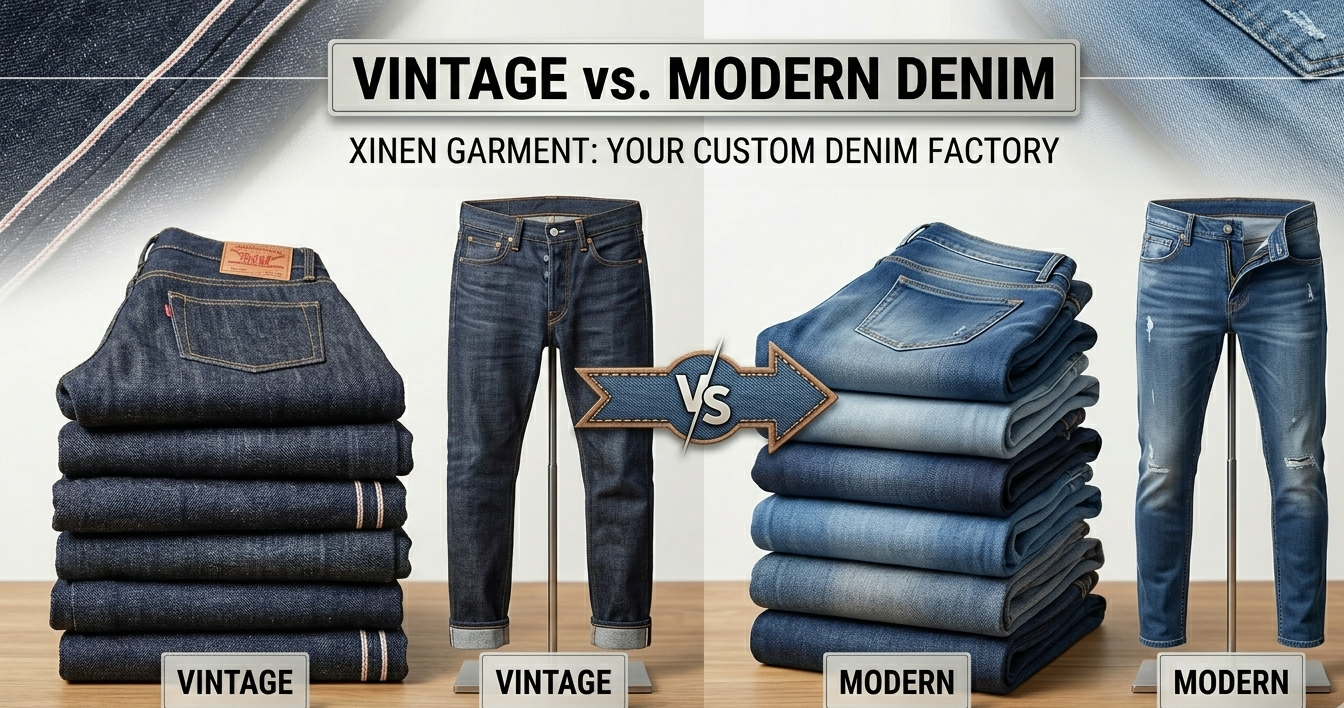
1. The Vintage Revival (The Purist’s Choice)
Vintage denim is all about authenticity. It mimics the workwear jeans of the mid-20th century.
- Fabric Composition: 100% rigid cotton. Zero stretch.
- Weight: Usually mid-to-heavyweight (12oz to 14oz+).
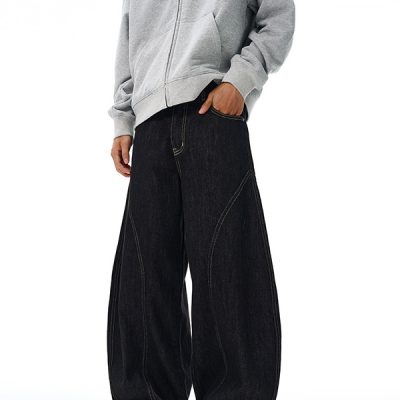
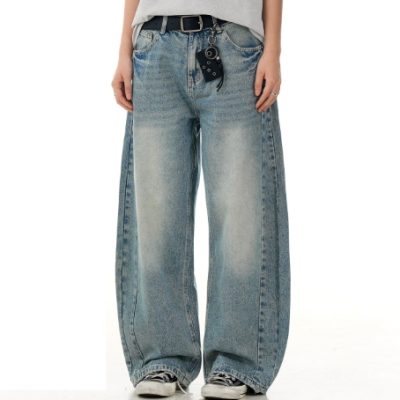
- The Look: High-contrast fades, real button flies, and often constructed with red-line selvedge edges.
- Why It Sells: Consumers love the “break-in” process. Rigid denim molds to the wearer’s body over months, creating a completely personalized fit. It signals high quality, durability, and premium streetwear aesthetics.
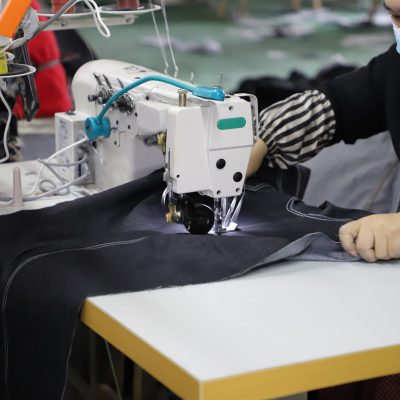
- The Factory Note: Sewing 100% cotton 14oz denim requires serious machinery. Standard factory needles will break. At Xinen, our specialized heavy-duty sewing lines ensure your vintage collections have unbreakable chain stitches and flat felled seams.
2. The Modern Standard (The Comfort King)
Modern denim was born out of the athleisure boom. Consumers wanted the look of jeans but the feel of sweatpants.
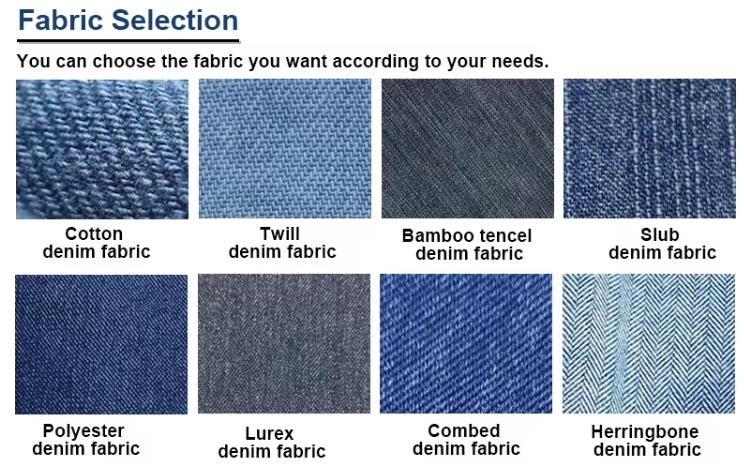
- Fabric Composition: Blends of cotton with Elastane (Spandex), Polyester, or Tencel.
- Weight: Lightweight to midweight (8oz to 11oz).
- The Look: Sleek, form-fitting, zip flies, and often finished with modern eco-friendly techniques like laser distressing.
- Why It Sells: Day-one comfort. There is no break-in period. Modern stretch denim caters to a broader, mass-market audience who prioritizes mobility and ease.
- The Factory Note: The biggest risk with stretch denim is “bagging out” (knees getting loose after a few hours of wear). When sourcing modern fabrics for our clients, Xinen specifically selects denim with high “stretch recovery” rates so the jeans maintain their shape wash after wash.
3. The Sweet Spot: “Modern Vintage”
So, what do consumers really want right now? They want a hybrid.
Today’s highest-selling premium brands are developing “Modern Vintage” collections. This means engineering jeans that look like rigid, 100% cotton vintage workwear, but feel like modern comfort wear.
- How We Make It: We use a specific fabric blend—usually 98% Cotton and 2% Elastane, woven with specialized “slub” yarns. The slub yarn gives the fabric the rough, textured appearance of 1950s denim, while the 2% Elastane provides just enough stretch for daily comfort.
- The Wash: We apply aggressive vintage wash recipes (heavy enzyme washing and local hand-scraping) to this stretch fabric to recreate decades of wear in a matter of hours.
Key Takeaways
- Know your audience: Streetwear and heritage brands should lean into 100% rigid cotton; mass-market and daily-wear brands should focus on stretch recovery.
- You don’t have to choose just one: The “Modern Vintage” approach (98% cotton / 2% stretch) is currently dominating the premium retail market.
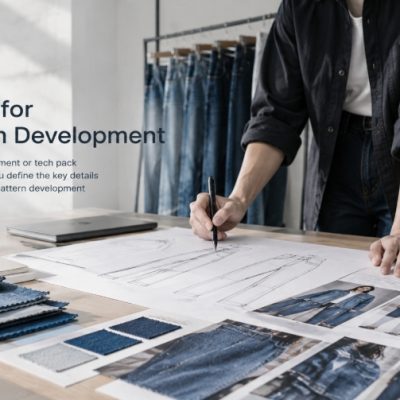
- Communicate your fabric goals: When you submit your Tech Pack to Xinen Garment, tell us your target aesthetic and comfort level. We will source the exact fabric composition to match your vision.
Frequently Asked Questions (FAQ)
Q: Does 100% cotton vintage denim shrink more than modern stretch denim?
A: Yes. 100% cotton rigid denim has a higher natural shrinkage rate. However, at Xinen Garment, we conduct rigorous wash shrinkage tests on every bulk roll before cutting, ensuring your sizing remains perfectly accurate regardless of the fabric.
Q: Can I put heavy vintage distress marks (rips and tears) on highly stretchy modern denim?
A: You can, but it requires caution. Highly stretchy denim contains elastane threads, which can snap and look messy if aggressively stone-washed or torn by hand. For heavy distressing, we recommend fabrics with no more than 1% to 2% stretch.
Q: Are vintage washes more expensive to produce?
A: Authentic vintage washes require multiple steps: hand-sanding for whiskers, enzyme baths, and sometimes tinting to achieve a yellow/brown “dirty” oxidized look. This takes more factory time than a simple one-step rinse, so the CPU (Cost Per Unit) is slightly higher, but the retail value you can charge increases significantly.
Q: Can Xinen Garment manufacture both styles in my 100-pair test run?
A: Yes. You can split your production. For example, you can design one style as a rigid selvedge jacket and another style as a modern stretch jean, both benefiting from our low-MOQ capabilities.