

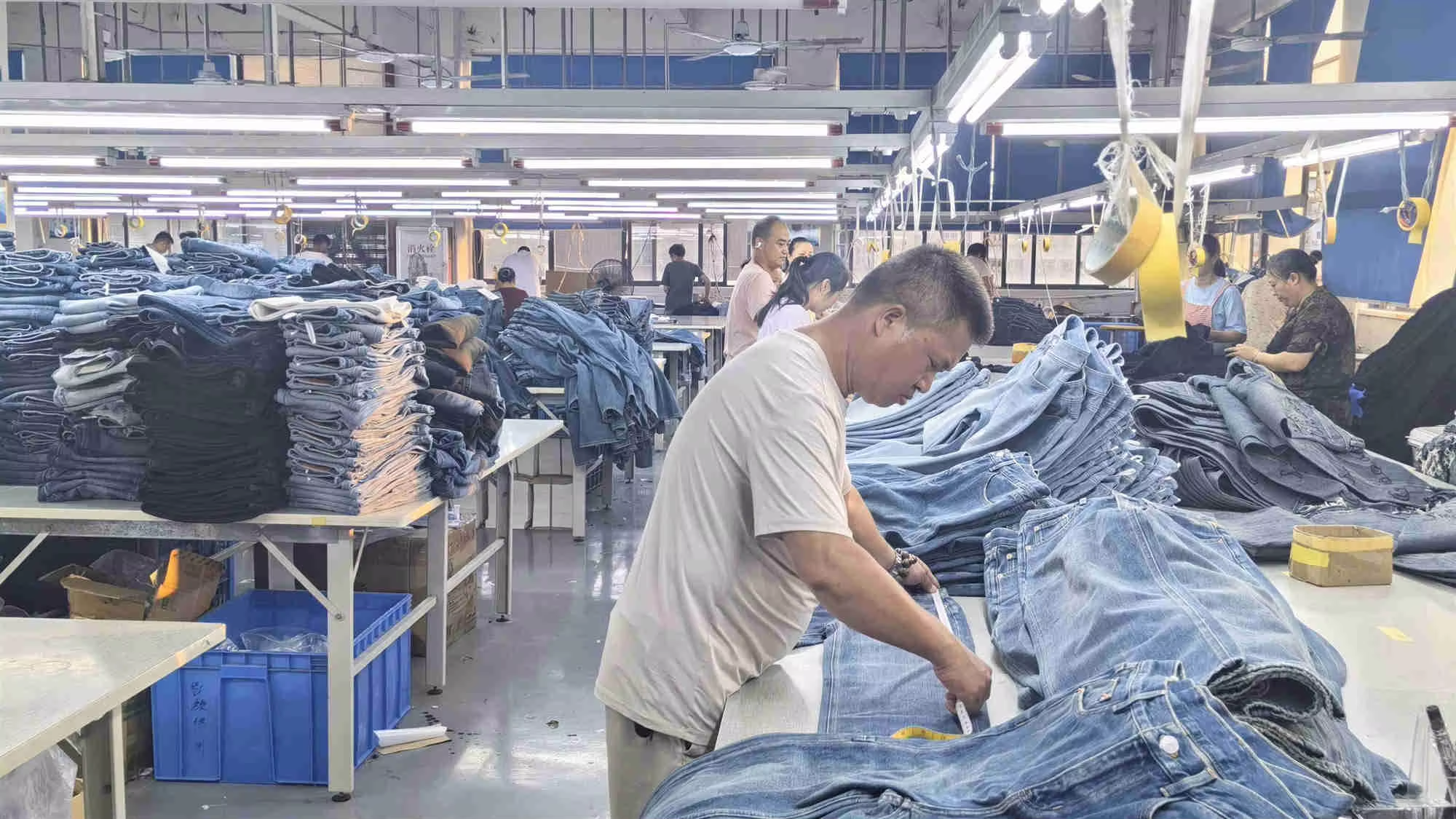
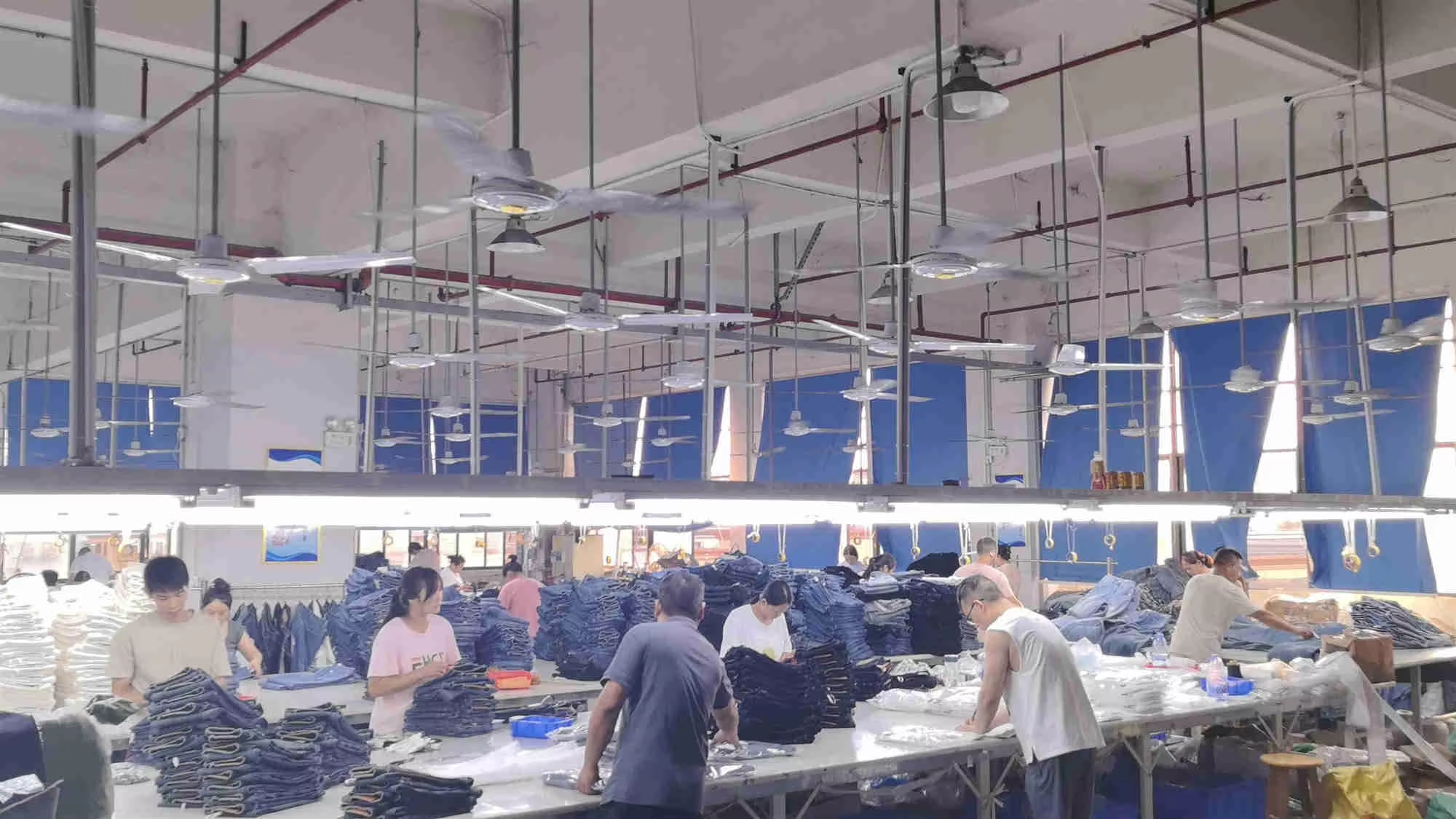
Quality Control in Denim Manufacturing
In denim manufacturing, quality control is not a single step at the end of production. It is a continuous process that starts before cutting and continues until final packing. Most quality issues seen in finished jeans can be traced back to earlier decisions: fabric selection, pattern handling, sewing sequence, or wash control.
A practical quality control system does not aim to eliminate every minor variation. Instead, it focuses on managing risk, maintaining consistency, and making sure products meet agreed standards across sampling and bulk production.
Below is how quality control is typically managed throughout the denim manufacturing process.
Fabric Inspection Standards
Fabric inspection is the first control point and often the most important one. Denim fabric directly affects fit, appearance, durability, and wash results. Even well-made garments can fail if fabric issues are not identified early.
Incoming Fabric Checks
Before production, denim fabric is usually inspected for:
- Surface defects such as holes, oil marks, broken yarns, or shading issues
- Fabric width consistency
- Weight variation within the same lot
- Stretch and recovery behavior for stretch denim
- Weave stability and skew
For stretch denim, extra attention is paid to elasticity and rebound. Inconsistent stretch can lead to fit variation after washing or wearing, even if the pattern and sewing are correct.
Fabric inspection does not mean rejecting every roll with minor issues. The goal is to understand fabric behavior and decide how it should be used. Some fabrics are suitable for specific styles or wash effects but not others.
Fabric Lot Control
When possible, cutting is organized by fabric lot. Mixing different lots without control can cause visible shade differences after washing. This is especially important for darker indigo denim or clean wash styles where color consistency is more noticeable.
Clear fabric records help production teams trace issues if they appear later in the process.
In-Line Quality Control
In-line quality control focuses on identifying issues during production, not after garments are finished. This reduces rework and prevents the same problem from repeating across large quantities.
Sewing Stage Control
During sewing, quality checks usually focus on:
- Stitch type and stitch density
- Seam strength and alignment
- Pocket placement and symmetry
- Waistband attachment
- Fly construction and zipper function
Operators may work on one operation repeatedly, which helps improve efficiency but also increases the risk of repeating the same mistake. In-line checks help catch issues early before they spread across dozens or hundreds of pieces.
Rather than stopping production for minor deviations, adjustments are often made gradually to keep output stable while correcting the issue.
Wash Process Monitoring
For denim, washing is not just a finishing step—it changes garment size, hand feel, and appearance. In-line quality control continues through the wash process.
Key points monitored during washing include:
- Shrinkage behavior
- Color change compared to the approved sample
- Fabric surface damage
- Stretch recovery after wash
Test pieces may be washed first to confirm the process before full batches are run. This is especially important for stretch denim, vintage effects, or heavy treatments.
Final Garment Inspection
Final inspection is the last checkpoint before packing and shipment. At this stage, garments are checked against approved samples and agreed specifications.
Visual and Functional Checks
Final garment inspection usually includes:
- Overall appearance and symmetry
- Color consistency within the order
- Stitching quality and seam condition
- Hardware attachment (buttons, rivets, zippers)
- Wash effect consistency
Inspectors do not look for perfection in every detail. The focus is on whether garments meet commercial standards and brand expectations.
Sorting and Grading
Garments that fall outside acceptable tolerance are separated for review. Depending on the issue, they may be repaired, rewashed, or rejected. Clear sorting rules help avoid delays and confusion during shipment preparation.
For brands, this step is important because it directly affects what end customers receive.
Measurement & Fit Consistency
Measurement and fit consistency are common concerns for denim brands, especially when scaling from samples to bulk production.
Measurement Control
Key measurements are checked based on size specifications provided by the brand. Typical focus points include:
- Waist, hip, and thigh
- Front and back rise
- Inseam and outseam
- Leg opening
Measurement checks are usually done after washing, since denim dimensions change during the wash process.
Tolerance ranges are agreed in advance. Small variations are normal in garment production, especially for washed denim. The goal is to keep these variations within an acceptable range.
Fit Consistency Across Sizes
Fit consistency is not only about one size fitting well. It also depends on how sizes are graded.
Patterns that are developed with clear grading logic tend to perform more consistently across sizes. When grading is poorly managed, issues often appear in larger or smaller sizes first.
Quality control teams often work closely with pattern makers to flag recurring fit issues so adjustments can be made in future developments.
Why Quality Control Supports Long-Term Collaboration
From a factory perspective, quality control is not about proving capability once. It is about maintaining stability across orders and seasons.
Brands tend to continue working with factories that:
- Understand their quality priorities
- Apply consistent inspection standards
- Communicate clearly when issues arise
- Keep records that support repeat styles
For new brands and growing labels, a clear quality control process also reduces uncertainty. It helps align expectations and creates a more predictable development experience.
In denim manufacturing, quality is built step by step. When fabric, process, and fit are controlled together, the result is not just better garments, but smoother cooperation over time.


