

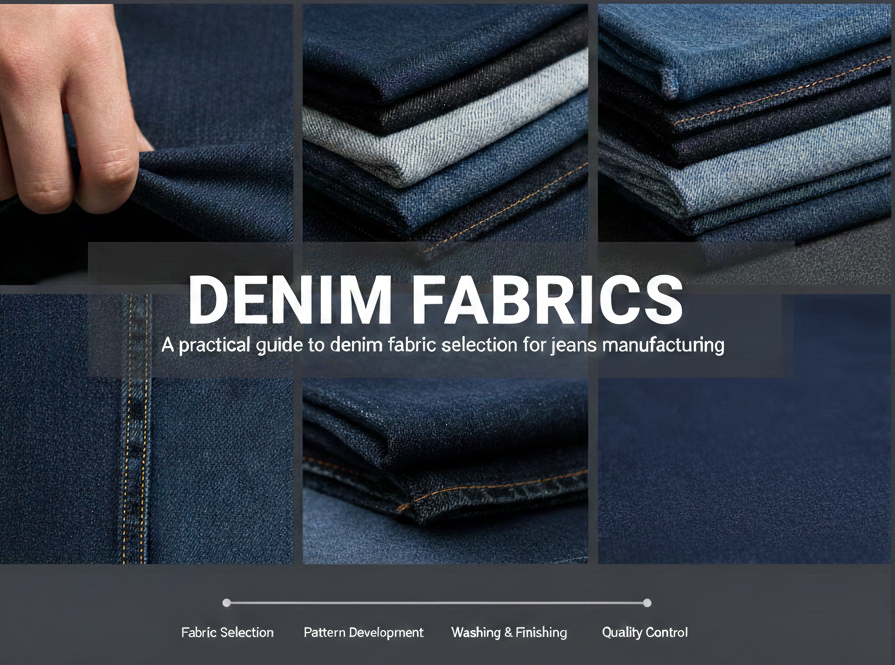
A practical guide to denim fabric selection for jeans manufacturing
Why Denim Fabric Decisions Matter
Denim fabric is the foundation of every pair of jeans.
In manufacturing, fabric choices affect far more than appearance. They influence fit behavior, washing results, durability, and production stability.
Many production issues seen later—unexpected shrinkage, fit inconsistency, or wash distortion—often begin with fabric decisions made at the early development stage.
This section explains how denim fabrics are evaluated from a factory perspective. The goal is to help brands understand how fabric structure, weight, and stretch behave during real production, not just how they look on a hanger.
Stretch vs Non-Stretch Denim
One of the first decisions brands face is whether to use stretch or non-stretch denim.
This choice affects pattern development, fit tolerance, washing control, and long-term wear performance.
Stretch Denim
Stretch denim usually contains elastane or similar fibers. It provides comfort and flexibility, especially for fitted silhouettes.
From a manufacturing point of view, stretch denim requires closer control in:
- Pattern balance
- Recovery after washing
- Measurement tolerance during bulk production
Stretch fabrics may feel forgiving when worn, but they are often less forgiving during production if not properly tested.
Non-Stretch Denim
Non-stretch denim offers a more stable structure. It is commonly used for classic or rigid fits.
In production, non-stretch denim:
- Holds shape more consistently
- Shows less measurement fluctuation
- Requires clearer fit approval during sampling
However, comfort expectations should be carefully considered during design.
👉 Read more: Stretch vs Non-Stretch Denim
Denim Weights and Fabric Constructions
Denim weight is typically measured in ounces per square yard.
Weight affects drape, durability, and seasonal suitability.
Lightweight Denim
- Softer hand feel
- Often used for summer or relaxed styles
- More sensitive to washing changes
Midweight Denim
- Balanced structure and comfort
- Widely used for commercial production
- Easier to control in bulk orders
Heavyweight Denim
- Strong structure and durability
- Requires careful washing and sewing control
- Not always suitable for all fits
Beyond weight, fabric construction—such as weave density and yarn type—also influences stability during cutting and washing.
👉 Read more: Denim Weights Explained
Raw Denim vs Washed Denim
Raw denim and washed denim behave very differently in manufacturing.
Raw Denim
Raw denim has not gone through garment washing.
It allows more flexibility in wash development but requires careful shrinkage testing.
Brands choosing raw denim should consider:
- Shrinkage control
- Fit allowance adjustments
- End-user washing behavior
Washed Denim
Washed denim has already gone through finishing processes.
It offers more predictable hand feel but less flexibility for later wash changes.
👉 Read more: Raw Denim vs Washed Denim
Selvedge vs Non-Selvedge Denim
Selvedge denim is often associated with heritage products, but it is not suitable for every project.
From a factory perspective:
- Selvedge denim has cutting limitations
- Sewing efficiency may be lower
- Production planning requires more precision
Standard denim is more flexible for scalable production and broader fit ranges.
Choosing selvedge should be based on product positioning and production scale, not trend appeal.
👉 Read more: Selvedge vs Non-Selvedge Denim
Sustainable Denim Fabric Options
Sustainability in denim fabric involves material sourcing, processing methods, and traceability.
Common approaches include:
- Organic or recycled cotton
- Reduced chemical treatments
- Lower-impact dyeing processes
From a manufacturing view, sustainable fabrics may require:
- Additional testing
- Adjusted washing parameters
- Clear documentation
Sustainable fabric choices should align with production capability and brand expectations.
👉 Read more: Sustainable Denim Fabrics
How Fabric Choices Affect the Next Production Steps
Fabric selection influences:
- Pattern development and grading
- Washing and finishing results
- Quality control tolerance
- Bulk production stability
Understanding fabric behavior early helps reduce revisions later in the process.
This is why fabric decisions should be aligned with fit development, washing plans, and production timelines—not treated as an isolated step.
Related Denim Knowledge Topics
- Fit & Pattern Making
- Washing & Finishing
- Jeans Manufacturing Process
Each topic builds on fabric knowledge and explains how decisions connect across the production workflow.
A Factory Perspective on Denim Fabrics
Denim fabrics behave differently under real production conditions than they do in concept stages.
The purpose of this section is to explain those behaviors clearly and realistically.
Better fabric understanding leads to smoother development, fewer revisions, and more stable bulk production.
👉 Continue exploring the Denim Knowledge Hub to build a complete understanding of jeans manufacturing.


