

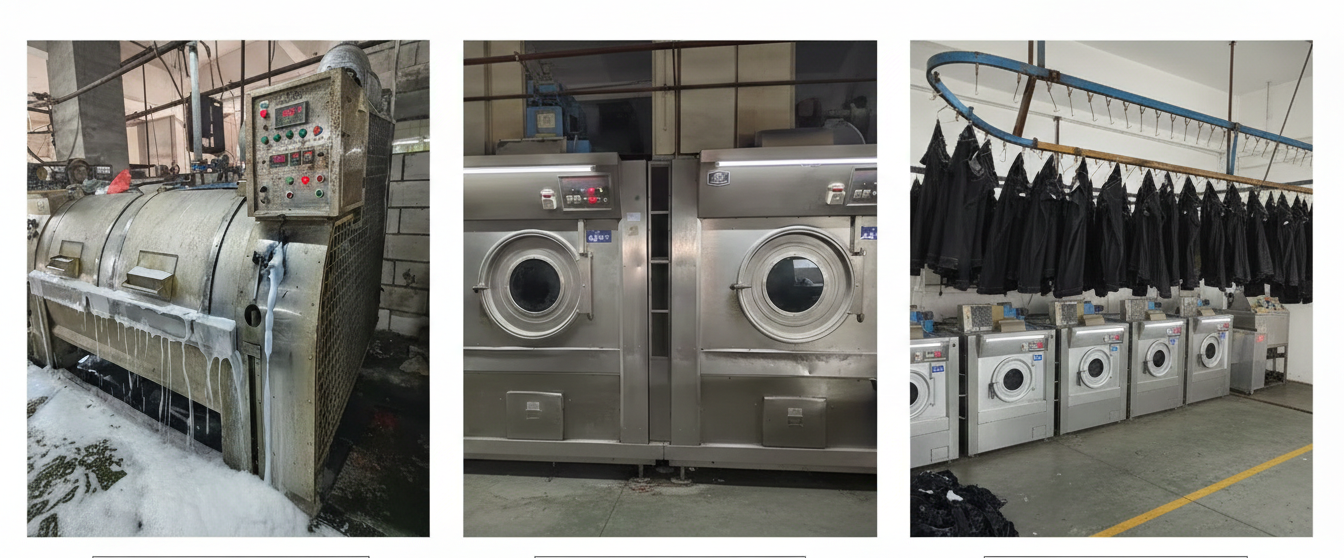
Denim Washing & Finishing Options
Washing and finishing are critical steps in denim manufacturing. They influence the final appearance, hand feel, fit behavior, and consistency of the finished garment. From a factory perspective, washing is not an isolated process. It must be aligned with fabric selection, pattern development, and quality control.
Different wash types create different results, but each also introduces specific risks and limitations. Understanding how these processes work in real production helps brands make informed decisions during development and bulk manufacturing.
Below is an overview of the denim washing and finishing options we commonly apply in jeans production.
Enzyme Wash
Enzyme wash is widely used to soften denim and reduce surface fuzz without damaging the core structure of the fabric. The process relies on controlled biological agents that act on the fabric surface during washing.
From a production standpoint, enzyme wash is often chosen when brands want a clean, wearable look with a softer hand feel. It helps remove stiffness from raw or rigid denim while maintaining the original color tone more evenly than aggressive washing methods.
Control is essential in enzyme washing. Wash time, temperature, and enzyme concentration all affect the final result. Small changes can lead to noticeable differences in shade and texture, especially in large production runs.
Enzyme wash is commonly applied to both cotton and stretch denim. However, when used on stretch fabrics, extra care is needed to protect elastic fibers. Proper wash settings help preserve stretch recovery and minimize fabric fatigue.
Stone Wash
Stone wash is a traditional denim washing method used to create a worn-in appearance and softer texture. Natural or synthetic stones are added during washing to abrade the fabric surface.
In manufacturing, stone wash is selected for styles that require visible contrast, faded areas, or a more casual, broken-in look. It is commonly used in mid-weight and heavier denim fabrics that can withstand mechanical abrasion.
Stone washing must be carefully managed to avoid uneven results. Factors such as stone size, wash duration, and load capacity influence how the fabric wears. Over-processing can weaken seams, reduce fabric strength, or create excessive damage.
For bulk production, consistency is a key concern. We monitor each wash batch closely to ensure that visual effects remain within acceptable tolerance levels. This is especially important when matching multiple production lots.
Vintage & Distressed Effects
Vintage and distressed finishes are used to recreate the look of long-worn or aged denim. These effects are achieved through a combination of washing techniques and manual finishing processes.
From a factory perspective, distressed effects require clear design references and realistic expectations. Each pair of jeans may show slight variations, which is part of the intended aesthetic. However, the overall look must remain consistent across the production order.
Techniques may include localized abrasion, controlled fading, or selective fabric removal. The sequence of these steps affects both appearance and garment strength. For this reason, distressed styles often require additional testing during sampling.
We also consider garment durability when developing vintage finishes. Stress points such as knees, pockets, and seams are reinforced where necessary to maintain wear performance while achieving the desired look.
Clean & Minimal Wash
Clean and minimal wash finishes focus on preserving the natural character of the denim fabric. These washes are designed to maintain color depth, surface texture, and structural integrity.
This approach is often chosen for modern, refined styles or collections where fabric quality is a central design element. Minimal washing helps reduce unnecessary processing and keeps measurement changes more predictable.
From a production standpoint, clean washes allow for tighter control over fit and sizing. Since there is less fabric disturbance, shrinkage and distortion are easier to manage during bulk production.
Clean finishes are commonly used for both stretch and non-stretch denim, especially in styles that rely on precise pattern shaping and silhouette.
Stretch Denim Wash Control
Stretch denim requires special attention during washing and finishing. Elastic fibers respond differently to heat, moisture, and mechanical action compared to cotton fibers.
In manufacturing, the main objective is to balance softness and appearance while protecting stretch performance. Excessive washing, high temperatures, or aggressive agitation can reduce stretch recovery and affect long-term wear.
Wash control for stretch denim involves adjusting parameters such as temperature, cycle duration, and drying methods. We also evaluate post-wash measurements to ensure consistency across sizes.
Sampling plays a critical role in stretch denim wash development. Multiple wash trials may be needed to identify the most stable process before bulk production begins.
Integrating Washing with Fabric and Fit
Washing and finishing should never be considered separately from fabric selection and pattern development. Each decision affects the final garment in measurable ways.
From a factory perspective, the goal is to apply washing techniques that support the design intent while maintaining production stability. Clear communication between the brand and manufacturer helps reduce risk and improve consistency.
There is no single wash method that suits every style. The most effective approach is one that aligns fabric behavior, fit requirements, and production scale.


