

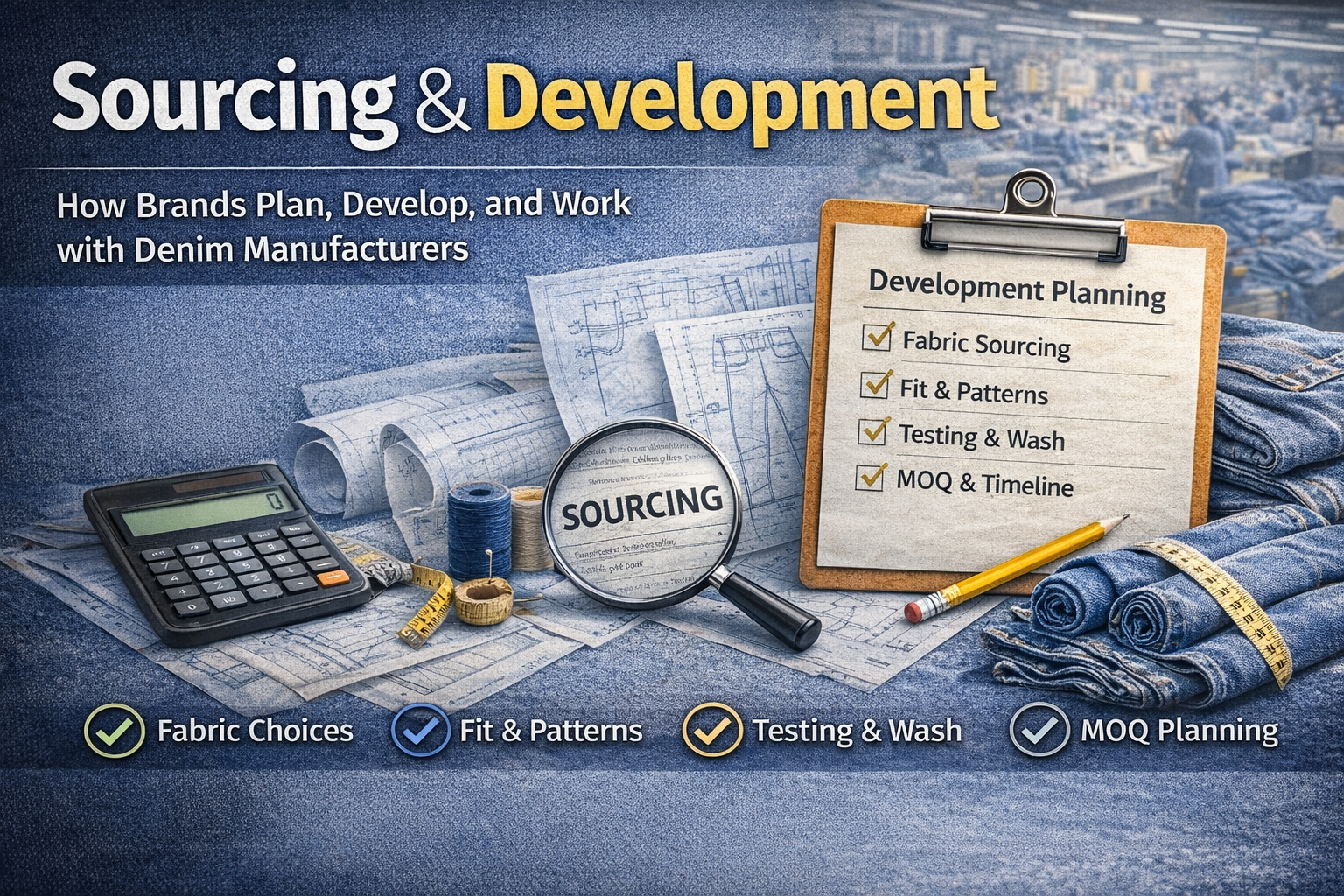
How Brands Plan, Develop, and Work with Denim Manufacturers
Choosing a denim fabric or approving a sample is only one part of building a jeans collection.
What usually decides whether a project runs smoothly — or becomes expensive and slow — is how sourcing and development are planned from the start.
Many brands struggle not because they chose the wrong factory, but because expectations, timelines, and development logic were never aligned early on. This page focuses on the real decisions brands face when sourcing denim and working with manufacturers, based on how factories actually operate.
Instead of trends or sales claims, the content here looks at how denim projects move from idea to bulk production, where risks appear, and how brands can reduce them through better planning and communication.
Why sourcing strategy matters more than most brands expect
In denim manufacturing, sourcing is not just about finding a supplier. It affects:
- Sample timelines
- MOQ flexibility
- Fabric consistency
- Fit accuracy in bulk
- Cost control over multiple seasons
Factories see this clearly. Projects with clear sourcing logic move faster, cost less to correct, and have fewer disputes during production. Projects without it often stall at sampling or face issues after bulk starts.
This Hub focuses on the practical side of sourcing — how decisions are made, not how they are marketed.
How denim sourcing decisions shape product development
Development problems usually start long before production.
For example:
- A fabric is approved without checking bulk availability
- A target price is set without understanding wash cost
- A pattern is developed before the final fabric is locked
From a factory point of view, these issues are not “mistakes” — they are planning gaps.
Good sourcing aligns three things early:
- Product goal (fit, look, target customer)
- Manufacturing limits (fabric, wash, capacity)
- Business reality (MOQ, lead time, cost tolerance)
When these are aligned, development becomes predictable instead of reactive.
Choosing a denim manufacturer: what really matters
Many brands start by comparing factories based on photos, certifications, or claimed experience. Those factors matter, but they do not tell the full story.
In real production, the most important questions are often:
- Can the factory handle your fabric and wash type consistently?
- Do they support development or only execute instructions?
- How flexible are they during sampling changes?
- How do they manage risk when something goes wrong?
A good denim manufacturer is not defined by size alone. Some smaller factories support development better than large ones. Some large factories are better for repeat bulk orders but less suitable for early-stage brands.
👉 Related page:
How to Choose a Denim Manufacturer
(Selection logic, warning signs, and factory-side evaluation criteria)
MOQ and development planning are connected
MOQ is often discussed as a number. In reality, it is a result of development choices.
MOQ is influenced by:
- Fabric mill requirements
- Dye lot minimums
- Wash setup costs
- Pattern and size range complexity
Brands that plan development well often achieve lower effective MOQs — even if the factory’s official MOQ looks high.
From a factory perspective, flexible MOQ usually comes from:
- Simplified fabric programs
- Shared base fabrics across styles
- Realistic size breakdowns
- Clear bulk forecasts
MOQ planning is not about pushing factories lower. It is about designing products that are easier to produce.
👉 Related page:
MOQ & Development Planning
Working with a custom denim factory: how collaboration actually works
Custom denim manufacturing is not a one-way process. Factories do not simply “make what is sent.” Every project involves trade-offs, adjustments, and shared decisions.
Strong factory collaboration usually includes:
- Early discussion of fabric risks
- Wash testing before final fit approval
- Clear sample feedback cycles
- Transparent bulk timelines
Problems arise when brands expect factories to solve issues without input, or when feedback arrives too late to be useful.
Factories work best when brands treat development as a joint process, not a transaction.
👉 Related page:
Working with a Custom Denim Factory
Where sourcing issues usually appear during production
From the factory side, sourcing-related problems most often show up at these stages:
- Sampling: fabric behaves differently than expected
- Wash testing: shrinkage or recovery changes fit
- Pre-production: cost or MOQ adjustments are needed
- Bulk: fabric variation between lots
Most of these are predictable. They become costly only when they are discovered too late.
This is why experienced brands invest more time in sourcing discussions before approving samples, not after.
How this Hub fits into the Denim Knowledge structure
The Sourcing & Development Hub connects directly with other parts of the Denim Knowledge Hub:
- Denim Fabrics → fabric choice impacts sourcing risk
- Fit & Pattern Making → development logic affects MOQ and bulk stability
- Manufacturing Process → sourcing decisions shape production flow
Understanding sourcing helps brands make better decisions across all these areas, not just at the supplier selection stage.
Explore related sourcing & development topics
If you are building or refining a denim collection, these pages go deeper into each key area:
Each page focuses on one part of the sourcing process, with details based on real factory workflows rather than theory.
Final note from the factory side
Most denim problems are not technical failures. They are planning failures.
Good sourcing does not eliminate risk, but it makes risk visible early — when it is still easy to manage.
This Hub is built to help brands, designers, and product teams make sourcing decisions that hold up through sampling, bulk production, and repeat orders.


