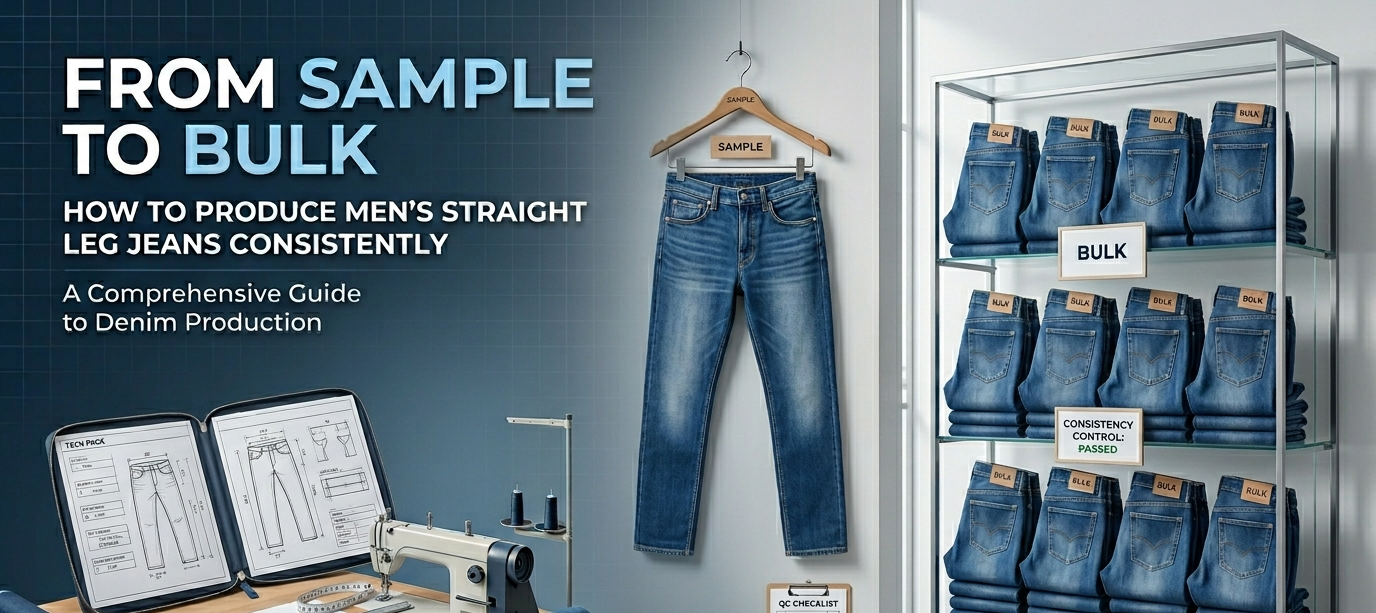
Producing a single, perfect pre-production sample (PPS) is a straightforward process. Replicating that exact fit and wash across a 1,000-piece or 5,000-piece bulk order is where emerging denim brands often face supply chain failures.
For a men’s straight leg jean, commercial success relies entirely on consistency. If a customer buys a size 32 waist in January and orders the same size in a different wash in July, the physical measurements must match. When preparing to transition from the sampling phase to mass manufacturing, brands and wholesale buyers must establish strict technical parameters with their factory to protect their inventory value.
Here is how professional denim production manages consistency from sample to bulk.
1. Locking Down the Pre-Production Sample (PPS)
The PPS is not just a reference point; it is a binding physical contract between your brand and the factory. Mass production should never begin until the PPS is completely approved.
- Fabric Shrinkage Verification: Before the factory sews the PPS, they must test the raw denim roll for shrinkage. Heavy industrial washing will alter the fabric dimensions. The pattern maker adjusts the initial cutting blocks based on this specific shrinkage rate so that the post-wash sample perfectly matches your target tech pack measurements.
- Approval Sign-Off: Once approved, the PPS is tagged and kept on the factory floor. The quality control (QC) team uses this exact garment to benchmark all bulk production runs.
2. Establishing Strict Measurement Tolerances
In commercial garment manufacturing, minor variations occur due to the physical tension of sewing machines and the heat of industrial drying. However, these variations must be controlled.
- Defining Tolerances: A tolerance is the maximum acceptable deviation from the tech pack measurement. For men’s straight leg jeans, professional factories operate on a strict +/- 0.5 inch tolerance for critical points like the waist, inseam, and leg opening.
- The Straight Leg Danger Zone: If the leg opening tolerance exceeds 0.5 inches, a straight fit can unintentionally become a relaxed or tapered fit. Brands must communicate these hard limits before the bulk fabric is cut.
3. Standardizing Wash Recipes to Prevent Shading
Denim shading—where different batches of the same order arrive in slightly different colors—is a major issue for wholesale importers.
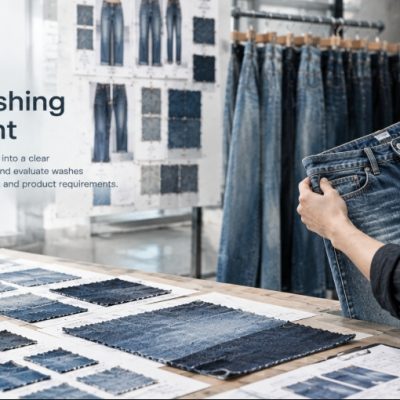
- Chemical and Temperature Logs: To replicate the exact shade of the PPS, the laundry facility must document the specific wash recipe. This includes the exact water temperature, the ratio of enzymes or pumice stones, and the precise cycle duration.
- Batch Sorting: Even with strict recipes, indigo dye behaves organically. During final bulk packing, the QC team must sort the finished jeans by shade bands, ensuring that all jeans within a specific carton match perfectly, preventing mismatched inventory from reaching the retail floor.
4. Accurate Pattern Grading
Approving a size 32 sample does not guarantee the size 38 will fit correctly. Grading is the mathematical process of scaling the base pattern up and down to create a full size run.
- Proportional Scaling: A straight leg pattern cannot be scaled uniformly. If the waist increases by 2 inches, the leg opening should not increase at the same rate, otherwise, the larger sizes will look like wide-leg jeans. The factory’s technical team must apply specialized men’s grading rules to maintain the straight silhouette across all sizes.
Why Choose Xinen Garment for Reliable Bulk Production
At Xinen Garment, we eliminate the technical risks associated with scaling custom denim production. We partner with fast-fashion wholesalers, private labels, and apparel importers to deliver stable, high-volume orders.
- Data-Driven Pattern Engineering: We do not rely on guesswork. Our in-house technical team calculates exact fabric shrinkage rates and applies precise grading rules to maintain your straight leg silhouette across your entire size matrix.
- Controlled Laundry Facilities: We maintain strict wash logs for every PPS we develop. Our automated washing machines regulate water temperature and chemical dosing to guarantee bulk shading consistency.
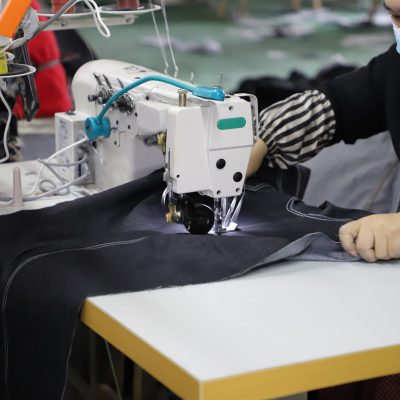
- Multi-Stage Quality Control: Our QC inspectors conduct in-line checks during sewing and final evaluations after washing. We enforce strict +/- 0.5-inch tolerances, ensuring the bulk delivery matches your approved sample exactly.
- Transparent Manufacturer Operations: Operating directly as the manufacturer allows us to provide clear production timelines and direct accountability, avoiding the delays often caused by third-party sourcing agencies.
Frequently Asked Questions (FAQ)
What happens if the bulk production does not match our approved PPS?
Our strict QC protocols are designed to catch deviations during the initial cutting and in-line sewing stages. We use the signed PPS as the definitive benchmark. Any garments falling outside the agreed measurement tolerances or shading limits are rejected internally before they reach the packing department.
How long does it take to grade patterns for a full size run?
Once the base size PPS is approved, our technical team typically completes the digital pattern grading for your full size run (e.g., sizes 28 through 40) within 2 to 3 working days before bulk cutting begins.
Can we split our bulk order into multiple washes using the same straight leg pattern?
Yes. Consolidating your order into one core straight leg pattern while splitting the volume across different washes (e.g., raw, medium blue, and black over-dye) is a highly efficient way to build a diverse collection while reaching production minimums.
Do you manage the shipment and logistics for bulk orders?
Yes. We assist B2B clients and wholesale buyers with complete export documentation and logistics coordination, whether you require standard sea freight (FCL/LCL) or expedited air freight to your international distribution center.