When developing a men’s denim line, selecting the fabric weight and composition is only the first step. The industrial wash finish is what ultimately dictates the garment’s market placement, retail price point, and target consumer demographic.
Because men’s straight leg jeans feature a uniform width from the knee down to the leg opening, they provide a large canvas for textile laundering. The same raw fabric roll can be transformed into a clean, corporate-ready staple or a rugged, vintage workwear piece entirely through the wash recipe. For private labels and wholesale buyers, understanding how these finishes alter the garment is essential for precise collection planning.
1. Primary Industrial Wash Categories and Their Visual Impact
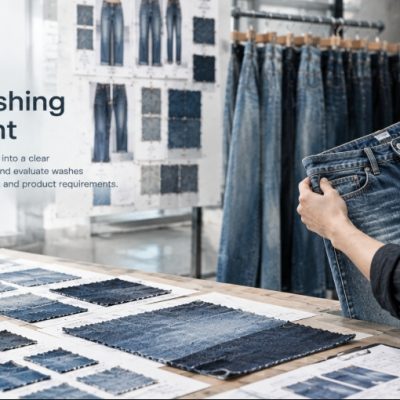
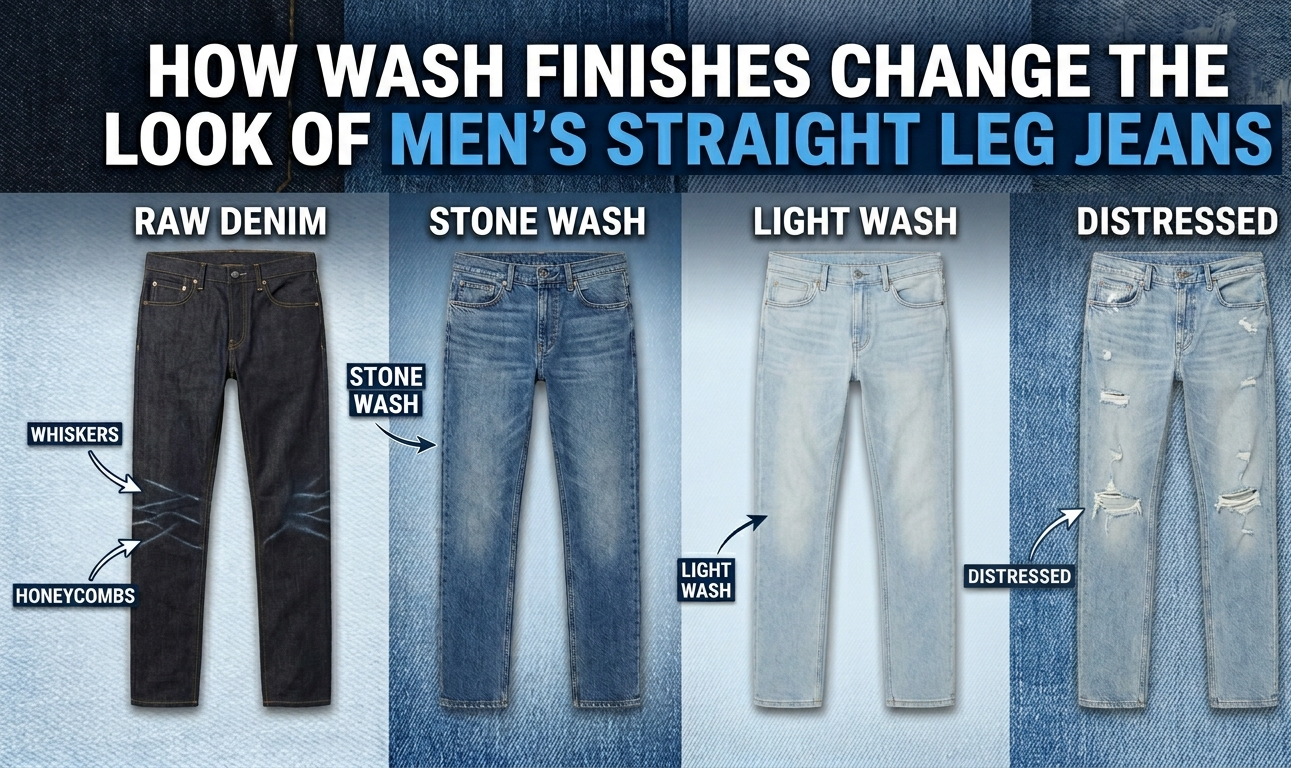
Different laundry processes alter both the indigo depth and the physical hand-feel of the denim fabric. Here is how the most common commercial washes change a straight leg silhouette:
Raw & Rigid (Unwashed or Light Rinse)
- The Process: The fabric is either left completely untreated after sewing or given a brief cold-water rinse to remove surface starch without stripping the indigo dye.
- The Result: The jeans retain a deep, uniform dark navy or black coloration with a stiff, structured drape. This finish accentuates the clean, vertical lines of a straight leg cut, making it highly marketable for smart-casual or premium heritage menswear collections.
Enzyme Wash (Medium to Soft Finish)
- The Process: Cellulase enzymes are introduced into the washing drums to organically degrade surface fibers and gently loosen the indigo dye.
- The Result: This process softens the denim significantly, removing the stiff texture of raw cotton. It yields a clean, smooth surface with uniform color saturation and minimal distressing, which appeals to mainstream consumers looking for immediate comfort.
Stone Wash (Vintage & Textured Finish)
- The Process: Jeans are tumbled in large industrial washers alongside natural pumice stones. The friction mechanically abrades the fabric surface.
- The Result: Stone washing creates high-contrast variations along the seams, pocket edges, and waistbands. On a straight leg jean, it highlights the natural texture of the slub yarn, giving the garment an authentic, broken-in, mid-blue aesthetic popular in casual and streetwear segments.
Bleaching & Tinting (Trend-Focused Finishes)
- The Process: Oxidizing agents or chlorine bleaches strip large amounts of indigo to achieve light-blue or ice-blue shades. Tinting involves adding small amounts of direct dyes (such as yellow or brown sulfur dyes) after bleaching.
- The Result: This process creates distinct retro, 90s-inspired, or distressed styles. It gives the straight leg silhouette a more relaxed, lifestyle-driven look.
2. Production Factors Brands Must Monitor
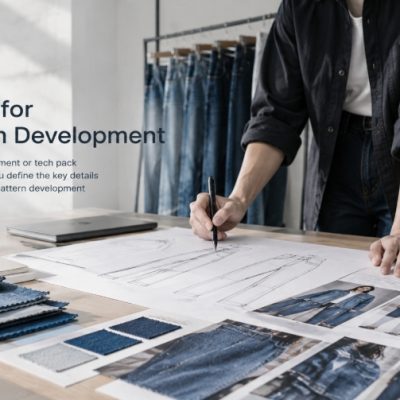
Varying the wash finish introduces physical changes to the garment that your brand must account for during tech pack development:
- Dimensional Stability (Shrinkage): Heavy processes like stone washing and bleaching involve high water temperatures and prolonged drying cycles. This causes the cotton yarns to contract. A factory must adjust the cutting patterns based on the specific wash recipe to ensure the final straight leg dimensions do not warp or shrink out of size specification.
- Fabric Weakening: Severe bleaching or prolonged stone washing degrades the tensile strength of the cotton fibers. If you are manufacturing lightweight denim (under 11oz), over-processing can lead to premature tearing at stress points like the crotch or pockets.
- Color Shading Variation: Indigo dyeing is an organic process. Even within the same production run, slight variations in temperature or chemical concentrations can cause subtle shade differences across different wash batches.
3. Why Partner with Xinen Garment for Your Custom Denim Washing
At Xinen Garment, we bridge the gap between design concepts and stable commercial manufacturing. We operate controlled production lines catering to fast-fashion wholesale importers, private labels, and established apparel brands.
- Advanced Wash Recipe Replication: Our technical laundry teams document exact chemical ratios, water levels, and run times to guarantee that your bulk production orders match your approved pre-production samples.
- Strict Shrinkage Calibration: We do not use guesswork. We perform fabric-specific wash testing prior to bulk cutting, modifying our automated pattern grading blocks to account for how enzyme, stone, or bleach finishes affect warp and weft shrinkage.
- Shading Control Management: Our quality control teams sort finished cargo using strict shading parameters, ensuring uniform color consistency across every wholesale batch shipped to your warehouse.
- Comprehensive Customization: Beyond the wash, we provide complete OEM/ODM production, integrating custom branded hardware, leather patches, and inner woven labels seamlessly into your custom denim line.
4. Frequently Asked Questions (FAQ)
Can we apply different wash finishes to the same fabric quality within one order?
Yes. If the fabric composition allows, you can split your bulk fabric order into multiple wash categories (e.g., 500 pieces in a dark enzyme wash and 500 pieces in a medium stone wash) to diversify your collection without changing the core fit or fabric supply.
How do you prevent the white pocket linings from turning blue during heavy washing?
We utilize anti-backstaining agents during the laundering cycles. These specialized chemical additives suspend loose indigo particles in the water, preventing them from re-depositing onto the interior pocket bags or white polyester-cotton linings.
Does stone washing damage the metal buttons or zippers?
To protect custom hardware, we typically perform heavy stone washing cycles before attaching the final branded metal buttons and rivets. If zippers must be sewn in prior to washing, we utilize high-durability, wash-resistant brass or alloy zippers capable of withstanding industrial abrasion.
What is the lead time for producing custom wash samples?
Once your physical tech pack and raw fabric selections are finalized, our laboratory sample room typically develops and delivers a custom washed sample within 7 to 10 working days for your brand’s review.