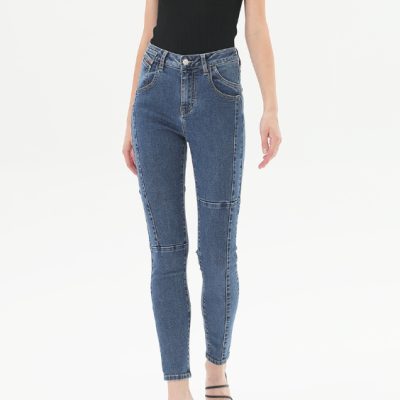
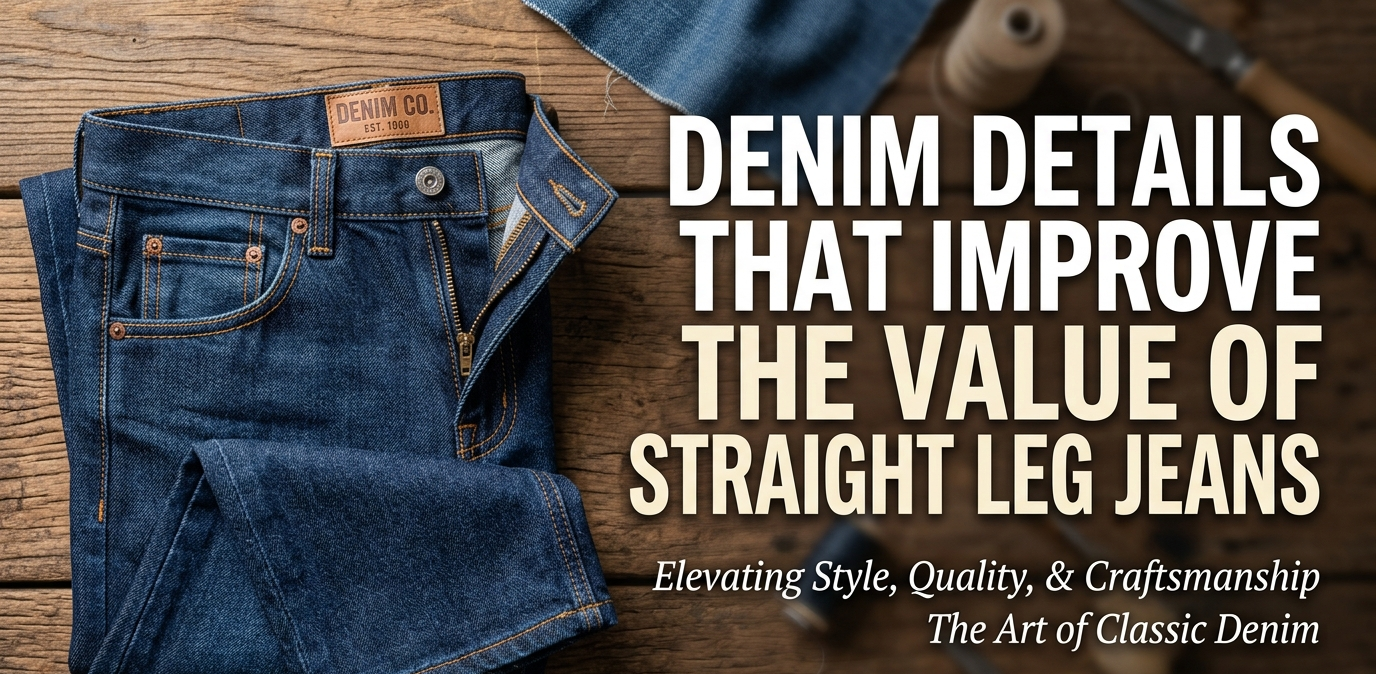
For entrepreneurs launching a private label or wholesale buyers curating a premium collection, a straight leg jean is a mandatory core fit. Because the straight silhouette is minimalist and clean, consumers and retail buyers do not judge its worth by an experimental shape. Instead, they evaluate its market value by its raw materials, structural integrity, and hardware finishing.
From a manufacturing perspective, upgrading a standard wholesale garment into a premium, high-margin product comes down to specifying the correct technical details during the pre-production phase. Below are the essential components that determine the actual retail value of custom straight leg jeans.
1. Hardware and Trim Specifications (External Value)
Trims are the first tactile indicator of quality when a buyer handles a garment. Standard retail lines often cut costs here, which degrades the product over time. Premium brands focus on the following:
- Button and Rivet Material: Standard mass-market jeans use hollow aluminum or low-grade iron hardware that feels light and can rust. Upgrading to solid brass, copper, or heavy die-cast zinc alloys adds physical weight and longevity. For custom brands, these should be debossed or embossed with your vector logo via dedicated molds.
- Zipper Assembly: A broken zipper renders a pair of jeans unwearable. Specifying a locking brass zipper—such as YKK or equivalent heavy-duty industrial brands—ensures smooth operation and prevents the fly from sliding down under tension.
- The Back Patch: The leather patch on the waistband is a primary branding tool. While fast-fashion relies on thin polyurethane (PU) synthetic patches that peel during industrial washing, high-value lines utilize genuine leather (cowhide) or high-density jacquard paper (such as washable kraft paper) featuring deep debossing and clean edge-stitching.
2. Construction and Stitching Standards (Internal Value)
A straight leg jean must maintain its clean, vertical line through hundreds of wash and wear cycles. The internal sewing methods dictate whether the garment retains its shape or falls apart at the seams.
- Thread Composition (Poly-Core Cotton): 100% pure cotton thread fades beautifully but lacks the tensile strength required for heavy denim seams. 100% polyester thread is strong but has a synthetic shine that looks cheap. Premium manufacturing utilizes poly-core cotton thread—a polyester core wrapped in cotton. This provides industrial-grade strength while allowing the thread surface to fade naturally alongside the indigo fabric during washing.
- Chain Stitching: Traditional lockstitches are rigid and prone to snapping under stress, particularly on the waistband and bottom hem. Utilizing automated chain-stitching machinery creates an interlocking loop pattern that stretches with the fabric, preventing seam puckering and creating the classic “roping effect” on the hem after washing.
- Pocket Bag Fabric Density: A hidden but critical detail is the pocket lining. Fast-fashion uses flimsy, lightweight polyester blends (under 120g/㎡) that easily tear when carrying keys or phones. High-end lines specify a heavy, tightly woven TC (tetoron-cotton) or 100% cotton canvas lining weighing at least 190g/㎡ to 210g/㎡.
- Bartack Reinforcements: High-stress junctions—such as the corners of the back pockets, the base of the belt loops, and the bottom of the fly—must be secured using automated bartack machinery (dense, localized zig-zag stitching) to stop seams from ripping under daily physical load.
3. Why Partner with Xinen Garment for High-End Production
At Xinen Garment, we manufacture custom denim products for B2B clients, fast-fashion wholesale importers, and private labels who require strict control over manufacturing variables.
- Complete OEM Trim Sourcing: We operate a transparent supply chain for custom hardware. We can source, mold, and implement customized alloy or solid brass buttons, specialized rivets, and real-leather waist patches matching your brand book.
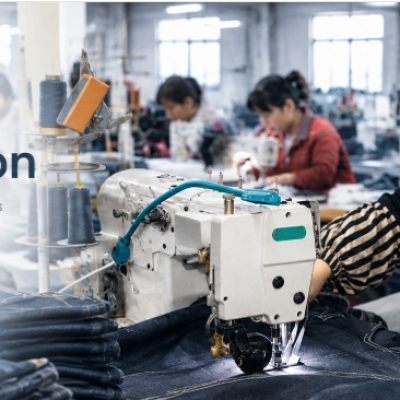
- Rigorous Structural Controls: Our production floor is equipped with specialized heavy-duty sewing equipment capable of executing clean chain stitching, uniform stitch-per-inch (SPI) counts, and heavy bartack placements exactly to your tech pack requirements.
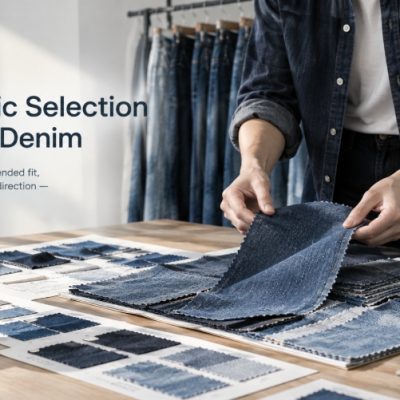
- Premium Material Selections: We do not use substandard stock fabrics or thin pocket linings. We help brands select the proper fabric weight (from 11oz up to heavy 14.5oz) and back it with durable, high-density pocket components.
- Direct-from-Factory Accountability: Dealing directly with our factory floor removes middleman markups and establishes a direct line of communication with the pattern engineering team, accelerating sample approvals and bulk lead times.
4. Frequently Asked Questions (FAQ)
What is the average tooling cost for custom-branded buttons and rivets?
Custom-branded hardware requires a one-time mold setup fee for engraving your logo. The exact price depends on the dimensions and material composition (e.g., zinc alloy vs. copper). Once the mold is created, it can be reused for all your future production re-orders. Please contact our sales team through the website for exact pricing structures.
Can we choose different thread colors for our straight leg line?
Yes. You can opt for traditional high-contrast contrast stitching (such as classic tobacco or orange thread) or modern monochromatic matching stitching (such as tone-on-tone navy or black thread) depending on your design framework.
What pocket lining fabrics do you offer as standard?
Our standard baseline fabric for custom orders is a heavy-duty, durable TC lining (190g/㎡). Upon request, we can upgrade your production run to 100% heavy cotton canvas, herringbone twill pocketing, or custom-printed linings featuring your brand logo.
How do you ensure the belt loops do not tear off during wear?
Every belt loop we manufacture is secured using industrial bartack sewing profiles at both the top and bottom junctions, integrating the loops deeply into the waistband structure for maximum structural strength.