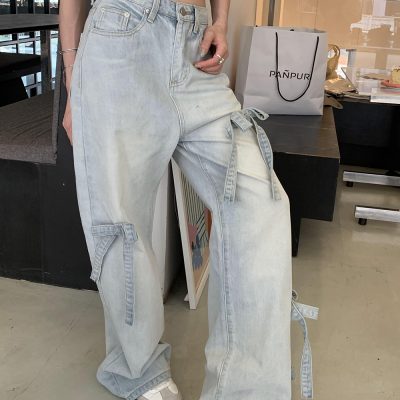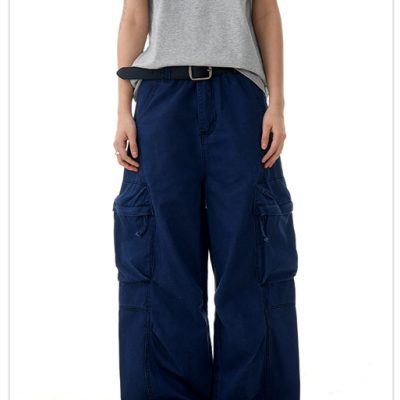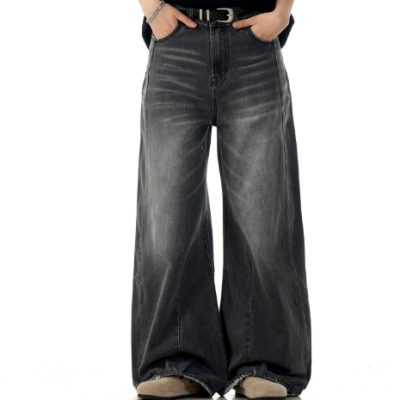
Men’s wide-leg jeans are a staple in current menswear collections, driven by a global shift toward relaxed and vintage-inspired silhouettes. However, for private labels, importers, and wholesalers, executing a wide-leg jean in bulk production is highly technical. It is not simply a matter of scaling up a straight-leg pattern; adding more fabric volume introduces specific structural challenges.
To achieve a premium product that meets brand standards and minimizes consumer returns, production teams must strictly control pattern grading, cutting techniques, and seam construction. Here are the key factory-level details buyers must verify when developing men’s wide-leg denim.
How Does Fabric Cutting Prevent “Leg Twist” in Wide Denim?
One of the most common defects in poorly manufactured wide-leg jeans is “leg twist” (or skewing), where the side seam twists toward the front of the leg after washing. In wide-leg styles, this defect is highly visible because the fabric panels are larger and hang away from the body.
- Grain Line Alignment: To prevent twisting, the fabric must be cut perfectly parallel to the warp (the vertical threads of the denim). Even a slight deviation in the cutting room will compound over the length of a wide, 32-inch or 34-inch inseam.
- Pre-Skewed Denim: For bulk production, we highly recommend sourcing pre-skewed denim. This fabric has been mechanically stretched at the mill to counteract the natural rotational pull of the twill weave, ensuring the side seams of the wide legs remain perfectly straight after industrial washing.
Why Are Reinforced Seams Necessary for Heavier Wide-Leg Panels?
Wide-leg jeans utilize significantly more fabric than slim or straight fits. If a brand selects a standard 12oz to 14oz rigid denim, the total weight of the garment increases. This puts extreme stress on the load-bearing seams.
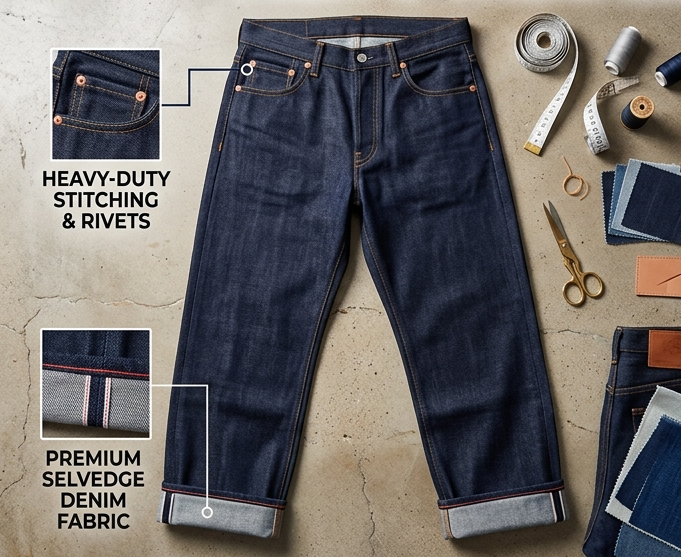
- Inseam and Yoke Construction: The crotch, inseam, and back yoke must be assembled using lapped seams with double-needle or triple-needle chain stitching. A standard lockstitch is prone to snapping under the weight of heavy, wide denim panels during movement.
- Stitches Per Inch (SPI): A premium B2B manufacturing standard requires a strictly regulated SPI. For heavy wide-leg jeans, maintaining 8 to 10 stitches per inch provides the optimal balance of seam flexibility and high tensile strength.
How Do You Grade the Top Block to Maintain a Tailored Look?
The defining characteristic of a well-made wide-leg jean is contrast: the legs are voluminous, but the top block (the waist, hips, and seat) must fit securely.
- The Anti-Diaper Effect: If the factory simply grades the entire pattern up, the seat and crotch will drop awkwardly, creating a sloppy fit. Pattern engineers must isolate the top block from the leg. The grading for the waist and upper hip should follow standard tailored measurements, with the “widening” angle beginning smoothly just below the hip or at the mid-thigh.
- Rise Calibration: Wide-leg jeans require a carefully calibrated mid-to-high rise. Because the leg panels are heavy, a low rise will cause the jeans to drag downward. A higher rise anchors the garment comfortably at the natural waist.
How Do We Engineer the Hem for Wider Leg Openings?
The leg opening on a wide-leg jean typically ranges from 18 to 24 inches. Because this wide hem frequently interacts with the wearer’s footwear and the ground, it requires robust finishing.
- Chain-Stitched Hems: For premium private labels, the hem should be finished with a dedicated chain-stitch machine (such as a Union Special). This not only secures the heavy fabric but also creates the highly sought-after “roping effect” (puckering) after the wash process, which vintage denim consumers look for.
- Hem Folding Tolerance: Because of the wide circumference, folding the hem accurately requires precise factory handling. The standard fold is typically 1/2 inch to 3/4 inch, double-turned to completely enclose the raw edge and prevent fraying from ground friction.
Why Choose Xinen Garment for Your Custom Denim Manufacturing?
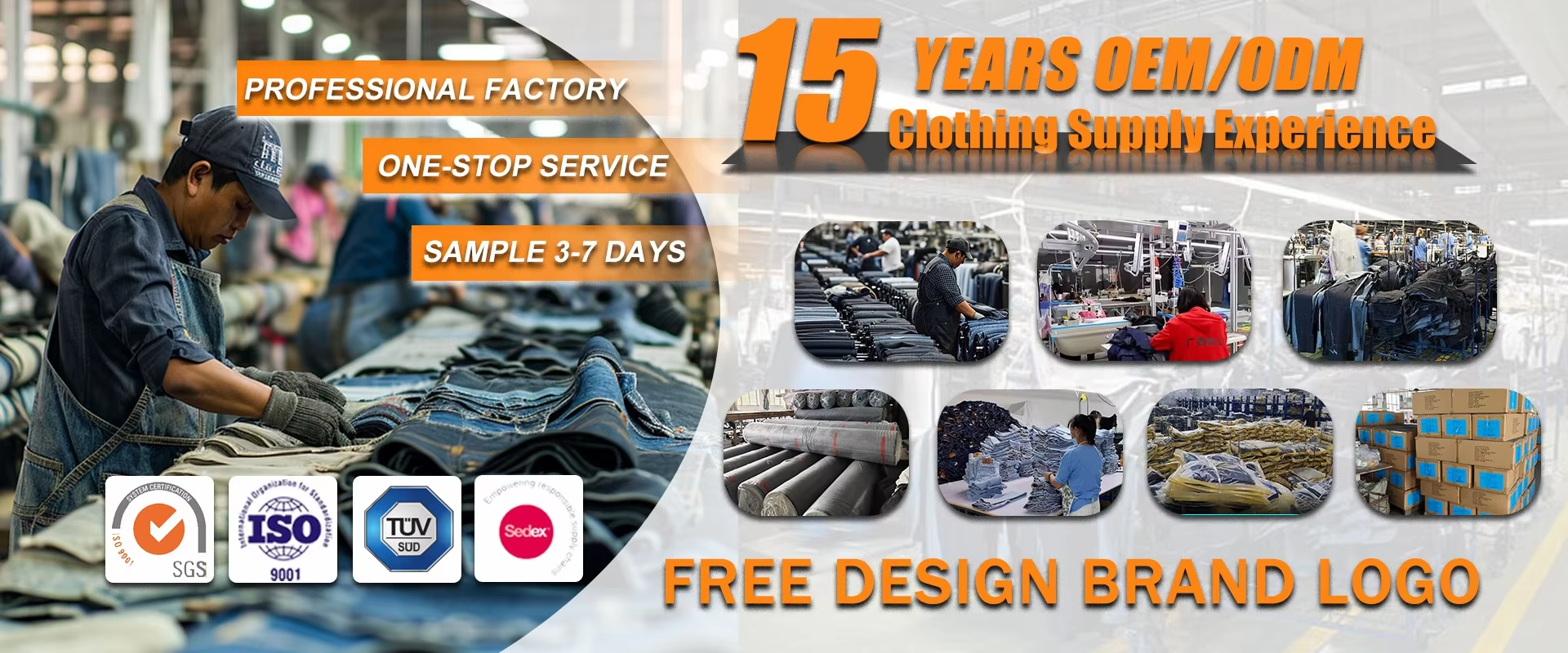
Executing complex silhouettes at scale requires a factory with technical discipline. Xinen Garment operates as a professional, direct-to-B2B denim manufacturer, servicing apparel importers, wholesalers, and fashion brands worldwide.
- Technical Pattern Precision: We do not rely on guesswork. Our in-house pattern engineers translate your tech packs into precise CAD files, ensuring the delicate balance between a fitted top block and a wide leg is maintained across your entire size run.
- Strict Quality Control: From checking the grain line in the cutting room to verifying the SPI on the sewing floor, our quality control protocols are designed to prevent the structural defects (like leg twist and seam failure) that plague lower-tier manufacturers.
- Scalable B2B Solutions: We are built for brands that need reliability. Whether you are developing a raw indigo wide-leg jean or a heavily washed vintage style, we manage the sourcing, shrinkage testing, and bulk production to deliver consistent, retail-ready garments on schedule.
Frequently Asked Questions (FAQ)
What is the factory tolerance for inseam measurements on wide-leg jeans?
In professional bulk production, the industry standard tolerance for inseam length is generally +/- 0.5 inches. We conduct thorough shrinkage tests prior to cutting to ensure the final washed garments fall strictly within this tolerance.
Does a wider leg require a heavier denim weight?
While lightweight denim (9oz-10oz) can be used for summer collections, it tends to lose its shape and drape poorly in a wide fit. We generally recommend mid-to-heavyweight denim (12oz to 14oz) to give the wide legs the structural integrity they need to fall cleanly.
Can you handle custom hardware for my private label?
Yes. We integrate your branded hardware—including custom-molded shank buttons, copper or brass rivets, and embossed leather patches—directly into the production line to ensure your brand identity is secure.
How do you test for shrinkage on wide-leg patterns before bulk production?
Before any bulk fabric is cut, we run 1×1 meter test panels through the exact industrial wash recipe specified in your tech pack. We calculate the exact warp and weft shrinkage percentages and adjust your CAD patterns to compensate for the fabric loss.