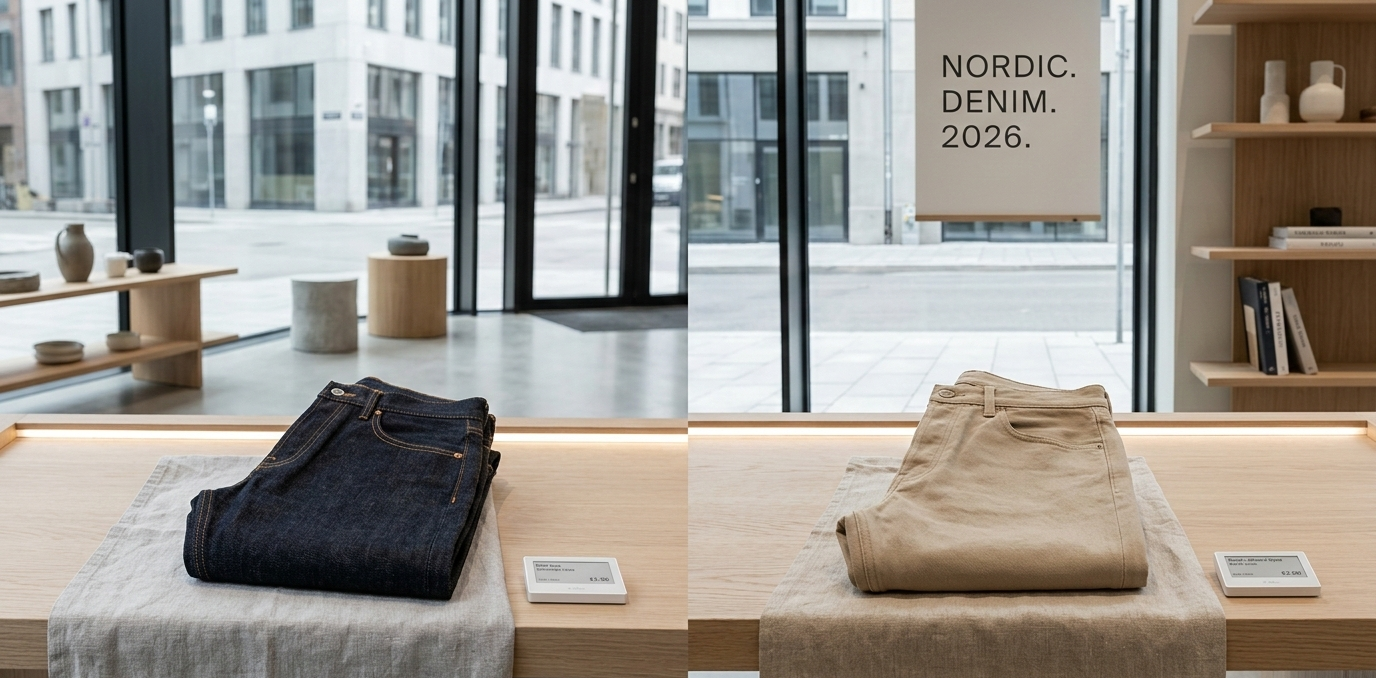
If you walk through the streets of Copenhagen or Stockholm today, you’ll notice that the “uniform” has shifted. The days of overly distressed, bleached-out fast fashion are mostly gone. In 2026, the Nordic market is obsessed with two things: longevity and naturality.
As a manufacturer, I’m seeing a massive tug-of-war between two specific palettes: the timeless Deep Dark Indigo and the rising Natural Earth Tones. If you are planning your next drop, choosing the wrong one could mean your collection looks dated before it even hits the shelves.
Here is the honest breakdown of what is actually happening on the ground.
Is Deep Indigo Still the “Safe” Choice for Nordic Brands?
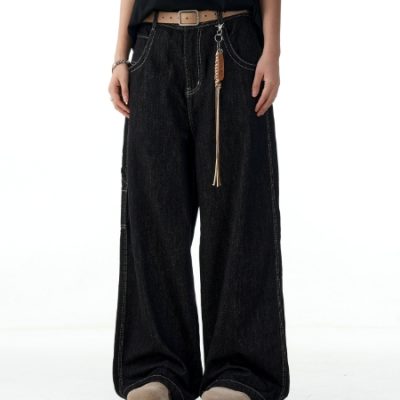
Yes, but with a twist. In the 2026 Nordic denim market, Dark Indigo isn’t just about “dark blue.” It’s about “Raw” or “One-Wash” aesthetics.
Northern European consumers are looking for a formal-to-casual transition. They want a pair of jeans they can wear to a high-end office with a blazer and then to a dinner at night. From a production standpoint, we are seeing a huge demand for indigo raw denim production that uses “stay-blue” technology—meaning the dye is locked in so it doesn’t rub off on white sneakers or sofas as easily as vintage denim did.
Indigo is the “safe” bet because it never goes out of style. It’s the ultimate investment piece. If you are a startup, having a dark indigo staple in your sustainable denim color trends strategy is almost mandatory for cash flow.
Are Earth Tones Replacing the Classic Blue?
They aren’t replacing it, but they are taking a massive bite out of the market share. 2026 is the year of “Mineral Hues.” We are talking about sands, olives, clays, and “bone” whites.
Why is this happening? It’s driven by the sustainability movement. Many of these earth tones are achieved through natural mineral dyes or undyed “ecru” cotton, which uses significantly less water and zero harsh chemicals compared to traditional indigo.
For a Danish or Swedish label, an earth-tone capsule screams “eco-conscious.” However, a word of caution from the factory floor: earth-tone denim is harder to get right. If the “mud” color is off by even 5%, the jeans can look dirty rather than premium. You need a factory that knows how to handle eco-friendly denim washes to ensure the color looks sophisticated, not “muddy.”
Which Palette Offers a Better Return on Investment?
Let’s talk about the math.
Dark Indigo is easier to sell year-round. It works in winter; it works in summer. Earth tones are more seasonal. A sand-colored jean sells like crazy in April and May but might sit in your warehouse during a dark Nordic November.
If you are running a Low MOQ denim startup, I usually recommend a 70/30 split. 70% of your stock in Dark Indigo or Deep Black (the “Classics”), and 30% in a seasonal Earth Tone (the “Trend”). This allows you to capture the 2026 “natural” vibe without risking your entire budget on a color that might be out of style by 2027.
Does the Fabric Weight Change Based on the Color?
Surprisingly, yes. For premium denim manufacturing, we usually see Dark Indigo requested in heavier weights (13oz to 14.5oz) to give that structured, architectural Scandi look.
Earth tones, on the other hand, are trending in “soft-structured” fabrics—think 11oz to 12.5oz with a slightly brushed surface. The goal is to make the earth-tone jeans feel more like a luxury chino but with the durability of denim.
FAQ: Choosing Your 2026 Palette
Which color shows wear and tear faster?
Earth tones, especially the lighter clays and sands, will show stains and daily grime much faster than indigo. However, Indigo “fades” (develops whiskers and honeycombs), which Nordic consumers actually love. If your customer wants “perfection” for a long time, go dark. If they want a “lived-in” organic look, go with earth tones.
Are natural dyes as durable as synthetic indigo?
In the past, natural dyes faded very quickly in the sun. But in 2026, natural mineral dye technology has improved significantly. They are much more light-fast now. They will still evolve over time, but they won’t turn into a different color after three washes like they used to.
Can I do a Low MOQ for both colors in one order?
Usually, no. Because the washing machines need to be cleaned thoroughly between an indigo run and an earth-tone run, factories usually treat these as two separate “minimums.” If you want both, you’re likely looking at 300 pieces of Indigo AND 300 pieces of Earth Tones.
What is the “must-have” color for the Copenhagen fashion scene right now?
“Ecru” (natural, unbleached cotton with tiny brown husks still visible) is the king of 2026. It’s the ultimate symbol of “I care about the planet.”