Women’s fashion brands, boutique labels, denim importers and private label startups often know which styles are trending, but not always which fits are safest for bulk orders and returns. This guide explains how wide leg jeans and straight leg jeans work on real women, so buyers can brief factories clearly and build a focused wholesale strategy.
This Guide speaks to:
- Women’s fashion brands planning a new denim line or expanding beyond skinny jeans
- Boutique labels looking for a strong “hero” fit in wide leg jeans or straight leg jeans
- Denim importers and wholesalers who must balance trend, fit, and inventory risk
- Private label startups that need simple, clear criteria when choosing styles
Throughout the article, key terms such as wide leg jeans, straight leg jeans, women’s jeans, brands, buyers, wholesale and bulk are used in a natural way to match how professional buyers actually search and think.
What Is a Women’s Straight Leg Jean?
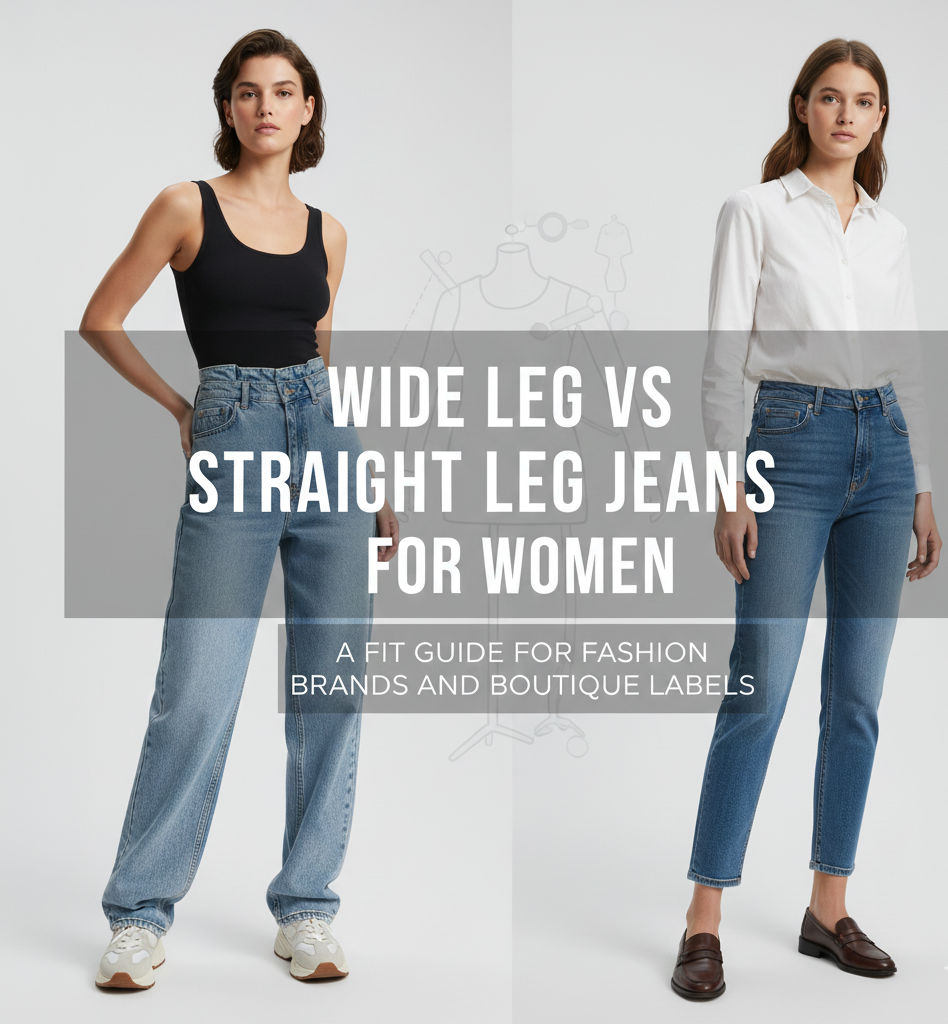
Straight leg jeans keep almost the same width from thigh to ankle, creating a clean, classic line. They are not tight like skinnies, but they also do not flare or balloon out. This makes straight leg jeans one of the most universally flattering and “neutral” styles for women across different ages and body types.
For women’s fashion brands and boutique labels, straight leg jeans often serve as the core, year‑round fit. They work with many tops and shoes, from sneakers to heels, and can be styled casual or polished. Because of this versatility, straight leg jeans usually carry lower markdown and return risk in wholesale and bulk orders than more extreme silhouettes.
What Is a Women’s Wide Leg Jean?
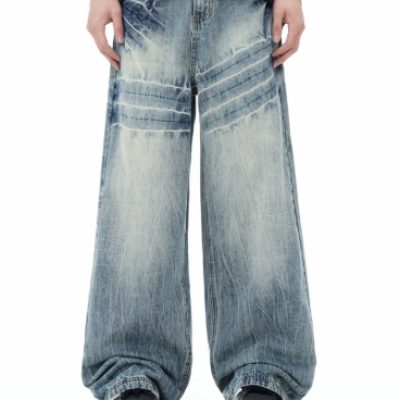
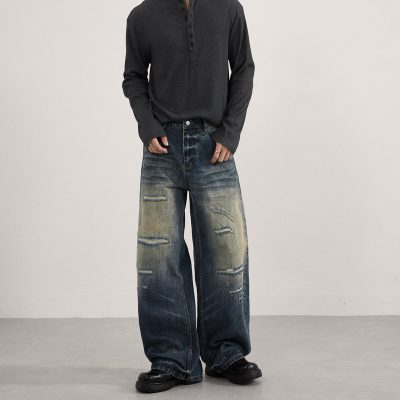
Wide leg jeans are relaxed from hip through thigh and widen toward the hem, creating more volume and movement in the leg. They feel modern, comfortable, and fashion‑forward, especially in high‑rise versions that define the waist while skimming over the hips and thighs.
For brands and buyers, wide leg jeans are a powerful trend and branding tool. They photograph well, create strong outfits and help a label look current. But in wholesale or bulk buying, wide leg jeans can also be more sensitive to rise height, leg opening and inseam length, because small changes affect how dramatic or wearable the silhouette feels.
Wide Leg vs Straight Leg: Fit Logic for Buyers
When women compare wide leg jeans and straight leg jeans, they rarely talk about pattern numbers. They talk about how the jeans make their legs look, whether their waist feels secure, and whether the style is “too much” for everyday life. For B2B buyers, it helps to translate that into clear fit criteria.
- Straight leg jeans for women:
- Visual: clean vertical line, balanced from hip to hem
- Effect: lengthens the leg without adding width
- Use: highly versatile, easy to wear to work, weekends and travel
- Wide leg jeans for women:
- Visual: more volume from knee down, sometimes from upper thigh
- Effect: can lengthen the leg when paired with the right rise and shoes
- Use: more statement, trend‑driven, ideal for fashion‑forward collections
Women’s fashion brands can position straight leg as the “safe base fit” and wide leg as the “trend and image fit”, then build their wholesale assortments accordingly.
Body Types: Which Fit Serves Which Customer?
From a procurement point of view, buyers need to link each fit to a specific target consumer, not just to a trend. A simplified mapping:
- Pear / curvy lower body
- Wide leg jeans balance hips and thighs, especially with a defined high waist.
- Straight leg jeans with a mid or high rise give clean lines without clinging.
- Apple / fuller midsection
- Straight leg jeans in mid rise help avoid cutting into the stomach and keep the leg line simple.
- Wide leg jeans with a soft top block can be comfortable, but rise and waistband must be tested carefully.
- Athletic / rectangle
- Wide leg jeans add shape and interest to the lower half and can create a more proportional look.
- Straight leg jeans keep things minimal and work well when the brand aesthetic is clean and tailored.
For small boutique labels and private label startups, straight leg jeans are often the safest first launch, because they fit a wide audience and are easier for staff to sell in‑store and online. Wide leg jeans can then be added as a second, more directional style once the brand understands its customer better.
Rise, Inseam and Leg Opening: Key Specs Buyers Must Control
For both wide leg jeans and straight leg jeans, three technical points have a huge impact on fit and returns: rise, inseam, and leg opening.
- Rise (low, mid, high)
- High‑rise straight leg jeans: define the waist, visually lengthen the legs and work well for many women.
- High‑rise wide leg jeans: very popular in current women’s fashion, but must be tested when sitting and bending.
- Inseam (length)
- Full‑length straight leg jeans: safer for most wholesale markets, can be cuffed if needed.
- Wide leg jeans: inseam must be very clear—too long and hems drag, too short and the style loses its drama. Offering regular / petite / tall inseams is ideal when volume justifies it.
- Leg opening
- Straight leg jeans: a moderate, consistent opening keeps the fit classic and wearable.
- Wide leg jeans: larger leg openings create more movement and fashion impact, but need to stay within the brand’s comfort zone for styling.
Brands and buyers should lock these three points in their tech packs or fit comments before committing to bulk production, especially for women’s wide leg jeans where small changes are highly visible.
Fabric Choices for Mid to High‑End Women’s Denim
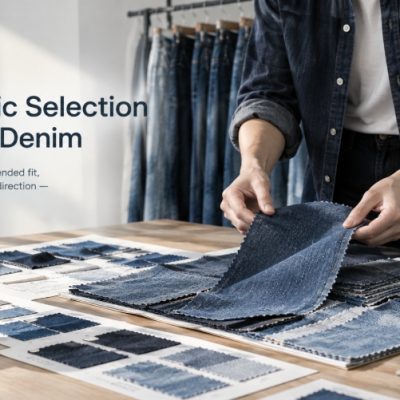
For a mid to high‑end jeans market, fabric selection is as important as fit. Buyers for women’s fashion brands and boutique labels usually look for:
- Weight: 11–13 oz for comfortable, drapey wide leg jeans; 12–14 oz for more structured straight leg jeans.
- Composition:
- Rigid (100% cotton) for a more authentic, tailored feel.
- Comfort stretch (1–2% elastane) for all‑day wear and more forgiving fits.
- Surface and wash:
- Clean dark indigo or saturated mid‑blue for core straight leg jeans.
- Softer, vintage‑inspired washes or light blues for wide leg jeans that feel relaxed and modern.
Denim importers and wholesale buyers can work with the factory to specify 1–2 fabric bases for straight leg jeans and 1–2 for wide leg jeans, then build multiple washes and small variations on top. This makes bulk purchasing more efficient and simplifies stock management.
Visual Comparison: Wide Leg vs Straight Leg for Your Line
A simple internal decision logic for brands and buyers when planning a women’s denim line:
- Choose straight leg jeans as:
- The “anchor” fit for women’s jeans in your collection
- The style you always carry in basic washes
- The default option for conservative markets or new private label startups
- Add wide leg jeans as:
- A fashion highlight in campaigns and lookbooks
- A style for collections focused on comfort, movement and modern silhouettes
- A tool to differentiate boutique labels from mass competitors
In B2B sales language, straight leg jeans reduce assortment risk, while wide leg jeans increase style impact and perceived fashion value. Together, they cover both core and trend.
How Buyers Should Brief a Jeans Factory
To turn design ideas into successful wholesale or bulk orders, buyers need to brief their denim factory clearly. A good fit guide for women’s wide leg jeans and straight leg jeans should be translated into simple, concrete instructions:
For straight leg jeans:
- Target customer: age range, market (US / EU / other), typical styling
- Rise: mid or high, with a clear front and back rise measurement
- Thigh and knee: enough ease for comfort, without looking baggy
- Leg line: straight from knee to hem with a defined leg opening
- Fabric: weight and stretch level suitable for your price point and season
For wide leg jeans:
- Target look: soft drape vs crisp, tailored wide leg
- Rise: often high‑rise, with a focus on waist comfort when sitting
- Upper leg: relaxed through hip and thigh
- Leg shape: gradual widening from thigh to hem, with clear leg opening values
- Length: full‑length or cropped, with clear inseam by size or height group
When denim importers, wholesale buyers and private label startups provide this level of detail, factories can develop patterns and samples that require fewer revisions and arrive faster at bulk‑ready status.
Quality and Return Risk: What B2B Buyers Should Check
For women’s wide leg jeans and straight leg jeans, quality issues often appear in the same areas:
- Waist and seat fit: gaping at the back, cutting in at the front
- Twisting: legs rotating after wash, especially visible on straight leg jeans
- Inconsistent leg lengths: big differences between sizes or production batches
- Fabric performance: unexpected shrinkage or over‑stretching with wear
Professional buyers for women’s fashion brands and boutique labels should always:
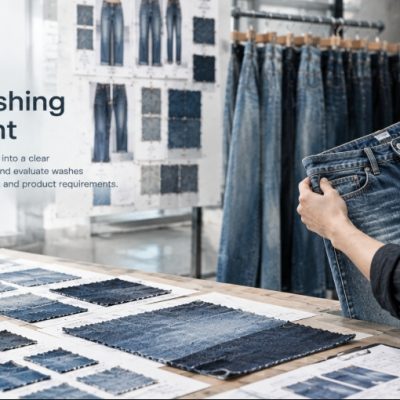
- Approve a final fit sample and a wash sample for both wide leg and straight leg jeans.
- Test the jeans on real women in the target size range, not only on mannequins.
- Wash and wear test samples to simulate real‑life use before bulk.
Working closely with a denim factory that understands mid to high‑end women’s jeans helps reduce returns and protect the brand’s reputation.
Building a Balanced Women’s Denim Range
For B2B customers—whether you are a boutique label, a larger women’s fashion brand, a denim importer or a private label startup—the most effective strategy is not to choose wide leg jeans or straight leg jeans, but to define their roles in your line.
- Use straight leg jeans as your long‑term, stable wholesale and bulk seller.
- Use wide leg jeans as your seasonal, image‑driven and campaign‑friendly style.
- Keep fit rules, fabric choices and quality checkpoints clear in your internal documents and factory briefs.
FAQ:
Wide Leg & Straight Leg Jeans for Women
Q1: For a new women’s fashion brand, should we launch wide leg jeans or straight leg jeans first?
For most new women’s fashion brands and private label startups, straight leg jeans are the safest first fit. They work for many body types, are easy to style, and usually have lower return risk in wholesale and bulk orders compared to more dramatic wide leg jeans.
Q2: Which fit is better for mature customers, wide leg jeans or straight leg jeans?
Many boutique labels that target mature women find that straight leg jeans with a mid or high rise are the most reliable. They give a clean line without clinging. Wide leg jeans can also work for this customer, but the rise, waistband and full length need careful testing before placing bulk orders.
Q3: How many inseam lengths should brands and buyers offer for women’s wide leg jeans and straight leg jeans?
For smaller boutique labels and private label startups, one well‑chosen inseam per fit is often enough at the beginning. As wholesale and bulk volume grows, denim importers and larger women’s fashion brands can add petite and tall inseams for both wide leg and straight leg jeans to reduce returns and improve fit for more women.
Q4: Are wide leg jeans more risky than straight leg jeans for wholesale and bulk buying?
Wide leg jeans are more sensitive to inseam, rise and leg opening, so poor specs can lead to higher returns. However, when the fit is tested well and the styling matches the brand image, wide leg jeans can deliver strong full‑price sales. Straight leg jeans remain the more stable, low‑risk base style for most brands and buyers.
Q5: What fabric do you recommend for mid to high‑end women’s wide leg and straight leg jeans?
For mid to high‑end markets, many brands and denim importers choose 11–13 oz comfort‑stretch denim for wide leg jeans and 12–14 oz rigid or comfort‑stretch denim for straight leg jeans. This balance gives structure, good drape and a premium handfeel, while still being suitable for wholesale and bulk production.