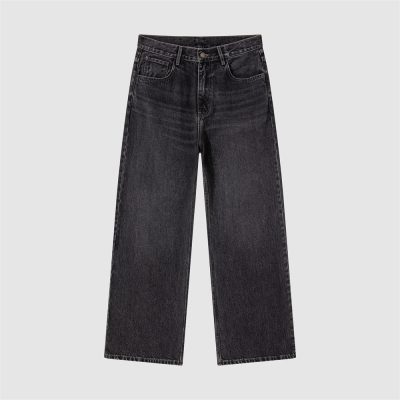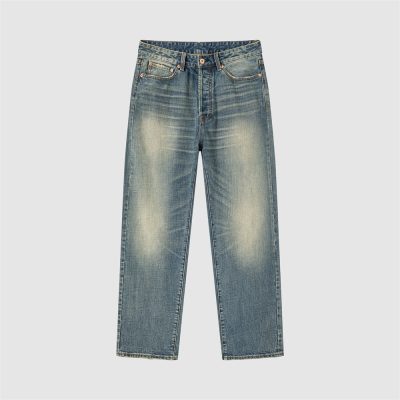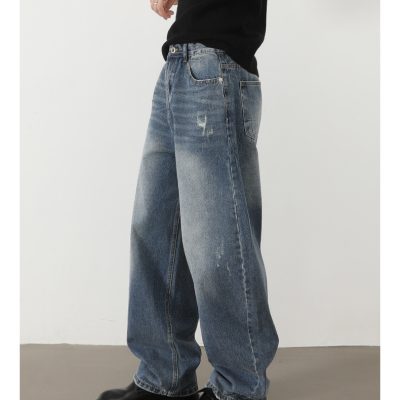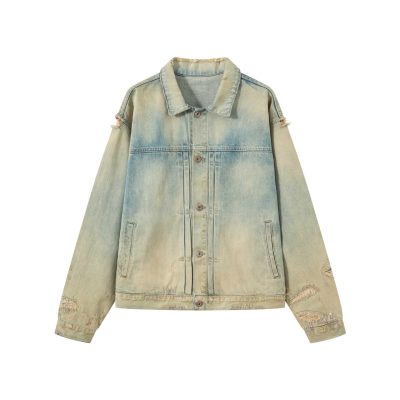
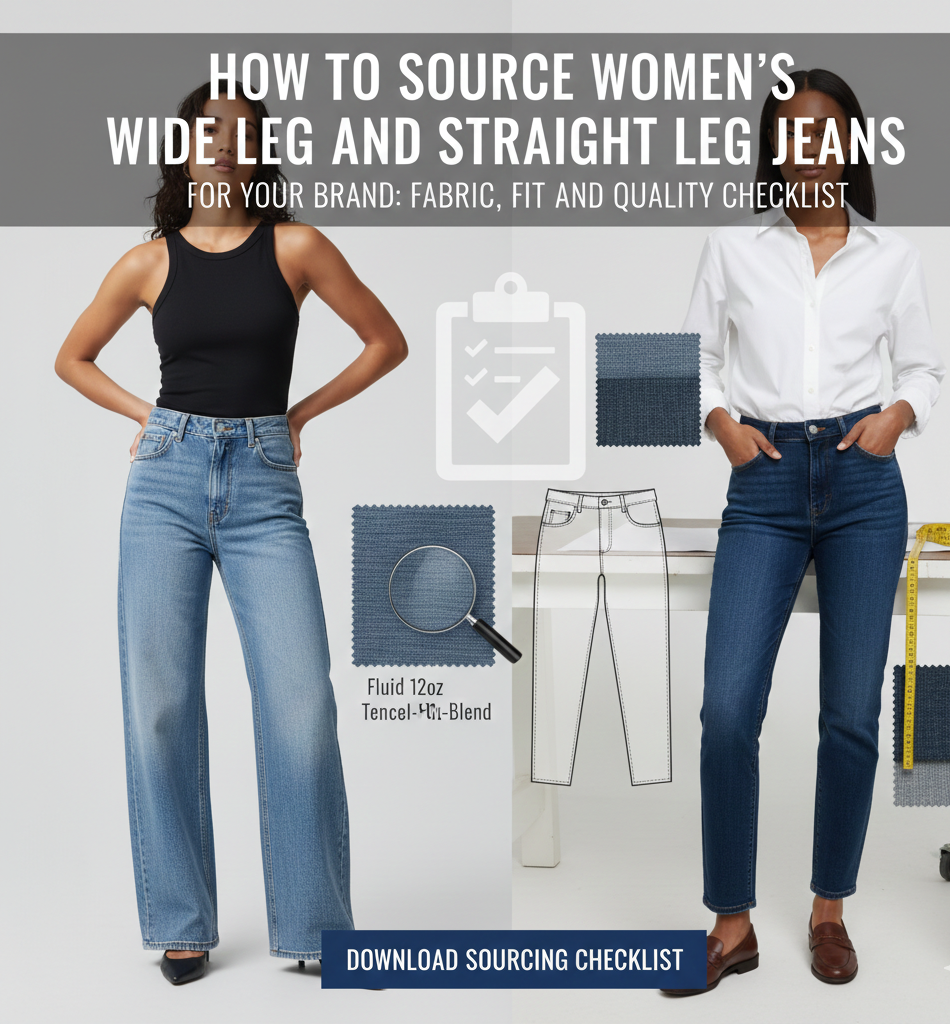
Women’s wide leg and straight leg jeans have become core items for many mid to high‑end brands, not just seasonal trends. For importers, boutique labels, wholesalers, fashion brands and streetwear labels, the real challenge is finding reliable production: fabric that matches your price point, fits that work on real women, and quality that stays consistent from sample to bulk.
1. Start With Your Brand and Customer
Before you talk to any denim factory, clarify who you are and who will wear your jeans. This will guide every sourcing decision.
- Brand type
- Women’s fashion brands: focus on everyday wear, office‑to‑weekend outfits, clean washes and flattering fits.
- Boutique labels: smaller assortments, more attention to detail, need styles with character but still commercial.
- Streetwear and fashion‑forward brands: bolder silhouettes, looser fits, stronger washes and visuals.
- Private label startups: limited budget and capacity, need safe, easy‑to‑sell fits first.
- Price and channel
- Mid to high‑end retail and department stores: expect denser denim, good recovery, clean sewing, stable sizing.
- Online DTC and niche brands: care strongly about customer reviews, fit feedback and return rates.
When you share this context with a factory, it is easier for them to recommend the right wide leg jeans and straight leg jeans concepts for your women’s line.
2. Wide Leg vs Straight Leg: Define the Role of Each Fit
For B2B sourcing, wide leg jeans and straight leg jeans should not compete with each other; they should have clear roles inside your range.
- Women’s straight leg jeans
- Role: core style / permanent line.
- Strengths:
- Works for many body types.
- Easy to style with different tops and shoes.
- In wholesale and bulk:
- More predictable sell‑through.
- Lower inventory and markdown risk.
- Women’s wide leg jeans
- Role: image / trend style.
- Strengths:
- Strong visual impact in lookbooks and social media.
- Feels modern and comfortable when executed well.
- In wholesale and bulk:
- Can lift the brand’s “fashion level”.
- Requires careful control of fit and length to avoid high returns.
A practical strategy for importers, wholesalers and brands is to use straight leg jeans as stable, seasonless sellers, and add wide leg jeans as key seasonal highlights in controlled volume.
3. Fabric Choices for Mid to High‑End Women’s Denim
For mid to high‑end women’s wide leg and straight leg jeans, fabric needs to balance structure, comfort and price.
3.1 Weight and Composition
- Wide leg jeans
- Suggested weight: around 11–13 oz.
- Too light: the leg may collapse and lose shape.
- Too heavy: the jeans may feel stiff and uncomfortable.
- Composition:
- 100% cotton for a cleaner, more tailored wide leg silhouette.
- 1–2% elastane for extra comfort and better movement without looking like jeggings.
- Suggested weight: around 11–13 oz.
- Straight leg jeans
- Suggested weight: around 12–14 oz for a solid, long‑lasting feel.
- Composition:
- 100% cotton for a classic, premium denim look.
- Comfort stretch blends when your market expects more forgiving fits and all‑day comfort.
3.2 Surface and Wash
- Classic mid or dark indigo: ideal for straight leg core styles, suitable for office and casual wear.
- Soft light blue or gently faded washes: work well on wide leg jeans for a relaxed, modern look.
- For brands with a sustainability angle: consider using mills or laundries that offer lower‑impact washes or water‑saving processes, and reflect that in your product storytelling.
When sourcing fabric, ask your factory for:
- Swatches with clear information on weight, composition and shrinkage.
- Wash samples on the same base fabric in 2–3 shades to compare handfeel and appearance.
4. Fit: Turn “Looks Good” Into Clear Specs
Consumers use words like “leg‑lengthening”, “not clingy” and “not too baggy”. Buyers need to convert those feelings into measurable parameters when ordering wide leg jeans and straight leg jeans in bulk.
4.1 Women’s Straight Leg Jeans: Key Fit Points
A straight leg jean should keep a relatively consistent line from knee to hem.
- Rise
- Mid‑rise and high‑rise are the safest options for most women’s markets.
- Thigh
- Should have ease for movement but not be so loose that it reads as boyfriend or baggy.
- Knee to hem
- Width difference should be small to keep the leg looking straight.
- Avoid strong tapering or sudden narrowing at the hem.
Sample brief to your factory:
“We want a classic women’s straight leg jean with a clean line from knee to hem, mid to high rise and a comfortable thigh that is not too tight.”
4.2 Women’s Wide Leg Jeans: Key Fit Points
A wide leg jean should have a secure top block and controlled volume through the leg.
- Waist and hip
- Waist should feel secure when standing and sitting; back waist should not gape.
- Hips need enough shaping to avoid a boxy or heavy look.
- Leg opening
- Decide if you want a tailored wide leg (neater, more structured) or a relaxed wide leg (more fluid).
- Inseam
- Full length: touches or slightly covers the shoe for a long‑leg effect.
- Cropped: above the ankle, but then styling and footwear become more important.
Sample brief to your factory:
“We need a high‑rise women’s wide leg jean with a secure waist and hip, full length, and a wide but controlled leg opening suitable for everyday wear.”
5. Sizing and Length Strategy: Control Returns and Dead Stock
Sizing and inseam strategy for women’s wide leg jeans and straight leg jeans has a direct impact on returns and leftover stock.
Practical approach:
- Choose a base size (for example, size 28 or M) for initial fit work.
- Lock key measurements in your size spec: waist, hip, thigh, knee, leg opening, front rise, back rise, inseam.
- Decide on inseam options based on your main markets:
- One inseam only for early stages or very focused brands.
- Two lengths (short / regular or regular / long) once volume and data justify more SKUs.
For private label startups and small boutique labels, starting with one carefully chosen inseam is often safer than launching several lengths at once. Once you see real sales and review data, you can extend the range.
6. Quality Checklist: From Sample to Bulk
A structured quality process helps both buyers and manufacturers.
6.1 Sample Stage
Request at least:
- Fit sample: to judge the overall silhouette and comfort.
- Wash sample: to check color, fading, softness and surface character.
- If possible, a small size run sample (for example, three key sizes) to see how grading works on different body types.
Internally, you can:
- Test standing, sitting and squatting in both wide leg and straight leg jeans.
- Review front, side and back views in good light.
- Wash each sample 1–3 times to check shrinkage, twisting and color change.
6.2 Before and During Bulk Production
- Golden sample
- Approve one final sample and keep it sealed as the standard. The factory keeps the same.
- Written standards
- Include fabric specs, wash standard and size tolerances in your purchase order.
- Define an acceptable defect rate and how any issues will be handled.
- Bulk inspection focus
- Check key measurements within tolerance.
- Look for leg twisting, inconsistent inseams, loose threads and hardware issues.
- Confirm that wash and shade match the approved sample.
The goal is not to create conflict, but to make expectations clear so both sides can manage quality together.
7. What to Look for in a Denim Factory
For mid to high‑end women’s wide leg and straight leg jeans, the right factory should be more than a sewing line. It should help translate your brand and customer requirements into workable patterns and processes.
Points to consider:
- Specialization
- Experience with denim and, specifically, women’s jeans.
- Understanding of export standards and documentation for importers and wholesalers.
- Communication
- Ability to discuss your target customer, channel and price level.
- Willingness to offer technical suggestions instead of only saying “yes” to every request.
- Sample quality
- Clean sewing and good wash execution on the first or second round.
- Fit that is already close to what you need for wide leg and straight leg styles.
- Flexibility
- Openness to small test orders for new brands or new fits.
- Capacity to scale up if a style performs well.
A good manufacturing partner will help importers, wholesalers and brands convert “we need women’s wide leg and straight leg jeans for mid to high‑end markets” into consistent, repeatable products.
8. Practical Advice for Different B2B Profiles
- Importers and wholesalers
- Use women’s straight leg jeans as long‑term, replenishment‑friendly styles.
- Introduce women’s wide leg jeans in smaller volumes as trend and image drivers, watching performance by market.
- Boutique labels and niche brands
- Choose one “signature fit” to own—either a straight leg or a wide leg—and refine it carefully across seasons.
- Build variety more through wash and detail than through too many different silhouettes at once.
- Private label startups
- Start with one or two strong straight leg jeans and one controlled wide leg style.
- Keep specs simple and clear, and use small bulk orders to learn from real customer feedback before expanding.
With clear positioning, solid fabric choices, detailed fit specs and an agreed quality checklist, sourcing women’s wide leg and straight leg jeans for mid to high‑end markets becomes much more manageable. Instead of gambling on trends, brands and buyers can build repeatable, profitable denim programs that grow season by season.