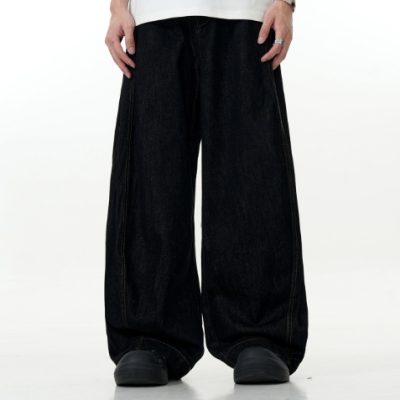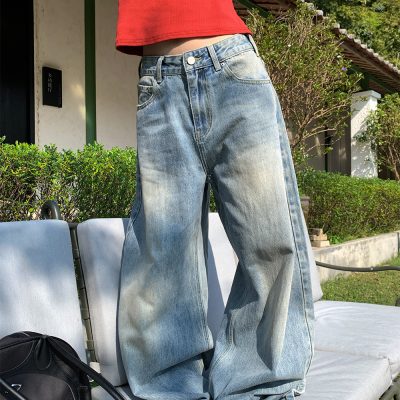
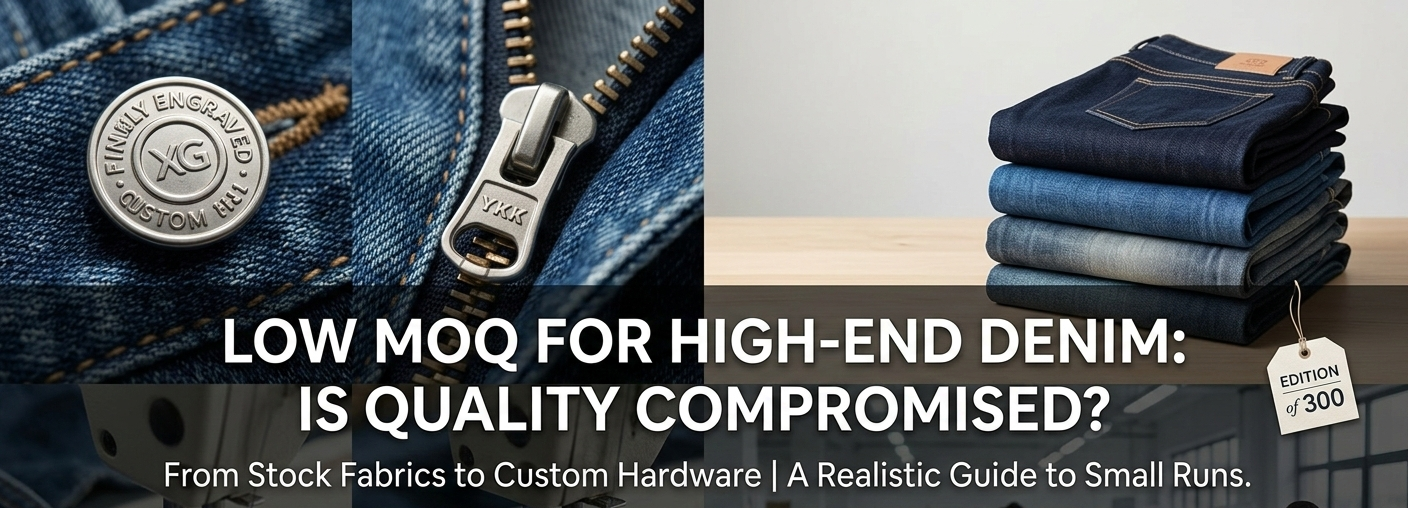
Every time I speak with a new designer from Europe or the US, they usually have the same fear: “If I only order 300 pairs instead of 3,000, will the factory give my order to the worst workers? Will the quality be terrible?”
It is a fair question. In many industries, the biggest clients get the best treatment, while the small guys get the leftovers. But in professional denim manufacturing, the relationship between order size and quality is widely misunderstood.
Here is the honest truth about what actually happens on the factory floor when you place a Low MOQ (Minimum Order Quantity) order for premium jeans.
Do Factory Workers Care Less About Small Orders?
No. This is a common myth. On a professional sewing line, the workers do not know—and do not care—if the total order is 300 pieces or 10,000 pieces.
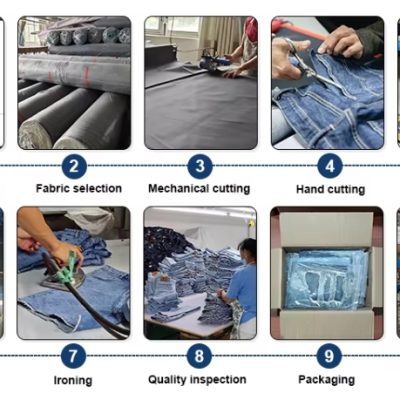
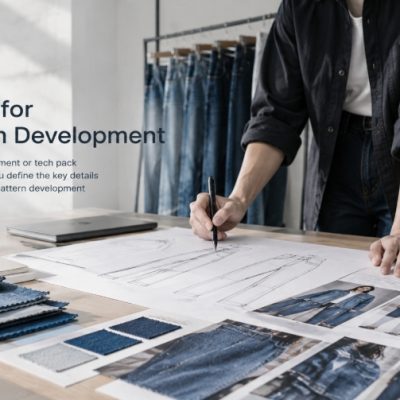
They are focused on the “Tech Pack” (your technical blueprint) and the approved sample. The sewing machines are calibrated the exact same way. The stitch density (SPI – Stitches Per Inch) remains exactly the same. We do not have a “premium team” for big brands and a “cheap team” for small brands. If a factory tells you the stitching will be worse because your order is small, run away. That means they lack basic quality control.
Will I Have to Use “Cheap” Fabric for a Low MOQ?
This is where the reality check happens. If you order 300 pairs, you cannot weave a custom fabric from scratch. Fabric mills usually require an order of 3,000 to 5,000 meters to create a brand-new denim roll just for you.
Does this mean you are stuck with bad fabric? Absolutely not.
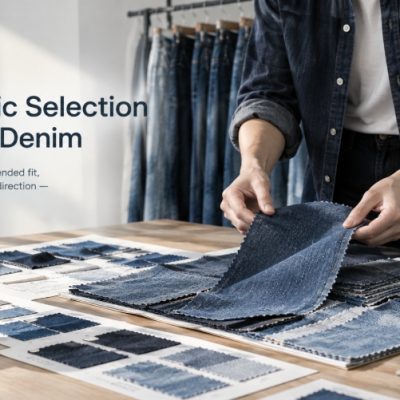
The solution is using Stock Fabric. High-end factories keep hundreds of rolls of premium fabric on the floor—ranging from heavy 14oz pure cotton to eco-friendly organic blends. The “compromise” here is not in the quality of the fabric, but in the options. You have to choose from what already exists in the market rather than inventing your own. For 99% of premium brands, high-quality stock fabric is more than enough to impress their customers.
Does the Wash Quality Drop on a 300-Piece Run?
As long as you hit that 300-piece mark, your wash quality will be perfect.
As I mentioned in our previous guide, 300 pairs is enough volume to properly fill an industrial washing machine. This ensures the denim gets the right amount of friction with the pumice stones or enzymes. The fades, the whiskering, and the color will look just as professional as a massive global brand.
However, if you try to force a factory to wash only 30 pairs, the machine will be too empty. The jeans won’t tumble correctly, and the wash will look flat, artificial, and cheap.
Where is the Real Compromise in Low MOQ?
If the stitching is the same, the fabric is good, and the wash is perfect, what is the catch?
The real compromise of Low MOQ comes down to two things: Hardware and Price.
- Custom Hardware Limitations: You want a beautiful copper button with your brand’s logo engraved on it? The button supplier will usually force you to buy 2,000 to 5,000 buttons minimum. To get custom details on a 300-piece clothing order, you will have to buy the extra buttons upfront and let the factory keep them in storage for your next restock.
- Higher Cost Per Unit: Setting up the sewing line takes hours. Making the paper patterns takes time. Dialing in the exact chemical recipe for your specific blue wash takes trial and error. When you divide these setup costs by 3,000 pairs, the cost per jean is tiny. When you divide them by 300, your price per piece goes up.
The Verdict: Are You Sacrificing Quality?
When you order a realistic Low MOQ (around 300 pieces), you are not sacrificing physical quality. You are sacrificing profit margins and total customization. For a high-end startup or a boutique label, this is the smartest trade-off you can make. It is much better to pay a few extra dollars per pair to guarantee a premium fit and finish, rather than ordering thousands of cheap jeans that your customers will return.
FAQ: The Hard Truth About Small Denim Orders
## Will you use cheaper zippers or thread to save money on my small order?
Absolutely not. Professional factories use standard premium hardware—like YKK zippers and heavy-duty core-spun threads—for every order. To be completely honest, stopping a production line to swap out good thread for “cheap” thread just for a 300-piece run would cost us more money in wasted time. Your small batch gets the exact same internal materials as the big brands.
## Can I still get sustainable or eco-friendly denim on a 300-piece order?
Yes, but you have to be flexible. Because you are using “stock fabric” instead of custom-weaving a new roll, you must choose from the eco-friendly options we already have on hand. The good news is that sustainable denim is now the industry standard. We regularly stock GOTS-certified organic cotton and recycled denim blends in classic weights (like 12oz or 14oz).
## Can I split my 300 pieces into three different colors (e.g., 100 blue, 100 black, 100 white)?
No. This is the most common mistake new designers make. 300 pieces is the minimum requirement for one specific wash recipe. If you split it into three colors, that means three completely different washing processes. The massive industrial machines will be too empty, the friction will be wrong, and the jeans will look cheap. If you have a tight budget, stick to one killer wash for your first drop.
## What happens if a pair gets ruined during the washing process? Do I get shorted?
Industrial denim washing is an aggressive process involving heavy stones and high heat. Sometimes, a stone tears a pocket or a label gets scratched. To ensure we ship exactly 300 perfect pairs to your warehouse, we always cut and sew a few extra pairs (usually around 305 to 310). Any defective pieces are caught during our final Quality Control check and discarded. You get exactly what you paid for.