For apparel brands and wholesale buyers, adding men’s cargo denim jeans to a collection presents a high-margin opportunity. Utility wear has secured a permanent place in menswear. However, transitioning from designing a standard five-pocket jean to a cargo jean introduces significant manufacturing variables.
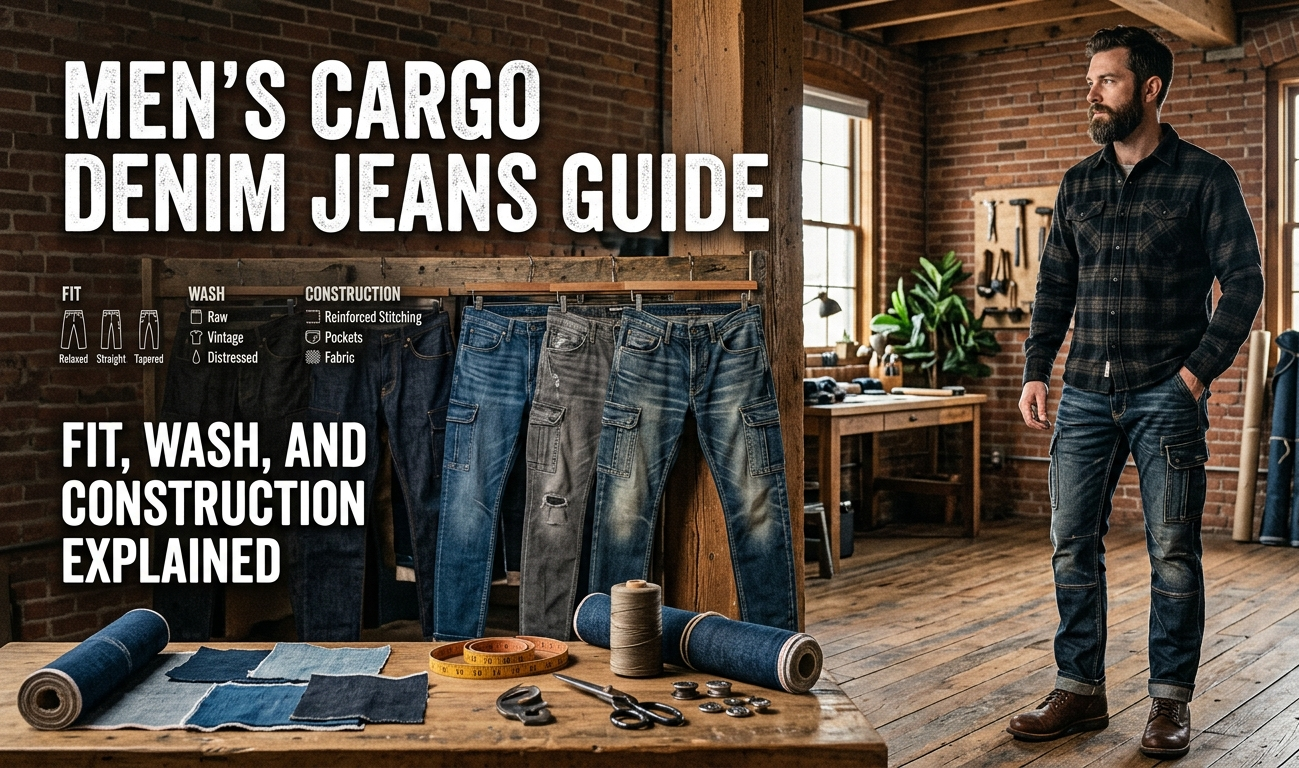
Cargo denim is structurally complex. If the factory miscalculates the pattern grading, pocket placement, or wash shrinkage, the final bulk production will suffer from twisted seams and torn hardware. For brands preparing their technical packages (tech packs), this guide breaks down the three critical manufacturing pillars of cargo denim: fit engineering, industrial construction, and wash execution.
1. Fit: Engineering the Cargo Silhouette
The foundation of a successful cargo jean is its pattern. Because cargo pockets add physical weight and bulk to the sides of the legs, the pattern must be engineered to support this uneven weight distribution.
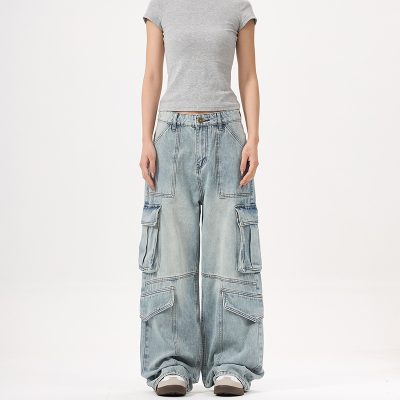
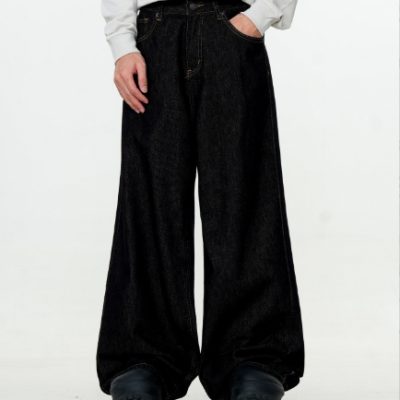
- Relaxed and Wide-Leg Blocks: Modern cargo jeans perform best on relaxed, straight, or wide-leg grading blocks. Skinny or slim fits do not accommodate the heavy utility pockets effectively. Brands should specify a wider thigh and knee measurement to ensure the garment drapes naturally.
- Outseam Balance: When a factory sews heavy denim pockets onto the outseam (side seam), the added weight can drag the fabric forward during wear. Professional pattern makers must adjust the front and back leg panels to counterbalance this weight, preventing the dreaded “leg twist” defect after the garment is washed and worn.
- Proportional Pocket Grading: A cargo pocket cannot remain the exact same size across an entire size run. The factory must grade the pocket dimensions proportionally. A pocket size that looks correct on a size 32 waist will look disproportionately small on a size 40 waist.
2. Construction: Industrial Requirements for Utility Denim
Consumers expect cargo jeans to be functional and durable. Brands must dictate strict construction standards to the manufacturing facility to prevent structural failures.
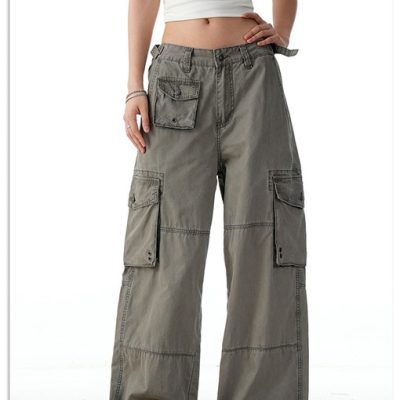
- Pocket Architecture (Bellows vs. Flat): Tech packs must clearly define the pocket type. 3D bellows pockets (gusseted pockets) feature expanding side folds to hold items, requiring precise folding and top-stitching. Flat patch pockets are simpler but still require heavy-duty sewing.
- Bartack Reinforcements: Cargo pockets endure high physical stress. Every pocket corner, flap joint, and belt loop must be secured using automated bartack stitching (dense zigzag stitches) to prevent the heavy fabric from tearing.
- Heavy-Duty Hardware: Cargo flaps should be secured with concealed brass snap buttons or metal zippers. Standard plastic buttons or lightweight aluminum snaps will fail when attached to heavy 13oz or 14oz denim.
3. Wash: Achieving the Right Visual Profile
Industrial washing completely changes the look and feel of cargo denim, but the complex pocket structures require careful laundry management.
- Managing Shrinkage Under Flaps: During heavy stone washing or enzyme washing, denim shrinks. However, the multiple layers of fabric at the cargo pockets and flaps shrink at different rates than the single-layer leg panels. Factories must conduct specific shrinkage tests to ensure the pocket flaps do not curl upward after the drying process.
- Abrasion and Vintage Textures: Cargo jeans benefit greatly from stone washing, which naturally abrades the edges of the pocket flaps and seams, highlighting the structural details.
- Over-Dyeing and Tinting: To achieve a rugged, military-inspired aesthetic, brands often request over-dyeing (adding utility colors like olive, brown, or black over the denim) or tinting (adding yellow/brown sulfur dyes) after the initial wash to create a muddy, vintage finish.
Why Choose Xinen Garment for Cargo Denim Production
At Xinen Garment, we manufacture complex utility and cargo denim for international apparel importers, fast-fashion wholesalers, and private labels. We understand the engineering required to produce stable, high-quality bulk orders.
- Technical Pattern Making: Our in-house technical team ensures your cargo patterns are perfectly balanced to prevent seam twisting, and we grade pocket dimensions accurately across your entire size matrix.
- Industrial Sewing Capacity: Our production lines are equipped with heavy-duty machinery capable of sewing through multiple layers of heavyweight denim, executing clean 3D pockets and secure bartack reinforcements.
- Controlled Wash Facilities: We run rigorous pre-production wash tests to calibrate shrinkage, ensuring your cargo pockets remain flat and proportionate, whether you require a clean enzyme rinse or a complex vintage over-dye.
- Complete OEM Hardware Sourcing: We supply and install heavy-duty, custom-branded metal snaps, zippers, and rivets that meet the functional demands of utility denim.
Frequently Asked Questions (FAQ)
What fabric weight do you recommend for men’s cargo jeans?
To support the structure of the cargo pockets without tearing, we strongly recommend mid-to-heavyweight denim, typically between 12.5oz and 14oz.
Can we design custom shapes for the cargo pockets and flaps?
Yes. We manufacture strictly according to your tech packs. You can customize the pocket depth, pleat styles, flap angles, and exact placement on the thigh or lower leg.
Do cargo jeans cost more to produce than standard straight leg jeans?
Yes. The addition of 3D pockets, extra hardware (snaps/zippers), and increased sewing time raises the cut-and-make (CM) cost. However, cargo jeans command a significantly higher retail price point, protecting your brand’s profit margins.
How do you prevent the pocket contents from ripping the fabric?
Beyond using heavyweight denim, we utilize dense bartack stitching at all stress points and often line the interior of the pocket attachment area with a stabilizing fabric (interfacing) to reinforce the denim against heavy loads