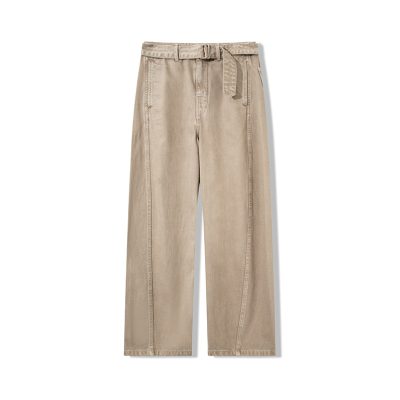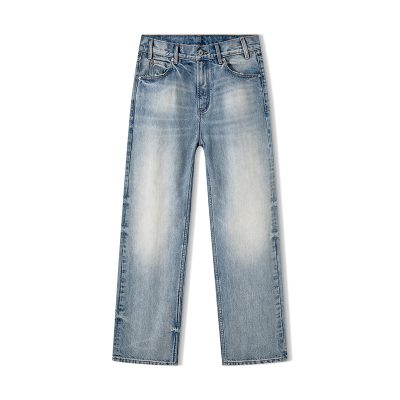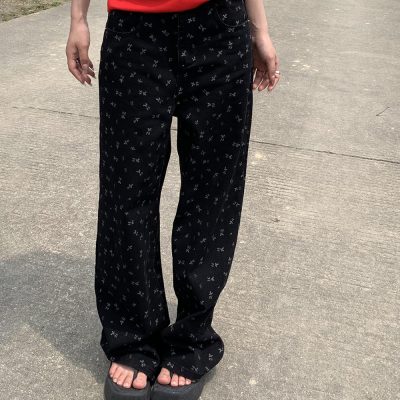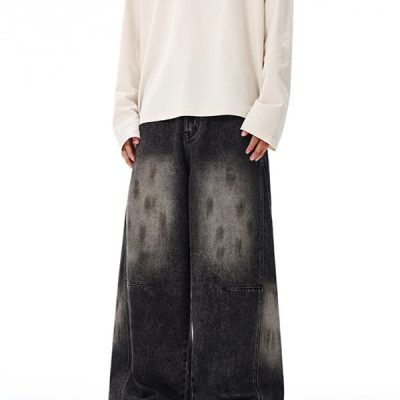
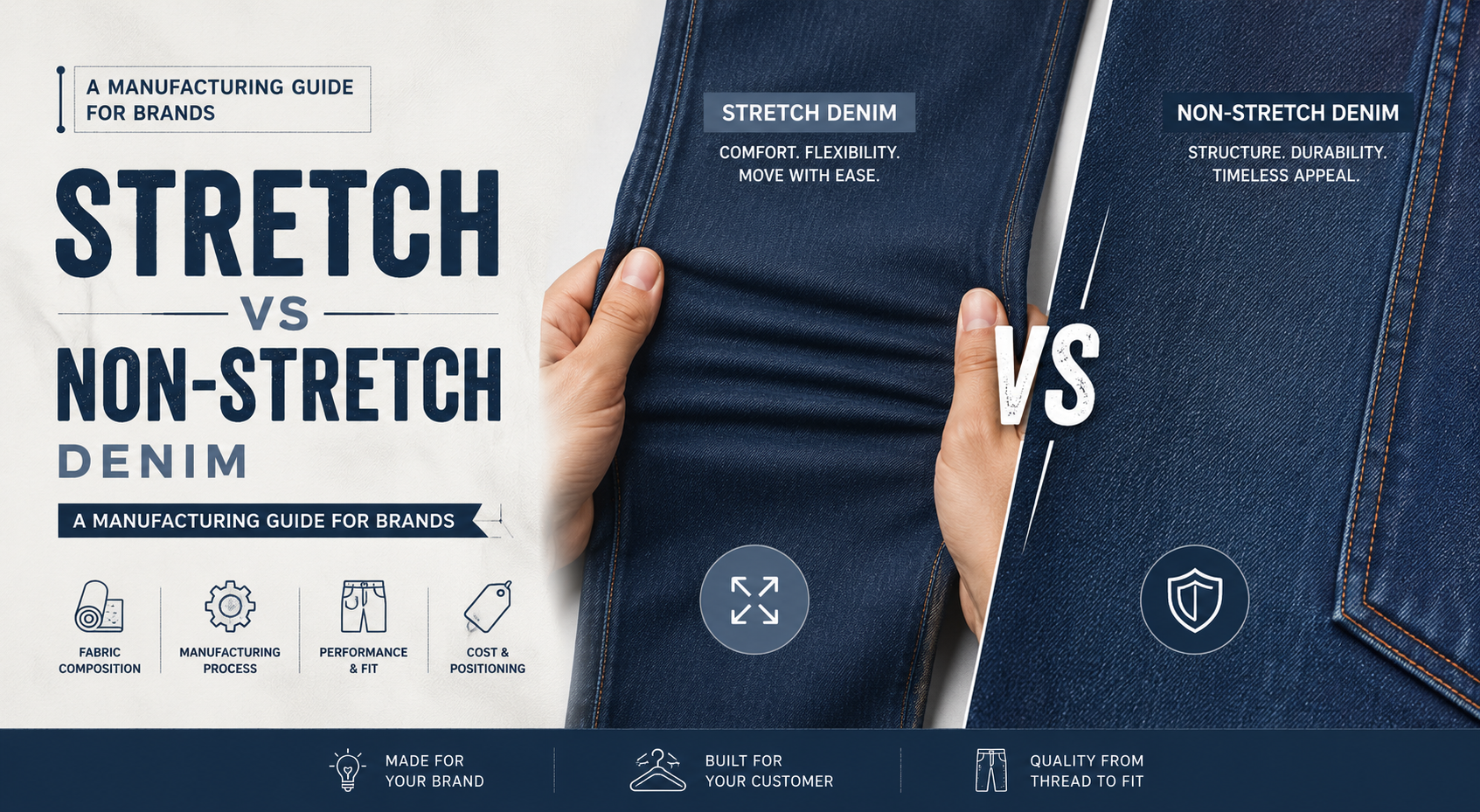
For apparel importers, private labels, and wholesale brands, the decision between stretch and non-stretch (rigid) denim is not merely an aesthetic choice. It is a fundamental manufacturing decision that dictates pattern engineering, industrial wash parameters, and the ultimate lifespan of the garment.
Choosing the wrong fabric composition for a specific silhouette will result in severe production defects, ranging from collapsed fits to “puckered” seams and blown-out elastane fibers during the laundry process. This technical guide breaks down how stretch and rigid denim behave on the factory floor, helping procurement teams align their raw material sourcing with their brand’s design requirements.
What is the Structural Difference Between Stretch and Non-Stretch Denim?
To understand how these fabrics perform in bulk production, you must look at their core yarn composition.
- Non-Stretch (Rigid) Denim: This is traditional denim, woven from 100% cotton yarn. The structural integrity comes from the classic twill weave. It is highly durable, stiff in its raw state, and requires a “break-in” period. Over time, rigid denim molds permanently to the wearer’s body and develops authentic, high-contrast fade patterns.
- Stretch Denim: This fabric blends natural cotton with synthetic elastane (spandex or Lycra) and sometimes polyester. A typical composition is 98% cotton and 2% elastane, or 90% cotton, 8% polyester, and 2% elastane. The synthetic core yarn allows the fabric to expand under tension and recover its original shape, providing immediate comfort.
| Technical Metric | Non-Stretch (100% Cotton) | Stretch (Cotton / Elastane Blends) |
| Fabric Weight | Typically Mid to Heavyweight (12oz – 15oz) | Typically Lightweight to Midweight (9oz – 12oz) |
| Drape & Structure | Architectural and rigid; holds its shape | Pliable and fluid; conforms to the body |
| Durability | Exceptionally high; withstands heavy friction | Moderate; synthetic fibers break down over time |
| Wash Tolerance | High; tolerates high-heat and aggressive stones | Moderate; requires strict temperature regulation |
How Does Fabric Stretch Affect Pattern Grading and Fit Engineering?
The pattern room approaches stretch and rigid denim completely differently. A tech pack designed for a 100% cotton jean cannot be used for a stretch jean, and vice versa.
- Engineering Rigid Denim: Because 100% cotton has zero give, the CAD grading must account for exact human movement. Factories must build precise ease into the hips, thighs, and knees. Rigid denim is the absolute requirement for modern, structured silhouettes like men’s wide-leg jeans, straight-leg cuts, and heavy utility cargo pants. If you attempt to make wide-leg cargo pants out of high-stretch denim, the fabric will collapse, look sloppy, and fail to hold the pocket structures.
- Engineering Stretch Denim: Stretch fabric requires “negative ease.” The CAD pattern is drafted slightly smaller than the target body measurements so the fabric has to stretch to fit, creating a sleek, form-fitting silhouette. This is the mandatory choice for skinny jeans, slim-tapered cuts, and jeggings.
Both fabrics require aggressive pre-production shrinkage testing. The factory must wash a 1×1 meter swatch of the specific fabric lot to calculate exact warp and weft shrinkage before cutting bulk markers.
How Do Industrial Wash Processes Differ for Stretch vs Rigid Denim?
The industrial laundry phase is where factory expertise is truly tested.
Washing Non-Stretch Denim:
Rigid, 100% cotton denim is an industrial workhorse. It can withstand aggressive wet processing to achieve authentic vintage looks. Factories can subject rigid denim to heavy pumice stone washing, high-concentration bleach baths, and intense mechanical friction without destroying the base fabric.
Washing Stretch Denim:
Stretch denim is highly sensitive. The synthetic elastane fibers hidden inside the cotton yarn are vulnerable to heat and aggressive chemicals.
- Temperature Control: If the industrial drying cylinders exceed specific temperature thresholds, the heat will literally melt the elastane. When this happens, the jeans lose their “recovery” (their ability to bounce back), resulting in permanently saggy knees and a ruined bulk shipment.
- Chemical Limits: Heavy acid washes and prolonged enzyme baths must be carefully monitored and neutralized, as harsh chemicals accelerate the degradation of the stretch yarns.
Which Denim Type is Best for Your Wholesale or Private Label Brand?
Your sourcing strategy should align with your target retail demographic and distribution channels.
- Choose Non-Stretch If: You are building a premium streetwear label, focusing on menswear, or selling vintage-inspired workwear. 100% cotton appeals to purists and buyers looking for high-durability items like heavy denim jackets and wide-leg silhouettes.
- Choose Stretch If: You are a fast-fashion importer, a women’s contemporary brand, or an Amazon FBA seller focusing on mass-market appeal. Stretch denim dominates the commercial market because it minimizes sizing returns—the elastane forgives minor fit discrepancies, making it a safer bet for high-volume online retail.
Why Choose Xinen Garment for Your Custom Denim Production?
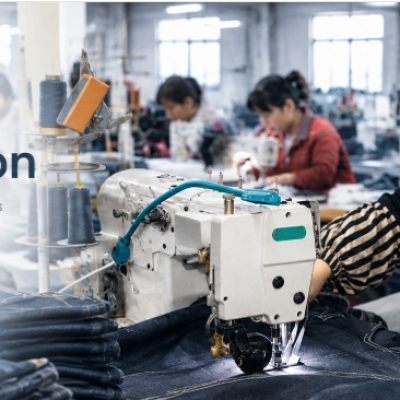
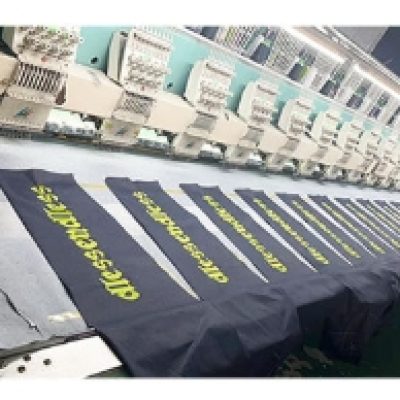
Executing both rigid and stretch denim at commercial scale requires distinct technical disciplines under one roof. Operating a high-end custom denim manufacturing facility in Foshan, China, Xinen Garment is a direct-to-factory partner for international apparel importers, B2B wholesalers, and private labels.
- Fabric-Specific CAD Calibration: We treat every fabric lot as unique. Our technical team tests both rigid and stretch fabrics for precise shrinkage rates, adjusting digital CAD markers so that a size 32 rigid cargo jean and a size 32 stretch slim jean both hit your required dimensional tolerances within +/- 0.5 inches.
- Strict Laundry Integration: We maintain total oversight of the industrial wash process. For stretch denim, we utilize calibrated, temperature-controlled drying cylinders to protect elastane recovery. For rigid denim, we execute precise enzyme, stone, and ozone fading techniques to replicate authentic vintage wear patterns.
- Optimized B2B Logistics: We understand the demands of global distribution. Whether you require dense export packing for ocean freight to a European wholesale hub or door-to-door DDP logistics directly to an Amazon fulfillment center, we structure our production and shipping to protect your commercial margins.
Frequently Asked Questions (FAQ)
Can you make a heavy 14oz denim with stretch?
It is technically possible, but highly discouraged. Blending elastane into heavy 14oz yarn creates a fabric that is uncomfortably dense and restrictive. If your brand requires stretch, we recommend capping the fabric weight between 10oz and 12oz.
Why do my stretch jeans get puckered seams after washing?
Seam puckering occurs when the factory sews the panels with incorrect thread tension or uses standard lockstitch machinery that doesn’t stretch with the fabric. At Xinen Garment, we calibrate our heavy-duty chain-stitch machines specifically to flex alongside elastane blends, ensuring flat, clean seams post-wash.
Do 100% cotton rigid jeans shrink more than stretch jeans?
Not necessarily. Both fabrics shrink during the first industrial wash, but stretch denim often has a higher rate of shrinkage in the weft (horizontal) direction due to the contraction of the elastane fibers. This is why lot-specific swatch testing is mandatory before bulk cutting.