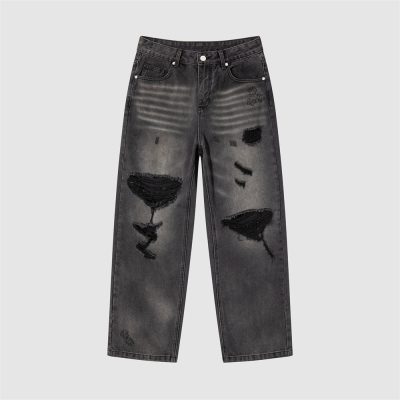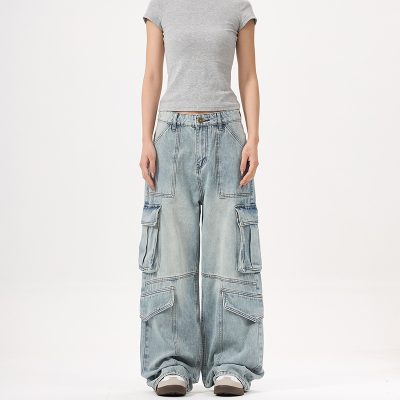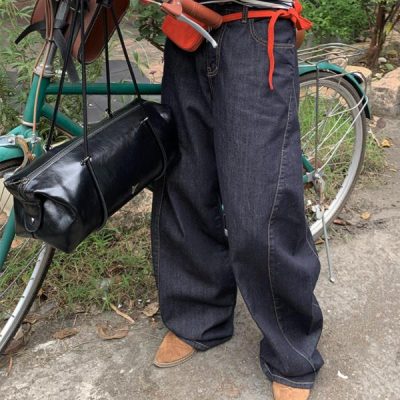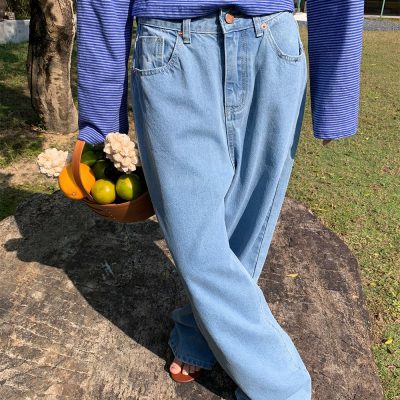
In the e-commerce denim market, the classic straight-leg jean is a “high-volume, high-risk” SKU. While it remains a top seller for Shopify and Amazon brands due to its timeless appeal, it also carries some of the highest return rates if the manufacturing is not precisely engineered.
A “simple” straight leg is actually one of the most difficult patterns to balance. Without professional CAD grading and strict wash-shrinkage control, a classic straight jean can quickly become an ill-fitting garment that twists at the seams or sags in the seat.
At Xinen Garment, we manufacture premium denim for global wholesalers and private labels. Here is the factual, factory-floor guide to manufacturing classic straight jeans while avoiding the production pitfalls that kill e-commerce profitability.
Why Is Pattern Balance the Most Critical Step for Straight Jeans?
The technical success of a straight jean depends on the “balance line”—the vertical axis from the hip to the hem. If the front and back panels are not mathematically balanced in the CAD pattern, the side seams will “twist” toward the front of the leg after the first wash.
- The Anti-Twist Engineering: In men’s straight jeans, the back panel must be wider than the front panel by a specific ratio to accommodate the leg’s natural curve.
- The Crotch Drop: A common pitfall is a crotch that is too low or too tight. A professional factory drafts an “anti-fit” block that allows for mobility without creating excess fabric bunching when the wearer sits down.
- Leg Opening Consistency: A true classic straight should maintain a consistent width from the knee down to the hem. Even a 0.5-inch error in grading can turn a “Straight Fit” into an unintended “Bootcut” or “Tapered” look.
How Does Fabric Weight (Oz) Dictate the Quality of a Straight Fit?
For a classic straight silhouette to look premium, the fabric must have enough “structural integrity” to fall in a clean vertical line. Choosing a fabric that is too light or too stretchy is a major production error.
- The Ideal Weight (12oz – 14oz): We recommend 12oz to 14oz rigid cotton or low-stretch denim (1% elastane) for this fit. This weight ensures the leg doesn’t “collapse” or cling to the wearer’s calves.
- The Drape Factor: 100% rigid cotton is the gold standard for classic straight jeans. It creates the architectural drape that characterizes high-end denim, allowing the garment to hold its shape through years of wear.
Why Is Wash-Shrinkage Control the “Make or Break” for E-commerce?
The biggest nightmare for an Amazon or Shopify seller is a customer receiving a jean that fits perfectly out of the box but shrinks two sizes after the first home wash.
- Pre-Wash Testing: At Xinen Garment, we conduct exhaustive wash-shrinkage tests on every fabric batch before bulk cutting.
- Pattern Scaling: If a heavy vintage wash causes 5% shrinkage, we digitally expand your CAD pattern by exactly 5%. This ensures that the final “washed” garment sitting in your warehouse matches your Tech Pack measurements perfectly.
- Consistency Across Batches: Without strict chemical and temperature controls in the wash lab, Batch A might be darker or smaller than Batch B. We utilize standardized wash recipes to ensure 100% consistency across your entire inventory.
Why Choose Xinen Garment for Your Denim Production?
Xinen Garment is a direct technical partner for B2B apparel brands, providing end-to-end manufacturing solutions that eliminate the guesswork of overseas production.
- Technical Pattern Expertise: Our in-house CAD engineers specialize in fit-balancing, ensuring your straight jeans drape correctly and minimize sizing-related returns.
- Direct Factory Transparency: We are a source manufacturer, not a trading company. You get direct communication with the production floor, transparent BOM (Bill of Materials) costing, and no middleman markups.
- Startup-Friendly Scaling: We support emerging brands with reasonable Minimum Order Quantities (starting at 100-300 pieces) while maintaining the capacity for large-scale wholesale orders.
- FBA & E-commerce Ready: From FNSKU barcoding to moisture-control packaging (desiccants) and heavy-duty cartons, your goods arrive ready for immediate fulfillment.
Frequently Asked Questions (FAQ)
Q: Should I use 100% cotton or stretch denim for classic straight jeans?
A: If you want a premium, vintage look that holds its shape, go with 100% rigid cotton. If you are targeting a mass-market audience where “day-one comfort” is the priority, a 1-2% stretch blend is a safer e-commerce bet to reduce returns.
Q: Why do the side seams on my current jeans twist toward the front?
A: This is usually caused by “unbalanced” pattern cutting or improper fabric tension during the sewing process. It is a sign that the factory did not properly account for the fabric’s natural torque during the wash cycle.
Q: What is the standard lead time for a bulk order?
A: Bulk production typically takes 30 to 45 days after you have approved the final Pre-Production (PP) sample. Sampling itself usually takes 10 to 15 days.
Q: Can you help us create a Tech Pack if we only have a sample?
A: Yes. We can reverse-engineer a physical sample to create a professional CAD pattern and a complete technical specification for your brand.