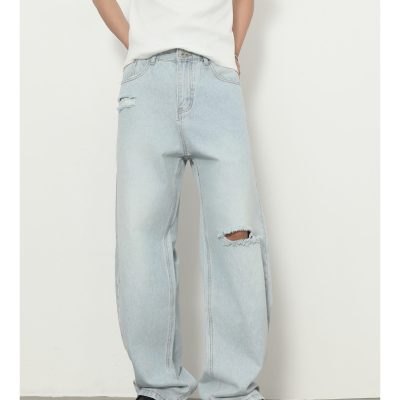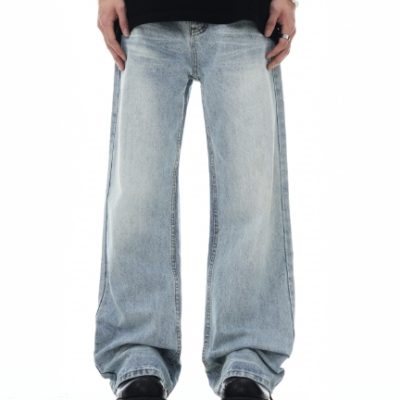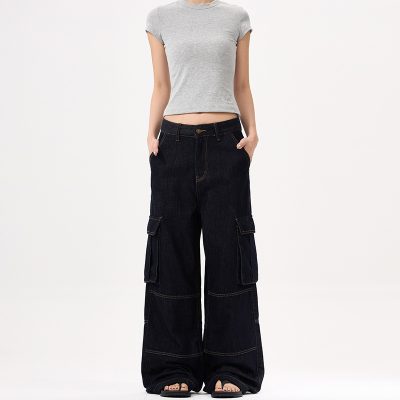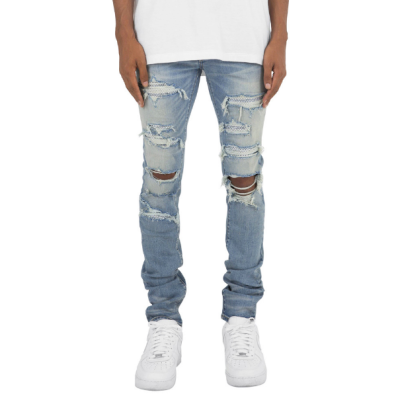
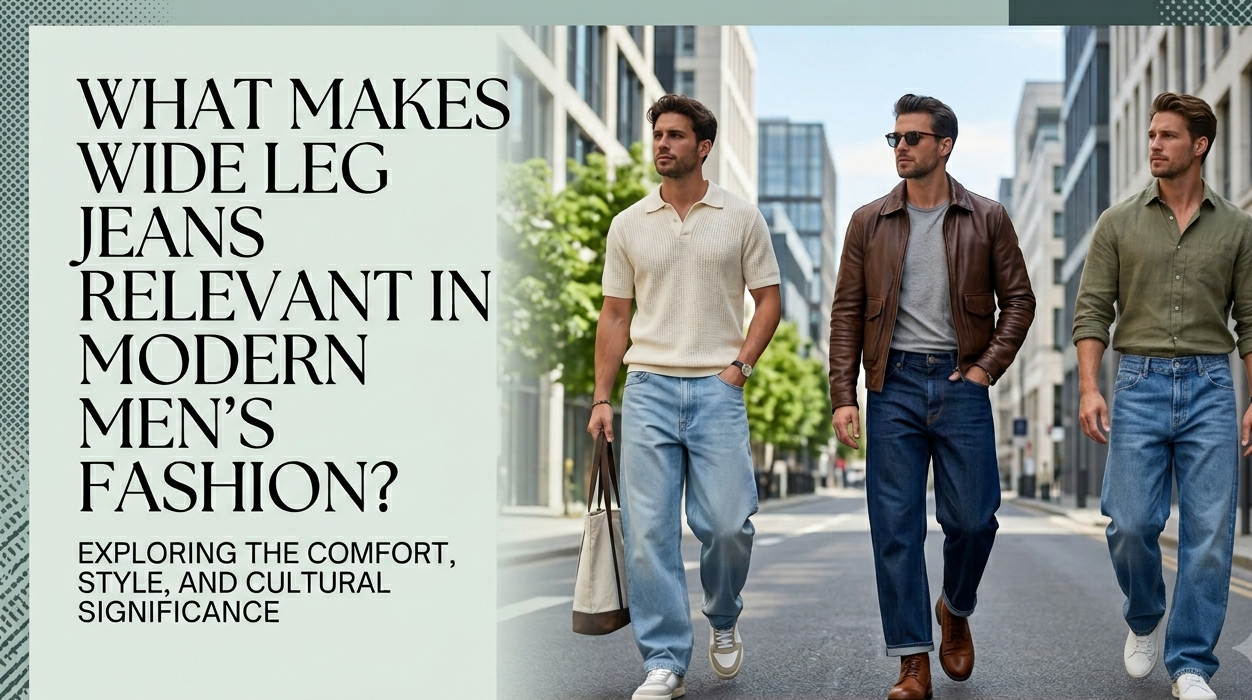
For apparel brands, fast-fashion importers, and private label owners, calculating the lifecycle of a silhouette is the difference between a highly profitable season and a warehouse full of dead inventory. When relaxed and wide-leg silhouettes first surged in the menswear market, many buyers treated them as a temporary reactionary trend against the decade-long dominance of skinny fits.
However, retail order books and wholesale shipping data show a different reality: wide-leg denim is no longer a passing fad. It has solidified into a structural anchor of modern men’s fashion.
If you are currently developing a tech pack or planning a production run for a denim brand, understanding the commercial and technical reasons behind the longevity of loose fits is essential for optimizing your manufacturing spend.
The Market Reality: Why the Silhouette Has Permanent Relevance
The ongoing demand for wide-leg denim is sustained by real shifts in consumer behavior and retail landscape dynamics, rather than empty marketing hype.
- The Smart-Casual Integration: Wide-leg denim has moved out of strict streetwear subcultures. Consumers now routinely layer heavy, raw, or vintage-washed wide jeans under structured tailoring, topcoats, and premium knitwear. This versatility across casual and professional settings has extended the garment’s seasonal utility.
- Generational Fit Baseline: For Gen Z and Millennial demographics—who represent the highest-spending segments for premium denim—the relaxed fit is their default baseline. Having worn roomy cuts for several seasons, these consumers view narrow fits as restrictive and visually dated.
- Higher Perceived Retail Value: Wide-leg garments require heavy, high-quality fabric weights to drape correctly without looking limp. This structural weight translates directly to a premium feel on the retail rack, allowing private labels to command higher retail price points and protect their profit margins.
Technical Challenges: The Production Realities of Wide-Leg Denim
A common pitfall for emerging clothing brands is assuming that wide-leg jeans are simple to manufacture because they are roomy. In fact, cutting a precise wide-leg pattern requires advanced pattern grading and strict fabric discipline. Without proper execution at the factory level, loose denim easily looks cheap, ill-fitting, or unwearable.
When working with your manufacturing partner, your design team must manage three key technical factors:
1. The Upper Block Fit (Waist and Seat)
The defining characteristic of a premium wide-leg jean is that it fits securely at the waist and upper hips before expanding through the leg. If a factory simply increases measurements uniformly across the entire pattern, the waistband will gap, the crotch will sag excessively, and the silhouette will slip down. The pattern must be engineered to anchor tightly at the waist while dropping smoothly into the roomy leg panels.
2. Fabric Drape vs. Structural Rigidness
Because a wide-leg cut exposes a large surface area of fabric, the selection of denim weight is critical.
- Lightweight denim (under 11.5oz) lacks the tensile strength to hold a wide shape, causing the fabric to bunch up messily around the shoes.
- Excessively stiff, unwashed heavy denim (over 15oz) will create a boxy, rigid profile that restricts natural walking movement.
3. Proportional Pattern Grading
Scaling wide-leg panels across a full size run (from size 28 up to 38) requires precise mathematical adjustments. The leg opening and knee measurements must scale dynamically in relation to the waist size. Poor grading causes smaller sizes to look cartoonishly wide and larger sizes to lose their intended loose proportions entirely.
Sourcing Matrix: Fabric Weights and Wash Configurations
To help your sourcing managers select the right materials for production, the table below outlines the primary fabric and wash standards utilized in modern wide-leg manufacturing:
| Fabric Specification | Intended Product Positioning | Technical Sourcing Notes |
| 13.5oz – 14.5oz 100% Cotton (Open-End or Ring-Spun) | Utilitarian workwear, heritage capsules, high-end private label lines. | Excellent structural retention and crisp vertical lines. Requires meticulous pre-wash shrinkage calibration to prevent sizing distortion after heavy wash cycles. |
| 12oz – 13oz Cotton Blends (with Tencel, Lyocell, or Hemp) | Contemporary fashion labels, seasonal spring/summer drops. | Yields a fluid, soft drape that moves naturally with the body. Reduces the physical bulkiness of oversized patterns. |
| Slub Yarn / Cross-Hatch Textures | Premium or artisanal denim branding. | The irregular yarn patterns become highly pronounced over large leg panels after washing, adding visual depth and premium character. |
Essential Wash Finishes
- Eco-Friendly Enzyme Stonewashing: Replicates uniform 90s vintage blue tones using sustainable liquid enzymes instead of harsh pumice stones, preserving the integrity of the cotton fibers.
- Sulfur Overdyeing and Tinting: Applying a highly controlled yellow, green, or earth-toned tint over a bleached base to recreate an authentic deadstock vintage patina.
- Rigid Raw Indigo: Bypassing the wash process to deliver a dark, clean option that naturally breaks in and creases according to the individual wearer’s body habits.
Why Partner with Xinen Garment for Your Custom Denim Line?
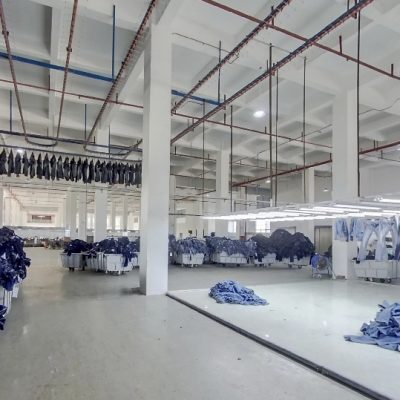
At Xinen Garment, we operate a fully integrated, professional production facility specialized in manufacturing premium custom denim jeans, jackets, and apparel for international wholesalers, fashion importers, and private labels.
When you contract your collection to our factory, you gain direct access to professional manufacturing standards designed to safeguard your production investments:
- Advanced CAD Pattern Engineering: Our technical teams understand international sizing differences. We convert your sketches, tech packs, or physical reference garments into highly accurate production patterns with balanced waist-to-hip proportions.
- Eco-Conscious Wash Consistency: Through our managed wash facility partnerships, we handle complex finishing techniques—including laser-guided distressing, ozone bleaching, hand-scraping, and custom sulfur tinting—ensuring your bulk production matches your approved prototype samples with minimal variance.
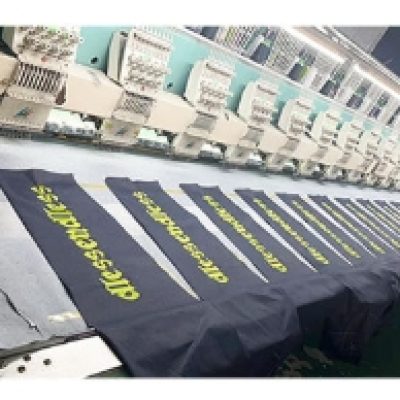
- Full Private-Label Customization: We execute complete custom branding, supplying branded metal shank buttons, rivets, YKK zippers, embossed genuine leather or jacron waist patches, and custom woven tags.
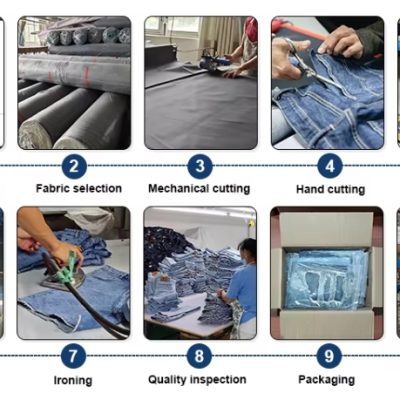
- Rigorous Quality Control Protocols: We implement multi-stage inspections on the factory floor, including raw fabric roll validation, mandatory pre-wash shrinkage testing, meticulous loose-thread trimming, and automated metal needle-detection scanning prior to export packing.
Frequently Asked Questions (FAQs)
What is your minimum order quantity (MOQ) for custom wide-leg jeans?
Our production MOQs are structured flexibly depending on whether your design utilizes our in-stock premium fabric catalog or requires a completely custom-loomed fabric composition. Please contact our sales team with your technical specifications for an accurate quote.
How do you prevent wide-leg jeans from shrinking out of spec during production?
Before laying out the fabric on our automated cutting tables, our laboratory conducts standardized wash tests on fabric panels from your specific production lot to measure exact vertical and horizontal shrinkage. Our CAD pattern makers then adjust the cutting markers to compensate for these variables, ensuring the final washed成衣 matches your spec sheet perfectly.
Can you replicate a wide-leg silhouette from a physical sample?
Yes. Our sample development team can reverse-engineer any physical reference garment. We analyze the fabric composition, thread count, stitch-per-inch (SPI) settings, and dimensions to recreate the exact fit and wash characteristics for your line.
What are the standard lead times for samples and bulk manufacturing?
Once your tech pack and custom hardware designs are approved, prototype sample development takes 7 to 15 business days. Upon your formal approval of the sample and deposit confirmation, our bulk production cycle averages 30 to 45 days, depending on current factory floor scheduling and wash complexity.
Contact Our Sourcing Team
If you are looking for an experienced, factory-direct partner to engineer a high-performing men’s wide-leg denim collection, visit our official website at www.xinengarment.com or reach out to our production managers to schedule a consultation.