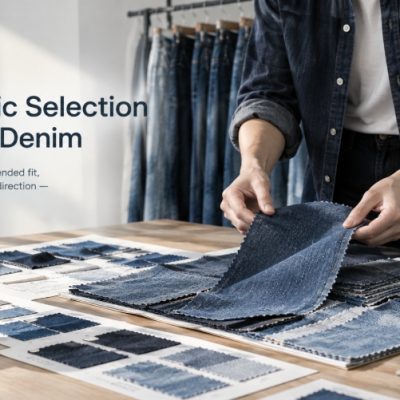
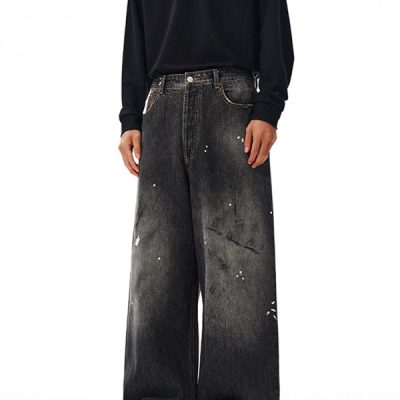
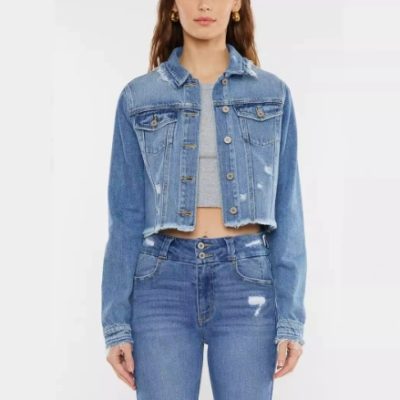
A pattern may look correct on paper, but a custom garment must be evaluated in physical fabric. Sampling is the point in development where the product brief, fabric selection, pattern work, and construction details come together.
Physical sampling provides a practical way for your brand and our development team to assess how a garment fits, hangs, and looks before moving forward. Evaluating a physical sample often reveals subtle differences in volume, proportion, or fabric drape that cannot be fully judged from a measurement chart, sketch, or digital tech pack alone.
Fit reviews and subsequent adjustments are a standard part of custom denim development. Rather than treating a first sample as a definitive final product, the sampling phase acts as a structured review process to refine specifications and align the garment with your brand’s vision.
Why Sampling Matters in Custom Denim
Creating a physical sample bridges the gap between technical documentation and a finished product. Denim behaves differently than lighter woven or knit fabrics, meaning structural decisions directly influence the final wear and look.
Sampling is essential during development for several reasons:
- Fit extends beyond flat measurements: A jean can meet every numerical target on a size chart and still pull at the hip, sit incorrectly at the waist, or drag across the thigh.
- Fabric behavior impacts silhouette: Denim weight, weave density, fiber composition, and elastane content alter how a pattern drapes, holds structure, or stretches across the body.
- Proportions are easier to evaluate in person: The visual balance between rise, leg opening, pocket size, and stitching details is clearer on a physical garment than on a flat drawing.
- Construction details affect garment drape: Heavy seams, double-layer waistbands, pocketing, and fly assemblies add structure that can change how a garment settles on the body.
- Wash processes alter dimensions: Wet processing, scraping, and heat treatments alter fabric tension and garment measurements, making early fit evaluations essential for planning shrink allowances.
Development Examples
- Bottoms: A pair of jeans may match the intended waist measurement, but physical fitting might show that the front rise needs to drop, the thigh needs extra ease, or the rear pocket placement needs to shift inward for better visual balance.
- Jackets: A denim jacket may meet the targeted chest measurement, but a physical review may show that the shoulder drop needs refining, the sleeve pitch requires rotation, or the body length needs slight adjustment to balance the hem width.
What We Review During Sampling
Evaluating a sample involves checking multiple functional, visual, and structural elements. Depending on your garment type, review focuses on these primary areas:
┌────────────────────────────────────────────────────────────────────────┐
│                        SAMPLING REVIEW FOCUS                           │
├──────────────┬─────────────┬────────────────┬──────────────┬───────────┤
│ Silhouette   │ Fit         │ Fabric         │ Construction │ Visuals   │
│ • Volume     │ • Waist/Hip │ • Hand feel    │ • Seams/Hems │ • Stitching│
│ • Proportions│ • Rise/Thigh│ • Structure    │ • Pocketing  │ • Trims   │
│ • Lengths    │ • Shoulders │ • Stretch/Drape│ • Closures   │ • Patches │
└──────────────┴─────────────┴────────────────┴──────────────┴───────────┘
1. Overall Silhouette
We assess the overall outline, volume, length, and proportions of the garment to ensure the macro-shape matches your design brief.
2. Fit and Mobility
Fit points vary depending on the product type:
- Bottoms: Waistband seating, front and back rise, hip depth, seat curve, thigh ease, knee width, leg line, inseam length, and leg opening.
- Jackets & Tops: Shoulder slope, chest width, body length, armhole depth (scye), sleeve pitch, sleeve length, bicep width, and cuff opening.
3. Fabric Behavior
We evaluate how the chosen denim responds to the pattern:
- Hand feel and rigidness vs. softness.
- Drape, fabric weight, and body.
- Stretch recovery and retention (if using stretch or comfort-stretch denim).
- Compatibility between fabric weight and intended garment volume.
4. Construction and Internal Finish
We check functional construction details:
- Waistband alignment and tension.
- Pocket construction, depth, and bag placement.
- Seam integrity, flat-felling, and overlocking.
- Fly assembly (zipper or button fly stability).
- Hardware setting, rivet placement, and buttonhole execution.
5. Visual Details and Trims
We inspect decorative and branding elements:
- Thread color, stitch density (SPI), and thread weight/gauge.
- Pocket shape, placement, and arcuate stitching.
- Leather or paper back patches, woven labels, and internal care tags.
- Hardware finishes (tack buttons, rivets, zippers).
How Fit Comments Are Reviewed
Clear, specific feedback helps streamline sample adjustments. Vague feedback can lead to misinterpretation, whereas descriptive observations allow patternmakers to make precise corrections.
| Less Constructive Comment | Actionable Fit Feedback | Pattern / Spec Adjustment |
| “The thighs feel too tight.” | “The thigh feels tight 2 inches below the crotch seam when sitting down, while the knee width feels correct.” | Add targeted cross-thigh ease without widening the lower leg line. |
| “The waist is wrong.” | “The waistband gapes at the center back by about 1 inch when standing normally.” | Adjust the waistband curve and rear rise angle to contour closer to the lower back. |
| “The sleeves look weird.” | “The sleeve pulls across the front biceps when arms are extended forward.” | Rotate the sleeve pitch slightly forward and adjust the front sleeve crown curve. |
Tools for Effective Feedback
To help communicate required changes:
- Annotated Photos: Front, side, and back photos of the sample on a fitting model or mannequin.
- Marked Garments: Photos or physical samples marked with tailor’s chalk, pins, or safety pins showing where to add or remove fabric.
- Measurement Spreadsheets: A comparison chart showing requested specs, actual sample specs, and proposed revised specs.
From First Sample to Revised Sample
Sampling is a step-by-step process of refining a garment. While some straightforward styles move quickly to approval, more complex silhouettes or custom fits may require multiple iterations.
┌─────────────────┐     ┌─────────────────┐     ┌─────────────────┐
│ 1. Prepare      │ ──> │ 2. Review Fit   │ ──> │ 3. Document     │
│    Sample       │     │    & Silhouette │     │    Feedback     │
└─────────────────┘     └─────────────────┘     └─────────────────┘
                                                         │
                                                         ▼
┌─────────────────┐     ┌─────────────────┐     ┌─────────────────┐
│ 6. Final Fit    │ <── │ 5. Prepare      │ <── │ 4. Update       │
│    Approval     │     │    Revised Spec │     │    Pattern      │
└─────────────────┘     └─────────────────┘     └─────────────────┘
- Sample Preparation: The factory produces a sample using the current pattern, selected fabric, and specified trim/construction details.
- Fit & Visual Review: The brand and development team assess the garment on a fitting model or dress form.
- Feedback Documentation: Observations are logged, including dimensional changes, aesthetic notes, and balance updates.
- Pattern & Specification Updates: Patternmakers modify the digital pattern curves, adjust spec sheets, or change construction methods based on notes.
- Revised Sample Creation (If Required): A second sample (proto 2 or fit 2) is produced to verify that updates achieved the desired result.
- Approval for Next Phase: Once fit and construction are confirmed, specifications are signed off to move into wash development or production planning.
Note: The number of sample rounds depends on style complexity, clarity of initial tech packs, fabric stability, and specific brand standards.
Fit Approval Is More Than Checking Measurements
Passing a fit review involves more than placing a measuring tape against a specification sheet. A garment can meet every flat measurement on paper and still fail on a body if balance or proportion is off.
When evaluating a fit approval, consider:
- Garment Balance: Does the garment sit plumb on the body? Do side seams hang straight, or do they twist toward the front or back?
- Ergonomics & Movement: How does the garment behave during movement? Is there sufficient room in the rise, seat, and knees for daily wear?
- Visual Proportions: Do pocket sizes, waistband heights, and leg taper work together visually?
- Fabric Interaction: Is the pattern working with the fabric weight, or fighting against it?
A practical fit evaluation balances tape-measure accuracy with how the garment looks, drapes, and feels when worn.
Sampling Different Denim Products
Review points vary depending on the product being developed:
Custom Jeans
- Primary Review Points: Waistband curve, front/back rise balance, hip envelope, seat shape, thigh ease, knee alignment, inseam length, and leg opening.
- Learn more about our Custom Jeans development capabilities.
Baggy & Wide-Leg Jeans
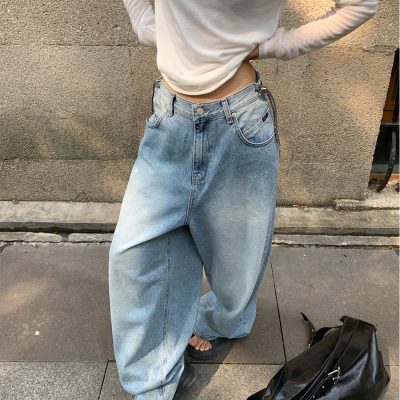
- Primary Review Points: Drape from hip to hem, total fabric volume, rise depth, leg opening sweep, inseam stacking, and waist security relative to heavy fabric volume.
- Explore pattern considerations for Baggy & Wide-Leg Jeans.
Straight & Relaxed Jeans
- Primary Review Points: Mid-rise placement, clean hip transition, straight drop from thigh through knee to hem, and balance between structure and comfort.
- See our approach to Straight & Relaxed Jeans.
Denim Shorts
- Primary Review Points: Inseam length, leg flare, thigh opening width, front rise comfort, hem finish stability, and raw-edge or cuffed construction.
- Review options for Denim Shorts.
Denim Skirts
- Primary Review Points: High-waist vs. mid-waist seating, hip contouring, rear vent/slit placement and height, panel line proportions, and hem walkability.
- Check options for Denim Skirts.
Denim Jackets
- Primary Review Points: Shoulder drop, armhole circumference, sleeve length, chest volume, waist sweep, button placket flat-lay, and mobility across the upper back.
- View structural options for Denim Jackets.
Sampling and Wash Development
Fit sampling and wash development are closely linked, but they are not always performed simultaneously.
Depending on project requirements, development typically follows one of two routes:
OPTION A: Sequential Approval (Recommended for precise fits)
┌──────────────────────┐     ┌──────────────────────┐     ┌──────────────────────┐
│ Raw / Standard Sample│ ──> │ Approve Fit & Pattern│ ──> │ Wash & Finishing     │
│ (Check Fit First)    │     │ Specifications       │     │ Development          │
└──────────────────────┘     └──────────────────────┘     └──────────────────────┘

OPTION B: Parallel Development (Recommended for heavy wash effects)
┌────────────────────────────────────────────────────────────────────────┐
│ Raw Fit Sample  +  Separate Wash Blank / Wash Swatch Testing           │
└────────────────────────────────────────────────────────────────────────┘
- Sequential Development: Fit, pattern, and construction are confirmed on raw or lightly rinsed fabric first. Once the pattern is locked, wash trials begin. This prevents wasting wash iterations on a garment whose pattern might change.
- Parallel Development: If a wash involves heavy processing (such as intense bleach, ozone, heavy stonewashing, or hand-scraping), wet processing will shrink and distort fabric dimensions. In these cases, fabric shrinkage is calculated early so fit samples can be evaluated after mock wash processing.
Read more about downstream finishing in our Wash & Finishing guide.
What Happens When a Sample Needs Work?
Receiving a sample that requires adjustments is standard in custom manufacturing. An imperfect sample provides valuable feedback about what needs tweaking.
When a sample does not hit the mark, we analyze the cause:
- Pattern Adjustments: Modifying seam lines, curves, rise angles, or cross-measurements.
- Fabric Adjustments: Switching weights, compositions, or stretch percentages if the fabric does not suit the desired silhouette.
- Construction Tweaks: Changing seam types, pocket structures, or waistband methods to reduce bulk or improve flat-lay.
- Shrinkage Recalibration: Updating pattern scaling if wet-processing shrinkage differs from initial estimations.
Adjustments are documented in an updated spec sheet before moving to secondary sampling or approval.
Brand Fit Approval Checklist
Use this practical checklist when reviewing physical samples:
Fit & Proportion
- [ ] Does the garment sit correctly at the designated waist/hip level?
- [ ] Is the rise comfortable when standing, sitting, and walking?
- [ ] Do side seams drop straight without twisting forward or back?
- [ ] Is the leg line or body shape proportional to your tech pack drawings?
Measurements
- [ ] Are critical points (waist, chest, rise, thigh, inseam) within acceptable spec ranges?
- [ ] Have all necessary measurement updates been recorded on a review sheet?
Fabric & Structure
- [ ] Does the fabric weight and stiffness match your target aesthetic?
- [ ] Does the material hold or drape the garment volume as intended?
Construction & Trim
- [ ] Are pocket placements, shapes, and sizes visually balanced?
- [ ] Are seams, waistband, fly, and hem constructed cleanly?
- [ ] Are hardware elements (buttons, rivets, zippers) secure and correctly placed?
Feedback Submission
- [ ] Are fit comments supported by photos, marked samples, or clear written notes?
Information Needed for Sample Evaluation
To help us execute accurate pattern and sample adjustments, please provide:
- Clear Fit Notes: Specific callouts detailing where the garment requires adjustments.
- Annotated Photos: Images of the sample being worn, showing front, side, and rear views.
- Garment Markings: Photos of chalk lines or pins on the physical sample showing desired changes.
- Updated Spec Sheet: A spreadsheet with requested measurement revisions highlighted.
- Reference Garments (Optional): A physical sample or secondary reference garment that illustrates the fit, drape, or pocket detail you want to match.
What Happens After Fit Approval?
Once the sample is signed off for fit, fabric drape, and construction, your project moves to the next stages of technical preparation:
01 Product Brief
  └── 02 Fabric Selection
        └── 03 Fit & Pattern Development
              └── 04 Sampling & Fit Approval (Current Stage)
                    └── 05 Wash & Finishing
                          └── 06 Bulk Production
Next Step in Development
- Proceed to Stage 05: Wash & Finishing
Related Development Links
- Stage 01: Product Brief
- Stage 02: Fabric Selection
- Stage 03: Fit & Pattern Development
- Technical Documentation: Denim Tech Pack Development
- Full Production Overview: Denim Manufacturing
Frequently Asked Questions
What is a denim fit sample?
A denim fit sample is a physical prototype made to evaluate a garment’s pattern, measurements, proportions, and construction on a body or mannequin. It allows brands to review and refine the product before approving it for production.
How many samples are usually needed before approval?
There is no fixed universal number. Many straightforward styles are approved in one or two sample rounds, while complex, highly detailed, or heavily washed styles may require additional revisions. The number of rounds depends on design complexity, initial spec accuracy, and brand feedback.
Can I request fit changes after receiving the first sample?
Yes. Requesting fit and pattern changes after reviewing the first sample is a standard part of development. Feedback is used to adjust digital patterns and specifications for secondary sampling or production.
What should I check when reviewing a denim sample?
Focus on overall silhouette, key measurements, rise balance, seam alignment, fabric behavior, construction quality, and visual details like pocket placement and stitching.
Can you develop a sample from a reference garment?
Yes. Physical reference garments can be measured and analyzed alongside your tech pack or design notes to establish base patterns and fit targets.
Do I need a complete tech pack before sampling?
While a complete tech pack speeds up development, sampling can begin with flat sketches, reference garments, and target measurement charts. These details will be formalized into a final tech pack during sampling.
Should fit be approved before wash development?
In most cases, yes. It is usually best to confirm the base fit, pattern, and construction before undertaking extensive wash testing. However, if a wash involves heavy shrinkage or aggressive processing, wash trials and fit reviews may run in parallel.
What happens after the fit sample is approved?
Once the fit sample is approved, the project moves into wash development (if wet processing is required) or final tech pack sign-off, grading, and pre-production planning.
Ready to Review Your Denim Sample?
Evaluating a physical sample involves more than checking numbers against a chart—it is about ensuring silhouette, drape, construction, and details work together as intended.
If you have a tech pack or design reference ready for sample development, reach out to our technical team to discuss your project requirements.
- Primary Action: Discuss Your Denim Project
- Secondary Action: Send Your Tech Pack