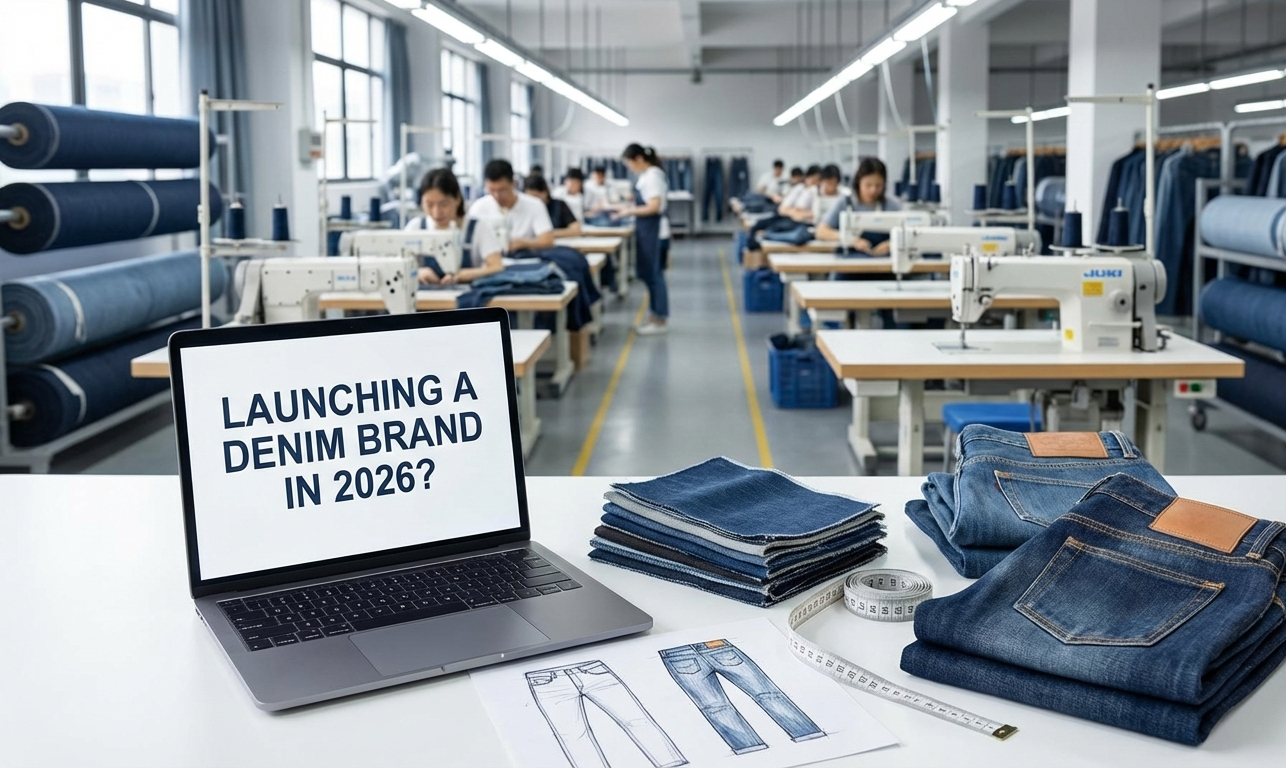
If you are browsing Instagram or TikTok in 2026, it looks easier than ever to start a fashion brand. You see “aesthetic” studios, quick samples, and influencers selling out of drops in minutes. But when you move from the “dream phase” to the “sourcing phase,” you hit a brick wall: The MOQ (Minimum Order Quantity).
You email ten factories in China. Five don’t reply. Three tell you they only take orders for 500 pieces per style. Two say they can do “low MOQ,” but the price they quote is higher than the retail price of a pair of Levi’s.
Is the “Low MOQ” promise a myth? Not exactly. But there is a lot of misinformation out there. In this guide, we’re going to look at the hard reality of denim manufacturing in 2026, why the numbers work the way they do, and how you can actually get your first 150 pairs of high-quality jeans made without losing your shirt.
What does “Low MOQ” actually mean in the 2026 denim market?
In the world of t-shirts or hoodies, “Low MOQ” might mean 10 or 20 pieces. In the world of denim, the math is different. Because denim requires heavy-duty machinery and complex chemical washing, most professional factories in China consider 150 to 300 pieces per style/wash to be “Low MOQ.”
If a factory tells you they can do 20 or 30 pieces of a custom-washed jean, they are likely either a very small sampling studio (which will charge you $150+ per pair) or they are a middleman who is going to outsource your order to a workshop with zero quality control.
To understand why 150 pieces is usually the “magic number,” we have to look at the two biggest bottlenecks in denim: The Fabric Roll and The Washing Drum.
Why is denim different from other garments when it comes to minimums?
If you want to make a cotton t-shirt, you buy the fabric, you cut it, and you sew it. The shirt is basically finished once it leaves the sewing machine.
Denim is a “living” garment. When it is sewn, it is usually “Raw” or “Greige”—stiff, oversized, and dark. The “soul” of the jean happens in the Laundry (The Wash). This is where the MOQ bottleneck is born.
1. The Fabric Weaving Limit
A standard roll of high-quality denim fabric is usually about 100 to 120 meters long. Depending on the size and fit (skinny vs. wide-leg), one pair of jeans takes about 1.3 to 1.8 meters of fabric.
- If you buy one roll of fabric, you must make at least 60–80 pairs just to use up that single roll.
- If you want a custom fabric (a specific weight or indigo shade), the weaving mills in China usually won’t even turn on their machines for less than 3,000 meters.
2. The Washing Machine Capacity
Industrial denim washing machines are huge. They aren’t like your laundry machine at home. A “small” industrial drum typically needs at least 100–150 pairs of jeans to tumble correctly. If you put only 20 pairs in a giant drum, there isn’t enough friction. The jeans won’t hit each other correctly, the chemicals won’t distribute evenly, and you end up with “streaky” or inconsistent washes.
How can a factory offer 150 pieces if the fabric mills require 3,000 meters?
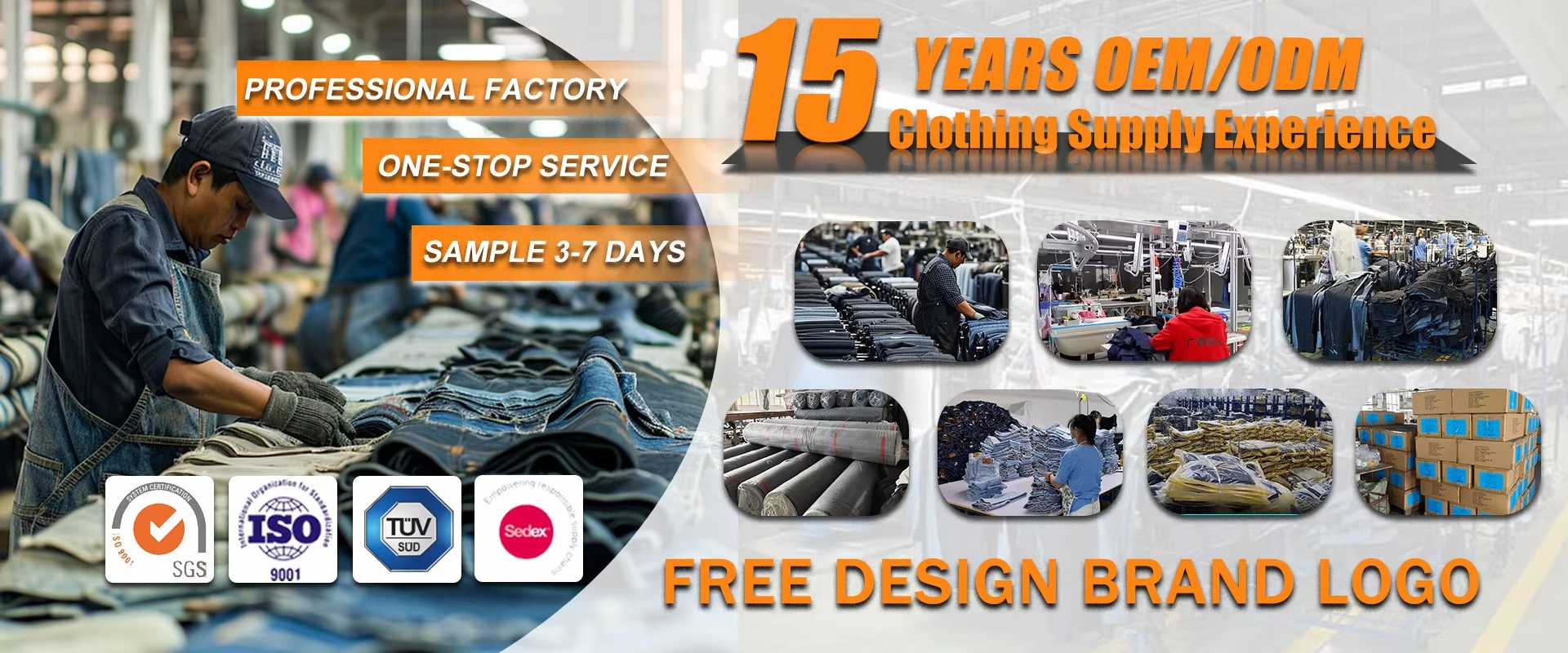
This is the “Truth” that most agents won’t tell you. When a factory like Xinen Garment offers a low MOQ of 150 pieces, we are using Stock Fabric Strategy.
We keep thousands of meters of “base” denim (12oz, 13oz, comfort stretch, 100% cotton) in our own warehouse. Because we bought 5,000 meters of it for a larger client, we can “cut” 200 meters out for your startup brand.
| Feature | Custom Fabric (High MOQ) | Stock Fabric (Low MOQ) |
| Minimum Order | 1,000+ pieces | 150 – 300 pieces |
| Lead Time | 15-20 days | 15-20 days |
| Color Choice | Any Pantone or Indigo shade | Selected best-sellers |
| Price | Lower per unit | Slightly higher per unit |
| Risk | High (Leftover fabric) | Low (Pay as you go) |
By choosing stock fabric, you aren’t getting “cheap” material; you are getting “proven” material that the factory already knows how to wash and sew. For a new brand, this is actually safer.
Why does a 150-piece order cost so much more per unit than 1,000 pieces?
One of the most common complaints from new designers is: “Why is the price so high? My competitor sells their jeans for $80, but your factory cost is $30-35!”
In 2026, Chinese labor costs are higher than they were ten years ago. When a factory sets up a sewing line, it’s like an airplane taking off—it uses the most energy at the start.
- Pattern Grading: We have to create a digital pattern for a Size 28, 30, 32, 34, 36, etc. Whether you order 100 pairs or 10,000 pairs, the time it takes the pattern maker to do this is the same.
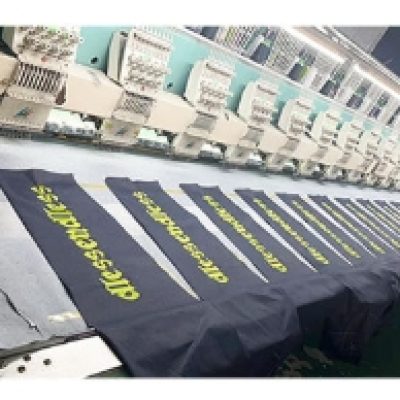
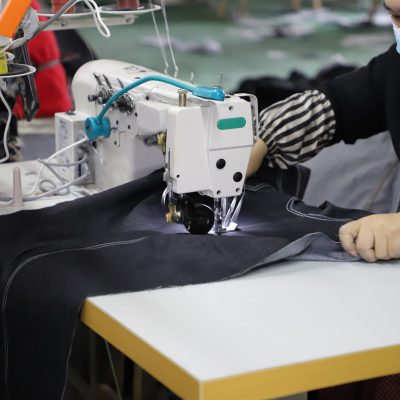
- The “Line” Setup: A denim sewing line involves 20 to 30 specialized machines (buttonhole machines, waistband machines, chain-stitchers). Workers have to change the thread colors and adjust the tension for your specific fabric. If they do this for 1,000 pieces, the “setup time” cost is spread out. If they do it for 100 pieces, that setup cost is concentrated on those few units.
- The Wash Samples: To get your specific “Vintage Blue,” we might have to run 3 or 4 test washes. Each test takes a technician’s full day.
The Reality: On a small order, you aren’t just paying for the fabric; you are paying for the Engineering Time.
How does “Low MOQ” affect your ability to customize hardware?
Buttons, rivets, and leather patches are the “jewelry” of a pair of jeans. However, hardware factories in China have their own MOQs.
Typically, a hardware factory won’t custom-mold a button with your logo for less than 2,000 to 5,000 sets.
- The Solution for 2026: Most low MOQ brands use “Generic” high-quality buttons for their first 150 pairs and focus their branding on the Leather Patch and Woven Labels. * Leather patches are easier to customize in small batches (minimums are often around 500), and since they are small and light, you can keep the leftovers for your next restock.
If a factory tells you they can do 100 pairs with custom-engraved buttons for free, they are likely using a very cheap alloy that will break or rust after three washes. Be careful.
Can you achieve “High-End Vintage Washes” in small batches?
This is a logical challenge. High-end washes (whiskers, honeycombs, hand-sanding) require a lot of manual labor.
In a low MOQ setting, the difficulty isn’t the labor—it’s the Consistency. If a technician sands 150 pairs by hand, they can stay focused. If you try to do a “sustainable” ozone wash on a small batch, the cost might go up because ozone machines are expensive to run for just a few pieces.
In 2026, we recommend that startup brands focus on one or two washes per style. Don’t try to launch one fit in five different colors with 30 pieces each. The factory will hate the complexity, and the quality will suffer. It is better to have 150 pieces of one perfect wash than 30 pieces of five average washes.
How to talk to a Chinese factory so they take your small order seriously?
Factories in China are currently shifting. They want to work with small brands because they know the next “Big Thing” starts small. But they are also tired of “time-wasters” who ask 100 questions and never place an order.
If you want to be treated like a professional, follow these three rules:
- Have a Tech Pack Ready: Don’t just send a photo of a celebrity wearing jeans. Send a PDF that shows measurements, fabric weight (oz), and stitch colors. It shows you are serious.
- Be Clear About Your Budget: If your target retail price is $90, tell the factory. They can then suggest fabrics and washes that fit your margins.
- Understand the Sampling Fee: Expect to pay 2x to 3x the bulk price for a sample. This isn’t a “profit” for the factory; it barely covers the cost of interrupting the production line to make one single pair.
Is 2,000 words enough to cover the “Truth”?
We’ve covered the basics of fabric, laundry, and costs. But the real truth about manufacturing in 2026 is that the relationship is more important than the contract.
Many brands fail because they treat the factory like a vending machine. You put money in, and jeans come out. But denim is too “hand-made” for that. You need a factory that will tell you, “Hey, this fabric you chose won’t hold this wash well,” or “This pocket design is going to be weak at the corners.”
That kind of advice only comes when you find a partner who is willing to work within the “Low MOQ” reality while keeping an eye on your long-term growth.
Conclusion: Start Small, but Start Smart
Launching a denim brand in 2026 is about Product-Market Fit, not “Inventory-Market Fit.” You don’t need 1,000 pairs to prove your idea. You need 150 pairs that fit perfectly, wash beautifully, and arrive on time.
The “Truth” is that Low MOQ manufacturing in China is more expensive per unit and has more restrictions on fabric and hardware. But it is the only way to build a brand without the crushing weight of unsold inventory.
At Xinen Garment, we’ve seen brands start with 150 pieces and grow into 5,000 pieces within two years. The secret wasn’t a magic factory; it was a realistic understanding of the production process from day one.