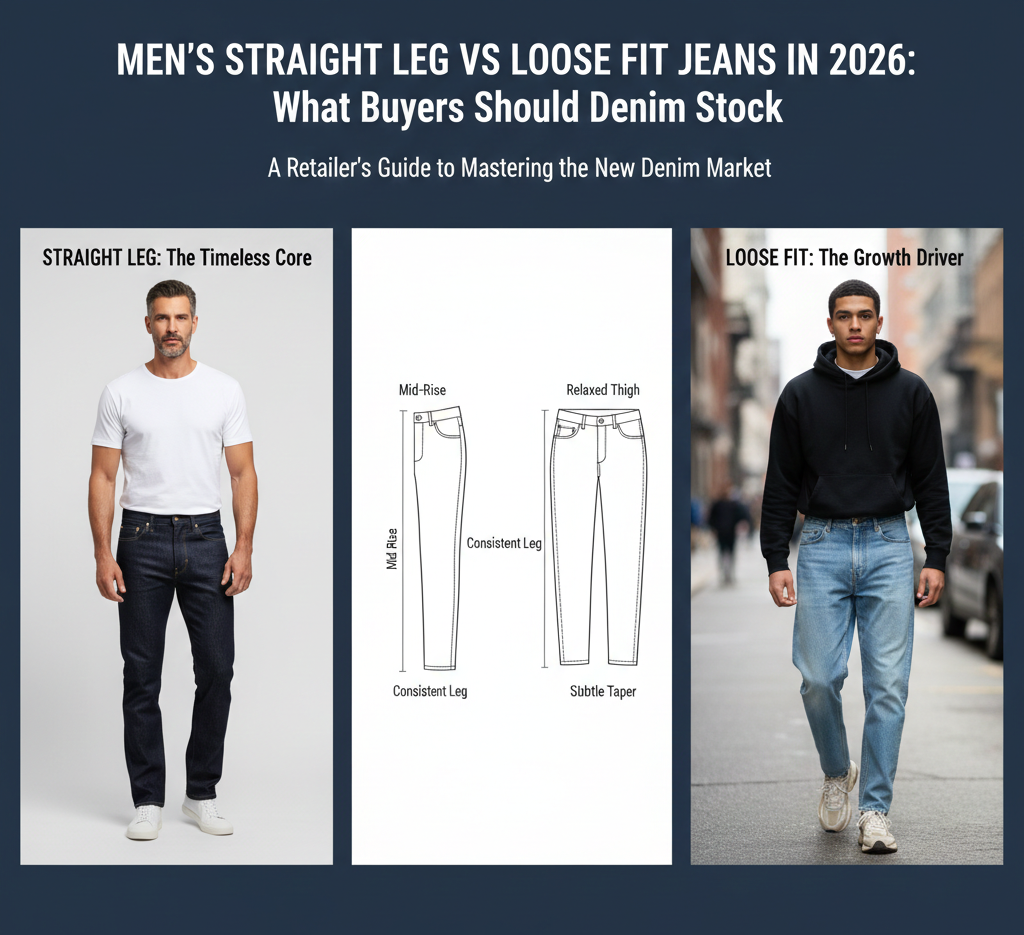
The men’s denim market in 2026 comes down to two fits that actually sell: straight leg jeans that work for everyone, and loose fit jeans that deliver comfort without looking messy. If you’re a wholesaler, importer, or brand buyer, your job is simple—figure out the right mix for your customers.
This guide breaks down what moves, what sits, and how to build inventory that keeps turning over.
Why Straight Leg Jeans Are Still the Safe Bet in 2026
Men’s straight leg jeans wholesale volume stays steady year after year because they fit the widest range of guys. We’re talking 25-year-olds wearing them to work, 45-year-olds on weekends, and everyone in between.
The fit is straightforward: mid or high rise, room through the thigh without excess fabric, and a leg opening that stays consistent from knee to ankle. No skinny squeeze, no baggy drape. Customers buy these as their chino alternative—they pair them with boots, clean sneakers, or loafers and call it a day.
For buyers, straight leg means predictable performance:
- Lower return rates (guys know what they’re getting)
- Easy reorders (silhouette doesn’t change season to season)
- Year-round demand (not trend-dependent)
Dark and mid-blue washes move fastest. Black comes in second. Keep it simple.
What Makes Loose Fit Jeans Different This Year?
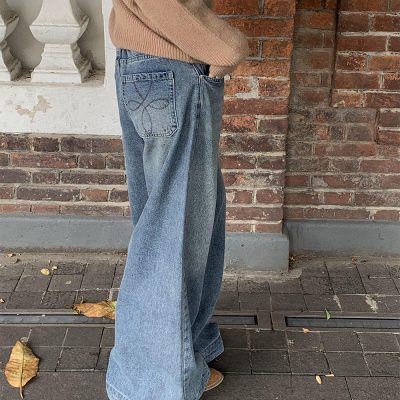
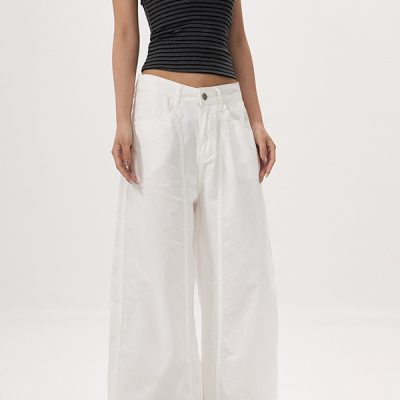
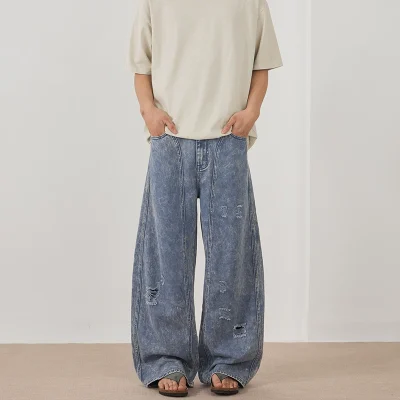
Men’s loose fit jeans for retailers in 2026 aren’t the oversized bags from a few years back. Today’s version has a relaxed thigh and seat, with either a controlled taper or straight leg below the knee. The rise sits mid to high, which keeps structure up top.
These appeal to younger customers into streetwear, skate culture, or casual comfort. They layer well under oversized tees and hoodies. They look sharp with chunky sneakers or work boots. Color-wise, mid to light washes perform best, along with olive and khaki for that worn-in aesthetic.
Why stock them?
- They capture trend energy (important for brands targeting 18-30 demographic)
- They photograph well for social media
- They command higher margins when the proportions are right
The key phrase: “when the proportions are right.” Sloppy loose doesn’t sell. Structured relaxed does.
Who Buys Straight Leg and Who Goes for Loose?
Understanding 2026 men’s denim trends for buyers means knowing your customer profiles.
Straight Leg Customers
- Age range: 25-45
- Who they are: Office workers, dads, weekend warriors
- What they want: One pair that works everywhere, no thigh rub, no waist slip
- Where they shop: Department stores, mid-tier online retailers, multi-brand shops
Loose Fit Customers
- Age range: 18-30
- Who they are: Streetwear fans, college students, early-career creatives
- What they want: Comfort and style—thigh room for movement, volume for layering
- Where they shop: Streetwear boutiques, Instagram shops, younger wholesalers
The overlap: Ages 25-35 buy both depending on occasion. Check your sales data—typically straight leg hits 60-70% of volume, loose fit 30-40%.
How Much of Each Fit Should You Stock?
When building your men’s jeans inventory strategy, aim for balance. Use straight leg as your core (60-70%), loose as your test styles (30-40%).
Starter lineup:
- 3 straight leg SKUs: Dark rinse, medium wash, black (year-round staples)
- 2 loose fit SKUs: Mid-blue relaxed taper, olive loose straight (seasonal push)
This spread covers broad appeal while testing current trends. If loose sells out fast, add more washes. If straight dominates, double down on additional colorways.
Budget tip: Straight leg runs cheaper to produce at scale because of simpler patterns. Loose fit needs careful grading to prevent sagging in larger sizes.
| Fit Type | % of Inventory | Key SKUs | Reorder Frequency | Risk Level |
|---|---|---|---|---|
| Straight Leg | 60-70% | 3 washes | Monthly | Low |
| Loose Fit | 30-40% | 2 styles | Seasonal | Medium |
What Fabrics and Washes Work Best for Each?
Fabric choice affects how jeans hang and wear over time.
Straight Leg Fabric
Best performers: 12-14 oz rigid or light-stretch denim. This weight holds a clean line without bagging out.
Wash recommendations:
- Dark indigo (most versatile)
- Medium blue (everyday workhorse)
- Black (solid secondary option)
Loose Fit Fabric
Best performers: 11-13 oz softer denim or 1-2% stretch. This weight shows drape without looking limp.
Wash recommendations:
- Mid to light washes (show drape best)
- Earth tones like olive (strong for street looks)
- Khaki or tan (seasonal test options)
Avoid extremes:
- No ultra-heavy raw denim for loose fits (too stiff, defeats the comfort purpose)
- No super-stretch for straight leg (loses shape after a few wears)
Factory tip: Request fabric swatches with real shrinkage data. Anything under 5% shrinkage keeps customers happy and reduces returns.
How to Display Them to Move Inventory
Your presentation—in-store and online—sells the story.
In-Store Merchandising
- Straight leg near chinos and button-ups: Position as “upgrade your daily pant”
- Loose fit by hoodies and sneakers: Position as “street ready, all-day comfort”
Online Presentation
- Straight leg hero shots: Full outfits, side profile showing clean leg line
- Loose fit close-ups: Thigh movement, squat demonstrations, layering examples
- Use fit quizzes: “Office or street style?” helps guide customer choices
- Show rack photos: Helps wholesalers visualize assortment
Where Returns Hurt Most (And How to Fix Them)
Understanding straight leg jeans return rates and loose fit challenges helps you prevent problems.
Straight Leg Return Issues
Problem: Thigh too tight Solution: Size-up guidance in product descriptions
Problem: Hem too long Solution: Offer basic hemming service or stock two inseam options
Loose Fit Return Issues
Problem: Looks too baggy on slim frames Solution: Show model shots on slim, average, and stocky body types
Problem: Sags after first wash Solution: Use firmer denim with better shape retention
Universal Fixes
- Clear size charts with waist/thigh/inseam measurements
- Multiple body types in product photography
- Wash instructions displayed upfront
- Stock both inseam lengths (32″ standard, 34″ tall) if volume allows
What Risks Come with Overstocking Loose Fits?
Loose fits carry higher markdown risk because they’re more trend-sensitive.
Watch out for:
Style fatigue: If super-wide baggy fades out, your relaxed taper holds better value
Color mismatches: Earth tones need small test runs—stick to blue core for volume
Sizing gaps: Most guys buy 32-34 waist. Be careful with 36+ quantities.
How to mitigate risk:
- Start with small production runs (200-500 pieces)
- Pre-sell via social media before bulk orders
- Use straight leg volume to buffer potential loose fit markdowns
Tracking Performance: What Actually Matters
The best men’s jeans to stock 2026 depends on your specific data, not industry averages.
Key metrics to watch:
Sell-through Rate
- Target: 65%+ within 90 days
- What it tells you: Product-market fit
- Action: Double down on styles hitting 70%+, cut styles under 50%
Return Rate
- Target: Under 8%
- What it tells you: Sizing and quality accuracy
- Action: Review customer feedback on high-return SKUs
Gross Margin
- Straight leg baseline: 40-45%
- Loose fit potential: 50-55% (when positioned right)
- What it tells you: Pricing power and market positioning
Reorder Velocity
- Straight leg: Should reorder monthly
- Loose fit: Should refresh quarterly
- What it tells you: Inventory turnover health
Working with Your Factory: Getting the Mix Right
As a wholesale men’s relaxed fit jeans manufacturer in China, we help buyers balance their lineup without overselling.
What reliable factories should provide:
Shared Construction
Use common top blocks for straight/loose to reduce development costs and speed up sampling.
Wash Libraries
Offer 5-7 proven wash options per fit, all pre-tested for consistency and shrinkage.
Flexible MOQs
Provide trial runs (200-500 pieces per style) so you can test demand before scaling.
Sales Data Transparency
Share what’s moved for similar buyers in your market. Good manufacturing partners help you avoid mistakes.
Questions to ask your factory:
- Can you provide shrinkage reports for each fabric?
- What’s the lead time difference between straight and loose production?
- Do you offer grading adjustments for loose fits in larger sizes?
- Can you suggest wash options that photograph well online?
What a Winning 2026 Lineup Looks Like
Here’s a sample mix for a mid-sized wholesaler focused on men’s denim fits for importers:
70% Straight Leg:
- Dark rinse: 40% of total inventory
- Medium wash: 20%
- Black: 10%
30% Loose Fit:
- Mid-blue relaxed taper: 15%
- Olive wide straight: 10%
- Khaki test run: 5%
Total SKUs: 7-8 styles maximum
This spread balances risk, covers multiple channels, and leaves room to scale winners.
Weekly tracking:
- Are straight leg styles reordering on schedule?
- Is loose fit moving faster than expected?
- Adjust next production order based on real performance
How to Scale from Test to Full Production
Phase your buying cycle to minimize risk and maximize learning.
Phase 1: Trial (First 20 Days)
- 200-500 pieces each for top 2 straight leg styles
- 200-500 pieces for 1 loose fit style
- Goal: Validate customer response
Phase 2: Confirm (Days 30)
- Double production on winners
- Drop styles with sell-through under 50%
- Goal: Build confidence before scaling
Phase 3: Scale (Ongoing)
- Monthly reorders on straight leg core styles
- Quarterly refreshes on loose fit seasonal options
- Goal: Maintain inventory flow without overstock
Performance indicators for scaling:
- Return rates under 8%
- Sell-through over 65%
- Positive customer feedback
- Reorder requests from retail partners
Understanding Loose Fit Jeans Sell Through
Loose fit jeans sell through data from 2025 shows interesting patterns:
Strong performers:
- Relaxed taper in classic blue washes
- Mid-rise loose straight with 1% stretch
- Earth tones (olive, khaki) in streetwear channels
Weak performers:
- Extreme baggy with no taper
- Low-rise loose (customers want structure)
- Novelty washes (stick to classic)
The lesson: Loose doesn’t mean shapeless. The best-selling loose fits have intentional structure—controlled volume, deliberate proportions.
Why 2026 Is Different for Denim Buyers
The straight leg vs loose fit jeans debate isn’t really a debate anymore. Both have clear lanes:
Straight leg = Foundation
- Predictable sales
- Lower risk
- Year-round demand
- Broader age appeal
Loose fit = Margin Opportunity
- Higher price points
- Trend capture
- Social media appeal
- Younger demographic
Smart buyers stock both. The mix depends on your customer base, sales channels, and risk tolerance.
Final Recommendations for Buyers
Start conservative: 70% straight, 30% loose gives you safety while testing trends.
Track everything: Weekly sell-through, monthly returns, customer feedback. Data drives your next order.
Work with factories that understand fit: Not all manufacturers can produce clean loose fits. Grading matters. Pattern development matters. Find partners who get it right.
Don’t chase extremes: Ultra-baggy will spike then crash. Ultra-skinny is dead. The middle ground—straight and relaxed—is where volume lives.
Remember the fundamentals: Guys want jeans that fit, hold their shape, and work with their wardrobe. Deliver that consistently, and you’ll keep reordering.
About Our Manufacturing
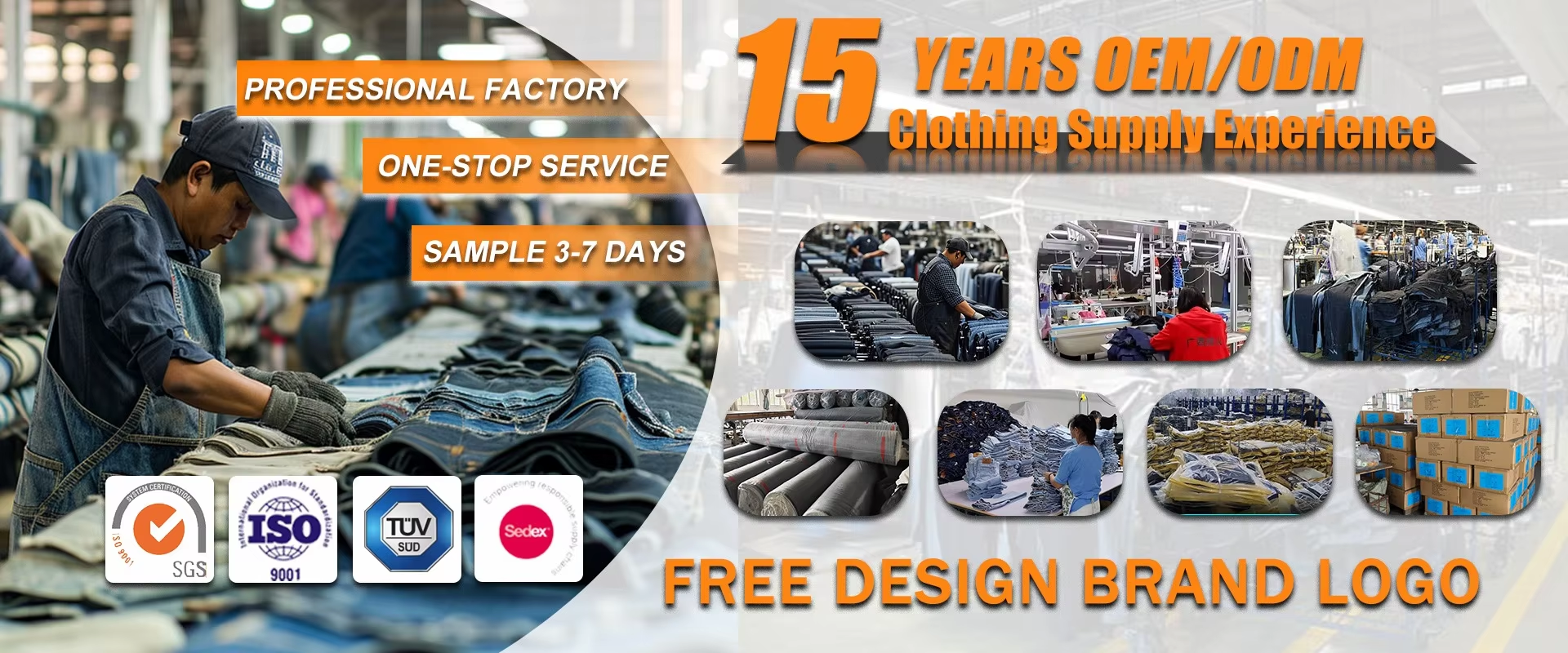
We specialize in producing men’s straight leg jeans wholesale and men’s loose fit jeans for retailers from our factory in China. Our focus is mid-to-high-end construction with attention to grading, fabric selection, and wash consistency.
We work with importers, wholesalers, and startup brands throughout the US, Europe, and Japan. Our MOQs start at 200-500 pieces per style, with flexible trial runs to help you test your market before scaling.
What we offer:
- Pre-tested fabric options with shrinkage data
- Pattern development for both straight and loose fits
- Wash libraries specifically designed for wholesale markets
- Production timelines that accommodate seasonal launches
- Technical support for fit optimization
Contact us to discuss your 2026 men’s denim program. We’ll help you build a lineup that balances core volume with trend capture.
Related Keywords: men’s straight leg jeans wholesale, men’s loose fit jeans for retailers, 2026 men’s denim trends for buyers, straight leg vs loose fit jeans, best men’s jeans to stock 2026, men’s jeans inventory strategy, wholesale men’s relaxed fit jeans, men’s denim fits for importers, straight leg jeans return rates, loose fit jeans sell through