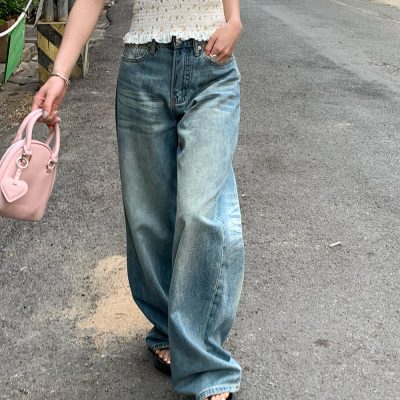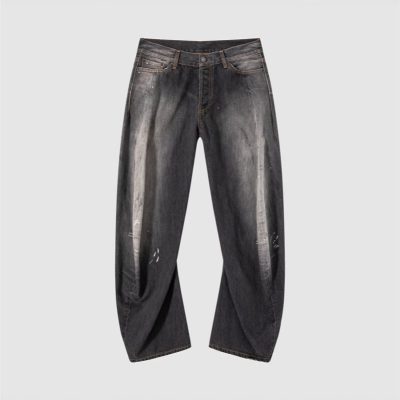
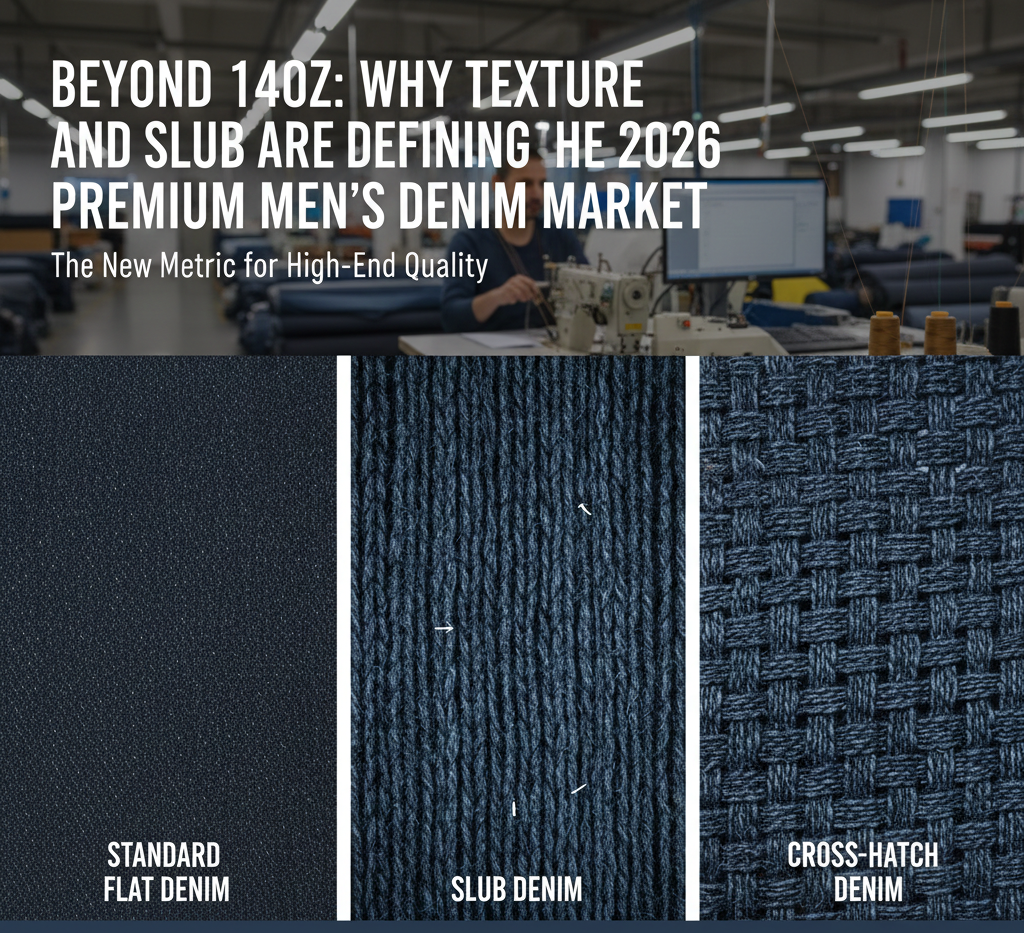
For years, denim weight was everything. Brands competed on who could make the heaviest jeans—14oz, 16oz, 21oz. But in 2026, something shifted. Texture matters more than weight.
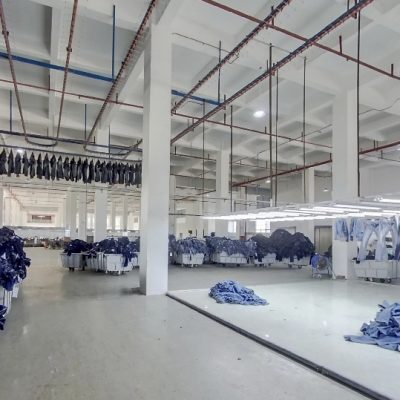
As a custom jeans factory in China specializing in premium denim manufacturing, we’ve seen this change firsthand. Our inquiry volume for slubby and textured fabrics jumped 40% in the past year, mainly from US, European, and Japanese brands.
If you’re launching a men’s denim brand or developing your next collection, here’s what you need to know about the texture revolution.
Why Denim Enthusiasts Care About Texture in 2026
Today’s denim buyers are educated. They spend time on Reddit communities like r/rawdenim and r/malefashionadvice, learning about fabric construction and fade patterns. They’re not just buying jeans—they’re buying a story that unfolds over time.
What they’re looking for:
- Vertical slub patterns that create high-contrast fading
- Cross-hatch textures for unique wear patterns
- Nep details (small fiber knots) for an artisanal look
Here’s the difference: flat denim looks uniform and industrial. Slub denim trends 2026 show that uneven yarns create a “rain effect” or “salt-and-pepper” appearance as jeans age. This visual character commands premium prices—often a 12oz slubby denim retails higher than standard 16oz flat denim because it delivers that heritage aesthetic customers want.
Understanding Men’s Heavyweight Jeans vs Textured Denim
When developing your tech pack, knowing these texture types helps you position your product correctly:
| Texture Type | How It’s Made | Market Appeal | Price Range |
|---|---|---|---|
| Standard Slub | Uneven vertical (warp) yarns | The classic choice—proven heritage look | $85-$130 |
| Cross-Hatch | Uneven warp AND weft yarns | For enthusiasts—creates grid-like fades | $150-$220 |
| Nep Denim | Small fiber knots on surface | Artisanal feel—snowy, tactile texture | $180+ |
| Slubby Stretch | Slub texture + 1-2% stretch | Best for e-commerce/DTC—comfort + character | $95-$150 |
Key insight: Weight alone doesn’t determine value anymore. A well-engineered 12oz slub can outperform a generic 16oz in both retail price and customer satisfaction.
The Manufacturing Reality: Why Texture Is Harder to Produce
Many factories can make standard flat denim. Fewer can consistently produce quality textured fabric. Here’s why it matters for your brand.
Challenge #1: Sewing Slubby Fabric
Slub yarns have thick and thin spots by design. Standard sewing equipment struggles with this variation. Thick sections can cause:
- Skipped stitches
- Needle breakage
- Uneven seam quality
Our approach: We use heavy-duty industrial machines with calibrated tension settings for uneven yarn densities. Each texture type gets specific needle gauge and thread weight combinations.
Challenge #2: Shrinkage Consistency
Irregular yarns react differently to washing. A slubby fabric might shrink 6% lengthwise but only 2% widthwise. This means your approved “relaxed straight” fit could become a slim fit after the customer’s first wash.
Our solution: Four-stage wash testing on every textured fabric roll before cutting begins. We map the exact shrinkage behavior and adjust patterns accordingly. Your fit stays true from sample to production.
Engineering Vintage Character with Modern Methods
In 2026, buyers want texture without environmental guilt. Denim fabric engineering has evolved beyond traditional stonewashing, which can damage delicate slub fibers.
Current techniques we use:
Laser-Etched Whiskers
Precisely targets the “peaks” of slub yarns for natural-looking wear patterns without chemicals or excessive water.
Ozone Finishing
Creates that dry, vintage hand-feel using ozone gas instead of thousands of gallons of water. The slub character stays intact while achieving the broken-in softness customers love.
GRS-Certified Recycled Slub Yarns
For brands prioritizing sustainability, we work with mills producing recycled cotton slub yarns that maintain texture quality while meeting environmental standards.
Chart: Premium Denim Characteristics Comparison
WEIGHT-FOCUSED (Traditional)          TEXTURE-FOCUSED (2026 Trend)
        |                                      |
   Heavy = Quality                     Character = Quality
        |                                      |
   14oz+ standard                       12oz+ with slub/texture
        |                                      |
   Uniform appearance                   Visual variation
        |                                      |
   Predictable fading                   High-contrast fades
        |                                      |
   Lower retail margin                  Premium pricing
How to Brief Your Denim Factory for Best Results
Don’t just specify weight and wash. Give us a “character brief” that includes:
1. Fade Pattern Goals
Do you want high-contrast (slubby texture) or subtle vintage (flat texture)?
2. Hand-Feel Target
Dry and crisp (heritage style) or soft and drapey (modern casual)?
3. Sustainability Requirements
Do you need GRS-certified recycled yarns? Ozone finishing? Water usage limits?
4. Production Volume
Minimum order quantities vary by texture complexity. Slub and nep fabrics typically require higher minimums.
5. Timeline Expectations
Custom textured fabrics need longer lead times for washing tests and quality control.
Why Work with a Specialized Factory
As a custom jeans factory China focused on mid-to-high-end production, we understand that textured denim isn’t just about aesthetics—it’s about consistency at scale.
What sets us apart:
- Fabric washing labs for pre-production testing
- Specialized sewing equipment for slubby and nep fabrics
- Technical pattern adjustments based on fabric behavior
- Quality control systems that catch texture inconsistencies early
- Direct relationships with premium denim mills
We don’t just manufacture jeans. We engineer them to ensure that beautiful, irregular texture in your sample stays consistent through your first thousand pairs and beyond.
Frequently Asked Questions About Premium Denim Manufacturing
Q: What’s the minimum order quantity for slub denim production?
A: MOQs vary by fabric complexity. Standard slub denim typically starts at 500-800 pieces per style. More specialized textures like cross-hatch or nep denim may require 1,000+ pieces because of fabric mill minimums and the need for extensive quality testing.
Q: How much longer does textured denim take to produce compared to standard denim?
A: Add 2-3 weeks to your timeline. Slubby and textured fabrics need extra wash testing (4-stage process) to map shrinkage behavior. We also run sewing trials to calibrate machines for uneven yarn density. Rush orders are possible but may have limitations on texture options.
Q: Can you match a texture from a sample I send?
A: Yes. Send us your reference sample and we’ll identify the slub pattern, yarn count, and weave structure. We work with multiple denim mills and can source matching fabric or suggest close alternatives. Exact matches depend on mill availability, but we typically get 90%+ similarity.
Q: Is slub denim more expensive than regular heavyweight denim?
A: Not always. A 12oz slub might cost similar to or slightly more than 14oz flat denim at the fabric level. However, production costs are higher due to specialized handling and testing. Total cost per unit typically runs 15-25% higher than standard denim, but your retail margin is often 30-40% better.
Q: Do you offer sustainable options for textured denim?
A: Yes. We work with GRS-certified recycled cotton slub yarns and use ozone finishing instead of traditional stonewashing. This reduces water usage by 70%+ while maintaining the vintage character. We can provide sustainability certifications for your marketing needs.
Q: What’s the difference between Japanese slub and regular slub denim?
A: Japanese slub typically uses vintage shuttle looms that create more pronounced, irregular textures. Regular slub (often from China or Turkey) uses modern projectile looms with controlled slub patterns. Both can be high-quality—it depends on your brand positioning. Japanese fabric costs 2-3x more but carries premium brand cachet.
Q: Can textured denim work with stretch?
A: Absolutely. Slubby stretch (1-2% elastane) is one of our fastest-growing categories. The challenge is maintaining slub character while adding comfort. We use specific yarn combinations that keep the texture visible while providing modern wearability. Great for DTC brands.
Q: How do I know if my brand should use slub vs. heavyweight flat denim?
A: Consider your customer. If they’re denim enthusiasts who understand fading and aging (Reddit crowd, heritage style fans), slub delivers the character they want. If you’re targeting casual buyers who prioritize durability and classic looks, heavyweight flat denim is safer. We can send sample swatches to help you decide.
The Bottom Line for 2026
Heavier isn’t better anymore. Character is better.
The premium men’s denim market has matured beyond simple weight metrics. Today’s successful brands understand that:
- A 12oz slubby jean can retail higher than a 16oz flat jean
- Texture creates the high-contrast fades enthusiasts pay premium for
- Manufacturing quality matters more with textured fabrics
- Sustainability and character can coexist with proper engineering
If you’re developing a denim line for 2026, think beyond weight specifications. Consider the story your fabric tells as it ages. Consider how texture differentiates your brand in a crowded market.
Ready to discuss your next collection? We work with startup brands and established labels looking for a premium denim manufacturing partner who understands both the technical and market sides of textured denim.