From Skinny to Wide: Why Women’s Wide Leg and Straight Leg Jeans Dominate the New Denim Lineup
Written by: sales.xinengarment@outlook.comPublished:2026-1-15
For the last decade, the denim market was predictable: high-stretch skinny jeans accounted for 70% of bulk orders. That era is over.
If you analyze recent discussions on Reddit’s r/streetwearstartup or look at the search volumes on Google Trends entering 2026, the signal is clear. The consumer has rejected “spray-on” fits in favor of comfort and structure. For denim importers, wholesale buyers, and private label startups, this is not just a change in style—it is a change in the supply chain.
Moving from skinny to wide leg jeansrequires different fabrics, different machinery, and a different pricing strategy. Here is what buyers need to know to adapt their production lines.
Visual Insight: The Market Shift
(Recommended Chart for this Section)
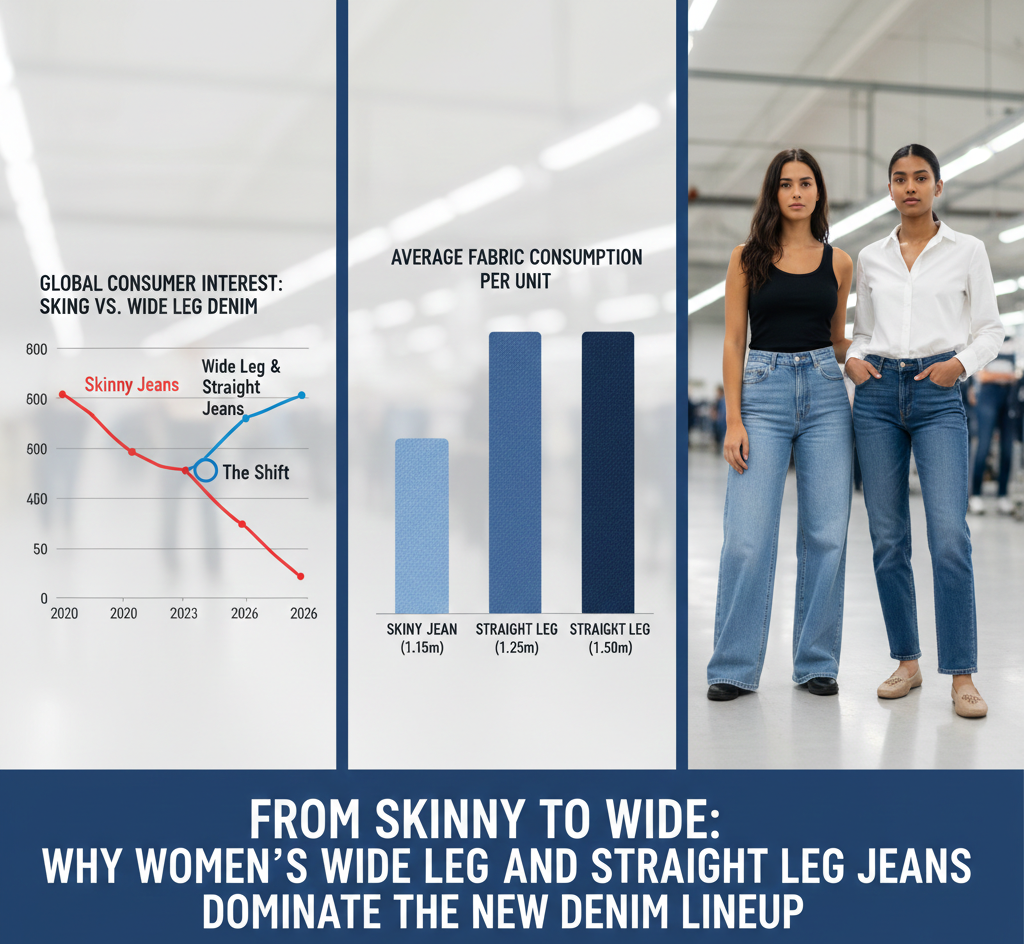
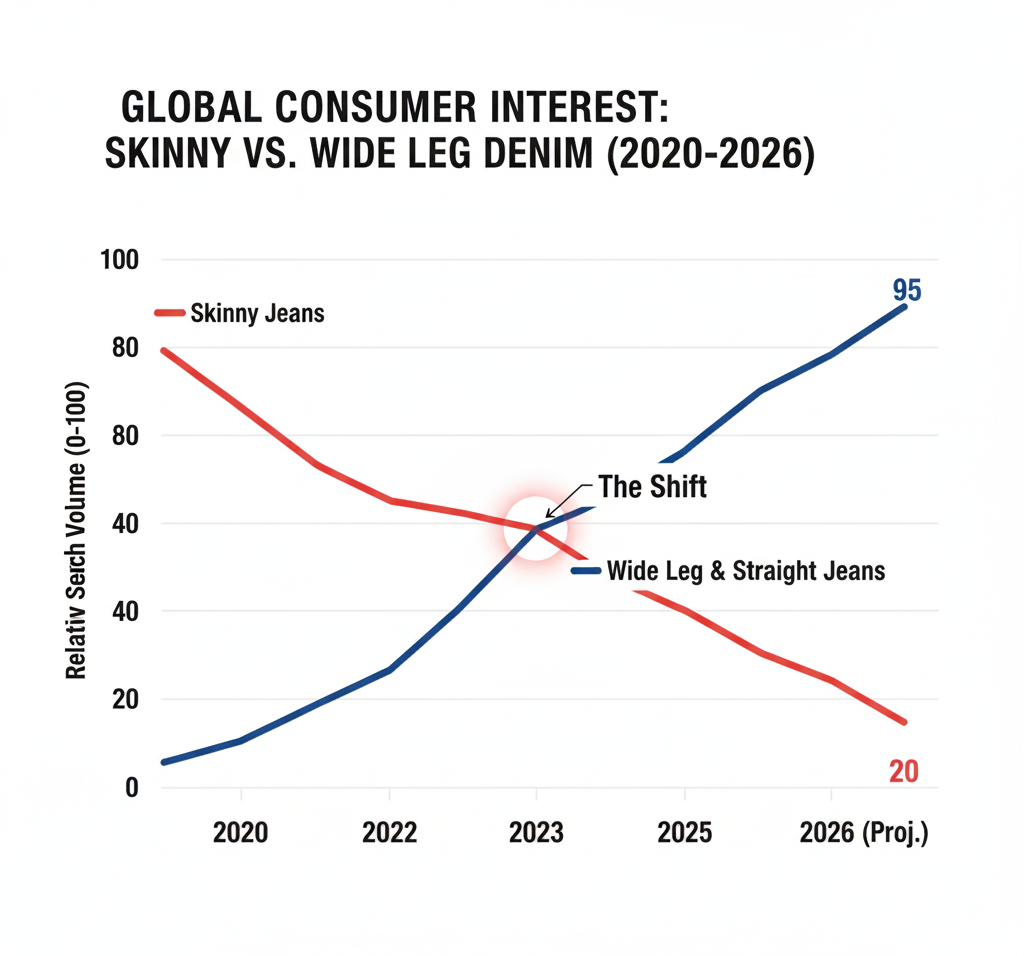
Chart Suggestion: A “Cross-Over” Line Graph based on Google Trends Data (2020–2026).
Line A (Red, declining): Search volume for “Skinny Jeans.”
Line B (Green, rising): Search volume for “Wide Leg Jeans” and “Baggy Jeans.”
Key Insight: The chart should visually show the intersection point in late 2023 where wide-leg overtook skinny, with the gap widening significantly into 2026.
Caption:Consumer Demand Shift: Volume-based silhouettes have consistently outperformed skinny fits in search interest since Q4 2023.
Why Are Consumers and Brands Abandoning the Skinny Jean?
This is the most common question on Quora threads regarding fashion retail: “Is the skinny jean actually dead?”
From a women’s fashion brands perspective, the answer is yes—for the primary rack. The shift is driven by two factors: Silhouette Balance and Fabric Authenticity.
During the skinny jean era, the focus was on “Performance Stretch” (fabrics with 20-40% elasticity). However, the current market demands “Authenticity.” Consumers want jeans that look like vintage denim—rigid, textured, and substantial. Wide leg jeans andstraight leg jeans provide the canvas to showcase these premium fabrics. A 13oz ring-spun denim looks incredible on a wide-leg cut; on a skinny jean, it is unwearable.
For boutique labels, this is a margin opportunity. Wide-leg styles allow you to market “premium structure” and “Japanese-style cuts,” which command a higher retail price than basic stretch leggings.
Does Manufacturing Wide Leg Jeans Increase the FOB Cost?
For bulk buyers, this is the critical calculation.
Yes, the FOB (Free On Board) cost for wide-leg jeans is generally 15-20% higher than skinny jeans. As a women jeans factory, we see this breakdown daily.
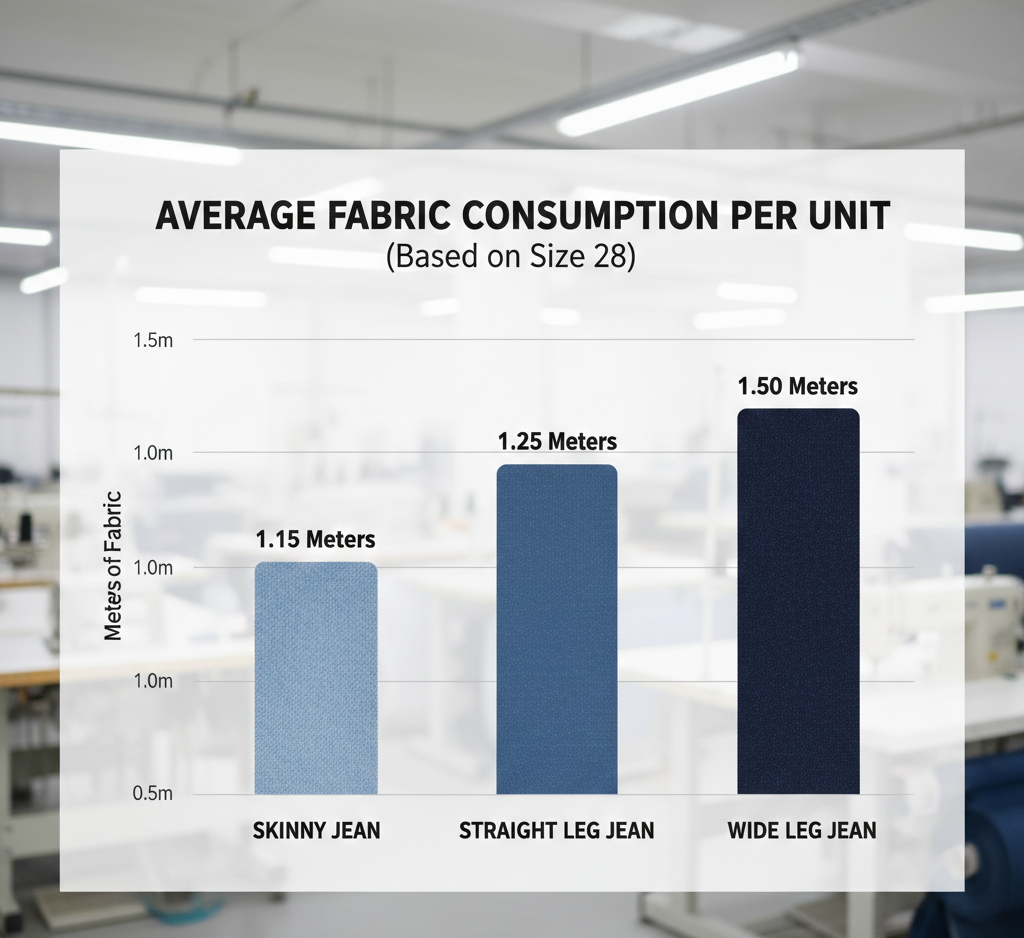
Fabric Yield (Consumption): A skinny jean might use 1.1 to 1.2 meters of fabric. A full-length wide-leg jean (especially with the trending “puddle” hem) requires 1.4 to 1.6 meters.
Cutting Waste: Because the pattern pieces are wider, the “marker efficiency” (how tightly we can arrange patterns on the fabric roll) decreases. There is more waste fabric between the legs.
Washing Complexity: Wide-leg jeans have more surface area. If you are doing a complex “Vintage Wash” with hand-sanding, the labor time per unit increases.
The Wholesale Strategy: While the cost is higher, the perceived value is unmatched. Denim importers are successfully offsetting this cost by using 100% cotton fabrics (which are sometimes cheaper per yard than high-tech T400 stretch fabrics) and marketing the product as “Premium Rigid Denim.”
Visual Insight: Production Yield
(Recommended Chart for this Section)
Chart Suggestion: A Bar Chart comparing “Fabric Consumption per Unit.”
Bar 1: Skinny Jean (Size 28) = 1.15 Meters
Bar 2: Straight Leg Jean (Size 28) = 1.25 Meters
Bar 3: Wide Leg Jean (Size 28) = 1.50 Meters
Key Insight: Visualizing the 30% increase in raw material usage explains the price difference to buyers instantly.
What Are the Technical Risks when Sourcing Wide Leg Styles?
If you browse Reddit’s r/femalefashionadvice, the number one complaint about wide-leg jeans is: “They fit my legs but gap huge at the waist.”
This is a pattern-making failure. When private label startups ask a factory to simply “widen the leg” of an existing pattern, the balance is lost.
To source successful women‘s wide-leg denim, you must verify your denim manufacturercapabilities in three areas:
The Rise Requirement: Wide legs must be High Rise (11 inches+). A mid-rise wide leg often looks sloppy unless specifically designed for a Y2K aesthetic.
Hip-to-Waist Ratio: The transition from the waistband to the hip must be sharper (more curved) than a skinny jean. This anchors the heavy fabric on the body.
Hem Weight: If the hem is too light, the wide leg will flap around. We recommend a wider hem fold (1 inch or 1.5 inches) to add weight to the bottom, ensuring the pant falls straight.
How Should Buyers Split Their Inventory: Straight vs. Wide?
We advise our brands and wholesale partners not to abandon the core customer. While skinny jeans are declining, they are not zero. However, the “New Core” is the Straight Leg Jean.
Recommended Buy Ratio for 2026:
50% Straight Leg: This is your volume driver. It fits the conservative customer and the office worker. It is the safe replacement for the skinny jean.
35% Wide Leg: This is your trend driver and image builder. It attracts the Gen Z and Millennial shopper.
15% Niche Fits: Barrel Leg, Bootcut, or Super-Wide (Palazzo).
This ratio protects denim importers from overstocking risky cuts while ensuring they are relevant to current trends.
What Fabric Should You Specify for the “New Denim Lineup”?
This is where denim manufacturers can make or break your collection.
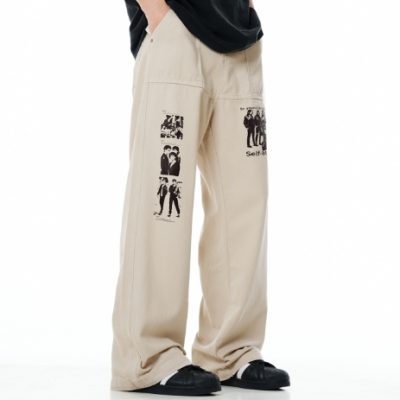
For Wide Leg: Do NOT use high stretch. If you use a thin, 10oz high-stretch fabric for wide-leg jeans, they will look like pajamas. You need “hold.” Specify 12oz to 13.5oz Rigid Denim or “Comfort Stretch” (99% Cotton, 1% Elastane).
For Straight Leg: You have more flexibility. A mid-weight 11oz denim with 2% stretch works perfectly for a vintage look that is still comfortable for sitting all day.
Conclusion: Partnering for the Shift
The market has spoken: the silhouette has expanded. For women’s fashion brands, this is an opportunity to sell product that commands a higher price point and builds stronger brand loyalty through better fits.
However, executing this shift requires a women jeans factory that understands the physics of heavy fabric and wide patterns. You cannot make a premium wide-leg jean on a production line optimized for cheap jeggings.
Are you ready to update your denim line? We are a specialized manufacturer helping bulk buyers and boutique labels transition their supply chains to modern fits.
FAQ: Quick Sourcing Guide
Q: What is the lead time for custom wide-leg jeans production?
A: Standard lead time is 35-45 days. However, because wide-leg jeans consume more fabric, we recommend finalizing fabric booking 2 weeks earlier than usual to ensure the mill has sufficient stock for your bulk order.
Q: Can you replicate a vintage fit from a sample?
A: Yes. Many boutique labels send us vintage Levi’s 501s or 90s skater pants. We can clone the fit while adjusting the pattern for modern sizing consistency.
Q: Do you offer low MOQ for street fashion startups?
A: Yes. We support private label startups and street brands. If you use our running stock of 13oz Rigid Denim, we can offer flexible MOQs to help you test the wide-leg market.
📊 Visual Data Summary for Buyers
(This section summarizes the data logic for the client)
Our Team is available 24/7 for support and fast response, giving full advice on your products and sharing engineering knowledge. Whether you order or not, we’re always here to support your business.