

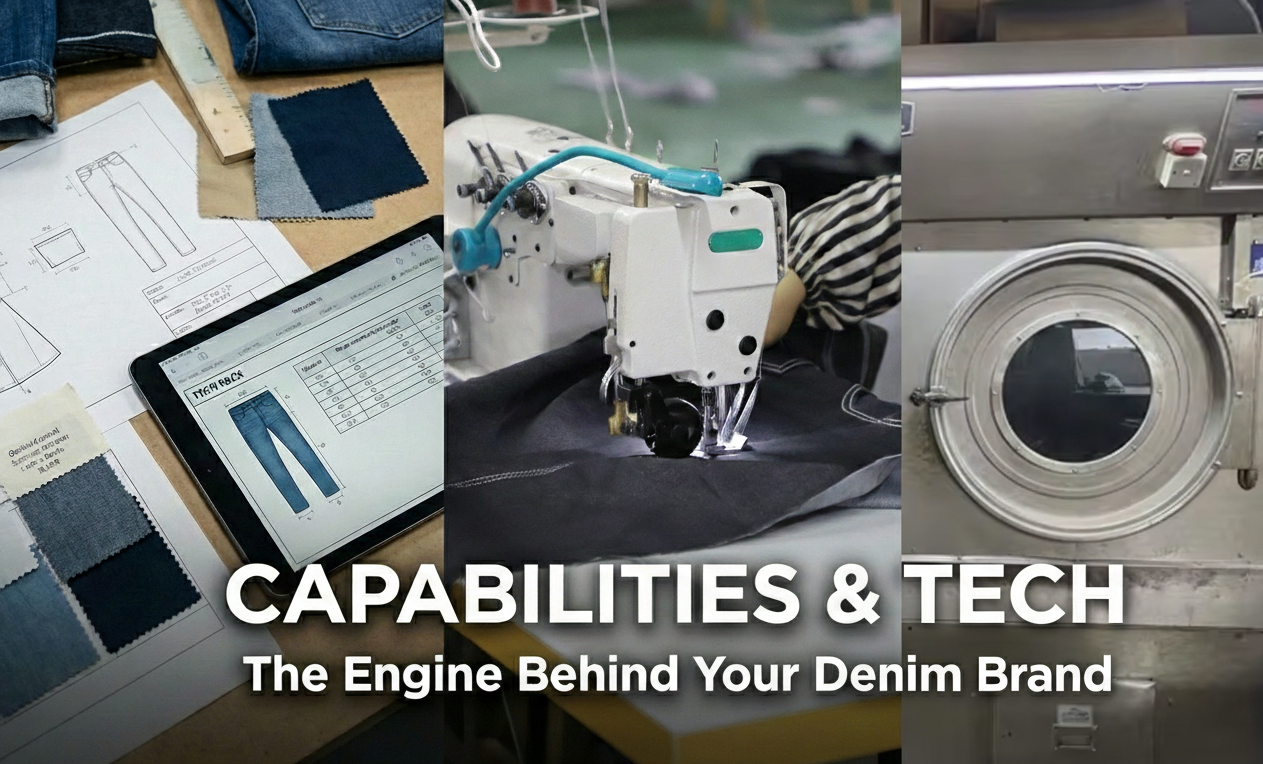
Custom denim manufacturing requires aligning fabric behavior, technical pattern construction, garment sewing, wet processing, and quality standards into a single repeatable production system. Unlike general apparel production, denim garments undergo significant physical and chemical transformations during washing and finishing, which directly influence final measurements, hand feel, and surface appearance.
At Xinen Garment, custom denim manufacturing focuses on taking approved product specifications and translating them into controlled bulk production, maintaining accuracy and consistency across every stage of the manufacturing process.
What Does Custom Denim Manufacturing Involve?
For a fashion brand, custom denim manufacturing is the process of executing an approved design specification into finished, shelf-ready garments. It extends beyond basic cutting and sewing, encompassing:
- Material Confirmation: Verifying that production fabric lots, pocketing, threads, hardware, and trims match approved development standards.
- Technical Preparation: Translating approved fit samples and measurement charts into production markers, graded patterns, and assembly instructions.
- Garment Construction: Cutting and sewing denim panels using specified seam structures, thread weights, and stitch densities.
- Washing & Finishing: Executing wet and dry processing to achieve targeted shades, distress details, and surface textures while controlling fabric shrinkage.
- Quality Control & Inspection: Monitoring measurements, seam strength, trim attachment, and appearance standards at designated production checkpoints.
- Final Packing & Logistics: Trimming, pressing, tagging, folding, and packaging garments according to retail specifications.
Manufacturing typically begins once key product requirements have been established and approved during the development stage.
From Approved Denim Product to Bulk Production
Transitioning a denim garment from sampling to bulk manufacturing requires clear technical documentation and material alignment. Before cutting begins, production specifications must be locked to prevent discrepancies during sewing and washing.
A standard transition workflow follows these steps:
- Approved Reference Sample: Locking the physical reference for fit, construction detail, and wash aesthetic.
- Final Technical Specifications: Confirming measurement charts, grading rules, seam details, and trim placement.
- Material Confirmation: Securing verified bulk fabric rolls and hardware components.
- Production Marker & Cutting: Optimizing fabric yields and cutting panels according to grainlines.
- Bulk Sewing Assembly: Constructing the raw garments according to tech pack guidelines.
- Washing & Wet Processing: Executing approved wash formulas to achieve color, hand feel, and character.
- Finishing & Quality Control: Attaching hardware, inspecting measurements, removing loose threads, and conduct final checking.
Clear confirmation of fabrics, trims, measurements, and wash references before starting production minimizes variations during bulk execution.
Our Denim Manufacturing Framework
Xinen Garment operates a structured manufacturing framework where each stage of production is integrated with technical oversight. The core capabilities of this system are detailed across six dedicated areas:
Custom Denim Manufacturing
Our garment construction facilities produce a broad range of custom denim apparel tailored to brand specifications. We manufacture custom jeans across various fits—ranging from slim and straight to relaxed and oversized silhouettes—as well as denim jackets, shorts, skirts, and cargo or utility denim garments. Production focuses on executing clean seam construction, accurate pocket placement, and consistent stitching across complex panel layouts.
Fabric & Materials
Bulk denim manufacturing relies on fabric lot consistency and material verification. We work with rigid and stretch denim fabrics across various weights, compositions, weave structures, and indigo shades. Prior to bulk cutting, fabric lots are checked for width, weight, shade consistency, and shrinkage behavior. Supporting components—including pocketing cloth, high-tenacity sewing threads, zippers, rivets, tack buttons, shank buttons, leather patches, and main labels—are confirmed against tech pack standards to ensure durability and aesthetic compatibility.
Learn more about material management on our Fabric & Materials page.
Pattern & Technical Development
The technical preparation stage translates approved fit samples into repeatable bulk manufacturing specifications. While fit development during sampling determines garment shape and balance, technical production preparation focuses on grading patterns accurately across all sizes, establishing cutting markers, and defining production seam allowances. We evaluate pattern adjustments to account for expected wash shrinkage, ensuring that finished garments align with the approved measurement chart after wet processing.
Learn more about technical specifications on our Pattern & Technical Development page.
Washing & Finishing
Denim washing is a critical manufacturing phase that alters both the aesthetic and physical attributes of the garment. Wet and dry processing techniques—such as enzyme washes, stonewashes, bleaching, ozone treatments, hand scraping, resin coating, and laser distressing—must be carefully controlled to achieve targeted color shades and hand feel. Because washing directly impacts fabric shrinkage, stretch recovery, and finished garment measurements, wash parameters are carefully managed to match approved production samples.
Learn more about wash management on our Washing & Finishing page.
Quality Control
Quality control is integrated throughout the production workflow rather than left as a single check at the end of the line. Inspection points occur during fabric receiving, panel cutting, inline sewing, post-wash processing, and final packaging. Checkpoints focus on seam integrity, hardware attachment security, measurement tolerances, wash consistency, and overall garment appearance against approved reference standards.
Production Process
The bulk production sequence coordinates material movement, cutting schedules, sewing line setup, wash house routing, and finishing operations. Each phase is scheduled to maintain steady production flow and allow sufficient time for quality inspections between stages.
Learn more about the full operational sequence on our Production Process page.
How Denim Development Connects With Manufacturing
Denim manufacturing relies directly on decisions made during initial product development. Because denim materials react dynamically during washing, small adjustments in early development impact bulk manufacturing:
- Fabric Selection vs. Pattern & Fit: A change in fabric weight, composition, or stretch percentage alters shrinkage rates, requiring adjustments to production patterns to achieve target finished measurements.
- Construction Details vs. Sewing Line Setup: Specifying heavy thread weights, flat-felled seams, or reinforced pocket corners requires specific machinery setup and folder attachments on the sewing line.
- Wash Intensity vs. Measurement & Shade: A deeper wash or heavier abrasion process can alter garment dimensions and fabric tensile strength, making precise wash parameter tracking essential.
- Trim & Hardware Selection vs. Attachment: Heavyweight denim fabrics require specific button shank lengths and rivet post lengths to ensure secure attachment without damaging the cloth.
Understanding these interdependencies ensures that product refinements during development translate smoothly into bulk production.
For more details on initial product creation, explore our Denim Development sections: Fit & Pattern Development, Fabric Selection, Wash Development, Sampling & Fit Approval, and Denim Tech Pack.
What Happens Before Bulk Denim Production?
To establish a clear production baseline, key specifications must be reviewed and confirmed prior to bulk execution:
- Approved Fit Sample: A physical sample representing approved fit, balance, and general construction.
- Complete Tech Pack: Detailed garment flat sketches, seam callouts, thread specifications, and label placement guides.
- Approved Measurement Chart: Measurement specs per size, including acceptable tolerance guidelines.
- Confirmed Fabric & Trims: Approved fabric lots, pocketing materials, thread colors, and hardware styles.
- Approved Wash Reference: Physical wash target establishing acceptable shade, distressing, and hand feel ranges.
- Grading Rules: Approved size increments across all production sizes.
- Packaging Requirements: Hanger, folding, polybag, hangtag, and carton labeling guidelines.
Resolving incomplete or conflicting specifications prior to production prevents delays and manufacturing errors.
Custom Denim Manufacturing for Different Product Types
Manufacturing requirements vary depending on garment structure and styling elements:
Custom Jeans
Jeans require precise pattern balance across the waistband, front rise, back rise, seat, and leg openings. Sewing demands durable seam construction, such as lap seams on the inseam or back rise, reinforced bar-tacks on stress points, and accurate fly assembly.
Baggy and Wide-Leg Denim
Voluminous silhouettes require careful pattern grading to preserve proportional balance across sizes. Fabric weight and drape heavily influence how wider leg shapes hang, requiring appropriate wash processing to achieve the desired drape and hand feel.
Cargo and Utility Denim
Cargo denim involves complex panel construction and multiple pocket assemblies. Precision cutting and positioning ensure pocket symmetry, while bar-tacking reinforces pocket flaps, straps, and stress points.
Denim Jackets
Jackets feature intricate panel layouts, chest pockets, collar assemblies, button plackets, and adjustable waistband tabs. Panel alignment across seams is critical prior to wash processing to prevent uneven fading or twisting.
Denim Shorts and Skirts
Shorts and skirts demand precise waistband construction, clean hem finishing (raw, frayed, or stitched), and accurate pocket placement relative to shorter garment lengths.
What Can Affect the Final Denim Production Result?
Denim manufacturing involves organic fibers, chemical treatments, and manual processing. Several operational variables influence final production outcomes:
- Fabric Lot Variations: Differences between fabric dye lots can lead to subtle variations in base shade or wash reaction.
- Shrinkage & Stretch Rates: Variations in warp/weft shrinkage during washing can impact final garment measurements.
- Manual Finishing Processing: Hand-scraping, whiskering, and localized abrasion are performed manually, introducing natural, minor variations between individual pieces.
- Wash House Conditions: Water temperatures, chemical ratios, batch sizes, and drying times must be carefully regulated to maintain shade consistency.
- Mid-Production Design Changes: Modifying construction details or measurements after cutting has commenced introduces risk of measurement or assembly inconsistencies.
Clear technical documentation and approved physical reference samples help manage these natural manufacturing variables.
What Happens If a Product Requirement Changes During Production?
If a product specification change becomes necessary after production has begun, a structured review process is required:
- Impact Assessment: Evaluating how the proposed change affects pattern dimensions, wash shrinkage, sewing operations, or trim compatibility.
- Sample Verification: Creating a physical sample or mock-up if the change alters fit, construction, or wash appearance.
- Documentation Update: Updating the tech pack, measurement chart, or bill of materials to reflect the revised standard.
- Production Approval: Confirming and signing off on updated specifications before applying changes to the active manufacturing line.
Unapproved verbal or informal adjustments during bulk sewing or washing increase the risk of product non-conformity.
Repeat Denim Production
Executing repeat production orders involves maintaining long-term product consistency across different manufacturing runs. Successful re-orders depend on managing consistent baseline standards:
- Archived Technical Patterns: Retaining master digital patterns and grading sets.
- Standardized Wash Formulas: Documenting liquor ratios, chemical treatments, cycle times, and temperatures used in previous production runs.
- Material Baseline Matching: Checking new fabric lots against master shade bands and weight standards.
- Reference Sample Retention: Maintaining approved historical production samples for visual and dimensional comparison.
When fabric suppliers or wash facilities change between production runs, re-evaluating shrinkage and shade bands is necessary to protect product continuity.
How Xinen Garment Supports Custom Denim Manufacturing
Xinen Garment manages custom denim production by linking technical preparation directly with factory execution. Our support structure covers:
- Technical Pre-Production Review: Verifying tech packs, pattern specs, and shrinkage calculations before cutting.
- Material Coordination: Sourcing and inspecting fabrics, threads, and hardware to ensure compatibility with denim processing.
- Garment Construction: Managing cutting and sewing operations using specialized denim machinery and folder attachments.
- Wash & Finish Management: Coordinating wet and dry processing against physical wash targets.
- Quality Inspection Routines: Conducting inline and final inspections to verify measurements, seam strength, and finishing standards.
- Packaging & Shipment Preparation: Packing garments according to retail specifications, folded or hung, ready for distribution.
What Does a Brand Need to Provide Before Production?
To initiate a bulk denim manufacturing project efficiently, a brand should typically provide:
- Complete Tech Pack or Design Artwork: Detailing garment construction, stitching callouts, and design details.
- Approved Measurement Spec Sheet: Including graded dimensions for all required sizes.
- Physical Reference Sample (if available): For fit, construction, or wash evaluation.
- Fabric & Trim Specifications: Describing desired fabric weight, composition, hardware finishes, and branding labels.
- Target Wash Standard: Physical sample or clear visual reference defining shade, fading, and distress levels.
- Order Quantities & Size Breakdowns: Specifying total units per colorway and size allocation.
If technical packages are incomplete, our development team can assist in finalizing specifications prior to manufacturing sign-off.
How Long Does Custom Denim Manufacturing Take?
Denim manufacturing lead times depend on several project variables rather than a single fixed timeline. Key factors influencing production duration include:
- Material Availability: Sourcing custom-dyed or specialty denim fabrics versus using available stock mill fabrics.
- Design & Wash Complexity: Complex multi-panel garments, extensive manual distressing, or multi-stage washes require longer processing times.
- Sampling and Sign-off Status: Production scheduling begins only after all fit, fabric, and wash samples receive formal sign-off.
- Order Quantity & Factory Capacity: Larger order volumes or peak seasonal production schedules affect queue times.
Project-specific timelines are established during the pre-production planning stage once specifications are locked.
Custom Denim Production Process at a Glance
Product Approval & Spec Sign-off
               ↓
Material Sourcing & Verification
               ↓
Pattern Grading & Marker Preparation
               ↓
Precision Bulk Cutting
               ↓
Garment Assembly & Sewing
               ↓
Wet Processing, Washing & Distressing
               ↓
Hardware Attachment & Trimming
               ↓
Quality Control & Measurement Check
               ↓
Final Pressing, Tagging & Packing
               ↓
Shipment & Logistics Handover
Note: The exact operational workflow may adapt based on fabric behavior, garment construction, or specific wash requirements.
Frequently Asked Questions About Custom Denim Manufacturing
What is custom denim manufacturing?
Custom denim manufacturing is the process of producing denim garments—such as jeans, jackets, shorts, and skirts—according to a brand’s specific design, fit, fabric, trim, and wash requirements, rather than purchasing pre-made blank products.
What is the difference between denim development and manufacturing?
Denim development focuses on creating and refining the product through design, pattern making, fabric sourcing, wash testing, and sampling until a final prototype is approved. Manufacturing focuses on reproducing that approved prototype consistently in bulk quantities.
What information does a brand need to provide before bulk production?
A brand should provide a complete tech pack, measurement chart, graded size specs, approved fabric and trim details, a physical or visual wash target, and order quantity breakdowns.
Can fabric changes affect denim production?
Yes. Changing fabric weight, fiber content, or stretch composition alters fabric shrinkage and drape, which can affect pattern fit, seam behavior, and final wash appearance.
Does denim washing affect finished measurements?
Yes. Wet processing causes denim fabric to shrink or relax. Production patterns must be engineered with specific shrinkage allowances so that garments measure accurately after washing.
How is quality checked during denim manufacturing?
Quality checks occur at multiple stages: raw material inspection upon arrival, inline checks during sewing, inspection following wet processing, hardware security testing, measurement verification, and final packing audits.
What is involved in repeat denim production?
Repeat production requires matching new fabric lots to original shade standards, using archived digital patterns, and applying established wash formulas to maintain product consistency across production runs.
How long does custom denim manufacturing take?
Lead times vary based on fabric availability, design complexity, wash intensity, sample approval timing, and order volume. Specific timelines are determined once project details are finalized.
Have a Custom Denim Product Ready for Production?
If you have finalized tech packs, approved samples, or defined denim specifications ready for bulk manufacturing, contact our team to review your technical requirements, material needs, and production scheduling.


