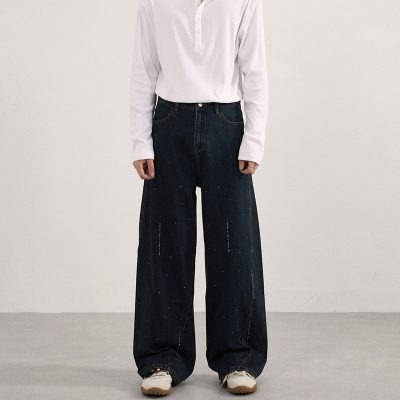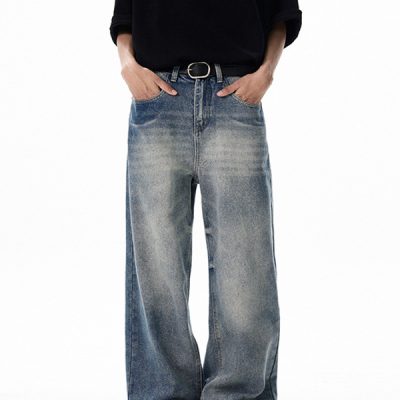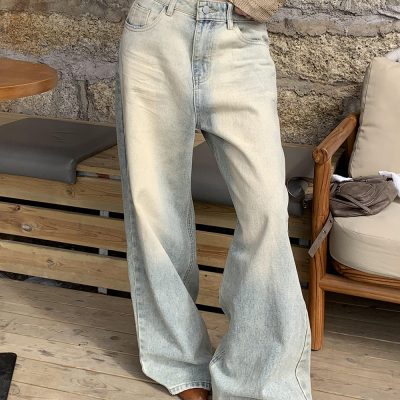
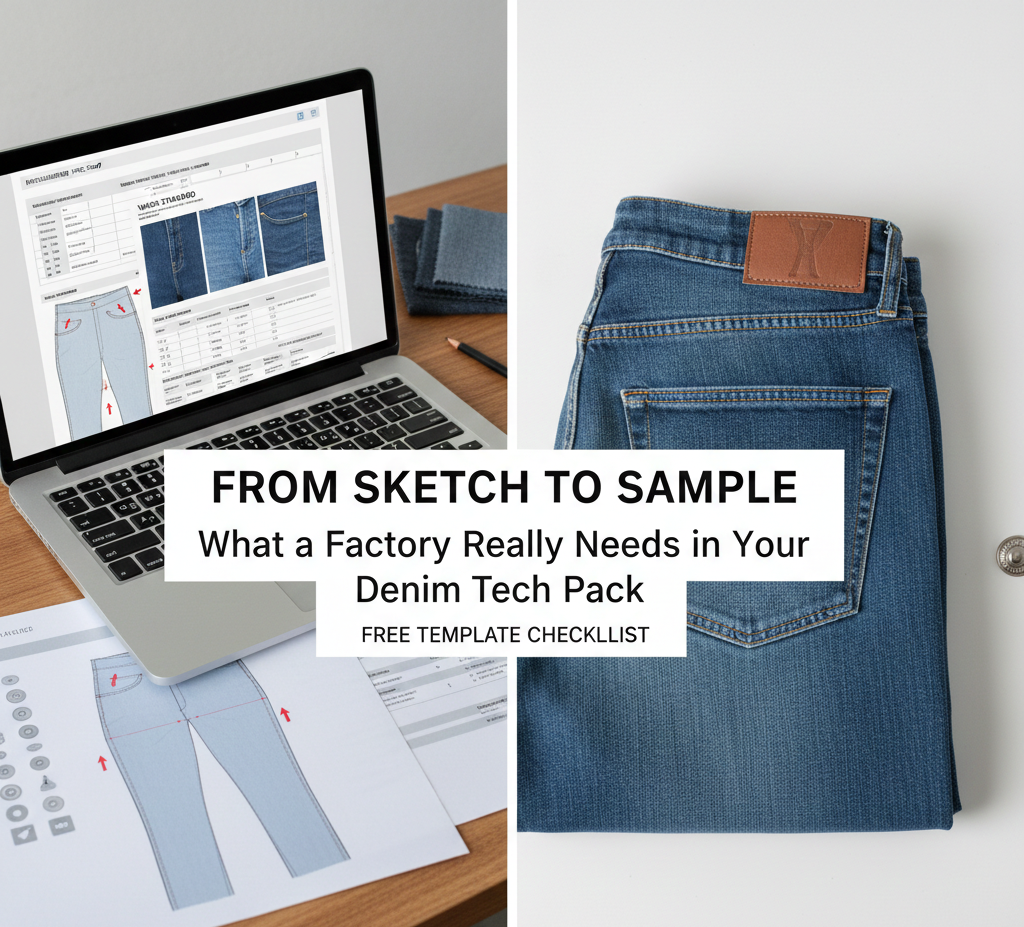
You have a great design sketch. You have a target customer. You even have a brand name. Now, you are ready to send your design to a denim factory to get a sample made.
But when you receive the first sample, it looks wrong. The fit is too tight, the wash looks “cheap,” and the whiskers are in the weirdest places.
Why did this happen?
In 90% of cases, the problem isn’t the factory’s skill—it’s the Tech Pack.
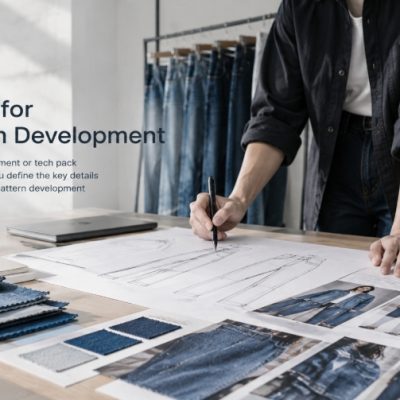
As a denim manufacturer, we see hundreds of tech packs every month. Some are 20-page books; others are a single photo sent via WhatsApp. The truth is, we don’t need fancy graphic design. We need specific technical instructions that tell our machines and washing laundry exactly what to do.
Here is a guide on how to build a denim tech pack that gets you a perfect sample on the first try, including a checklist you can copy right now.
Why is a Denim Tech Pack different from a T-shirt Tech Pack?
If you are making a T-shirt, you give the factory the fabric weight (e.g., 200gsm cotton) and the measurements. It is simple.
Denim is a beast. It is a “living” fabric.
- It Shrinks: A pair of jeans can shrink 10% – 15% after washing. If your tech pack doesn’t account for this, your “Size 32” will arrive fitting like a “Size 29.”
- It Changes Color: You aren’t just picking a fabric color; you are creating a “recipe” for the laundry to wash the blue indigo down to your desired shade.
- It Has Heavy Hardware: Rivets, shank buttons, and leather patches need specific placement instructions, or they will break your sewing needles.
A standard apparel tech pack is not enough. You need a Denim-Specific Tech Pack.
Question 1: How do I specify the “Wash” so it doesn’t look cheap?
This is the #1 reason for sample rejection. You write “Vintage Blue” in your tech pack, but every factory has a different idea of what “Vintage” means.
To a factory, a “Wash” is a chemical formula. We need to know two things:
- The Base Color (Cast): Do you want the blue to have a Green Cast (vintage look), a Red Cast (modern look), or a Grey Cast (dusty look)?
- The “Highs and Lows”: How much contrast do you want between the seams and the flat fabric?
The Factory-Approved Solution: Never rely on words. Use photos. In your Tech Pack, include a “Wash Standard” page.
- Photo A: “Overall Color Target” (The general shade of blue).
- Photo B: “Whisker Placement” (Where the white lines on the hips should go).
- Photo C: “Destruction Level” (Do you want clean holes or messy, hairy holes?).
Pro Tip: If you can, send the factory a physical pair of old jeans to use as a “Wash Reference.” We can match a physical sample 95% closer than a digital photo.
Question 2: What measurements do I actually need to provide?
Many brands download a generic measurement sheet online. Please don’t do this. Denim requires specific points of measure (POM) that other pants don’t.
Here are the critical POMs often missed:
- Front Rise & Back Rise: Crucial for the fit. Denim doesn’t drape; it structures the body.
- Thigh (at 1 inch below crotch): This determines if the jeans feel “tight” when sitting down.
- Knee (at 12-13 inches below crotch): This dictates the silhouette (Skinny, Slim, or Straight).
- Leg Opening: Be exact here. A 6-inch opening is a “Skinny.” A 7-inch opening is a “Slim.” A 0.5-inch difference completely changes the style.
The “Shrinkage” Trap: When you give us measurements, please specify: “Before Wash” (BW) or “After Wash” (AW)?
- We strongly recommend you provide Target Body Measurements (After Wash).
- Let the factory calculate the shrinkage pattern. We know our fabric better than you do. We will cut the pattern bigger so it shrinks down to your target size.
Question 3: Why does the thread color and thickness matter?
Have you ever looked at a pair of luxury jeans vs. supermarket jeans? The difference is often the Stitch Perception (SPI) and thread thickness.
Cheap jeans use thin thread and long stitches (low SPI) to save money. Premium jeans use thick thread and short, tight stitches.
In your Tech Pack, “Construction” section, specify this:
- Stitch Type: Do you want a Chain Stitch (looks like a rope, used on waistbands and hems) or a Lock Stitch (flat and standard)?
- Recommendation: Use Chain Stitch on the waistband and bottom hem for that authentic denim look.
- Thread Color: Denim usually uses two colors.
- Tobacco (Gold/Orange) for the main seams.
- Navy Blue (Tonal) for the pockets and hidden areas.
- SPI (Stitches Per Inch):
- Standard Commercial: 8-9 SPI.
- Premium / Vintage: 10-12 SPI (Takes longer to sew, but looks expensive).
Question 4: What about the “BOM” (Bill of Materials)?
The BOM is your shopping list. If it’s not on the list, we won’t buy it.
For denim, your BOM must include:
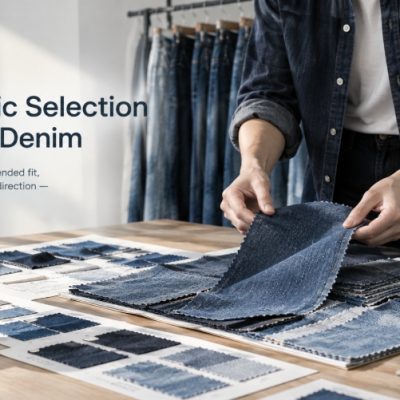
- Main Fabric: Weight (e.g., 12oz), Composition (e.g., 99% Cotton / 1% Elastane).
- Pocketing Fabric: This is the white fabric inside the front pockets. Do you want it thin (cheap) or heavy twill (premium)?
- Main Button: Usually a 17mm metal shank button. (Copper, Silver, or Gunmetal finish?)
- Rivets: Usually 9mm nipples for the pocket corners.
- Zipper: YKK is the industry standard. Specify the size (usually #4 or #5 for denim).
- Leather Patch: Dimensions and artwork file for the back waistband.
Factory Reality Check: If you leave the “Rivet” section blank, we will use whatever silver rivets we have in stock. If you want specific “Matte Black” rivets, you must list it in the BOM.
Free Template Checklist: The “Factory-Ready” Denim Tech Pack
You don’t need expensive software. A clean Excel sheet or PDF is perfect. Before you hit “Send” on your inquiry, check if you have these 6 pages.
Page 1: The Cover Sheet
- [ ] Sketch of the Front and Back (Black & White).
- [ ] Style Number (e.g., DNM-2026-001).
- [ ] Fabric Description (e.g., 12oz Comfort Stretch Indigo).
- [ ] Intended Size Range (e.g., 28 – 38).
Page 2: Construction Callouts
- [ ] Arrow pointing to Waistband: “Chain Stitch preferred.”
- [ ] Arrow pointing to Hems: “Raw edge” or “Clean finish”?
- [ ] Arrow pointing to Fly: “Zipper Fly” or “Button Fly”?
- [ ] Thread Colors defined (e.g., “Topstitching: Gold Tex-80”).
Page 3: Measurement Spec Sheet (The most important page!)
- [ ] List of all Points of Measure (Waist, Hips, Thigh, Knee, Inseam, etc.).
- [ ] Sample Size measurements (e.g., Size 32).
- [ ] Note: “All specs are After Wash targets.”
Page 4: The Wash “Recipe”
- [ ] 1 High-Res Reference Photo for Overall Color.
- [ ] 1 Close-up Photo for Whiskers/Fading.
- [ ] 1 Close-up Photo for Destruction/Rips (if any).
- [ ] Text Description: “Mid-Blue, Stone Wash, Soft Handfeel.”
Page 5: Bill of Materials (BOM)
- [ ] Main Fabric (Width/Weight).
- [ ] Buttons (Size/Finish).
- [ ] Rivets.
- [ ] Zippers.
- [ ] Labels (Main label, Care label, Size tag).
- [ ] Patches (Leather/Paper).
Page 6: Branding Placement
- [ ] Artwork for the Main Button (if custom).
- [ ] Artwork for the Leather Patch.
- [ ] Exact placement of the woven logo label (e.g., “Sew on top of right back pocket”).
Conclusion: Help Us Help You
A clear Tech Pack is a sign of a professional brand. It tells the factory, “I know what I want, and I am ready to do business.”
When your instructions are clear, we don’t have to guess. We don’t have to pause production to email you about button colors. We can focus on what we do best: cutting, sewing, and washing high-quality denim.
Are you ready to turn your Tech Pack into a physical sample? At Xinen Garment, we specialize in helping brands navigate the complex world of denim production. Whether you have a perfect PDF or just a sketch and a dream, we can guide you to the next step.
FAQ: Common Tech Pack Questions
Q: Do I need Adobe Illustrator to make a Tech Pack?
A: No. While Illustrator is the industry standard for sketches, many successful brands start with clear hand drawings and Excel sheets. As long as the measurements and photos are clear, we can work with it.
Q: Can I just send you a sample from another brand and say “Copy this but change the logo”?
A: Yes! This is actually the safest and fastest way to start. It’s called a “Counter Sample.” You send us a pair of jeans that you love the fit of, and we use that as the “Technical Standard” for the fit, while you customize the wash and details.
Q: How much detail do I need for the fabric?
A: If you are new, just describe the feeling and weight. Example: “I want a heavy, rigid denim like vintage ” or “I want a super stretchy, soft denim like leggings.” Our fabric sourcing team will send you swatches that match your description.
Q: What is a “Grading Rule”?
A: Grading is how the measurements change between sizes (e.g., Size 30 to Size 32). If you don’t know how to grade, just provide the measurements for one sample size (e.g., Size 32). We have standard industry grading rules we can apply for the rest of your sizes.