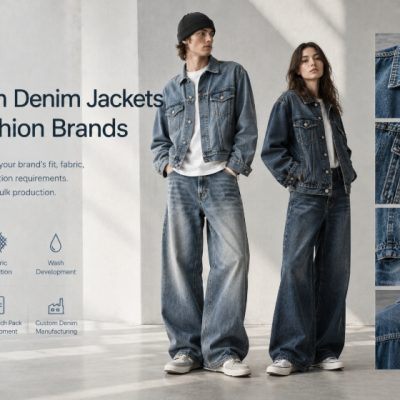
Designing a denim jacket is structurally more complex than designing a pair of jeans. A jacket has to support collars, cuffs, heavy hardware, and complex panel stitching while still draping perfectly across the shoulders. The success of your design entirely depends on one foundational choice: the fabric.
Choose a fabric that is too light, and your trucker jacket will look like a flimsy shirt. Choose one that is too heavy, and it becomes too stiff for daily wear. At Xinen Garment, we guide brands through these technical decisions every day on our factory floor.
If you are developing a new outerwear line, here is our complete factory-level breakdown of the best fabrics for denim jackets.
What Is the Ideal Denim Weight for a Classic Trucker Jacket?
Weight is the most critical metric in denim sourcing. For a standard, year-round trucker jacket, you need a fabric that balances rugged durability with wearable flexibility.
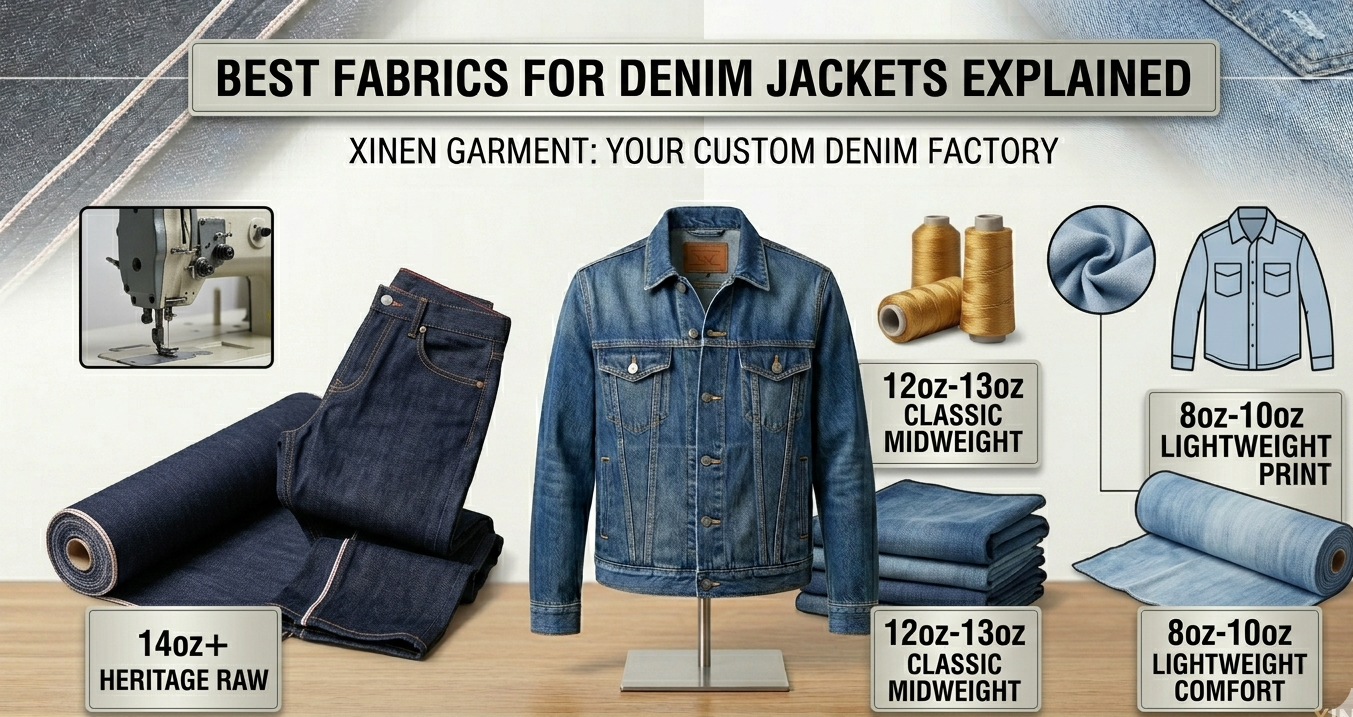
- The Industry Standard (12oz – 13oz): This is the sweet spot. A 12oz to 13oz denim provides enough rigidity to hold sharp collar lines and support the heavy shank buttons down the front placket without sagging. It also responds beautifully to aggressive enzyme washes and pumice stone distressing, creating high-contrast vintage fades at the seams.
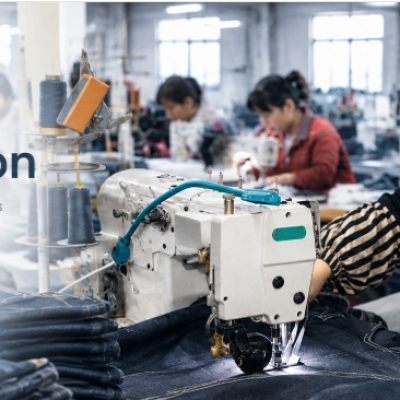
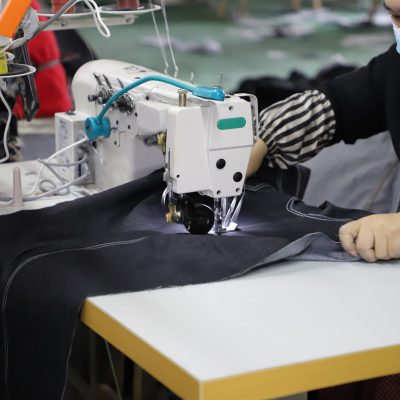
- The Factory Note: When handling 13oz denim, standard needles aren’t enough. At Xinen, our jacket production lines are equipped with heavy-duty sewing machines capable of seamlessly passing through multiple layers of thick 13oz fabric, especially around the armholes and chest pocket flaps.
When Should You Choose 100% Rigid Cotton Over Stretch Blends?
The composition of your fabric defines the jacket’s aesthetic and break-in process. You must choose between heritage authenticity and modern comfort.
- 100% Rigid Cotton: This is the purist’s choice. Rigid cotton has zero stretch and offers an authentic, vintage Americana look. It creates the sharpest, most permanent wear patterns (honeycombs at the elbows). If your brand targets the premium streetwear or heritage market, 100% cotton is mandatory.
- The Stretch Blend (98% Cotton / 2% Elastane): If you are designing a slim-fit jacket or targeting the mass market, adding 1% to 2% elastane provides crucial mobility across the back and shoulders. It offers “day-one comfort” without sacrificing the classic denim look.
Why Are Lightweight Denim Fabrics Essential for Summer “Shackets”?
As seasons change, the oversized “shacket” (shirt-jacket) has become a massive retail trend. A traditional 13oz denim is too heavy for this silhouette.
- The Lightweight Solution (8oz – 10oz): For spring and summer collections, we switch to lightweight denim in the 8oz to 10oz range. This fabric drapes softly over the body rather than maintaining a boxy shape.
- Fabric Upgrades: To enhance the drape, we often recommend blending cotton with Tencel or Lyocell. These fibers make an 8oz denim feel incredibly soft and breathable, perfect for layering over a simple t-shirt during warmer months.
How Does Fabric Shrinkage Impact Your Jacket Sizing?
This is a technical detail that many middlemen and startup brands ignore, often resulting in disastrous sizing issues.
- The Reality of Wet Processing: Denim shrinks during the factory wash process. A 100% cotton jacket will shrink differently than a stretch-blend jacket. If you use the exact same paper pattern for both fabrics, the final jackets will be two different sizes.
- Our Process: Before we cut the bulk fabric for your jackets, Xinen Garment conducts rigorous shrinkage tests on the raw fabric rolls. We calculate the exact vertical and horizontal shrinkage percentages and adjust your CAD patterns accordingly, ensuring your Medium fits exactly like a Medium, wash after wash.
Key Takeaways
- Aim for 12oz-13oz: This is the ultimate midweight range for classic, durable denim jackets.
- 100% cotton equals authenticity: Use rigid cotton for vintage washes and streetwear fits, but switch to a 2% stretch blend for slim-fitting modern styles.
- Lightweight for draping: Use 8oz-10oz denim (preferably with Tencel) if you are designing flowy, oversized summer shackets.
- Factor in shrinkage: Always partner with a factory that adjusts patterns based on the specific shrinkage rate of your chosen fabric roll.
Frequently Asked Questions (FAQ)
Q: Can I use the exact same fabric for both my jeans and my jackets?
A: Yes, this is highly recommended if you want to sell matching “denim sets.” Using the same bulk fabric roll guarantees that the jacket and the jeans will absorb the wash recipe identically, resulting in a perfect color match.
Q: Does heavyweight 14oz+ denim work for jackets?
A: Yes, but it is a niche product. 14oz or 15oz selvedge denim makes an incredible, armor-like winter jacket, but it requires a very long break-in period for the consumer. It is best suited for premium heritage brands.
Q: Can Xinen source specific fabrics for my 100-piece jacket order?
A: Absolutely. Even with our low MOQ of 100 pieces per style, we can source specific weights, compositions, and weave textures directly from our partner denim mills to meet your Tech Pack requirements.
Q: How do slub yarns affect the jacket’s appearance?
A: Slub yarns are intentionally spun with variable thicknesses. When woven into denim and washed, they create a beautiful, irregular, “cross-hatch” texture that perfectly mimics vintage 1950s denim. It’s an excellent upgrade for high-end jacket collections.