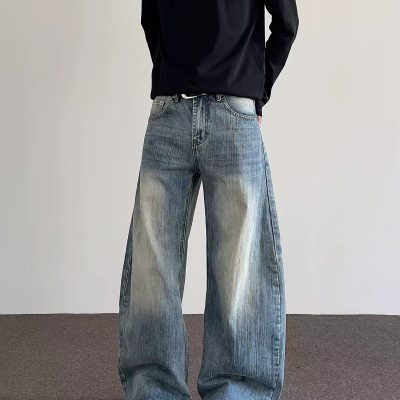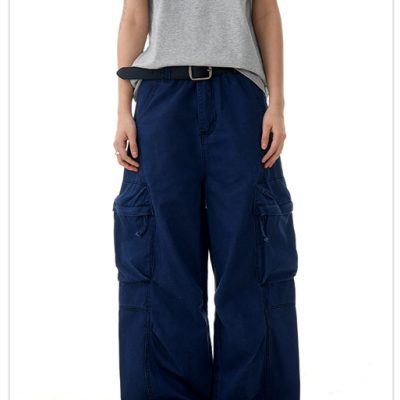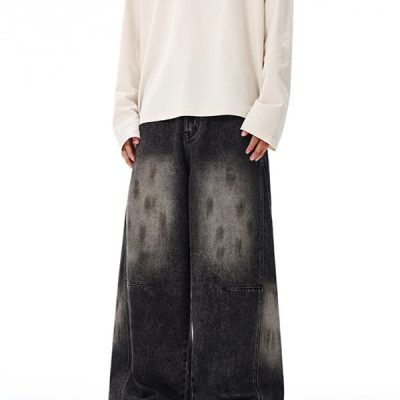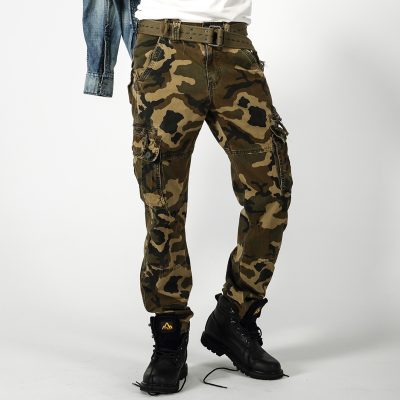
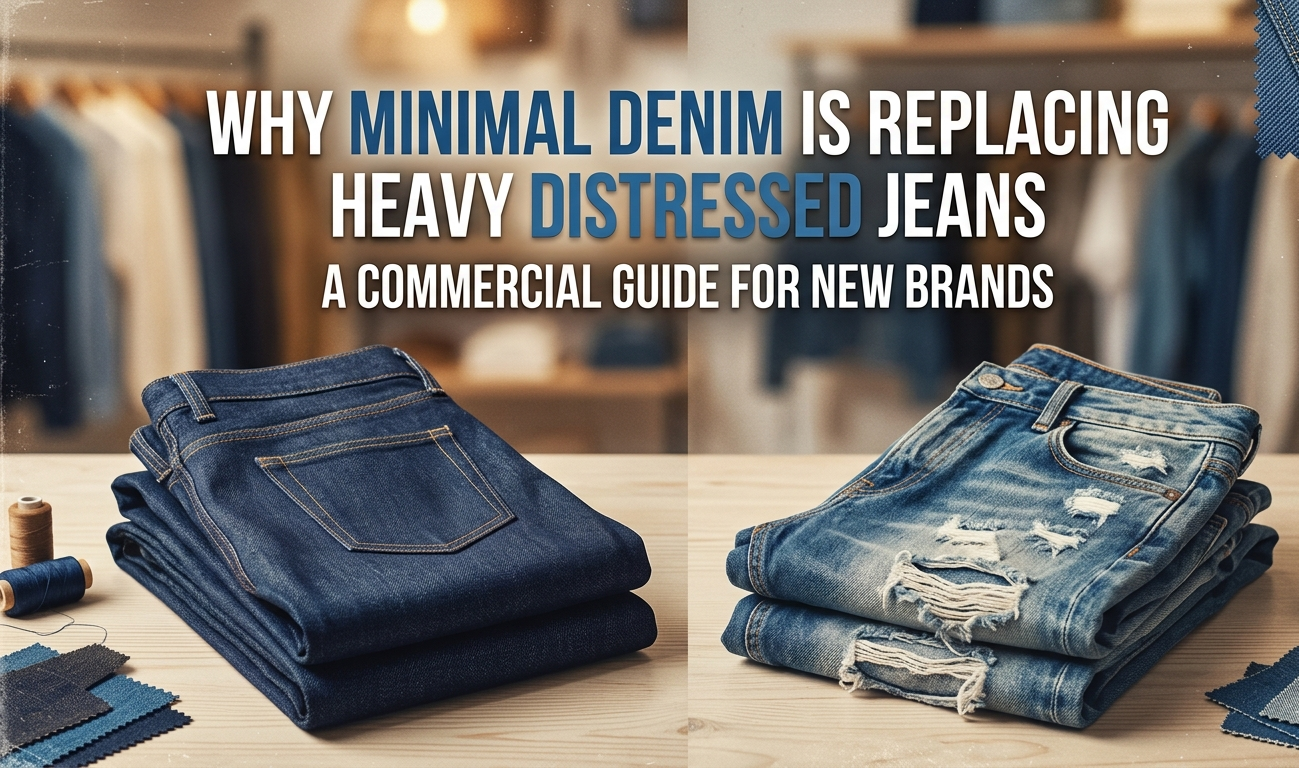
If you are preparing to launch a new denim brand or plan your next seasonal collection, the design phase can be overwhelming. For the past decade, heavily distressed jeans—featuring massive knee blowouts, aggressive fraying, and bleach stains—dominated the streetwear market. However, wholesale manufacturing data and retail trends indicate a massive shift: Minimal Denim is rapidly replacing heavy distressing.
For independent apparel brands, e-commerce importers, and Amazon sellers, understanding this shift is not just about following a trend. It is a strategic calculation regarding your Cost Per Unit (CPU), production lead times, and e-commerce return rates.
At Xinen Garment, we manufacture custom denim for global B2B clients from our facility in Foshan. Here is the factory-floor reality of why minimal denim is taking over, and why your brand should pivot toward clean, structural fits.
1. The Market Shift: “Quiet Luxury” and Versatility
Consumers are changing how they purchase apparel. In a tightening global economy, buyers are looking for high-ROI (Return on Investment) garments.
- The Work-to-Weekend Wardrobe: A heavily distressed, ripped jean is strictly casual. It cannot be worn in a smart-casual office setting or a high-end restaurant. A minimal, clean-wash straight jean, however, transitions seamlessly from a workplace to a weekend setting.
- The “Quiet Luxury” Aesthetic: Premium consumers are moving away from loud, aggressive designs. They are replacing heavy distressing with subtle indicators of quality: custom copper hardware, precise stitching, and premium medium-weight fabrics with a clean drape.
2. The Manufacturing Reality: Production Costs and Lead Times
From a factory perspective, heavy distressing is an operational bottleneck. When you design a minimal jean, you are actively lowering your production costs and speeding up your supply chain.
- The Cost of Destruction: Heavy distressing is not an automated process. Factory technicians must use grinders, Dremel tools, and manual hand-sanding to destroy the fabric fibers safely. This intensive manual labor significantly increases your Cost Per Unit (CPU).
- Faster Turnover: Minimal denim—such as a deep indigo rinse or a uniform mid-blue enzyme wash—bypasses hours of manual scraping. Your bulk order moves through the wet processing lab much faster, shortening your lead time from 45 days down to 30 days, allowing you to restock sold-out sizes quicker.
3. E-commerce Return Rates and Product Lifespan
For Shopify and Amazon FBA sellers, a high return rate will destroy your profit margins. Heavily distressed denim carries inherently higher structural risks than minimal denim.
- Fabric Integrity: When a factory cuts large holes into a pair of jeans, the structural integrity of the garment is compromised. If a consumer pulls the jeans up by the belt loops and their foot catches the knee-hole, the jean will tear entirely. This leads to negative reviews and “defective item” returns.
- Sizing Consistency: Heavy wet processing and chemical bleaching cause unpredictable fabric shrinkage. Clean, minimal denim undergoes stable, mild wash recipes. This means the CAD pattern grading translates perfectly to the final garment, ensuring that your Size 32 fits exactly like a Size 32 every single time.
Why Choose Xinen Garment for Your Minimal Denim Production?
Executing minimal denim successfully means there is nowhere to hide poor craftsmanship. Without heavy rips and fading to distract the eye, the stitching, pattern balance, and fabric quality must be flawless. Xinen Garment provides the technical infrastructure to manufacture premium, clean denim collections.
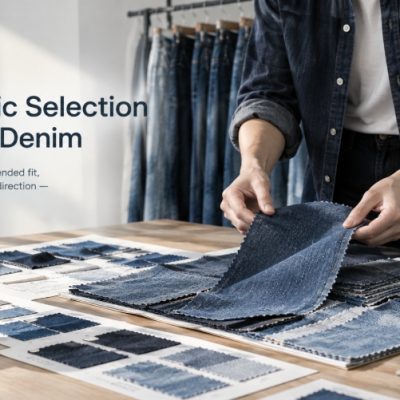
- Premium Fabric Sourcing: Minimal denim relies heavily on the fabric’s natural drape. We source high-quality 11oz to 14oz ring-spun cotton and precision stretch blends that look structured but feel comfortable.
- Strict Pattern Balancing: Our in-house CAD engineers ensure your straight, slim, or wide-leg silhouettes fall cleanly without the side-seams twisting.
- Startup-Friendly Scaling: We allow new brands to test minimal styles with realistic Minimum Order Quantities (MOQs starting at 100-300 pieces per style).
- Retail-Ready Delivery: We handle all B2B preparations, from attaching your custom leather patches to executing Amazon FNSKU barcoding and moisture-control packaging for international freight.
Frequently Asked Questions (FAQ)
Q: Can a minimal denim jean still have a vintage wash?
A: Yes. “Minimal” refers to the absence of physical destruction (rips, tears, heavy grinding). You can still apply a beautiful, authentic vintage enzyme wash with subtle whiskering while keeping the fabric structurally intact.
Q: Is minimal denim cheaper to manufacture than distressed denim?
A: Generally, yes. Because it requires less manual labor in the wash lab (no hand-grinding or localized destruction), the labor costs are lower, allowing you to allocate more budget toward premium hardware or better fabric.
Q: Which fits work best with a minimal, clean aesthetic?
A: The Classic Straight Fit and the Relaxed Tapered Fit perform exceptionally well with clean washes. These silhouettes rely on architectural drape, which minimal denim highlights perfectly.
Q: How do I communicate a “minimal wash” in my Tech Pack?
A: Specify “Clean Enzyme Rinse” or “Flat Wash, No Localized Abrasion.” Always provide a physical reference sample or a high-resolution photo showing the exact uniform color you want to achieve without any distressing.