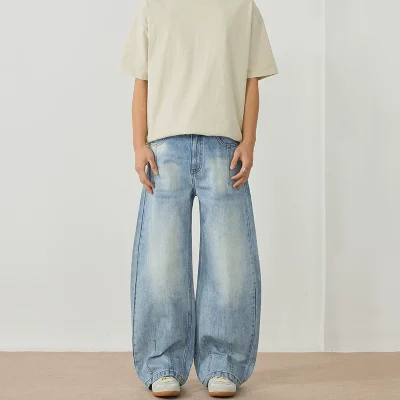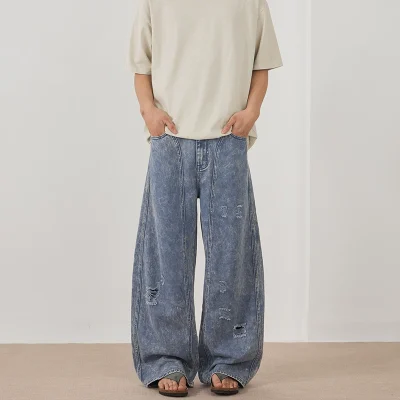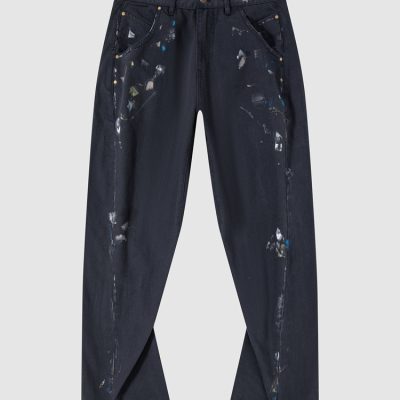
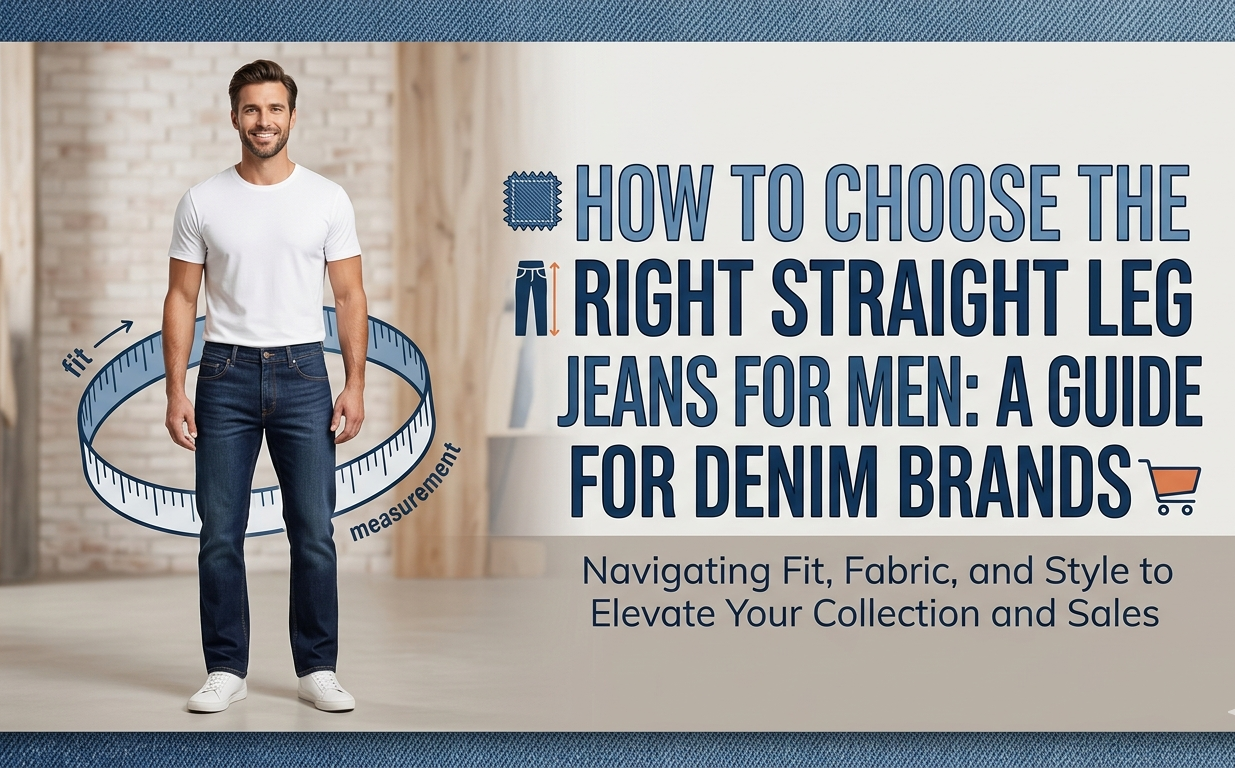
If you are launching a men’s denim brand or expanding your current collection, the straight-leg jean is your most important SKU. However, simply writing “Straight Fit” on a Tech Pack is a recipe for disaster. There is no universal straight leg. The fit must be engineered specifically for your target demographic’s body type and lifestyle.
For wholesale importers and e-commerce brand owners, choosing the right specifications for a men’s straight-leg jean dictates your production costs and your sizing return rates.
At Xinen Garment, we engineer and manufacture custom denim for global B2B clients. Here is the factory-floor guide on how to choose and configure the perfect men’s straight-leg jeans for your upcoming collection.
1. Define the Demographic Through the “Rise”
The foundation of a men’s jean is not the leg; it is the rise (the distance from the crotch seam to the waistband). You must choose the rise based on who will be wearing your jeans.
- The Mid-Rise (9.5 to 11 inches): This is the commercial gold standard. A mid-rise sits naturally just below the navel. It is the safest choice for high-volume Amazon or Shopify sellers because it accommodates the widest range of male body types without restricting the waist.
- The High-Rise (11.5+ inches): If your brand targets the heritage workwear or vintage-reproduction market, a high-rise is mandatory. It provides a classic, 1950s architectural drape, but it appeals to a narrower, more specialized customer base.
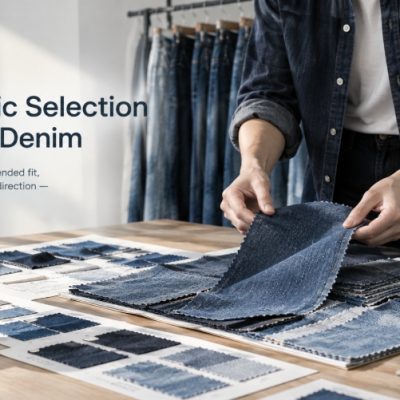
2. Match the Fabric Weight (Oz) to the Silhouette
A straight leg requires the fabric to fall in a clean vertical line from the knee to the hem. If you choose the wrong denim weight, the jean will either collapse or feel like cardboard.
- For a “True Vintage” Straight (13oz–15oz Rigid): If your brand aesthetic relies on authentic fades and a structured look, you must use 100% rigid cotton. Heavyweight denim holds its shape perfectly and reacts best to aggressive industrial stone washing.
- For the “Mass Market” Straight (11oz–12oz Stretch): If you are selling to a general consumer who prioritizes immediate comfort, use a mid-weight blend with 1% to 2% elastane. This slight stretch acts as a sizing buffer, drastically reducing your e-commerce return rates while maintaining the straight visual profile.
3. Calculate the Knee-to-Hem Ratio
A straight leg is defined mathematically. You must specify the exact measurements for the lower block in your Bill of Materials (BOM).
- The Classic Straight: The Point of Measure (POM) at the knee is nearly identical to the leg opening. For a standard Size 32, this often looks like an 8.5-inch knee dropping to an 8-inch or 8.5-inch hem. It fits easily over boots or sneakers without bunching.
- The Relaxed Straight: If you are targeting the modern streetwear market, you scale the entire pattern up. The thigh ease is increased, and the knee/hem might measure 9 to 9.5 inches. This provides the trendy, slightly baggy drape without crossing into “wide-leg” territory.
4. Select the Appropriate Wash Profile
Your wash profile determines your production lead time and retail positioning.
- Clean Rinses: Dark indigo or flat black washes are fast to produce, highly consistent across bulk batches, and perfect for “smart-casual” menswear brands.
- Enzyme & Vintage Washes: If you want high-contrast whiskering and honeycombs behind the knees, the factory must use localized abrasion. This increases the Cost Per Unit (CPU) but allows you to command a much higher retail markup.
Why Choose Xinen Garment for Your Denim Production?
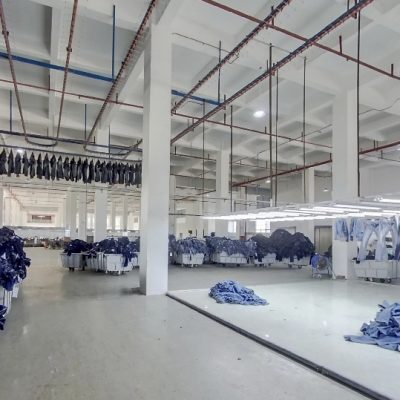
Building a scalable men’s denim line requires a supply chain that understands fit engineering. Operating out of the Foshan manufacturing hub, Xinen Garment acts as your direct technical partner.
- Precision CAD Engineering: Our pattern makers mathematically balance the front and back panels of your straight jeans to ensure the side seams never twist after washing.
- Wash-Shrinkage Control: We conduct rigorous wash-shrinkage tests before bulk cutting. If your chosen vintage wash shrinks the fabric by 4%, we digitally expand your pattern by 4% to guarantee the final garment measures exactly to your specifications.
- Startup-Friendly Scaling: We support independent labels with highly practical Minimum Order Quantities (typically 100 to 300 pieces per style), allowing you to validate your core fits in the market safely.
Frequently Asked Questions (FAQ)
Q: Can I use one CAD pattern for both rigid and stretch fabrics?
A: No. A pattern drafted for 100% rigid cotton will fit completely differently if cut from a 2% elastane fabric. We engineer separate grading rules based on the specific elasticity and shrinkage of the chosen fabric.
Q: What is the most popular men’s straight wash for 2026?
A: The “Authentic Vintage” enzyme wash—a mid-blue hue with soft, natural-looking contrast—is currently dominating bulk orders, as it bridges the gap between casual streetwear and premium heritage fashion.
Q: How long does it take to develop a custom straight-leg prototype?
A: Translating your Tech Pack into a cut pattern and finishing the first physical Fit Sample generally takes 10 to 15 days.
Q: Does Xinen Garment handle custom branding?
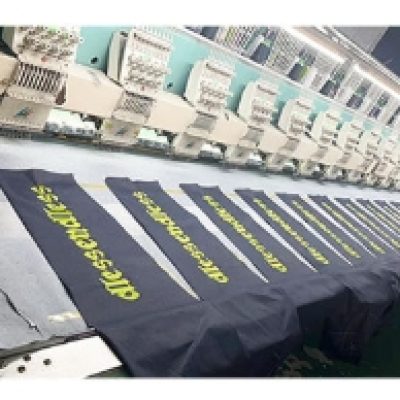
A: Yes. Our facility is equipped for complete private labeling. We attach your custom woven waist labels, branded leather patches, and custom-molded shank buttons directly during the manufacturing process.