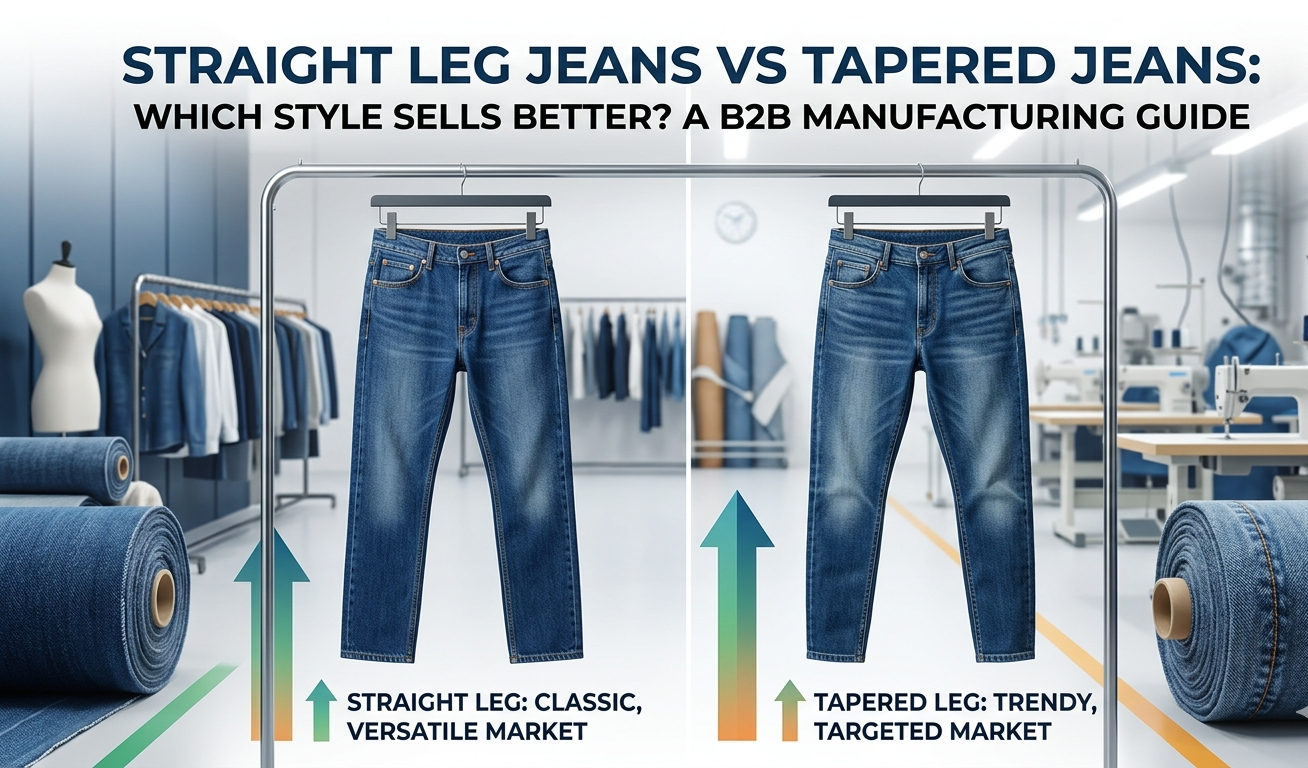
When independent apparel brands and e-commerce importers plan a new denim collection, the most frequent debate revolves around the core silhouette: should you invest your inventory budget in Straight Leg or Tapered Jeans?
From a design perspective, both have merit. However, from a B2B manufacturing and retail perspective, the choice directly impacts your Cost Per Unit (CPU), your target demographic, and your sizing-related return rates. You cannot rely on runway trends to make this decision; you must rely on fit engineering and consumer data.
At Xinen Garment, we manufacture custom denim for global wholesalers, Amazon FBA sellers, and premium private labels. Here is the factory-floor reality of how Straight and Tapered fits perform, and how to choose the right commercial anchor for your brand.
The Straight Leg: The Commercial Anchor
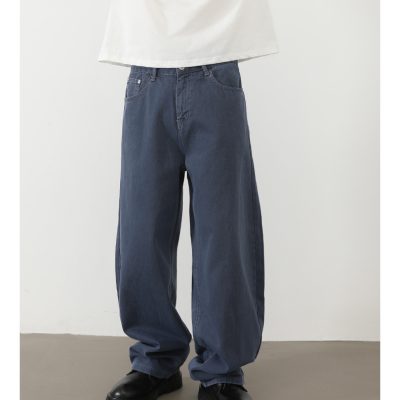
A “True Straight” jean is mathematically drafted so the Point of Measure (POM) at the knee is nearly identical to the hem opening. The fabric drops in a vertical column.
- Retail Performance: Straight leg jeans are the ultimate “safe bet.” Because the lower leg does not cling to the calf, this fit accommodates the widest variety of body shapes. For e-commerce brands, this universal compatibility translates directly to the lowest sizing-related return rates.
- Fabric Engineering: To prevent the straight leg from collapsing and looking sloppy, it requires structural integrity. We highly recommend using 12oz to 14oz rigid cotton (or a maximum of 1% elastane). This weight provides the architectural drape that premium consumers expect.
- Best For: Heritage brands, workwear-inspired labels, and brands targeting a broad age demographic (25–55).
The Tapered Leg: The Modern Essential
A Tapered jean offers standard ease through the hips and thighs (like a regular fit) but gradually narrows from the knee down to the ankle.
- Retail Performance: The tapered fit solves a major consumer pain point: the “athletic build.” Consumers with larger thighs who want a clean, tailored look at the shoe prefer tapered jeans. It is a massive seller for modern “smart-casual” and streetwear brands.
- Fabric Engineering: A taper requires mobility. Because the fabric sits closer to the calf, drafting a tapered jean in heavy 100% rigid cotton restricts movement and causes discomfort. A commercial tapered fit must utilize a 1% to 2% elastane blend to act as a sizing buffer and ensure mobility.
- Best For: Fast-fashion e-commerce, Amazon sellers, and brands targeting the “sneakerhead” or athletic consumer.
Which Style Actually Sells Better?
The answer depends entirely on your retail platform and target audience:
- For High-Volume, Low-Risk E-commerce: The Straight Leg consistently holds the highest volume of long-term sales. It is trend-proof. An inventory of straight jeans will not become deadstock when seasonal aesthetics change.
- For High-Conversion Fast Fashion: The Tapered Fit often sees higher initial conversion rates among younger demographics (18–35) who prioritize a tailored aesthetic that showcases their footwear.
Our Manufacturing Advice: If you are launching a new brand, do not force a 50/50 split. We advise a 70/30 inventory split. Anchor 70% of your production in the straight fit for stable cash flow, and allocate 30% to a stretch-tapered fit to capture the athletic/modern demographic.
Why Choose Xinen Garment for Your Denim Production?
Executing these fits correctly requires more than just sewing machines; it requires precise CAD balancing and strict supply chain management. Located in Foshan, Xinen Garment acts as the direct technical partner for your denim brand.
- Technical Pattern Grading: Our CAD engineers adjust the knee-to-hem ratios meticulously. We calculate specific wash-shrinkage rates before cutting the fabric to ensure your tapered jeans don’t become unintended “skinny” jeans after the wash lab.
- Startup-Friendly Scaling: We empower independent labels with practical Minimum Order Quantities (typically 100 to 300 pieces per style), allowing you to test both straight and tapered fits in the market without severe financial risk.
- Retail-Ready Fulfillment: From custom branded leather patches to strict moisture-control packaging and FNSKU barcoding, your inventory leaves our facility ready for immediate wholesale or FBA distribution.
Frequently Asked Questions (FAQ)
Q: Can I use the same fabric for both Straight and Tapered styles?
A: We do not recommend it. A straight fit benefits from the stiffness of rigid 100% cotton, while a tapered fit requires at least 1% stretch for calf mobility. Attempting to use one fabric for both will compromise the fit of one of the styles.
Q: Do tapered jeans cost more to manufacture?
A: The Cost Per Unit (CPU) is generally identical. The sewing time is similar; the only variable is the specific cost of the fabric you choose (e.g., premium stretch blends vs. heavyweight rigid denim).
Q: Why do the side seams on tapered jeans sometimes twist?
A: “Leg twist” occurs when a factory fails to balance the pattern against the natural torque of the denim twill during industrial washing. We use advanced CAD balancing to ensure the side seams remain perfectly straight on the leg.
Q: How do I specify a taper in my Tech Pack?
A: You must provide clear Points of Measure (POM) for the Thigh, the Knee, and the Leg Opening. A standard commercial taper often drops from an 8.5-inch knee down to a 6.5-inch or 7-inch hem.