For international clothing importers and fast-fashion wholesalers, successfully manufacturing a custom denim collection is only half the operational equation. The second half is moving tons of heavy, bulky twill fabric across the globe without eroding your profit margins. Denim is exceptionally heavy compared to standard apparel, meaning your logistics strategy dictates your final landed cost.
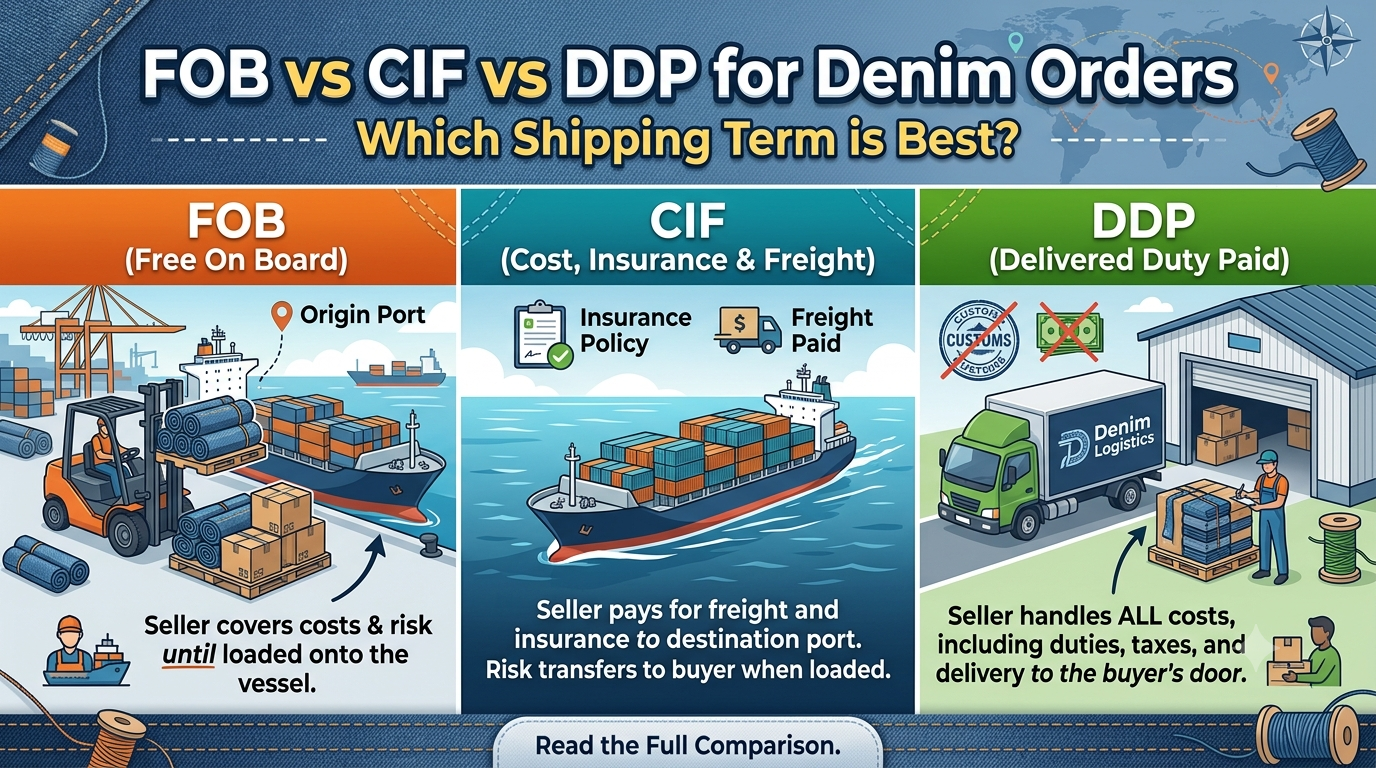
When negotiating a manufacturing contract with a Chinese supplier, the shipping responsibility is defined by Incoterms (International Commercial Terms). The three most common structures used in B2B garment sourcing are FOB, CIF, and DDP. Choosing the wrong term can result in surprise destination fees, delayed customs clearance, or expensive demurrage charges at your local port.
What Does FOB (Free on Board) Mean for Denim Importers?
Under FOB terms, your manufacturer is responsible for producing the garments, clearing them for export, and loading the cartons onto a shipping vessel at a designated Chinese port (such as Shenzhen or Guangzhou). The moment the goods cross the ship’s rail, all risk and cost transfer to you, the buyer.
- The Buyer’s Responsibility: You must arrange and pay for the main ocean or air freight, cargo insurance, import duties in your home country, and final transportation to your warehouse.
- Strategic Advantage: FOB offers the highest level of control over logistics costs. Established brands prefer FOB because they can negotiate aggressive freight rates directly with their own trusted freight forwarders rather than accepting a factory’s marked-up shipping quote.
- The Drawback: It requires an active logistics team or a reliable forwarder to manage the international transit.
How Does CIF (Cost, Insurance, and Freight) Change Your Logistics Strategy?
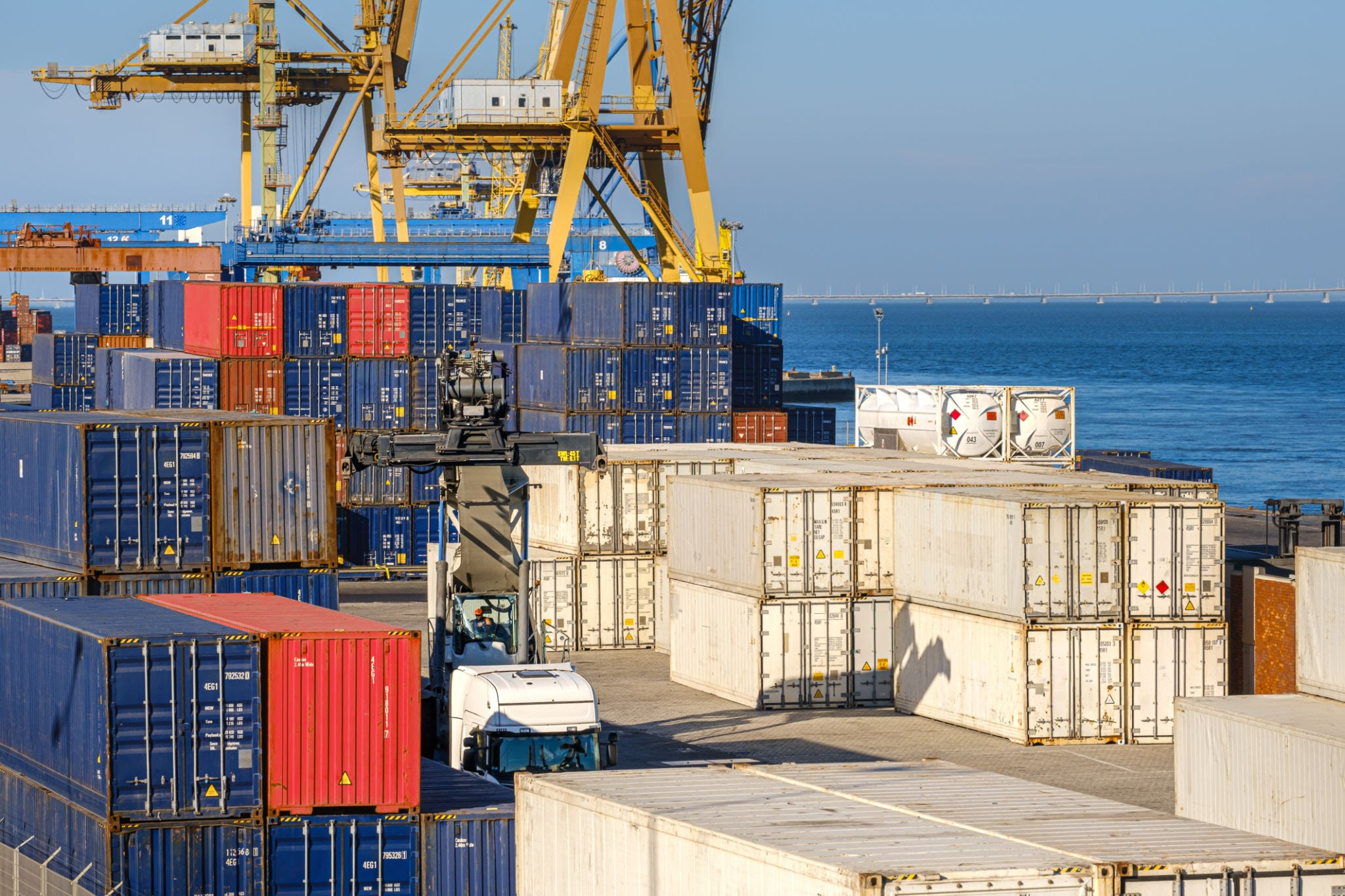
CIF shifts more of the initial logistics burden to the manufacturer. Under this term, the factory pays for the production, the main ocean freight to your destination port (e.g., the Port of Los Angeles), and a minimum level of cargo insurance.
- The Buyer’s Responsibility: While the factory pays for the freight, the actual risk transfers to you as soon as the goods are loaded onto the ship in China. Once the container arrives at your destination port, you are entirely responsible for import customs clearance, tariffs, and paying trucks to move the goods to your facility.
- Strategic Advantage: It simplifies the early stages of shipping. You do not need to coordinate with Chinese forwarders to book space on a vessel.
- The Drawback: CIF is notorious for hidden destination fees. While the ocean freight is paid, the destination handling charges (DTHC) at your local port can be aggressively inflated by the manufacturer’s chosen shipping agent. Furthermore, the mandatory insurance provided is often minimal, requiring you to purchase supplemental coverage for high-value custom denim runs.
When Should Brands Choose DDP (Delivered Duty Paid) for Garment Shipments?
DDP is a complete door-to-door logistics solution. The manufacturer assumes total responsibility, risk, and cost for the entire journey—from the factory floor in Foshan all the way to your final receiving warehouse.
- The Buyer’s Responsibility: You simply wait to receive the goods. You are only responsible for unloading the cartons once the truck arrives at your loading dock.
- Strategic Advantage: DDP provides the exact “landed cost” upfront. You know precisely what the total invoice will be, with no surprise customs invoices or port fees. This makes it the ideal Incoterm for e-commerce startups, Amazon FBA sellers, and private labels that lack an internal logistics department.
- The Drawback: DDP is technically the most expensive Incoterm. Because the manufacturer assumes all the financial risk of fluctuating freight rates, potential customs delays, and varying tax structures, they will build a buffer into the total quoted price to protect their margins.
How Do Denim Fabric Weights Affect Your Freight Costs?
Unlike lightweight activewear or silk garments, denim dramatically impacts shipping volume and weight restrictions. A standard pair of men’s 14oz cargo jeans can weigh over 800 grams (1.7 lbs).
When packing heavy denim, cartons hit the maximum weight limit long before they run out of physical space. Freight forwarders charge based on the greater of two metrics: actual weight or volumetric weight (the size of the box). Because denim is dense, shipments almost always max out the actual weight metric. If you choose an air freight option under FOB or CIF, the heavy nature of rigid denim will aggressively spike your per-unit shipping cost compared to ocean freight.
Why Choose Xinen Garment for Your Denim Production and Logistics?
Xinen Garment operates a fully integrated, high-end denim manufacturing facility in Foshan, China. We do more than engineer premium jeans and jackets; we optimize the entire export supply chain for international fashion importers and wholesale brands.
- Flexible Commercial Terms: We operate directly with B2B clients, offering complete flexibility across FOB, CIF, and DDP terms. Whether you have an established contract with an international forwarder or need us to manage a door-to-door delivery straight to an Amazon fulfillment center, we adapt to your logistics framework.
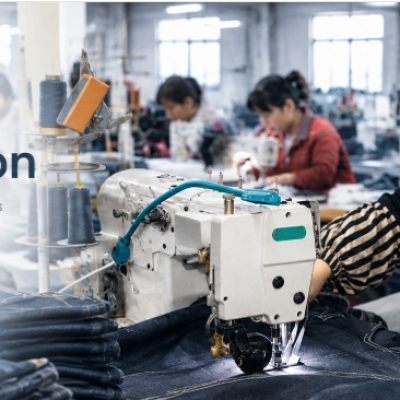
- Optimized Packing Density: Because denim freight costs are driven by weight and volume, our packing department utilizes standardized, heavy-duty export cartons designed to maximize container utilization. We balance the piece-count per box to prevent carton blowout during transit while minimizing dead volumetric space.
- Direct Factory Export Operations: We hold our own direct export licensing. We do not rely on third-party trading agents to process our international shipments. This means faster customs declarations at major southern ports like Shenzhen and Guangzhou, and transparent, direct communication regarding your vessel tracking and documentation.
Frequently Asked Questions (FAQ)
Does Xinen Garment provide the necessary certificates of origin for import clearance?
Yes. Regardless of the Incoterm selected, our export department provides a complete commercial invoice, itemized packing list, Bill of Lading (B/L), and specific Certificates of Origin required to clear your destination country’s customs efficiently.
If we choose FOB, which Chinese ports does your factory ship from?
Given our strategic location in Foshan, we primarily route our FOB shipments through the Port of Shenzhen (Yantian/Shekou) or the Port of Guangzhou (Nansha). These are Tier-1 global logistics hubs offering direct sailing routes to North America, Europe, and Australia.
Can you ship a bulk order via air freight if we need a fast turnaround?
Yes. While ocean freight is the standard for heavy denim, we can coordinate direct air freight or express courier (DHL/FedEx/UPS) for expedited delivery. We often recommend a split shipment strategy: airfreighting 10% of the order to stock your initial retail launch, while the remaining 90% ships via standard ocean freight to protect your margins.
Who pays the US import tariffs on denim jeans under a DDP agreement?
Under DDP (Delivered Duty Paid), Xinen Garment covers all associated import tariffs, local taxes, and customs brokerage fees. The price we quote you is the final landed cost to your warehouse door.