Launching a straight fit denim line is a strategic move for emerging fashion brands, private labels, and wholesale importers. Unlike highly cyclical trends like ultra-skinny or extreme wide-leg fits, straight fit jeans offer a stable retail foundation with consistent year-round demand.
However, because the straight cut relies on a balanced silhouette from the hip down to the hem, executing this style perfectly at scale involves technical production factors that brands must manage during the development phase. This guide covers the essential manufacturing considerations required to protect your margins and ensure fit consistency.
1. The Commercial Value of Straight Fit Profiles
For a new or expanding apparel brand, balancing inventory risk is a primary concern. Straight fit jeans are a practical anchor product for several reasons:
- Reduced Markdown Exposure: Micro-trends require fast stock clearance at the end of a season. The classic straight leg retains its market value, meaning lower markdown risks for wholesale buyers.
- Broad Sizing Compatibility: The silhouette accommodates a wider range of body types compared to slim or tapered cuts, widening your target customer demographic.
- Fabric Adaptability: A well-engineered straight leg pattern performs well using heavy 14oz rigid cotton denim, as well as lighter 11oz stretch denim blends.
2. Technical Factors Before Entering Mass Production
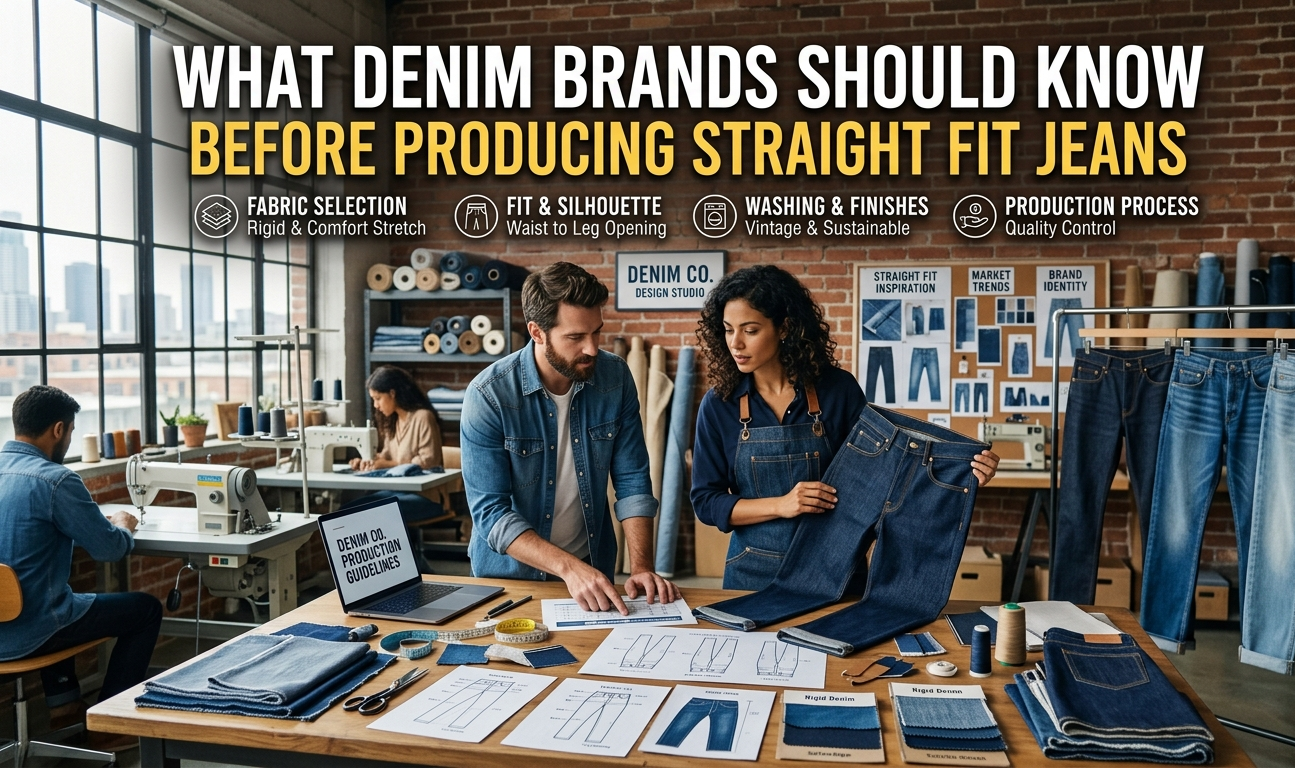
A successful production run depends on technical alignment between your brand’s tech pack and the factory’s cutting floor. Paying attention to these three variables prevents sizing discrepancies in your bulk order:
Fabric Weight and Shrinkage Calculations
Denim reacts dynamically to heat and water during industrial washing. If your brand plans to launch a washed straight fit jean (such as a medium stone wash or enzyme wash), the raw fabric will experience shrinkage. A professional manufacturer calculates the exact shrinkage percentage of the specific fabric batch before cutting. The initial pattern blocks are scaled up proportionally so that the finished, washed garment matches your final size chart.
Inseam and Fit Tolerances
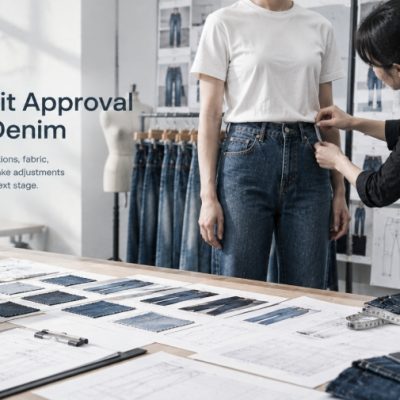
Because denim behaves differently across warp and weft directions during heavy wash cycles, minor variations occur. In commercial garment manufacturing, an acceptable inseam tolerance is usually within +/- 0.5 inches. Brands must establish these tolerance baselines during the pre-production sample (PPS) approval stage to maintain consistent sizing across thousands of pieces.
Wash Recipes and Re-order Consistency
The aesthetics of a straight fit jean—such as whisker patterns, scraping, and color depth—depend entirely on the wash recipe. Industrial processes like stone washing use abrasive pumice stones to wear down the indigo, while enzyme washes use organic proteins to soften the fabric cleanly. To ensure that future re-orders match the original production batch, your factory must log exact wash times, water temperatures, and chemical ratios.
3. Why Choose Xinen Garment for Your Custom Denim Production
At Xinen Garment, we focus on the manufacturing precision required by apparel importers, fast-fashion wholesalers, and private labels looking for reliable custom production.
- Fit Engineering & Pattern Grading: We translate your design concepts into production-ready patterns. Our technical teams analyze fabric stretch and post-wash shrinkage to ensure the straight-leg line remains straight after final processing.
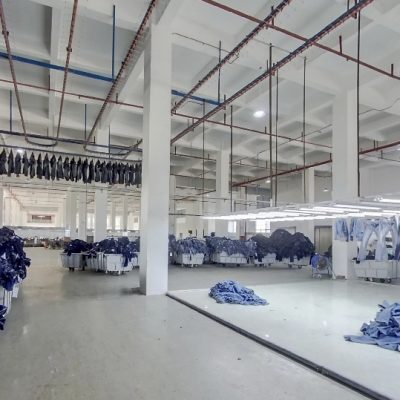
- Controlled Industrial Washing: Our production lines manage everything from basic rinses to advanced enzyme, stone, and bleach washes, maintaining strict batch-to-batch color continuity.
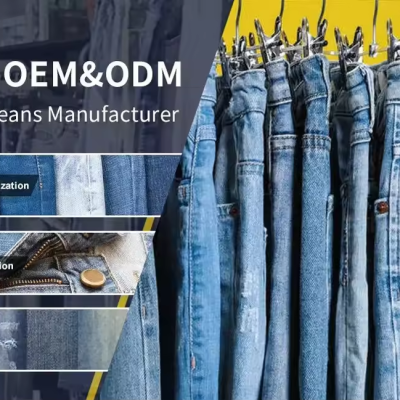
- Complete OEM/ODM Customization: We offer end-to-end customization. Brands can specify pocket linings, choose thread strengths, and select custom metal hardware (branded buttons, rivets, and zippers) alongside custom leather back patches.
- Direct Manufacturer Transparency: By working directly with our factory, you communicate directly with the team engineering your garments, reducing sample turnaround times and eliminating intermediary markup costs.
4. Frequently Asked Questions (FAQ)
What is the minimum order quantity (MOQ) for custom straight fit jeans?
Our production MOQs vary based on the specific denim fabric weight, composition, and custom wash requirements you select. Contact our sales team directly through our website with your design specifications for a precise minimum volume assessment.
Can our brand provide a proprietary size chart for manufacturing?
Yes. We manufacture directly according to your brand’s specific size charts and tech packs. For emerging brands without pre-set charts, our pattern makers can provide standard grading blocks optimized for US, EU, or Asian target markets.
How does the factory guarantee that bulk orders match the approved sample?
Before bulk cutting begins, we produce a Pre-Production Sample (PPS) using the final chosen fabric and wash recipe. Once your brand reviews and signs off on the PPS, our quality control team uses it as the definitive benchmark for the entire bulk production run, conducting multi-stage inspections during sewing, washing, and packaging.
Do you handle custom branding elements like buttons and patches?
Yes. We offer full branding integration. We can source or mold custom-embossed metal buttons, rivets, woven main labels, care labels, and leather back patches according to your vector artwork.