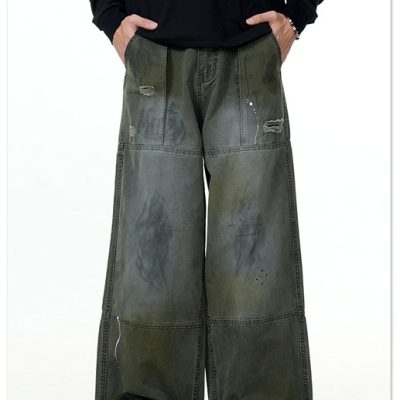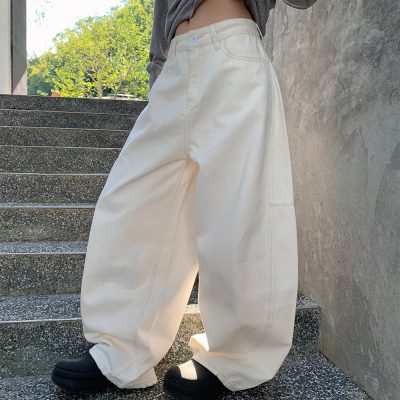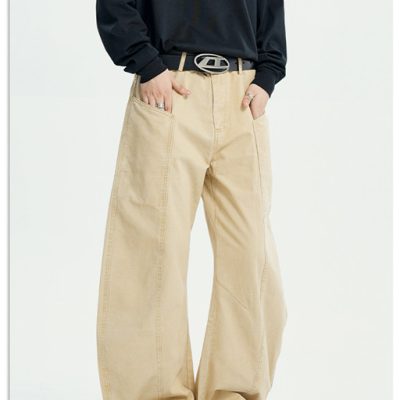
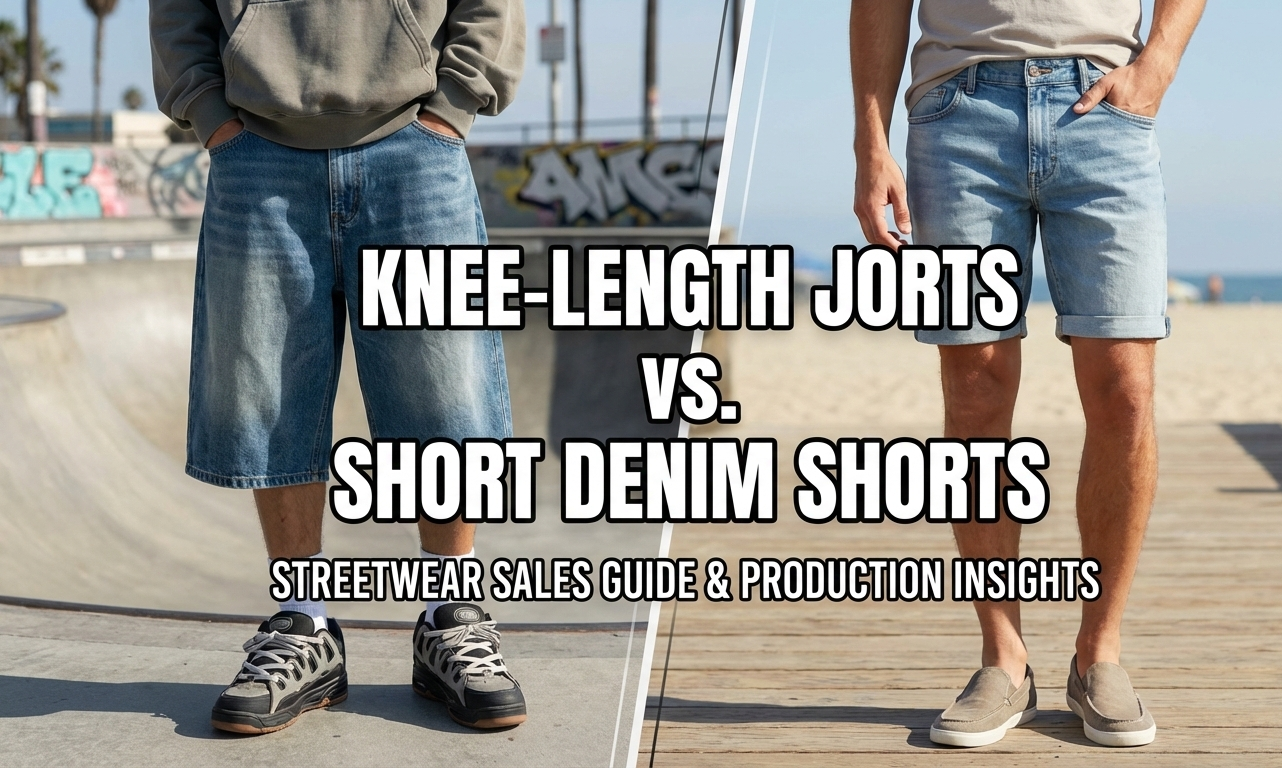
If you’re looking at the denim market right now, you’ve probably noticed that the “standard” fit is dead. We are seeing two completely opposite extremes taking over the streetwear scene: the oversized, below-the-knee “Big Boy” jorts and the retro, mid-thigh short shorts.
For a brand owner, this is a headache. You have limited budget and limited stock space. You need to know which one is going to fly off the shelves and which one is going to sit in your warehouse on clearance.
Let’s look at the facts—not just the trends—from a production and sales perspective.
What is Driving the Obsession with Knee-Length Jorts?
Knee-length jorts (usually a 10–14 inch inseam) aren’t just shorts; they are a statement piece. This look is heavily carried by the Y2K revival, skate culture, and brands like Polar Skate Co. or JNCO.
The Reality:
- The Fit: They are baggy, wide, and usually sit right at or just below the knee.
- The Fabric: You almost always need heavy, 12oz–14oz denim to make these look “right.” If the fabric is too thin, they look cheap and don’t drape correctly.
- The Buyer: Primarily Gen-Z and hardcore streetwear enthusiasts.
Why they sell: They have a high “perceived value.” Because they use more fabric and usually feature heavy washes or embroidery, you can often charge a premium price. Plus, because they are baggy, you have fewer “it doesn’t fit” returns.
Are Short Denim Jorts a Safer Bet for Mainstream Sales?
On the other side, we have the “short jort” (5–9 inch inseam). This is more of a retro, 70s-meets-modern-prep look. Think “Chubbies” but in denim.
The Reality:
- The Fit: These sit mid-thigh. They can be raw-hemmed (cut-offs) or cuffed.
- The Fabric: Usually lighter weight (9oz–11oz). Some even use a bit of stretch for comfort, though 100% cotton is still preferred for the look.
- The Buyer: The mainstream guy, the festival-goer, and the European/Australian market where showing leg is more standard.
Why they sell: They are a summer staple. They are “functional” shorts. They are cheaper to produce because you’re using significantly less fabric and the washes are usually simpler (cleaner).
Which Style is Currently Growing Faster?
It depends on where you are selling.
- The US and East Asia (Japan/Korea): The baggy, knee-length “skater” jort is winning by a landslide in the streetwear space. If your brand is about “hype” and Instagram aesthetics, this is your winner.
- Europe and Coastal Regions: Shorter lengths remain more stable. They don’t go “out of style” as fast as the oversized trend might.
How Does Length Affect Your Production Costs?
From a factory’s perspective, the difference isn’t just a few inches of cloth.
Knee-Length Production:
- Higher Fabric Consumption: You’re using nearly as much denim as a pair of jeans.
- Wash Costs: Because there is more surface area, heavy stone-washing or enzyme treatments cost slightly more per unit.
- Weight: Shipping costs are higher because the garments are heavier.
Short Jorts Production:
- Lower Material Cost: You save on fabric.
- Precision is Key: With shorter shorts, the “leg opening” width is everything. If it’s too wide, they look like a skirt; too narrow, and they are uncomfortable. You might need more sampling rounds to get the fit perfect.
Which Style Offers Better Profit Margins?
This is where it gets interesting. Even though knee-length jorts cost more to make, they usually make more money.
Streetwear customers expect to pay $80–$120 for a pair of high-quality, heavy-duty oversized jorts with a vintage wash. Meanwhile, it’s much harder to convince a customer to pay $100 for a basic pair of short denim cut-offs. Most people see short jorts as a “basic” and expect to pay “basic” prices.
How Do You Decide Which One to Produce?
Don’t guess. Look at your current “Top Sellers” list.
- Go Knee-Length if: You have a younger audience, your brand is skate-influenced, or you want to do high-detail embroidery and heavy distressing.
- Go Short if: You sell “lifestyle” gear, you’re targeting a slightly older or more “classic” customer, or you want a lower entry-level price point for your summer drop.
The Hybrid Strategy: Many brands are now dropping a “Relaxed 9-inch.” It’s not a short-short, and it’s not a baggy jort. It’s the “safe” middle ground that hits the widest possible audience.
Final Thoughts
There’s no “best” style, only the best style for your specific customer. However, if you are a streetwear brand looking to make a splash in 2026, the energy is currently with the longer, baggier silhouettes.
Regardless of which way you go, the “wash” is what will sell the shorts. A bad wash on a good fit will still result in deadstock.
Frequently Asked Questions (FAQ)
Can I use the same pattern for both lengths?
Absolutely not. A baggy knee-length jort has a completely different rise and seat construction than a slim or regular-fit short jort. If you just “chop the legs off” a baggy pant pattern to make short shorts, the leg opening will be way too wide.
What is the most popular inseam for streetwear right now?
For the “baggy” look, an 11 to 13-inch inseam is the sweet spot. For the “retro” look, a 5 to 7-inch inseam is the standard.
Do denim shorts shrink more than jeans?
They shrink the same amount, but because there is less fabric, the shrinkage can feel more “extreme” in the waist and rise. Always make sure your factory is using pre-shrunk denim or has accounted for the wash-process shrinkage in the final measurements.
Which color wash sells best for jorts?
Across the board, a “Vintage Mid-Blue” (slightly faded) is the top seller. “Raw Black” is a close second for streetwear brands, as it’s easier to style with oversized hoodies and tees.