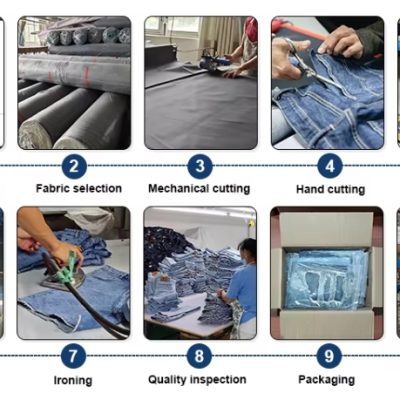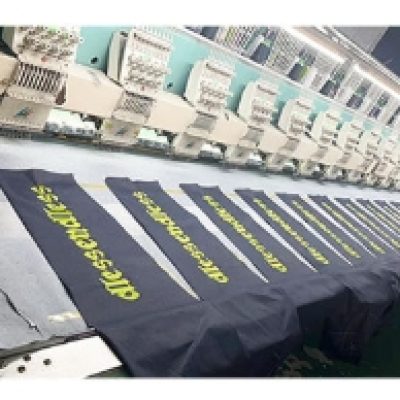
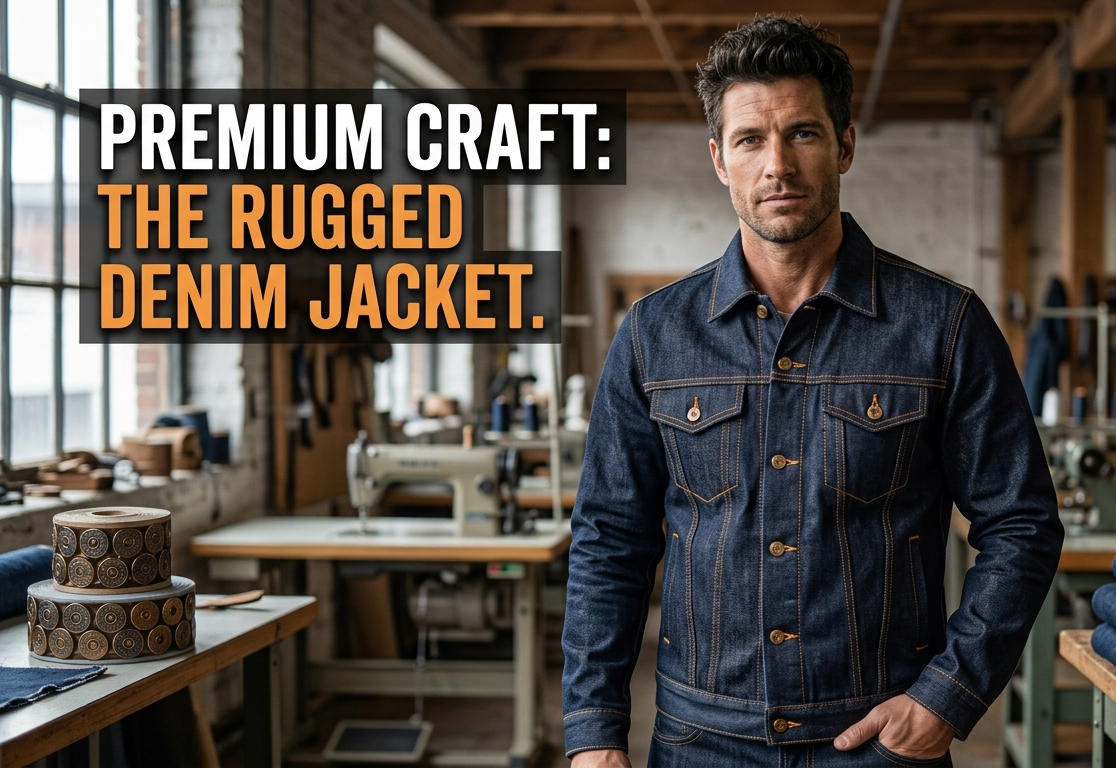
The word “premium” is heavily overused in the fashion industry. Brands often rely on expensive marketing campaigns to justify high retail prices. However, on the factory floor, “premium” is not an abstract concept—it is a measurable set of technical specifications.
A true premium denim jacket is defined by its hardware weight, the tension of its yarns, and the complexity of its stitching. At Xinen Garment, we manufacture both standard and high-end denim outerwear. When a brand asks us to upgrade their Tech Pack to a premium standard, we don’t just change the label; we re-engineer the construction.
If you are developing a high-end outerwear line, here is the factual, factory-level breakdown of the key details that make a premium denim jacket.
Why Does Hardware Separate Premium Jackets from Fast Fashion?
Premium hardware uses solid brass or copper base metals, whereas fast-fashion jackets rely on cheap, hollow zinc alloys that rattle and degrade over time.
- The Weight and Sound: A premium jacket feels heavy in the hands, largely due to the shank buttons. A high-quality button is cast from solid metal and securely tacked. If you shake the jacket and the buttons rattle loosely, it is a sign of cost-cutting.
- Custom Tooling: Premium brands invest in custom-engraved hardware. While basic jackets use blank or stock buttons, a custom mold with your brand’s logo establishes immediate authority.
- Rivets at Stress Points: Look at the pocket corners and cuff vents. A premium jacket uses copper rivets driven through the fabric to reinforce high-tension areas, rather than relying solely on basic thread bar tacks.
What Stitching Techniques Ensure a Denim Jacket Lasts a Lifetime?
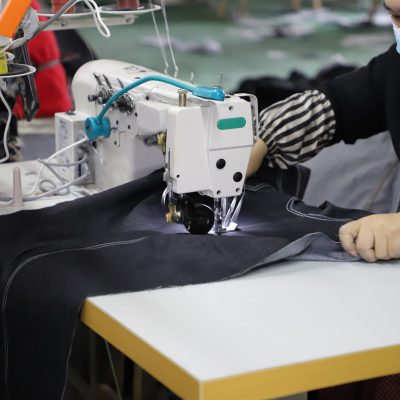
A premium denim jacket is constructed using double-needle flat felled seams, which lock the raw edges of the fabric inside the seam to prevent fraying and ensure extreme structural durability.
- Flat Felled Seams vs. Overlock: Fast-fashion factories save time by sewing panels together quickly and finishing the inside edges with an overlock stitch (serging). Premium jackets use a flat felled seam (often with a chain stitch machine), which is much slower to produce but results in a clean, unbreakable bond.
- Thread Thickness: Denim is a heavy fabric. Premium jackets are sewn using thick, heavy-duty polyester core-spun threads (such as Tex 60 or Tex 80). Using standard, thin sewing thread on 13oz denim will inevitably lead to busted seams.
- Stitch Density (SPI): A premium jacket maintains a consistent and tight Stitches Per Inch (SPI) count, usually between 8 to 10 SPI, ensuring the seams do not pull apart under stress.
How Do Fabric Yarn and Weave Dictate the Jacket’s Overall Quality?
Premium denim is woven using ring-spun cotton yarns, which provide a naturally uneven, textured surface (slub), as opposed to the perfectly flat and uniform open-end yarns used in cheap mass production.
- Ring-Spun vs. Open-End: Open-end yarn is fast and cheap to produce, resulting in a flat, lifeless fabric. Ring-spun yarn is twisted tightly and slowly, making it significantly stronger. It creates subtle vertical and horizontal textures in the denim that become more beautiful as the jacket fades.
- The Weight Factor: While summer “shackets” can be light, a true premium trucker jacket requires a foundational weight of 12oz to 14oz. This specific weight range provides the necessary structural rigidity to hold the shape of the collar and shoulder line.
Why Should You Inspect the Inside of a Denim Jacket?
Because denim jackets are typically unlined, examining the interior reveals the true standard of the factory’s craftsmanship; a premium jacket looks just as clean on the inside as it does on the outside.
- Clean Finishing: If you turn a jacket inside out and see loose threads, messy overlock stitching, or uneven fabric edges, the construction was rushed.
- Bound Edges: In the highest tier of denim manufacturing, internal raw edges (like the armhole seams) are finished with cotton binding tape. This prevents the denim from chafing against the wearer’s skin and significantly elevates the garment’s perceived value.
Key Takeaways
- Hardware matters: Demand solid brass or copper shank buttons and reinforcing rivets, avoiding hollow zinc alloys.
- Demand flat felled seams: This construction method is non-negotiable for premium durability.
- Specify ring-spun cotton: Ensure your Tech Pack requests ring-spun yarn for superior strength and authentic texture.
- The interior test: A truly premium jacket is flawlessly finished on the inside, with no exposed raw edges or loose threads.
Frequently Asked Questions (FAQ)
Q: Does premium hardware require a massive MOQ?
A: Custom logo-engraved buttons require a mold fee and usually have an MOQ of around 1,000 to 3,000 pieces from the hardware supplier. However, since one jacket uses approximately 15 buttons, an order of just 100 to 200 jackets easily absorbs this hardware MOQ without creating massive dead stock.
Q: Is selvedge denim necessary for a premium jacket?
A: Not necessarily. Selvedge denim (woven on vintage shuttle looms) is the pinnacle of heritage denim, but it is very narrow and extremely expensive. A jacket made from high-quality, ring-spun non-selvedge denim from a reputable mill can absolutely be classified as premium.
Q: Why does a premium vintage wash cost more than a standard wash?
A: True premium vintage washes require skilled human labor. Instead of just throwing the jacket into an industrial washing machine with bleach, technicians must manually hand-sand the edges, pockets, and elbows to replicate authentic wear patterns before the enzyme wash. You are paying for the artisanal labor.
Q: Can Xinen Garment upgrade my current design to a premium standard?
A: Yes. If you have an existing Tech Pack or a sample that feels “cheap,” our technical team can re-engineer it. We will upgrade the thread thickness, adjust the seam construction to flat-felled, and source ring-spun denim while maintaining your original silhouette.