Take a look at any premium streetwear lookbook or high-street retail display this season, and you will notice one undeniable trend: the vintage wash denim jacket is back. Modern consumers no longer want to spend three years breaking in a stiff, rigid jacket. They want day-one comfort paired with an authentic, decades-old aesthetic.
However, designing a “vintage” jacket on paper is easy; manufacturing it is an entirely different challenge. A poorly executed wash looks artificial and cheap. At Xinen Garment, our wet processing facility specializes in transforming raw denim into lived-in masterpieces.
If your clothing brand is planning to capitalize on this massive comeback, here is the factory-floor guide to understanding, designing, and manufacturing vintage wash denim jackets.
Why Are Vintage Wash Denim Jackets Dominating the Current Market?
Vintage wash denim jackets are dominating because modern consumers crave authentic, heritage aesthetics but prioritize immediate wearability and comfort over the grueling break-in process of raw denim.
- The Nostalgia Factor: Driven by the resurgence of 90s and Y2K fashion, oversized, heavily faded jackets are seen as premium statement pieces rather than basic outerwear.
- Higher Perceived Value: A well-executed vintage wash looks like a rare thrift store find. Consumers are willing to pay a premium for jackets that feature unique, complex fade patterns (like whiskers and honeycombs) because they look bespoke.
How Do Factories Create an Authentic Vintage Wash?
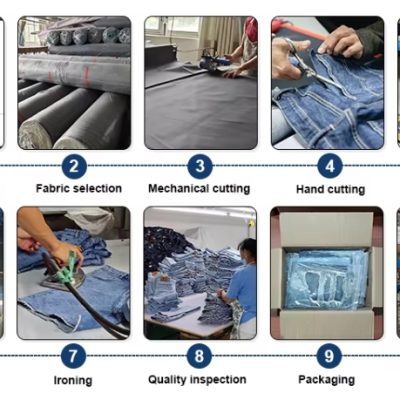
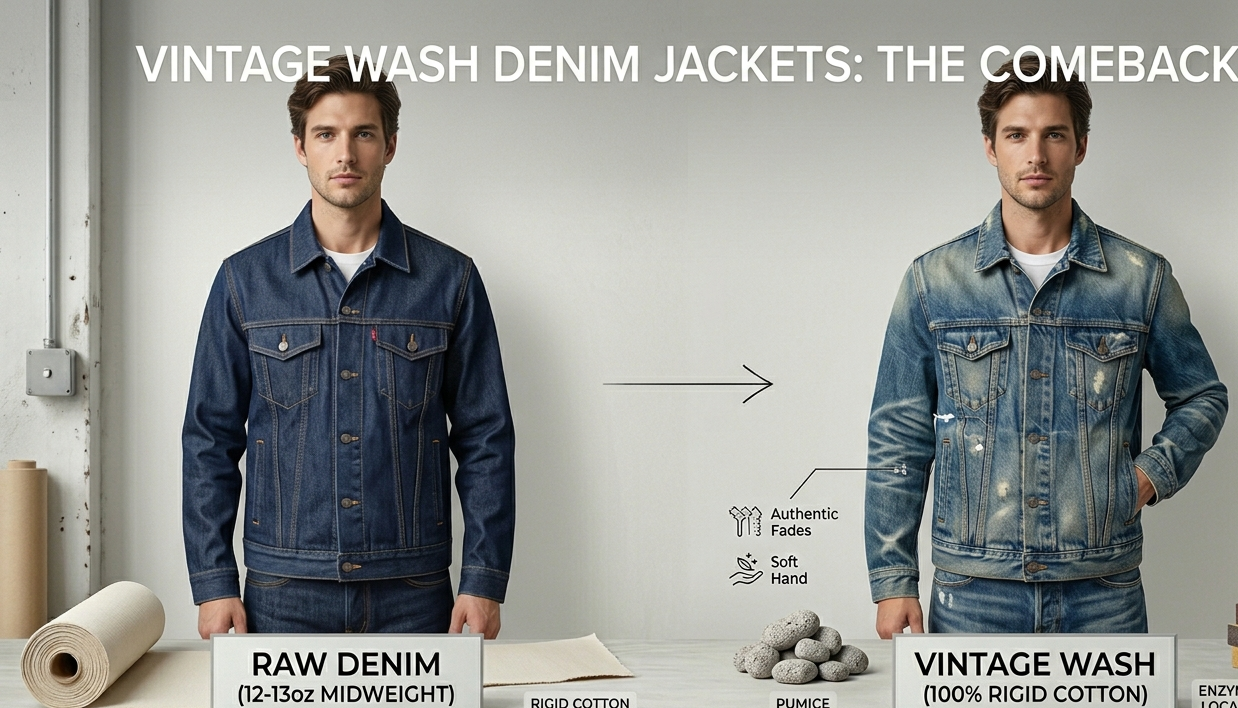
Factories create an authentic vintage wash through a highly controlled, multi-step wet processing method that involves enzyme baths, pumice stone abrasion, and skilled localized hand-scraping.
- The Hand-Crafted Element: True vintage cannot be entirely automated. At Xinen Garment, our wash technicians use specialized sandpaper blocks to manually scrape the areas of the jacket that would naturally see the most friction—the elbows, the collar edges, and the pocket flaps.
- The Wet Process: After hand-scraping, the jackets enter large industrial tumblers with enzymes (which eat away at the indigo dye) and pumice stones (which physically beat the fabric to soften it).
- Ozone Technology: To achieve that oxidized, slightly yellowed “dirty vintage” look without using excessive water or harsh bleach, we often utilize eco-friendly Ozone gas treatments to naturally age the fabric.
What Fabric Weight Works Best for Vintage Treatments?
The ideal fabric weight for a vintage wash denim jacket is a midweight 12oz to 13oz 100% rigid cotton denim.
- Why 100% Cotton? Stretch denim (containing elastane) does not respond well to heavy vintage washing. The abrasive pumice stones can break the synthetic stretch fibers, causing the jacket to look puckered or ruined. Rigid cotton absorbs the wash beautifully and creates sharp, high-contrast fade lines.
- Why 12oz – 13oz? Because the enzyme and stone wash process physically degrades the cotton to make it soft, starting with a lightweight fabric (like 9oz) might result in a jacket that tears too easily. Starting with a sturdy 13oz fabric ensures that after the heavy wash, the jacket settles into a perfect, durable medium weight.
How Does Heavy Washing Affect Your Jacket’s Fit and Sizing?
Heavy vintage washing causes significant fabric shrinkage, meaning a jacket will lose volume and alter its proportions during the production process.
- The Sizing Trap: If you cut a Size Medium from raw denim and subject it to a heavy vintage stone wash, it will likely shrink down to a Size Small.
- The Factory Solution: Pattern engineering is critical here. Before we cut your bulk order, Xinen Garment conducts strict wash tests on your chosen fabric roll. We calculate the exact shrinkage rate of your specific vintage wash recipe and mathematically enlarge your CAD patterns. This ensures that after the extreme washing process, your jackets shrink precisely to your target size chart.
Key Takeaways
- The Market Demand: Vintage washes offer the perfect blend of heritage style and day-one comfort, commanding higher retail prices.
- The Process is Manual: Authentic fades require skilled hand-scraping combined with industrial enzyme and stone washing.
- Choose Rigid Denim: Stick to 12oz–13oz 100% cotton denim; avoid high-stretch fabrics for heavy vintage washes.
- Account for Shrinkage: Always partner with a factory that adjusts your patterns based on wash-test shrinkage rates to prevent sizing disasters.
Frequently Asked Questions (FAQ)
Q: Can Xinen Garment replicate a specific vintage wash if I provide a reference photo?
A: Yes. The best way to communicate a wash is visually. Send us a physical reference jacket or a high-quality photo. Our wash lab will develop a “lab dip” or a Pre-Production (PP) sample to match the exact shade and fade pattern before bulk production begins.
Q: Does vintage washing weaken the denim jacket?
A: Yes, the process intentionally breaks down some cotton fibers to achieve that buttery-soft feel. This is exactly why we insist on using high-quality, durable midweight denim (12oz+) so the final garment remains strong enough for years of daily wear.
Q: Can I get a custom vintage wash if I only order 100 jackets?
A: Yes. While industrial wash machines are designed for massive batches, Xinen Garment specializes in supporting growing brands. We can execute custom vintage washes at our low MOQ of 100 pieces per style, allowing you to launch a premium product without overstocking.
Q: Can you add custom distressing (rips and holes) to a vintage wash?
A: Absolutely. After the vintage wash is complete, we can add localized grinding on the hems and cuffs, or use precision lasers to create clean, intentional blowouts and rips for a more grunge-inspired aesthetic.