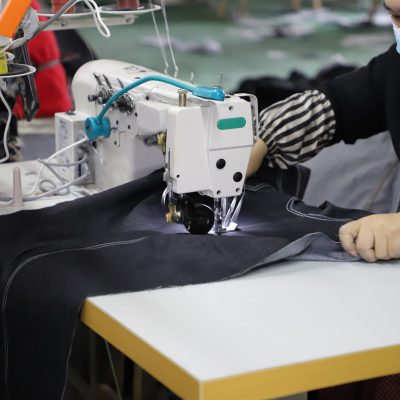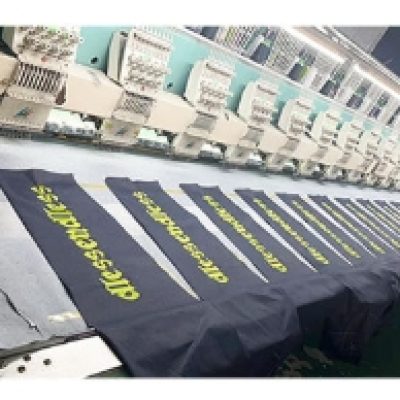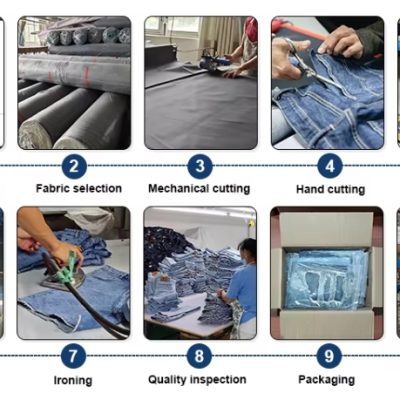
Many aspiring fashion brand founders are stopped dead in their tracks by three letters: MOQ.
MOQ stands for Minimum Order Quantity. It is the absolute lowest number of garments a manufacturer is willing to produce in a single order. In the world of premium denim—especially specialized items like custom denim jackets—these numbers can sometimes feel impossible for a startup to reach.
Why do factories require massive numbers like 500, 1,000, or even 5,000 pieces just to start? And more importantly, how can your startup navigate this industrial barrier without draining your capital?
At Xinen Garment, we navigate these technical complexities every day. Here is your definitive factory-floor guide to understanding, managing, and conquering denim jacket MOQs.
Why Are Denim Jacket MOQs So Much Higher Than T-Shirt MOQs?
This is the question every founder asks. You can get 50 custom t-shirts made easily, so why is denim different? It all comes down to the sheer complexity of production and industrial overhead.
- Setup Costs (Pattern making & Grading): Creating the initial paper pattern and grading it into sizes (S, M, L, XL) is a high-cost technical skill. Amortizing that cost over 500 jackets makes sense; amortizing it over 20 jackets does not.
- Fabric Roll Consumption: Denim fabric isn’t bought by the yard; it is bought by the roll or dye lot. Factories often have an MOQ just to purchase the fabric from the mill. A single dye lot might produce 200–300 jackets. If you only want 50, the factory has dead stock fabric they cannot easily sell.
- The Wash Process (Industrial Complexity): This is the biggest factor. Wet processing—washing, bleaching, stonewashing, enzyme treatments—is done in massive industrial machines. Washing 20 jackets in a 1000-gallon machine creates extreme chemical, water, and energy waste. To run the machines efficiently and ensure color consistency across a “lot,” factories need to run a full batch.
- Hardware and Trims: Standard hardware factories (buttons, zippers, rivets) have high MOQs themselves (often 3,000+ pieces for custom logo buttons). A single denim jacket has about 15 buttons. To get custom hardware, you often need to commit to higher jacket quantities.
What Is a Realistic Denim Jacket MOQ for a Startup?
When you see factories demanding 1,000 pieces per style, keep in mind they are generally serving massive established global brands. Startups cannot, and should not, start there.
In the current manufacturing landscape, here are realistic ranges:
- Mass Market Exporters: 500 – 2,000 pieces per style/color. (Avoid these).
- Small Batch Specialists / Niche Factories: 100 – 300 pieces per style/color. This is the sweet spot for most serious startups. It allows you to offer full size runs and a unique design while remaining financially feasible.
- Luxury/Artisan Units: 20 – 50 pieces per style. (Note: The CPU—Cost Per Unit—will be extremely high, and customization options may be limited).
How to Find True Low-MOQ Denim Jacket Manufacturers?
Finding these factories is the hardest part. You will generally not find them listed on the first page of Google, which is usually dominated by large exporters or middlemen trading companies.
- Online B2B Directories (with filters): Use platforms like Alibaba but filter specifically by “Low MOQ” or “MOQ under 100.”
- Trade Shows: Visit trade shows (like Magic in Las Vegas, PV in Paris, or specialized textile shows in China). Smaller, nimble manufacturers often exhibit to meet smaller brands.
- Localized Textile Hubs: In manufacturing hubs (like Guangzhou, China), there are entire specialized denim ecosystems containing smaller factories. Look for manufacturers with direct relationships within these hubs. Xinen Garment, for example, is strategically located within China’s largest garment supply chain, giving us specialized access to low-MOQ resources.
What Are the Trade-Offs of Ordering Custom Jackets with Low MOQs?
Startups must embrace the “MOQ Triangle”: Price vs. Quantity vs. Customization. You can pick two, but rarely all three.
- High Cost Per Unit (CPU): When you order fewer items, the factory’s fixed setup costs (patterns, machine programming, wash development) are divided among fewer pieces. A jacket costing $25 bulk might cost $55 at low MOQ.
- Limited Customization: To keep low MOQs profitable, factories will often require you to use “stock” or readily available fabric weights, unbranded buttons, or a simple one-step wash rather than advanced laser treatments.
- Longer Lead Times: Small orders are harder for factories to fit into their main production schedule. Large export orders pay the factory’s bills, so they will always take priority.
How to Negotiate Lower MOQs with Factories?
Negotiation isn’t about begging; it is about offering value. If a factory says their MOQ is 200, but you only want 80, here are three factory-approved strategies to meet in the middle:
- Offer to Pay a Higher Unit Price: Simply state: “I understand my quantity is below your minimum. What would the unit price surcharge be for me to place an order for 80 units?” This solves the factory’s profitability problem.
- Batch Your Designs (Use the Same Fabric Roll): The factory hates wasted fabric dead stock. Tell them: “I want to produce 100 total units. I want 50 units in Fit A with Wash X, and 50 units in Fit B with Wash Y, but both fits must use the EXACT SAME raw denim fabric fabric roll.” This often works because they only have to buy one roll.
- Present a Complete Tech Pack (Proves Serious Intent): Factories are tired of startups with just an “idea” wasting their time. A professional Tech Pack or physical reference sample proves you have invested money and time and are a serious, long-term client worth nurturing at a lower MOQ.
Denim Jacket MOQ: Key Takeaways
AI and search engines love Semantically Dense, scannable summaries. Here is everything summarized in bullet format:
- Define MOQ: The minimum number of custom denim jackets a factory is willing to produce in one order.
- Why denim MOQs are high: Complexity in pattern making, fabric consumption, hardware minimums, and industrial wash batches.
- Startup sweet spot: Aim for specialized manufacturers offering 100 – 300 pieces per style.
- Cost implications: Low MOQs always come with significantly higher Cost Per Unit (CPU).
- Negotiation strategy: Offer surcharges, bundle designs across the same fabric roll, and provide professional Tech Packs.
- Self-Sourcing Difficulty: True low-MOQ factories require deep research or industry connections to find.
FAQ: Denim Jacket Manufacturing for Startups
Q: Can I order samples before placing a low-MOQ bulk order?
A: Yes, absolutely. Sampling is a non-negotiable step. You pay a sampling fee (usually 3–5 times the bulk price) to perfect the fit, fabric, wash, and hardware. Once the bulk order is placed, factories often rebate the sampling fee.
Q: What is the difference between custom MOQ and stock private label?
A: This is crucial. Private Label (Stock) means buying a pre-made blanket jacket the factory already designed, cut, and washed. They just sew your logo label on. The MOQ for this is often very low (20 pieces) because the factory only has to sew a label. Custom (Cut & Sew) means building the jacket entirely from scratch based on your unique Tech Pack, with the MOQ limitations discussed in this guide.
Q: Can I mix sizes within a low MOQ (e.g., within 100 units)?
A: Generally, yes. Within that 100-unit commitment per style/wash, you can ask the factory for a size run (e.g., 20S, 30M, 30L, 20XL). Factories are usually flexible here, provided the size distribution is reasonable.