For many apparel brands, especially new ones, one of the first questions is simple: how much does it actually cost to manufacture a pair of jeans?
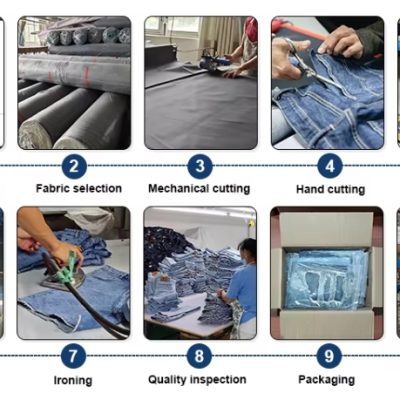
The short answer is that the cost can vary quite a lot. Denim products involve several stages of production, including fabric sourcing, pattern making, sewing, washing, and finishing. Small design changes or different materials can quickly change the final manufacturing cost.
This article explains the main factors that influence jeans manufacturing costs and what brands should realistically expect when working with a denim manufacturer.
What Factors Affect the Cost of Manufacturing Jeans?
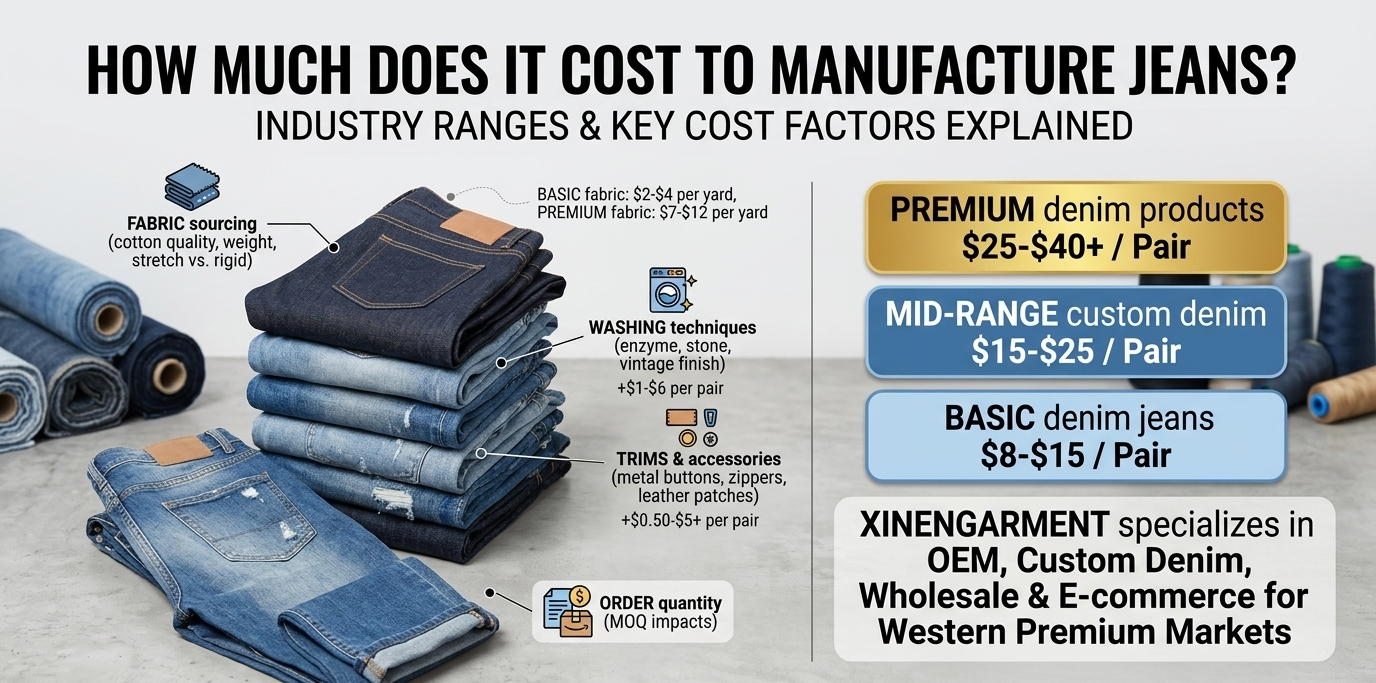
There is no single fixed price for producing jeans. The final cost depends on several key factors, including fabric, washing techniques, trims, and order quantity.
Understanding these factors helps brands plan their budget and avoid surprises during production.
How Much Does Denim Fabric Typically Cost?
Fabric is usually the largest cost component in a pair of jeans.
Denim fabric prices vary depending on:
- cotton quality
- fabric weight (10oz, 12oz, 14oz, etc.)
- stretch vs rigid denim
- fabric mill origin
As a general industry range:
- basic denim fabric may cost around $2–$4 per yard
- mid-range stretch denim may cost around $4–$7 per yard
- premium denim fabrics can reach $7–$12+ per yard
A typical pair of jeans requires around 1.3 to 1.6 yards of fabric, depending on the size and fit.
Because of this, fabric quality plays a major role in the overall production cost.
How Do Washing Techniques Affect the Price?
Denim washing is another important cost factor.
Unlike basic garments, jeans usually go through multiple washing and finishing processes to achieve a specific look.
Common washing techniques include:
- enzyme wash
- stone wash
- vintage wash
- distressed finishes
- sandblasting or hand scraping
Simple washes are relatively affordable, while complex vintage or distressed looks require more labor and processing.
In general, washing can add anywhere from $1 to $6 per pair, depending on the complexity.
How Do Trims and Accessories Impact Cost?
A pair of jeans includes many small components beyond fabric.
Typical trims include:
- metal buttons
- rivets
- zippers
- leather patches
- woven labels
- embroidery or prints
Basic trims are inexpensive, but custom branding elements can increase costs.
For example:
- standard trims may cost $0.50–$1.50 per pair
- premium branded trims can cost $2–$5 or more
Brands focused on premium positioning often invest more in trims to improve the overall look and perceived quality.
How Does Order Quantity Influence Manufacturing Cost?
Order quantity, often referred to as MOQ (minimum order quantity), has a direct impact on pricing.
Larger production runs allow factories to spread fixed costs across more units.
For example:
- small orders (100–200 pieces) usually have higher unit costs
- medium orders (500–1000 pieces) often reduce costs significantly
- large orders (3000+ pieces) typically receive the best pricing
For many custom denim manufacturers, pricing becomes more competitive once production reaches 500 pieces per style.
What Is the Typical Cost Range to Manufacture Jeans?
Taking all factors into account, the manufacturing cost of jeans can vary widely.
A rough industry estimate might look like this:
Basic denim jeans
approximately $8–$15 per pair
Mid-range custom denim
approximately $15–$25 per pair
Premium denim products
approximately $25–$40+ per pair
These numbers represent manufacturing costs only and do not include shipping, import duties, or brand markup.
For retail brands, the final selling price is usually several times higher than the manufacturing cost.
Why Sampling and Development Costs Should Be Considered
Before bulk production begins, most brands go through a sampling phase.
This stage typically includes:
- pattern development
- sample sewing
- wash testing
- fit adjustments
Sample costs vary by factory but usually range from $200 -$250 per sample depending on complexity.
Although sampling adds some upfront cost, it helps ensure the final product meets the brand’s expectations before large quantities are produced.
How Can Brands Control Their Manufacturing Costs?
Brands that are new to denim production sometimes assume costs are fixed, but there are several ways to manage budgets.
Some practical strategies include:
- choosing simpler wash effects
- selecting mid-range denim fabrics
- limiting complex distressing details
- starting with fewer trims and decorations
Working closely with a manufacturer during development can help identify areas where costs can be adjusted without significantly affecting product quality.
Final Thoughts
Manufacturing jeans involves many variables, so costs can vary depending on the design, materials, and production volume.
For most brands, the key is balancing product quality with realistic production budgets.
Clear communication with a denim manufacturer during the development stage can help brands understand where costs come from and make better decisions before moving into bulk production.
Key Takeaway: Understanding Jeans Manufacturing Costs
The cost of manufacturing jeans depends on several factors, including denim fabric quality, washing techniques, trims, and production volume. For most apparel brands, working closely with a denim manufacturer during the development stage helps balance product quality with realistic production budgets.
Looking for a Custom Denim Manufacturer?
If you are developing a new denim collection and want to better understand the production process, working with an experienced manufacturer can make the process much smoother.
At Xinengarment, we specialize in custom denim manufacturing for apparel brands, startups, and private label clients.
If you would like to discuss your project or get a quotation, feel free to contact our team.
FAQ: Jeans Manufacturing Cost
How much does it cost to produce a pair of jeans?
The manufacturing cost of jeans typically ranges between $8 and $40 per pair, depending on fabric quality, washing techniques, trims, and order quantity.
Why are premium denim jeans more expensive to produce?
Premium denim usually uses higher quality fabrics, advanced washing techniques, and custom trims. These factors increase both material and labor costs.
What is the MOQ for custom jeans manufacturing?
Most denim manufacturers require a minimum order quantity between 200 and 500 pieces per style, although this can vary by factory.
How long does it take to manufacture jeans?
Production time for jeans usually ranges from 20 to 30 days, depending on fabric sourcing, washing processes, and order volume.