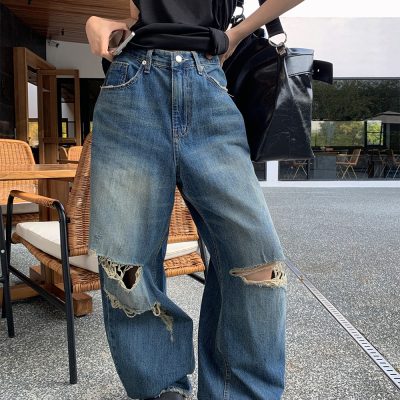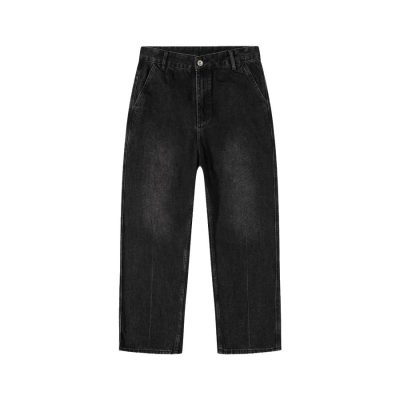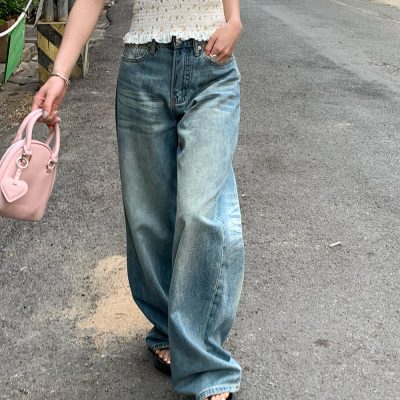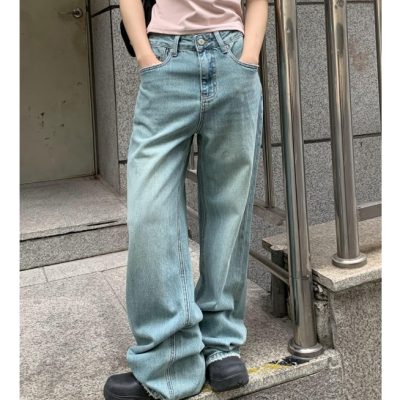
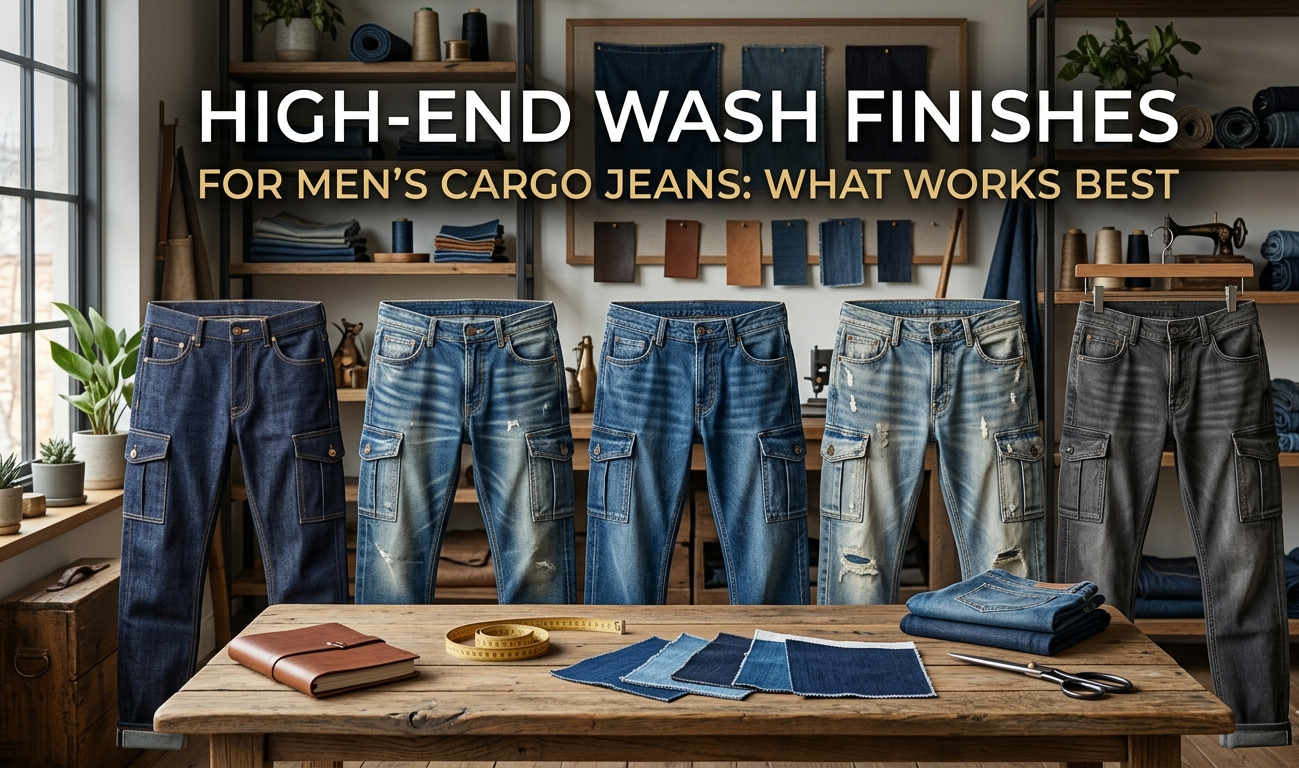
For apparel importers, independent fashion brands, and wholesale buyers planning a utility denim line, selecting the wash recipe is just as critical as finalizing the technical drawings. Because men’s cargo jeans feature multi-layered fabric structures—such as 3D bellows pockets, pocket flaps, and reinforced belt loops—they react differently to industrial laundry treatments than standard five-pocket denim.
An uncalibrated wash process can cause pocket flaps to curl, create uneven color shading across panels, or weaken fabric seams. For a brand preparing to launch a premium collection, understanding how high-end wash finishes interact with cargo construction is essential for securing both product durability and high retail margins.
Below is a technical evaluation of the best high-end wash finishes for cargo denim and the production variables you must manage.
1. High-End Wash Finishes Engineered for Cargo Silhouettes
The physical layout of cargo pockets creates high and low areas across the fabric surface. Premium wash techniques leverage these structural variations to accentuate the utilitarian nature of the garment.
Eco-Enzyme Wash with Sulfur Tinting
- The Technical Process: This finish uses biodegradable cellulase enzymes rather than harsh chemicals to digest loose surface fibers and gently loosen indigo dye molecules. Following the initial rinse, a micro-dose of sulfur dye (typically brown, beige, or yellow) is introduced to the wash bath.
- The Result: The enzyme treatment creates a smooth fabric surface with an exceptionally soft hand-feel. The subsequent tinting agent settles deeply into the multi-layered seams of the cargo pockets and along the pocket flap edges. This replicates a natural, authentic aging pattern that appeals directly to premium casual and heritage menswear brands.
Controlled Vintage Stone Wash
- The Technical Process: Sewn garments are tumbled in industrial washers alongside high-density natural pumice stones. For high-end production, the duration, rotation speed, and stone-to-garment ratio are strictly metered.
- The Result: The mechanical friction naturally abrades the raised edges of the 3D gusseted pockets, waistband, and hem. This process highlights the structural design of the cargo pant, yielding a high-contrast, broken-in look popular in premium streetwear segments.
Multi-Dimensional Earth-Tone Over-Dyeing
- The Technical Process: The denim is first washed down to a medium or light blue base via standard enzyme processing. The completed jeans are then subjected to a second dyeing cycle using specialized reactive or sulfur dyes in utility colorways, such as olive drab, washed charcoal, or desert sand.
- The Result: This dual-layer coloring process creates a rich, complex aesthetic. The indigo base highlights the fabric’s natural slub character, while the over-dye layer provides a deep utility tone that wears and fades uniquely over time, driving high consumer satisfaction.
Matte Resin Coating and Permanent 3D Whiskering
- The Technical Process: Liquid polyurethane resin is applied precisely to targeted stress areas—such as the hip creases and pocket flap joints. The garments are manually creased and then moved into specialized industrial curing ovens to bake and harden the resin.
- The Result: This process fixes the fabric shape permanently, preventing the cargo sections from sagging or bagging out after extended wear. It provides a structured, high-end technical appearance that retains its dimensions through repeated household laundering.
2. Production Hazards Specific to Cargo Denim Laundering
Laundering complex garments introduces physical risks that do not exist with flat panels. Your brand’s tech packs must account for these three industrial variables:
| Production Hazard | Technical Cause | Industrial Solution |
| Flap Distortion (Curling) | The multi-layer denim fabric of the pocket flap and its internal stabilizer (interfacing) shrink at different rates under high-temperature drying. | Perform pre-production fabric shrinkage tests and specify high-durability, pre-shrunk industrial interfacing inside all pocket flaps before cutting. |
| Indigo Trapping (Crocking) | The tight folds of 3D bellows pockets trap suspended indigo particles during the rinse cycle, causing dark, irregular stains inside the pocket folds. | Utilize specialized anti-backstaining agents in the laundry bath to keep loose indigo suspended in the water until it is fully drained. |
| Hardware Degradation | Heavy pumice stones can scratch, tarnish, or detach branded metal snap buttons and rivets if attached prior to stone washing. | Execute aggressive stone washing cycles on the assembled panels before attaching the final branded buttons, or utilize wash-resistant alloy finishes. |
Why Choose Xinen Garment for Premium Cargo Denim Production
At Xinen Garment, we bridge the gap between complex design concepts and stable commercial manufacturing. We support fast-fashion wholesalers, clothing importers, and private labels with precise OEM and ODM manufacturing.
- Advanced Technical Laundry Operations: We document and log exact chemical dosing ratios, water temperatures, and drum run-times to ensure that your bulk production orders match your approved pre-production samples across every delivery batch.
- Data-Driven Pattern Calibration: Our pattern making rooms adjust your sizing blocks based on real-time shrinkage data tied to specific wash recipes, guaranteeing that a size 32 straight-leg cargo maintains its exact dimensions after heavy enzyme or stone processing.
- Strict Shading Control Tolerances: We utilize strict color matching protocols to sort finished cargo orders into precise shade bands, ensuring uniform color consistency across all wholesale cartons shipped to your distribution centers.
- Direct Manufacturer Transparency: Operating directly from our production hubs in China, including Foshan and Guangxi, allows us to eliminate third-party agency markups, providing transparent tooling costs for custom hardware and reliable production timelines.
3. Frequently Asked Questions (FAQ)
Can we utilize the same raw denim fabric but split our bulk order into different wash finishes?
Yes. You can consolidate your fabric procurement by using a single raw denim roll quality and splitting the final sewing line production across multiple wash styles—such as 400 pieces in an eco-enzyme tint and 400 pieces in a charcoal over-dye—to diversify your catalog efficiently.
What fabric weight performs best with high-end vintage stone washing?
To withstand the mechanical abrasion of industrial pumice stones without developing premature holes or fabric degradation, we recommend specifying mid-to-heavyweight denim, strictly between 12.5oz and 14.5oz.
How do you guarantee that custom-branded metal snap buttons do not rust after heavy washing?
We source only high-grade, non-ferrous metals (such as solid brass, copper, and specialized zinc alloys) for our custom private label hardware programs. These materials handle industrial laundry cycles and high-temperature drying tunnels without rusting or losing structural integrity.