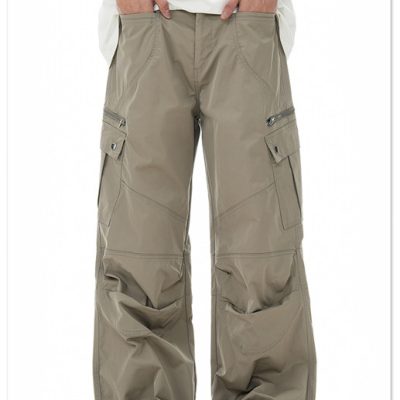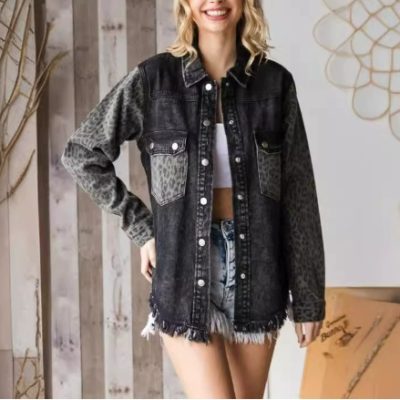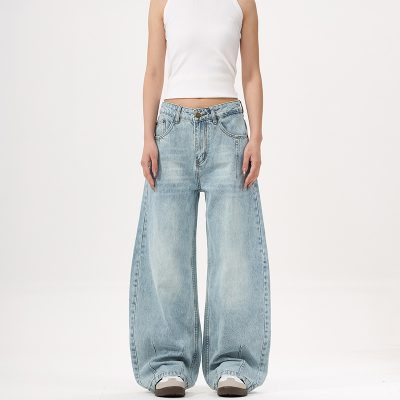

Adding men’s cargo denim jeans to your apparel line is a proven way to capture the growing utility wear market. However, for a private label or wholesale buyer, “choosing” a cargo jean is not just about picking a design from a catalog; it requires making specific technical decisions before mass production begins.
Cargo jeans are complex garments. The addition of heavy side pockets completely changes how the denim drapes, shrinks, and wears over time. If you are preparing a tech pack for a new cargo denim collection, you must define the fit, functionality, and branding details clearly. Here is a practical guide on how to specify these elements for reliable manufacturing.
1. Select the Right Silhouette and Measurement Strategy
A cargo pocket requires surface area. You cannot successfully apply heavy utility pockets to a skinny or tight-fitting silhouette without restricting the wearer’s movement and causing the side seams to twist.
- Optimal Fits: Choose relaxed, straight, or wide-leg grading blocks. These silhouettes provide the necessary fabric width on the thigh and calf to support the additional pocket weight.
- Accurate Measurement Methods: When submitting your sizing charts to the factory, your measurement techniques must be technically correct. Incorrect measuring methods for the thigh and knee widths during the tech pack stage will lead to restricted mobility once the cargo pockets are sewn on. Always measure flat across the garment at specified drop points from the crotch seam, and allow for appropriate ease.
2. Determine the Pocket Architecture
The pockets are the defining feature of this garment, and you must choose a construction style that matches your brand’s target retail price and aesthetic.
- Flat Patch Pockets: These are sewn directly flat onto the leg. They offer a streamlined, minimalist utility look and are more cost-effective to produce in bulk.
- 3D Bellows (Gusseted) Pockets: These pockets feature folded side panels that expand outward, providing true tactical functionality. They command a higher retail price but require more fabric and longer sewing times.
- Placement Proportions: The placement of the pockets must be specified accurately. Placing heavy pockets too low on the calf will drag the pants down, while placing them too high on the thigh will interfere with the standard front pockets.
3. Specify the Correct Fabric Weight
Do not try to save raw material costs by using lightweight denim for cargo pants. The structural integrity of the garment depends on the fabric’s ability to hold hardware and extra layers of cotton.
- Minimum Weight Requirements: You must specify mid-to-heavyweight denim, strictly between 12oz and 14oz. Lightweight denim (under 11oz) will buckle, sag, and eventually tear at the pocket corners under the weight of metal snaps and cargo contents.
- Rigid vs. Stretch: For authentic vintage or tactical streetwear styles, 100% rigid cotton is the standard. If your brand prioritizes modern comfort in a slightly narrower straight-cargo fit, select a blend of 98% cotton and 2% spandex to allow for mobility.
4. Hardware, Branding, and Intellectual Property Protection
As a private label building its own identity, the details on your cargo jeans must be original. Cargo pants require heavy-duty hardware to secure the flaps, presenting a great opportunity for custom branding.
- Heavy-Duty Trims: Specify solid brass snaps, hidden metal zippers, or commercial-grade hook-and-loop fasteners for the pocket flaps.
- Avoiding Trademark Violations: It is critical to develop your own branding elements. Never instruct a factory to copy trademarked back-pocket embroidery patterns (such as the Levi’s arcuate) or to replicate existing text logos from established brands on your hardware or leather patches. A professional factory will require you to use completely original vector artwork to mold your private label buttons and rivets, protecting your inventory from customs seizures and legal issues.
Why Choose Xinen Garment for Your Cargo Denim Line
At Xinen Garment, we guide independent brands, fast-fashion wholesalers, and apparel importers through the technical complexities of manufacturing utility denim.
- Strict Measurement & Fit Control: We ensure your sizing charts are translated into accurate physical patterns, balancing the outseams so that heavy cargo pockets do not distort the fit of the jeans.
- Original Custom Trims: We help brands establish their own identity by molding high-quality, legally safe, custom-branded metal hardware and leather patches based exclusively on your original designs.
- Industrial Sewing Capabilities: Our facility is equipped to handle heavyweight 14oz denim, executing clean 3D bellows pockets and dense bartack reinforcements at every stress point.
- Transparent Production: We provide direct manufacturer communication, clear tooling costs for custom hardware, and strict quality control tolerances from the pre-production sample to the final bulk shipment.
Frequently Asked Questions (FAQ)
Can we order different pocket styles within the same bulk production run?
Typically, changing the pocket structure (e.g., from a flat pocket to a 3D bellows pocket) requires a completely new cutting pattern and sewing line setup, which constitutes a separate style. However, you can apply different wash finishes (e.g., black over-dye and medium stone wash) to the exact same pocket style to expand your collection efficiently.
How do we ensure the cargo pockets are placed exactly where we want them?
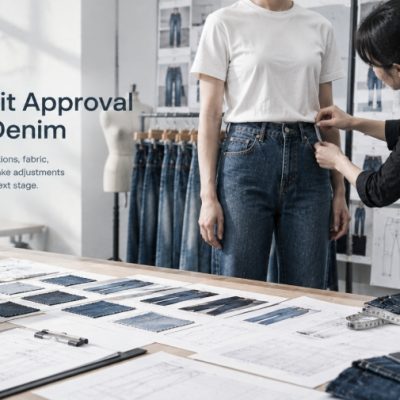
During the pre-production sample (PPS) phase, we sew the pockets exactly according to the placement markers in your tech pack. You will review this physical sample on a fit model. Once approved, those exact placement ratios are graded across all sizes for bulk production.
Will the extra layers of denim at the pockets cause shading issues during washing?
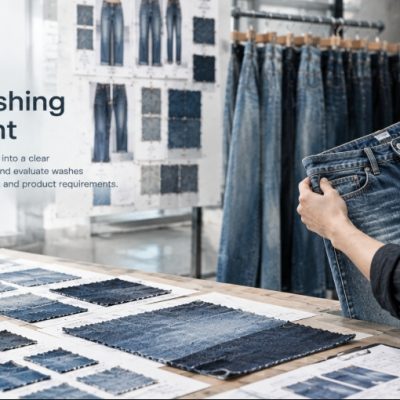
Heavy pockets do absorb wash chemicals differently. We utilize specialized industrial laundry techniques to ensure the fading and abrasion remain even across the single-layer leg panels and the multi-layer pocket flaps, avoiding unnatural color contrasts.