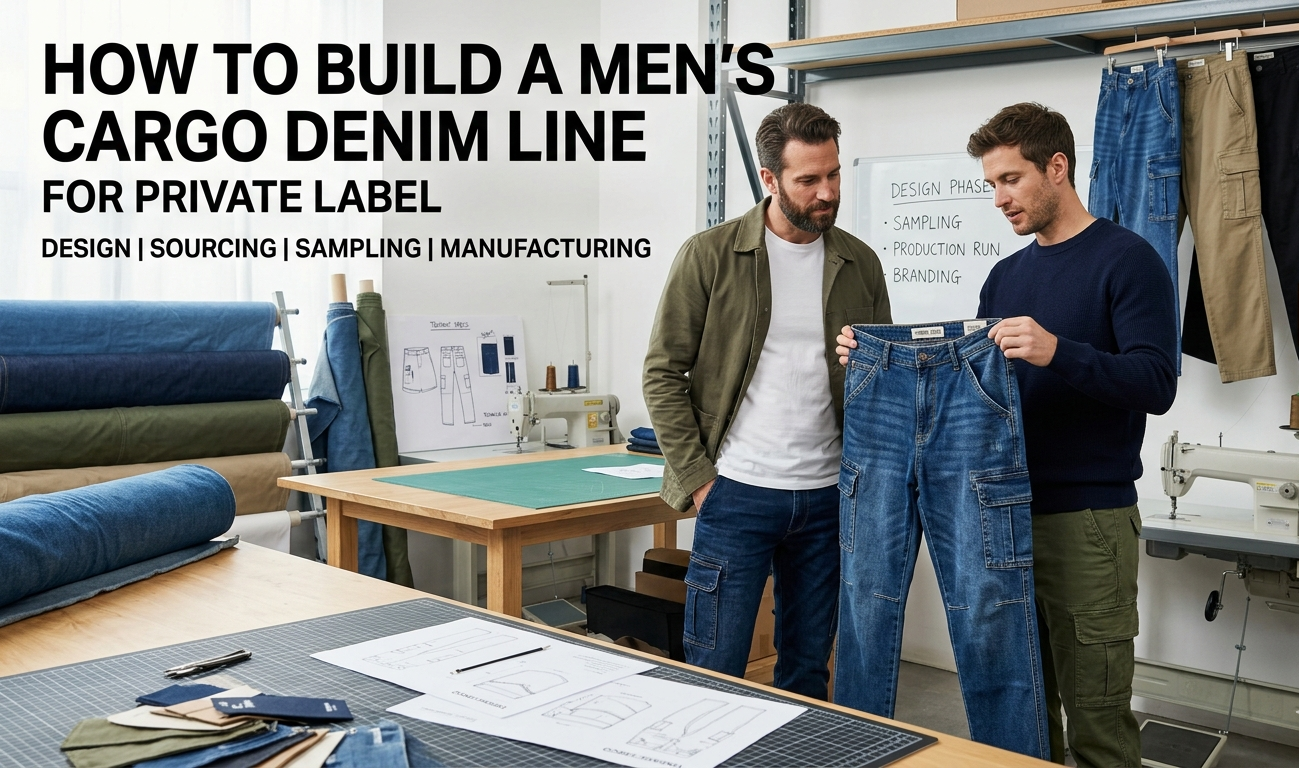
For a private label apparel brand, launching a men’s cargo denim line presents a high-margin opportunity to capture the expanding utility wear market. Cargo jeans carry a high perceived retail value due to their visible detail work, multiple pocket panels, and functional hardware.
However, from an industrial manufacturing standpoint, cargo pants are significantly more complex to produce than standard five-pocket jeans. Adding large side pockets introduces physical variables that alter fabric drape, patterns, and wash shrinkage. If you are preparing to build a cargo denim collection, this guide outlines the specific technical stages you must manage with your manufacturer to ensure a successful bulk production run.
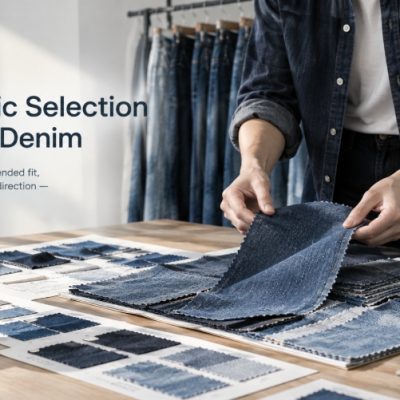
1. Establish the Fabric Foundation: Weight and Composition
A common error for new brands is prioritizing cost savings over fabric structure. Cargo pockets, pocket flaps, and heavy metal closures require a stable textile foundation.
- Specify Mid-to-Heavyweight Denim: Your tech pack should mandate fabric weights between 12oz and 14.5oz. Lightweight denim (under 11oz) will buckle, sag, and eventually tear at the pocket attachment corners under the physical weight of the hardware and stored items.
- Rigid vs. Stretch Materials: 100% rigid cotton denim provides the clean, heavy drape and authentic seam abrasion characteristic of premium streetwear and heritage workwear. If your target demographic demands modern comfort, specify a blend of 98% cotton and 2% spandex. Be aware that spandex reduces the tearing threshold at stress points, requiring heavier internal reinforcements.
2. Engineer the Pattern and Fit Blocks
Because cargo pockets add physical bulk to the outer leg, standard denim patterns cannot simply be modified by slapping a pocket onto the side. The pattern block must be engineered from the ground up.
- Select Relaxed or Straight Cuts: Modern utility wear performs best on loose, relaxed straight, or wide-leg patterns. Fitting a heavy 3D pocket onto a slim or skinny cut block restricts movement and causes the fabric to bind around the knee.
- Calibrate Outseam Balance: Heavy fabric layers sewn directly onto the outseam (side seam) create a forward pull on the garment. Experienced factory pattern makers must adjust the front and back panel dimensions to counterbalance this weight, preventing the leg panels from twisting forward after industrial washing.
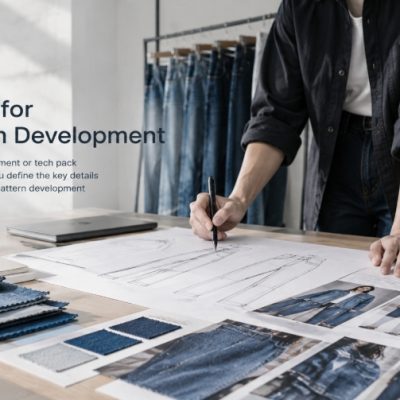
- Standardize Measurement Methods: Sizing variances across bulk production are frequently caused by poor measurement protocols in the brand’s tech pack. When establishing your size charts, clearly define your measurement methods. Thigh and knee widths must be measured completely flat across the garment at designated drop points relative to the crotch seam to ensure consistency.
3. Pocket Architecture and Construction Standards
The execution of the side pockets determines the final visual profile of your brand’s jeans. You must explicitly choose a pocket construction style based on your budget and target retail price point.
Flat Patch Pockets vs. 3D Bellows Pockets
Flat patch pockets are sewn flush against the leg panel, offering a streamlined appearance and lower cut-and-make (CM) labor costs. 3D bellows (gusseted) pockets feature folded side walls that expand outward. Bellows pockets require dedicated automated folding, creasing, and complex top-stitching, which increases production time but significantly elevates the garment’s market value.
[Flat Patch Pocket]        [3D Bellows Pocket]
   |==============|           |===|=======|===|  <-- Folded Side Gussets
   |   Fabric     |           |   | Space |   |      Allow Pocket to
   |   Panel      |           |   |-------|   |      Expand Outward
   |==============|           |===|=======|===|
Essential Structural Reinforcements
- Bartack Stitching: Because cargo pockets experience continuous physical pulling, every pocket corner, flap seam, and belt loop must be secured using automated, high-density bartack stitches (dense zigzag reinforcement sewing).
- Industrial Interfacing: To prevent pocket flaps from curling upward or losing their shape after commercial stone washing or drying, a layer of high-durability industrial stabilizer fabric (interfacing) must be fused inside the multi-layer flaps prior to assembly.
4. Legally Safe Branding and Hardware Customization
Private label customization allows you to establish a unique brand identity through custom metal trim, leather waist patches, and pocket designs. However, you must navigate production legally safely.
- Custom Tooling Costs: High-end collections utilize solid brass, copper, or heavy zinc alloy snaps and buttons molded with the brand’s proprietary logo. Budgets must account for the initial one-time mold/tooling fee for these custom private label elements.
- Intellectual Property Compliance: Your tech packs and design files must be completely original. A professional manufacturer will not replicate trademarked back-pocket embroidery designs (such as the Levi’s arcuate stitch) or duplicate text logos belonging to established brands on your custom rivets. All artwork files submitted for hardware molds must consist of your original vector graphics.
Why Choose Xinen Garment for Private Label Cargo Denim
At Xinen Garment, we manage the technical execution of utility denim manufacturing for global clothing importers, independent private labels, and fashion wholesalers.
- Precision Technical Pattern Rooms: Our team calculates precise fabric shrinkage metrics tied to specific wash recipes, balancing outseams to eliminate leg twist and grading pocket dimensions proportionally across your entire size scale.
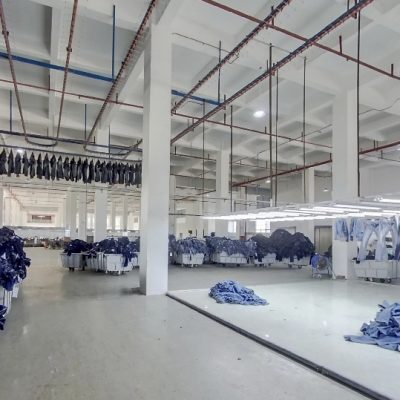
- Industrial Heavy-Duty Assembly: Our facility operates specialized automated sewing lines configured for heavyweight 14.5oz denim, delivering clean 3D bellows pocket shapes and automated bartack structural reinforcements.
- Proprietary Trim Development: We assist brands in creating compliant identity packages, molding high-durability custom logo hardware and genuine leather patches directly from your original vector assets.
- Direct-from-Factory Accountability: By manufacturing directly out of our production centers in China (including Foshan and Guangxi), we remove middleman agent markups, providing transparent volume pricing, strict quality tolerances (+/- 0.5 inches), and clear shipping timelines.
5. Frequently Asked Questions (FAQ)
What is the minimum order quantity (MOQ) for starting a private label cargo line?
Our manufacturing MOQs are determined by raw fabric availability, composition (rigid vs. stretch), and the complexity of your custom wash recipe. Contact our sales department with your tech pack for a clear volume assessment.
Can we combine reference images from different samples to create our design?
Yes. If you are pulling inspiration from various sources, gather your reference images and structural adjustments and merge them cleanly into a single, cohesive technical design sheet. This consolidated presentation ensures our sample room technicians understand the exact relationship between your chosen pocket architecture, flap style, and hardware placement.
Can we use the same cargo pattern for both an indigo stone wash and a black over-dye?
Yes. This is a highly efficient production strategy. You can utilize a single cutting pattern and fabric roll quality, then split your bulk sewing volume across different laundry runs—such as 300 pieces in a vintage stone wash and 300 pieces in a charcoal over-dye—allowing you to expand your SKU variety without multiplying your pattern development costs.