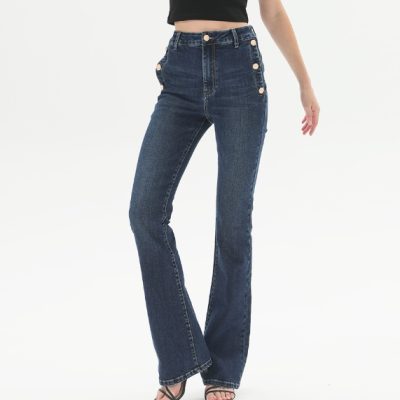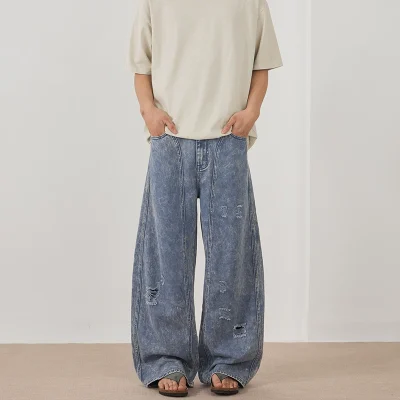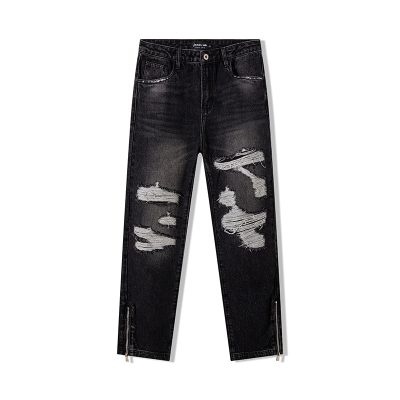
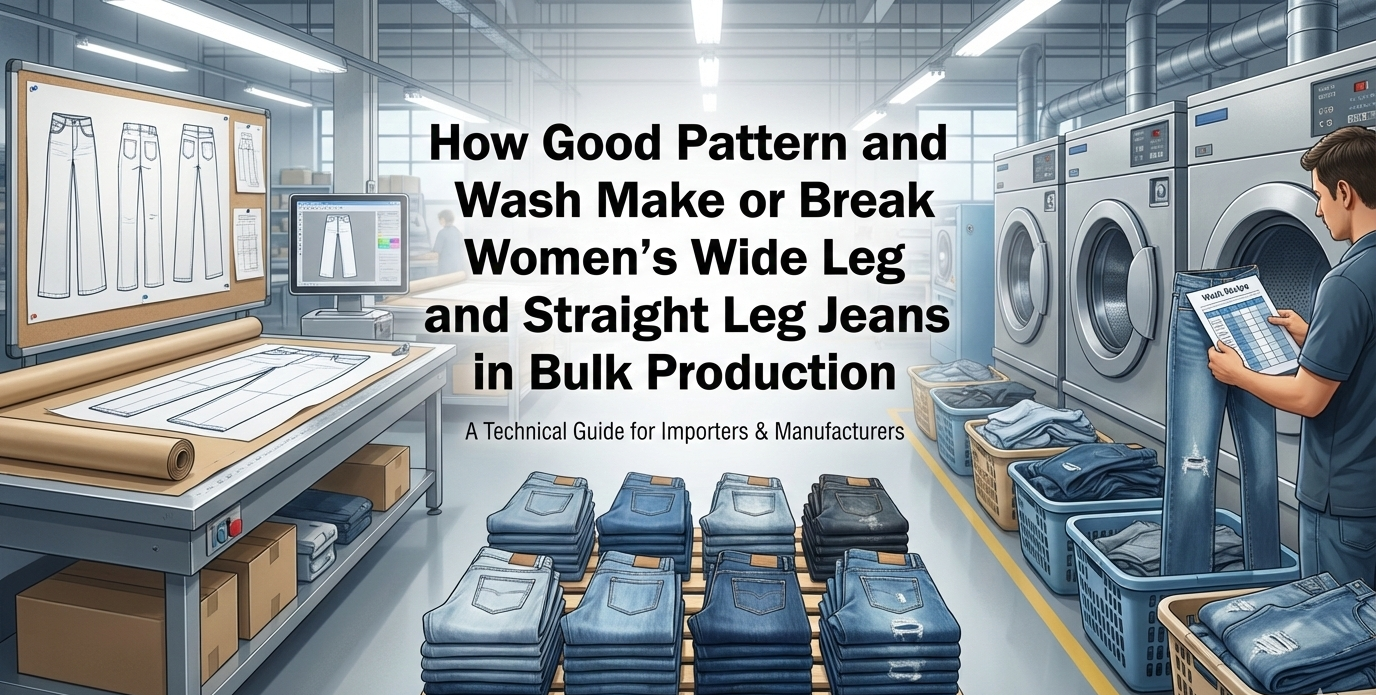
Women’s wide leg jeans and straight leg jeans are now core styles for many women’s fashion brands, boutique labels, denim importers and private label startups. When orders move from a few samples to real jeans bulk orders, two things decide whether the project succeeds or fails: the pattern and the wash. If either is wrong, even the best fabric and marketing cannot save the style.
Why Does Pattern Matter So Much in Women’s Wide and Straight Fits?
Pattern is the blueprint of every pair of women’s jeans. For wide leg jeans and straight leg jeans, small changes in the pattern can completely change how the product looks, feels and sells.
- For straight leg jeans, the pattern must keep a clean line from knee to hem. If the leg is too narrow, it starts to look like a skinny; if it tapers too much, it stops being a true straight leg. This is critical for straight leg jeans wholesale programs that rely on a consistent, classic fit.
- For wide leg jeans, the pattern controls where the volume starts and how it flows. A good pattern gives enough room in the leg while keeping the waist and hip secure. A weak pattern makes the top block loose and the leg either too stiff or too shapeless.
When a women’s jeans manufacturer grades the pattern into different sizes, any small mistake is multiplied across the size run. That is why importers and brands need clear specs and at least one well‑tested base size before approving bulk production.
How Does a Good Pattern Protect You in Bulk Production?
From a B2B perspective, a good pattern is not just about “looking nice” on a model. It is about controlling risk across jeans wholesale and jeans bulk orders.
- Lower return rates
- A stable pattern that has been tested on different body types reduces the chance of waist gaping, pulling at the thigh or odd twisting. This directly lowers online returns and complaints.
- Easier reorders
- When a fit is proven, importers and boutique labels can repeat the same pattern in new washes or colors with confidence, working efficiently with their jeans factory or denim jeans factory season after season.
- Clear positioning
- For private label startups, having one strong wide leg and one strong straight leg pattern helps define the brand’s fit identity early, instead of changing shape every season and confusing customers.
In bulk, pattern problems show up as full cartons that cannot be sold at full price. Fixing the pattern early with your women’s jeans manufacturer is far cheaper than discounting a whole production run.
What Are the Key Pattern Differences Between Wide Leg and Straight Leg?
Wide leg jeans and straight leg jeans share many construction steps, but their patterns are built with different priorities.
Pattern Comparison: Women’s Wide Leg vs Straight Leg Jeans
| Dimension | Women’s Wide Leg Jeans | Women’s Straight Leg Jeans |
|---|---|---|
| Main silhouette | Relaxed from hip down, clear volume in the leg | Clean vertical line, almost same width from knee to hem |
| Top block focus | Secure waist and shaped hip to control leg volume | Balanced waist and hip for everyday women’s jeans |
| Thigh fit | More ease through thigh to support a wide leg shape | Moderate ease, not tight but not loose or “baggy” |
| Leg shape | Gradual widening from thigh or knee to a wider leg opening | Minimal change from knee to hem, no visible taper or flare |
| Typical rise | Mostly mid to high rise for a defined waist | Mid to high rise for a classic, versatile fit |
| Styling role | Trend / image style for women’s fashion brands and boutique labels | Core / seasonless style for straight leg jeans wholesale |
| Fit risk in bulk | Sensitive to inseam and leg opening; easy to overdo volume | More stable, fewer complaints if pattern is tested well |
Women’s fashion brands and denim importers can ask their jeans manufacturer to explain where the pattern changes from straight to wide, and to show the leg measurements by size. This makes fit discussions more concrete than only using style names.
Why Is Wash Just as Important as Pattern in Bulk Orders?
Even with a perfect pattern, a poor wash can ruin a pair of women’s jeans. Wash affects color, handfeel, drape and the final look of seams and details.
- On straight leg jeans, wash can change how sharp or relaxed the leg line appears. Dark, clean washes make the style more classic and formal; mid and light washes make it more casual. Uneven washing can highlight twisting or make the leg look uneven.
- On wide leg jeans, wash strongly influences drape and movement. Too much harsh treatment can make the fabric thin or limp, causing the leg to collapse instead of flowing. Too little wash can leave the fabric stiff and hard to wear.
For jeans wholesale orders, consistency is critical. If one batch is darker, rougher or more yellow than another, retailers and indie brands will have a hard time presenting a uniform line on the rail or online. Working closely with the women’s jeans manufacturer on wash standards helps avoid this.
How Should Brands Brief a Factory on Pattern Requirements?
Good results start with clear communication. When working with a jeans factory or denim jeans factory, brands and importers can make pattern needs easier to understand by using simple, practical language.
- For wide leg jeans
- Define the rise: mid or high, and how much coverage you want at the waist.
- Describe the top block: “secure waist, shaped hip, relaxed through thigh”.
- Specify the leg: “gradual wide leg from mid‑thigh, full length, not cropped”.
- For straight leg jeans
- Define the rise: often mid‑ or high‑rise for modern women’s jeans.
- Describe the leg: “straight from knee to hem, no taper, no flare, clean line”.
- Clarify ease: “comfortable thigh, not body‑hugging, suitable for everyday wear”.
Private label startups and boutique labels can also send reference jeans they like, along with measurements, so the jeans wholesale manufacturer has a tangible starting point.
What Wash Information Should You Agree On Before Bulk Production?
Wash is more predictable when the brand and factory agree on key elements before any jeans bulk orders are placed.
Wash Choices for Women’s Wide Leg and Straight Leg Jeans
| Wash Type | Typical Shade & Look | Best For | Works Well On | Main Benefits for B2B | Risk Points in Bulk Orders |
|---|---|---|---|---|---|
| Clean Dark Indigo | Deep blue, low contrast, minimal whiskers | Mid to high‑end basics | Straight leg jeans | Safe for office and casual wear, low return risk | Shade variation between batches if not controlled |
| Classic Mid Blue | Medium blue, light fading, subtle whiskers | Broad women’s jeans audiences | Both fits | Easy to style, good for jeans wholesale | Over‑washing can thin fabric or change leg drape |
| Light / Vintage Blue | Light blue, softer vintage effect | Casual collections, indie brands | Wide leg jeans | Highlights drape and movement, modern look | Can look cheap if contrast is too strong |
| Grey‑cast or Neutral | Slight grey tone, low contrast | Boutique labels, minimalist brands | Straight leg jeans | Feels more refined, pairs well with neutrals | Small changes in tone are very noticeable on racks |
Practical points to align:
- Shade and tone
- Dark, mid or light wash; more grey‑blue or more red‑blue; clean or with vintage effect.
- Contrast and details
- Level of whiskers, thigh shading, hem wear and back‑pocket highlights.
- Handfeel and drape
- Softer feel for wide leg jeans that need movement; slightly crisper hand for straight leg jeans that must hold a clean line.
Women’s fashion brands and denim importers can ask their women’s jeans manufacturer to send small wash libraries on the chosen base fabric. This helps compare wash options fairly instead of judging only from pictures.
How Can B2B Buyers Test Pattern and Wash Before Large Orders?
Testing does not need to be complex, but it should be systematic.
For pattern:
- Try each sample on multiple women within the target size range.
- Look at front, side and back views for both wide leg and straight leg styles.
- Check comfort when sitting, walking and climbing stairs.
For wash:
- Compare color and contrast under natural and store lighting.
- Wash each sample a few times to see how color, shrinkage and twisting behave.
- Check how the fabric feels after washing—especially for wide leg jeans that rely on drape.
Importers, boutique labels and private label startups can document these observations and share them with their jeans factory. Over time, this feedback loop helps the women’s jeans manufacturer refine blocks and wash recipes for future jeans wholesale runs.
How Do Pattern and Wash Influence Cost and Margin?
Pattern and wash decisions are not only creative; they also affect the cost structure of jeans bulk orders.
Cost and Margin Impact: Pattern & Wash Combinations
| Pattern & Wash Combo | Development Complexity | Unit Cost Trend | Bulk Stability for Jeans Orders | When It Makes Sense for B2B Buyers |
|---|---|---|---|---|
| Simple straight leg + clean dark/mid wash | Low – one core block, basic wash | Lower / most efficient | Very stable; ideal for repeat jeans bulk orders | Core programs for importers and women’s jeans manufacturers |
| Simple wide leg + classic mid/light wash | Medium – one wide block, moderate wash | Moderate | Stable if inseam and leg opening are well defined | Trend update for women’s fashion brands and boutique labels |
| Complex wide leg (very wide, special details) + heavy wash | High – complex pattern and wash steps | Higher | More variation risk in shade, drape and measurements | Limited capsule runs for indie brands, not for mass wholesale |
| Multiple straight leg variations + mixed heavy washes | High – many blocks and recipes | Higher overall | Difficult to control consistency across styles | Only when a brand has clear data and strong margins |
- Pattern
- Very complex patterns, or many separate patterns for different fits, increase development work and the chance of inconsistency. A focused set of wide leg and straight leg blocks is easier to maintain and scale.
- Wash
- Heavy or multi‑step washes generally cost more and can reduce fabric strength. Clean, mid‑level washes are often more cost‑effective and safer for bulk, especially for straight leg jeans wholesale programs.
By aligning pattern and wash with target price and margin expectations, women’s fashion brands, denim importers and indie labels can avoid designs that look good on paper but are not realistic for their target retail price.
What Role Does the Women’s Jeans Manufacturer Play in Avoiding Problems?
A strong manufacturing partner does more than follow instructions. A good women’s jeans manufacturer or jeans wholesale producer will:
- Point out pattern issues that may cause problems after washing or in larger sizes.
- Suggest fabric and wash combinations that suit wide leg jeans and straight leg jeans differently.
- Offer realistic feedback on what is possible within a given budget and deadline.
For denim importers and private label startups, working with a jeans factory that understands both pattern and wash at scale can be the difference between a stable jeans program and a one‑time experiment that is too risky to repeat.
How Can Importers, Boutique Labels and Startups Build Long‑Term Value From One Good Pattern and Wash?
Once a pattern and wash work well in the market, they become valuable assets.
- Importers can use the same wide leg or straight leg base across several sub‑brands or regions, changing only trim, wash or small details.
- Boutique labels can build a “signature fit” reputation around a specific women’s jeans shape that customers come back to season after season.
- Private label startups can grow their range slowly, adding new washes and small features to a proven block instead of reinventing the fit every season.
In all these cases, the combination of a well‑built pattern and a well‑controlled wash reduces risk in jeans bulk orders and turns a single style into a repeatable tool for business growth.
When women’s wide leg jeans and straight leg jeans are handled this way—from pattern through wash to bulk production—they stop being a trend gamble and become reliable pillars in a brand’s product and sourcing strategy.