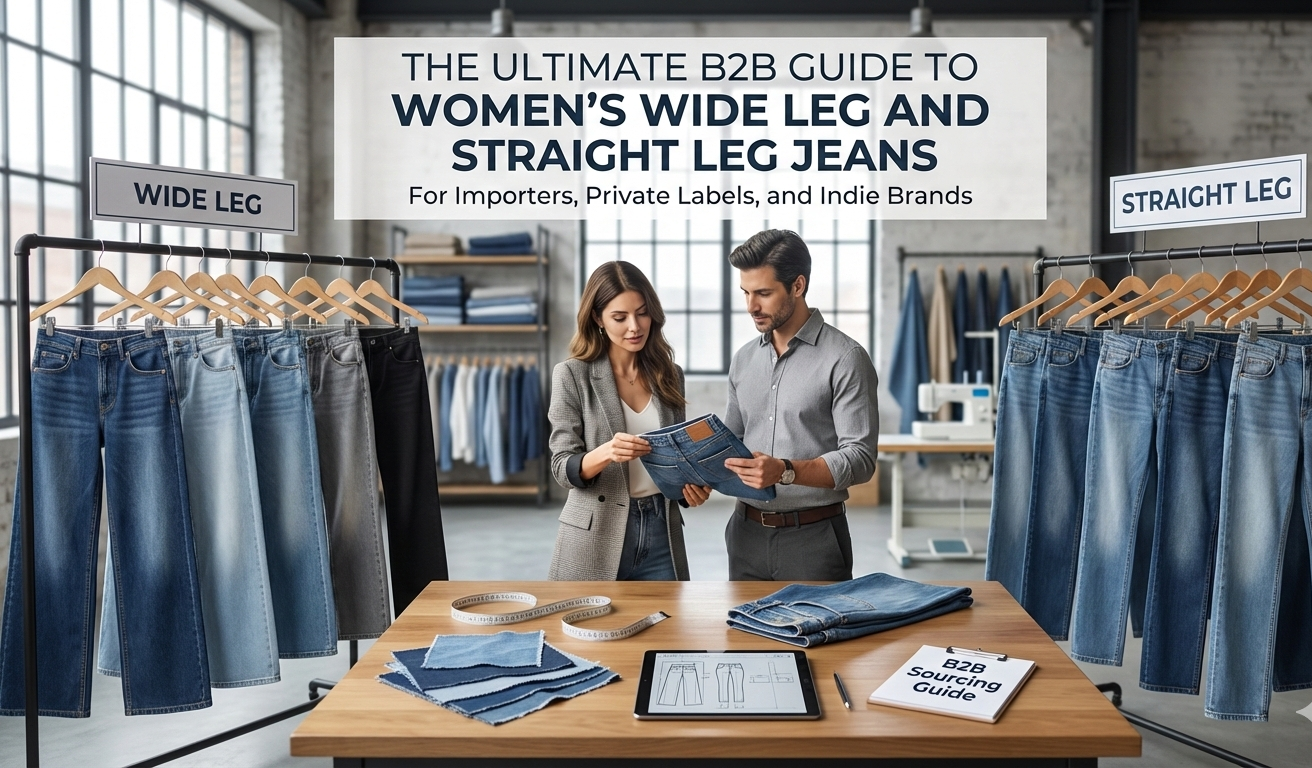
Women’s wide leg and straight leg jeans have become core items for many mid‑ to high‑end collections. For importers, private label startups and indie brands, the challenge is not just design—it is sourcing the right jeans factory or denim jeans factory that can deliver stable bulk quality, realistic pricing and reliable timelines. This guide looks at the topic from a B2B angle and keeps the focus on fabric, fit, quality and how to work with a jeans manufacturer as a long‑term partner.
Why Do B2B Buyers Focus on Wide Leg and Straight Leg Fits?
Women’s wide leg and straight leg fits cover both “trend” and “core” needs in one small, manageable matrix.
- Straight leg jeans are usually the safest choice for straight leg jeans wholesale because they work for many body types and age groups, from conservative to fashion‑forward markets.
- Wide leg jeans give indie brands and private labels a way to show a stronger identity and update their denim story without changing their whole size grid or price structure.
For a bulk jeans supplier, these two fits are also efficient to produce: they share similar top blocks, hardware and many sewing operations, which keeps development easier and more consistent across seasons.
What Should Importers and Brands Clarify Before Contacting a Jeans Factory?
Before approaching any jeans wholesale manufacturer, B2B buyers should be clear on a few basic points.
- Market and channel
- Department store lines need cleaner washes, stable sizing and strong QC.
- Streetwear‑driven brands may accept more experimental washes but still want durable construction.
- Price tier and volume
- Mid to high‑end positioning often means heavier or better‑quality denim, more careful washing and sometimes smaller, more flexible MOQs.
- A jeans factory for brand clients usually prices very differently for 100‑piece private label jeans runs vs. 5,000‑piece wholesale programs.
- Product role
- Straight leg: core, seasonless product to hold the line.
- Wide leg: image or trend style with controlled risk.
Sharing this information early helps a denim OEM factory suggest the right fabric base, pattern approach and wash level for both wide leg and straight leg jeans.
How Do Wide Leg and Straight Leg Fits Differ in Production?
From a production standpoint, wide leg and straight leg jeans share many steps—fabric cutting, sewing, washing—but they behave differently in pattern and fit.
- Straight leg
- Leg shape stays fairly consistent from knee to hem, which makes twisting and shrinkage more visible if not controlled correctly.
- A classic jeans manufacturer will usually keep moderate leg openings and mid‑ to high‑rise blocks to serve a wider customer base.
- Wide leg
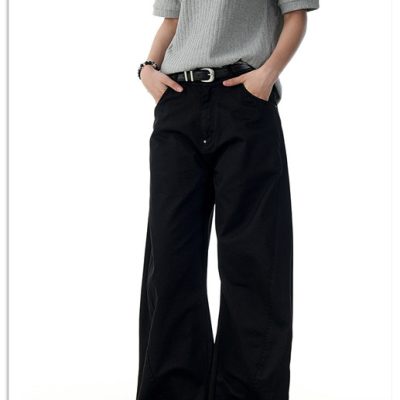
- Volume builds from the thigh downward; fabric weight and drape matter more, otherwise the leg can look stiff or collapse.
- Cutting and pressing need more attention to keep side seams straight and ensure the leg hangs correctly after washing.
A good denim jeans factory will test shrinkage, leg torque and drape on both fits during development, not only in final inspection.
What Fabric Choices Work Best for Women’s Wide and Straight Fits?
Fabric selection is where B2B sourcing decisions have long‑term impact on cost, quality and brand positioning.
- Weight
- Straight leg jeans: often 12–14 oz for a solid, long‑lasting feel that still works for everyday wear.
- Wide leg jeans: often 11–13 oz with enough structure to hold shape but enough softness to move and drape.
- Composition
- Rigid 100% cotton: suits brands that want a more authentic or classic look and are ready to educate customers on break‑in.
- Cotton with 1–2% elastane: gives comfort and easier fit across sizes, which many importers and bulk jeans suppliers prefer for larger programs.
- Wash and surface
- Dark or clean mid‑blue straight leg jeans are safe for work‑to‑weekend capsules.
- Wide leg jeans can use lighter washes, subtle vintage effects or soft textures to differentiate without adding extreme distressing.
A competent jeans manufacturer should be able to show a small, curated fabric and wash library for women’s straight leg jeans wholesale and wide leg projects in different tiers.
What Fit Details Matter Most for B2B Buyers?
Fit issues are a major source of returns and margin loss, so importers and brands need to go beyond style names and focus on measurements.
Key points for both fits:
- Rise
- Mid‑rise or high‑rise are usually the safest for women’s markets; they support the waist and offer more coverage.
- Thigh, knee and leg opening
- For straight leg: a relatively small change from knee to hem keeps the silhouette clean.
- For wide leg: volume must feel intentional; too little looks like a straight leg, too much can feel costume‑like.
- Inseam
- Single inseam: simpler for private labels and small indie brands that want low SKU count.
- Multiple inseams: more common for larger importers or wholesale programs that serve different height ranges.
A denim OEM factory with experience in women’s fits should provide graded specs and advise where to keep or relax tolerances based on your market.
What Does a Practical B2B Fit Matrix Look Like?
Many importers, private labels and indie brands use a simple fit matrix to structure orders from a jeans factory.
| Fit Type | Role in Line | Typical Rise | Leg Shape | Wash Strategy | Risk Level |
|---|---|---|---|---|---|
| Women’s Straight Leg | Core, seasonless | Mid / High | Straight from knee to hem | Dark & mid‑blue basics | Low |
| Women’s Wide Leg | Trend / image | High | Wider from thigh to hem | Light & vintage‑inspired | Medium |
This table helps buyers brief a jeans wholesale manufacturer clearly and gives the factory a framework for sampling and bulk planning.
How Should B2B Buyers Handle Sampling and Testing?
For B2B sourcing, the way you manage samples sets the tone for every bulk order.
- Step 1: Proto and fit samples
- Check silhouette, measurements and movement for both wide and straight fits.
- Try on several body types from your target range.
- Step 2: Wash samples
- Approve color level, contrast, whiskers (if any) and handfeel.
- Compare different wash options on the same base fabric.
- Step 3: Size run or key size samples
- Confirm grading makes sense across sizes, especially in waist and thigh.
Once final samples are approved, a professional jeans factory for brand clients will keep a sealed reference sample that matches the buyer’s reference, and use it as a benchmark for bulk.
What Quality Checks Matter Most for Bulk Orders?
For importers, private label and indie brands, quality problems in bulk deliveries can quickly erase margins.
Typical checks with a bulk jeans supplier include:
- Measurement checks on key points (waist, hip, rise, inseam, leg opening) against the agreed spec.
- Visual checks for twisting, uneven hems, poor pressing and inconsistent wash tone.
- Construction checks for seam strength, bartacks at stress points, hardware function and topstitching quality.
A reliable jeans manufacturer should accept reasonable AQL or agreed inspection levels and be transparent about their internal QC flow.
What Should You Look for in a Jeans Factory or Denim OEM Partner?
Not all factories are positioned for mid‑ to high‑end women’s jeans, and not all are comfortable with small or flexible MOQs.
Key signs of a suitable partner:
- Experience with women’s wide leg and straight leg programs for export customers.
- Ability to act as a denim jeans factory and a development partner, not only as a cut‑and‑sew workshop.
- Willingness to handle both trial runs for private label jeans and larger bulk programs for established clients.
Terms you may see in their profile include “jeans factory”, “jeans manufacturer”, “jeans wholesale manufacturer”, “denim OEM factory” or “bulk jeans supplier”, but the real test is their sampling quality, communication and how they handle your fit and fabric questions.
How Can Importers, Private Labels and Indie Brands Work Smarter With Their Factory?
For B2B buyers, long‑term success with women’s wide leg and straight leg jeans comes from process, not shortcuts.
Practical steps:
- Keep your fit blocks stable and only make small, tested adjustments between seasons.
- Use one or two main fabric bases per price tier, then build variety with washes and details.
- Share sales and return feedback with your jeans factory so they can help refine patterns and QC over time.
By treating your denim jeans factory as a strategic partner instead of a one‑off vendor, importers, private label startups and indie brands can build repeatable, profitable programs in women’s wide leg and straight leg jeans—without over‑promising to their own customers or over‑stretching their supply chain