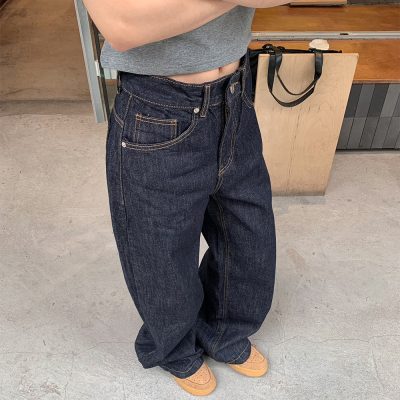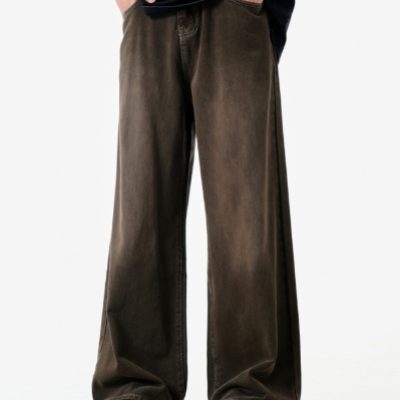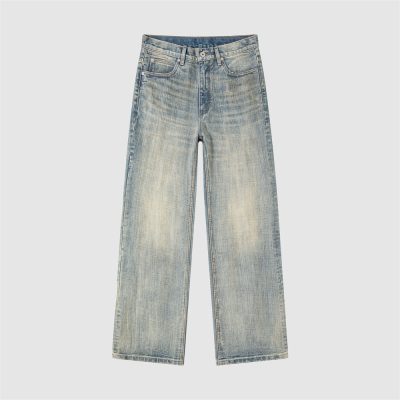
For apparel brands, fast-fashion importers, and wholesale distributors, adding men’s denim cargo pants to a collection is an effective way to meet the global demand for utility wear. Because cargo pants carry visible stitch details, extra fabric panels, and heavy hardware closures, they command a higher retail price point and offer stronger profit margins than standard five-pocket jeans.
However, from a manufacturing standpoint, a cargo jean is a complex garment. If a new brand relies on incomplete tech packs or uncalibrated factory patterns, the bulk order will likely suffer from twisted outseams, distorted pocket shapes, and size discrepancies. This guide breaks down the technical parameters of fit, fabric, and construction required to execute a premium wholesale cargo denim run.
1. Fit: Engineering Pattern Balance and Mobility
A common mistake when starting a cargo denim line is trying to apply utility pockets to narrow or slim patterns. Because cargo pockets add physical weight to the sides of the legs, the pattern blocks must be engineered specifically for this style.
- Silhouette Selection: Cargo denim requires a relaxed, straight, or wide-leg silhouette. These cut blocks provide the necessary surface area on the thigh and calf panels to host the pockets without tightening against the wearer’s leg.
- Preventing Leg Twist: When heavy fabric pockets are stitched onto the outseam (side seam), the weight drags the fabric down and forward. Professional pattern makers must balance the front and back panel dimensions to counteract this pull, ensuring the side seams stay vertical through bulk production and washing.
- Standardized Measurement Methods: Sizing discrepancies usually stem from poor tech pack documentation. When creating your size charts, define your measurement methods clearly. The thigh and knee widths must be measured completely flat across the garment at exact drop points below the crotch seam to ensure a reliable fit run.
2. Fabric: Specifying Weights and Shrinkage Thresholds
The fabric you choose dictates how well the cargo pockets hold their shape on the retail floor.
- Weight Thresholds: Specify mid-to-heavyweight denim, strictly between 12oz and 14.5oz. Lightweight denim (under 11oz) lacks the structural integrity to support multi-layer pockets and metal hardware, causing the pockets to sag, wrinkle, and eventually tear at the attachment points.
- Composition (Rigid vs. Stretch): For a traditional tactical or heritage streetwear look, 100% rigid cotton denim provides the clean, heavy drape buyers expect. If your target market prefers immediate comfort, a blend of 98% cotton and 2% spandex adds mobility while retaining the appearance of structured denim.
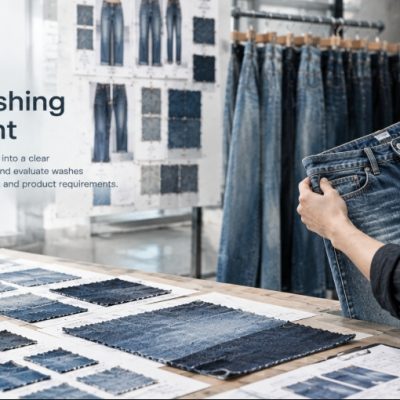
- Differential Shrinkage: Industrial washing cycles (such as stone washing or enzyme rinsing) cause denim to contract. Because a cargo pocket consists of multiple layers of fabric and interfacing, it shrinks at a different rate than the single-layer leg panel beneath it. The laundry facility must perform pre-cutting shrinkage tests so the pattern blocks can be scaled up proportionally.
3. Construction: Heavy-Duty Reinforced Assembly
A premium cargo jean is evaluated by its internal and external sewing standards. Mass-market lines often cut corners here, leading to quick product degradation.
- Pocket Architecture: Decide between Flat Patch Pockets and 3D Bellows (Gusseted) Pockets. Flat pockets are sewn flush against the leg panel and offer a clean look. 3D bellows pockets feature folded side walls that expand outward; these require automated folding and precise top-stitching, which increases labor time but significantly boosts the garment’s market value.
- Bartack Reinforcements: Cargo pockets are functional items that experience physical pull. Every pocket corner, flap joint, and belt loop must be secured using dense, automated bartack stitching to prevent seams from ripping under load.
- Thread Type: Specify poly-core cotton thread (a high-strength polyester core wrapped in cotton). This configuration combines the tensile strength needed to hold multi-layer seams together with a cotton surface that fades naturally during industrial washing.
- Clean Technical Layouts: When preparing your design assets for the factory pattern room, ensure all reference images, pocket placements, and trim details are merged cleanly (
合并) into a single, cohesive technical blueprint. Fragmented files or loose images increase the likelihood of structural misinterpretations on the sewing floor. - Intellectual Property Compliance: Building an original private label requires original artwork. Tech packs must be completely free from trademarked logos or copied pocket embroidery (such as the Levi’s arcuate). A professional factory requires original vector files for all custom leather patches, care labels, and hardware molds to ensure safe customs clearance and legal compliance.
Why Choose Xinen Garment for Your Wholesale Denim Production
At Xinen Garment, we specialize in manufacturing high-end custom denim apparel for international clothing brands, fast-fashion wholesalers, and private labels.
- Precision Pattern Rooms: Our technical pattern makers ensure your sizing charts are accurately translated, managing fabric shrinkage metrics and outseam balancing to prevent leg twist across your entire size matrix.
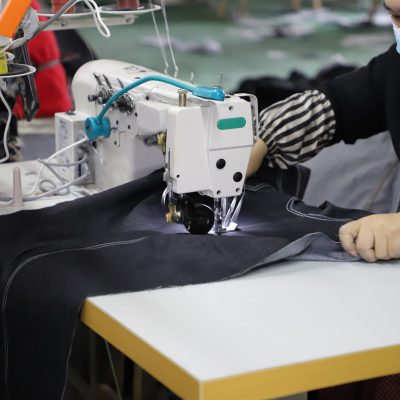
- Industrial Sewing Capacity: Our production lines handle heavyweight 14.5oz denim with ease, executing clean 3D bellows pocket structures and dense bartack reinforcements utilizing automated machinery.
- Legally Compliant Customization: We assist brands in tooling custom alloy or solid brass snaps, buttons, and genuine leather patches based exclusively on your unique vector designs, protecting your brand identity.
- Direct Factory Operations: Operating directly out of our manufacturing centers in China allows us to eliminate trading agent markups, providing transparent bulk pricing, strict quality control tolerances (+/- 0.5 inches), and straightforward delivery timelines.
4. Frequently Asked Questions (FAQ)
How do you keep the pocket flaps flat after heavy industrial washing?
We fuse a layer of high-durability industrial interfacing (stabilizer fabric) inside the pocket flaps prior to sewing. This keeps the multi-layer flaps structured and flat, preventing them from curling upward during stone or enzyme washes.
Can we split a bulk cargo order across multiple wash styles?
Yes. You can use the exact same structural pattern and fabric roll but split the bulk volume across different laundry runs—such as a dark uniform enzyme rinse, a medium vintage stone wash, or a charcoal over-dye—to diversify your product options efficiently.
How should we present design modifications if we want to combine elements from different samples?
Please gather your reference images and structural notes and merge them cleanly into a single technical sheet. This consolidated layout ensures our sample room can see the exact correlation between pocket shapes, hardware placement, and seam lines without confusion.