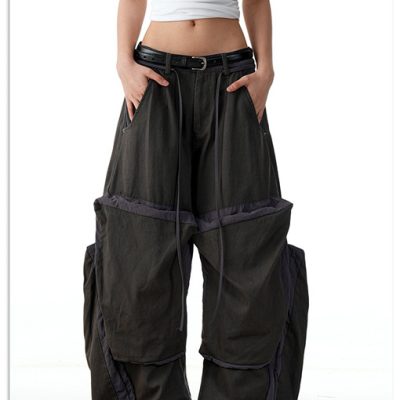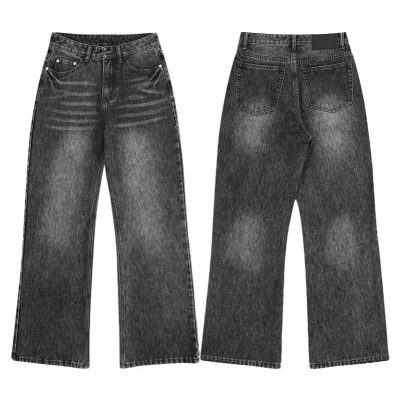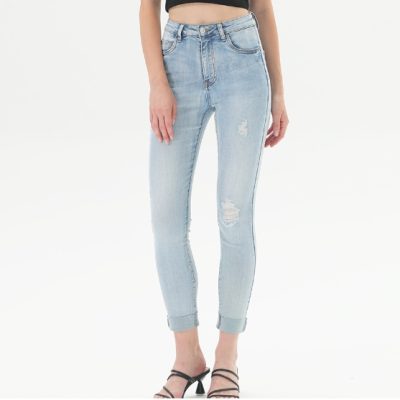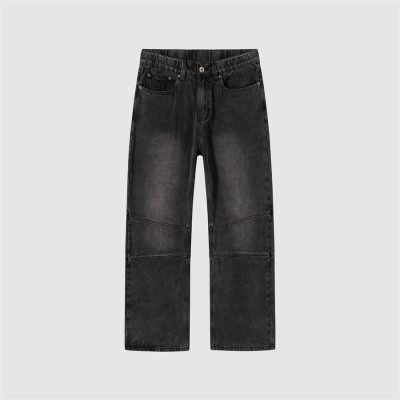
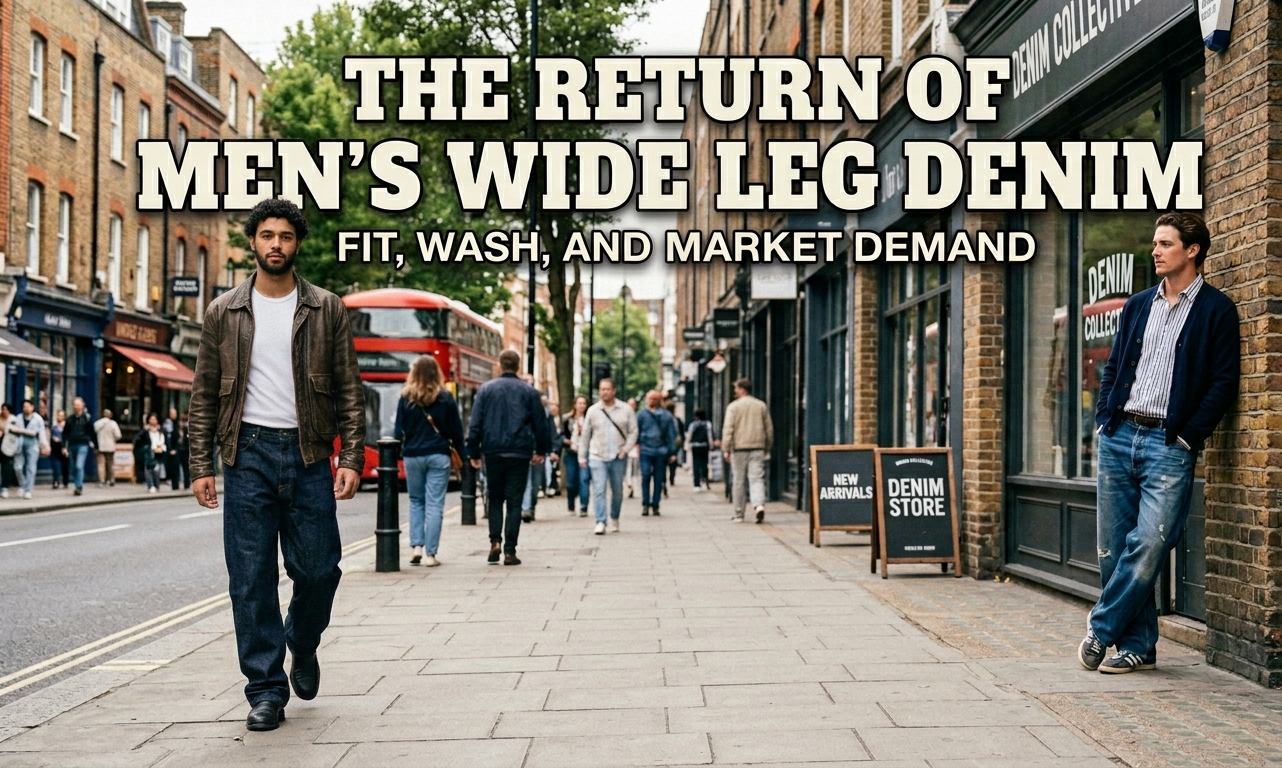
For apparel entrepreneurs planning a new denim line or expanding an existing private label, choosing the right silhouettes dictates your entire capital allocation strategy. While slim and straight cuts long dominated menswear order sheets, wholesale buying patterns have structurally shifted. Wide-leg denim is no longer an experimental item for niche streetwear labels—it is driving consistent commercial volume across contemporary menswear brands.
Launching a competitive denim brand requires analyzing this category through three distinct lenses: actual retail demand, pattern engineering realities, and wash development.
1. Market Demand: Is Wide-Leg Denim a Safe Investment?
When building a production budget, you cannot afford to chase short-lived micro-trends. Fortunately, market indicators demonstrate that the demand for loose and wide-leg silhouettes is structural rather than seasonal.
- B2B Reorder Consistency: Inventory turn data across global apparel platforms shows that wide-leg denim maintains stable sell-through rates year-round. It is moving out of warehouses just as predictably as traditional straight-leg cuts.
- Demographic Alignment: The primary consumer base driving premium denim sales views loose-fitting trousers as their daily baseline. This generational shift ensures a reliable multi-year lifecycle for wide-fit product lines.
- Higher Sourcing Margins: Because wide-leg jeans require premium fabric weights to hang correctly, they command a higher perceived retail value, allowing private labels to position them as premium or mid-tier luxury items.
2. Mastering the Fit: Technical Pattern Engineering
A common mistake among startup apparel brands is assuming that wide-leg patterns are easy to develop because the fit is “oversized.” In reality, an unstructured or poorly drafted loose cut looks sloppy and fails at retail.
To pass quality control and fit assessments, your tech packs must address three engineering factors:
The Waist-to-Seat Ratio
If you simply expand a standard straight-leg pattern uniformly, the waistband will gap and the crotch will sag excessively. A high-end wide-leg jean must hold securely at the waist and fit cleanly across the upper seat, dropping into its signature volume starting strictly from the upper thigh.
Proportional Sizing and Grading
Scaling wide panels from a sample size 32 down to a 28 or up to a 38 requires dynamic pattern grading. The leg opening and knee width must scale proportionally with the waistband measurement, or the intended silhouette will warp across different body sizes.
Inseam Break and Length Calculation
Wide-leg jeans interact differently with footwear than slim cuts. If the inseam is graded too long, the wide hem will drag on the ground and fray prematurely. If it is too short, the fabric breaks awkwardly. Patterns must be optimized based on the target consumer’s average height and styling preferences.
3. Fabric Selection and Wash Formulations
Because wide-leg jeans present a large visual surface area, the fabric’s weight, composition, and wash profile completely define the garment’s quality.
| Material Property | Ideal Application | Sourcing & Production Insights |
| 13.5oz to 14.5oz 100% Cotton Rigid | Utilitarian workwear, heritage capsules, raw denim lines. | Provides excellent structural retention. Requires deep, mandatory pre-wash shrinkage testing to prevent sizing shifts during bulk washing. |
| 12oz to 13oz Cotton-Tencel Blends | High-fashion contemporary lines, summer drops. | Offers a smoother, fluid drape that flows naturally with movement, reducing the stiffness of large fabric panels. |
| Ring-Spun vs. Open-End Yarn | High-end private label vs. Mass wholesale. | Ring-spun yarns provide a pronounced vertical slub texture that shows up clearly after intensive wash cycles. |
Essential Wash Finishes
- Eco-Friendly Enzyme Stonewashing: Achieves authentic, uniform 90s mid-blue shades without the fabric degradation caused by traditional pumice stones.
- Vintage Sulfur Top-Dying: Applying a highly controlled light brown or yellow tint over washed indigo to replicate the look of natural oxidation.
- Clean Raw Indigo: Skipping the wash process entirely (except for a basic sanforization or rinse) to provide a crisp, dark option that shapes naturally over time.
Why Partner with Xinen Garment for Your Denim Brand?
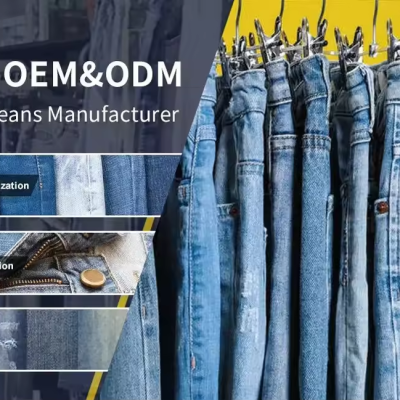
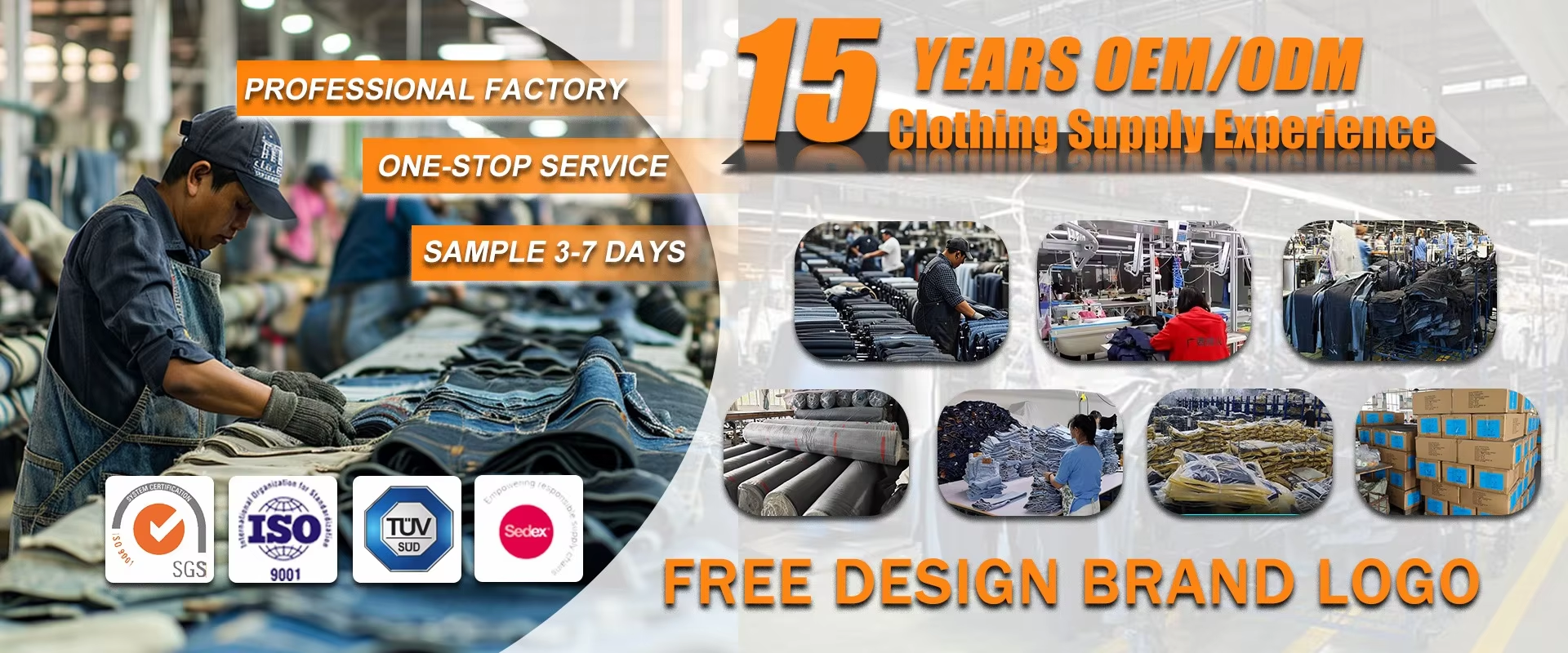
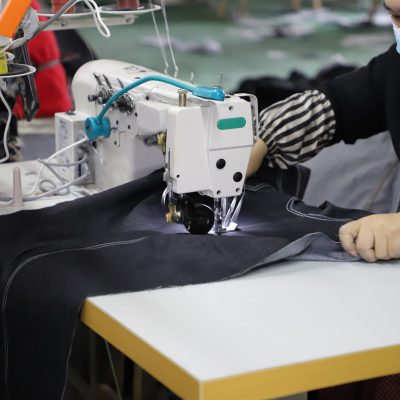
At Xinen Garment, we operate a fully integrated, professional production facility specializing in manufacturing premium custom denim jeans, jackets, and apparel for international wholesalers, private labels, and apparel importers.
When you source your men’s wide-leg line with our factory, you leverage direct production expertise:
- CAD Pattern Engineering: Our technical pattern makers specialize in converting sketches, reference images, or physical garments into production-ready tech packs with precise size grading.
- Advanced Wash Processing: Through our partner wash facilities, we execute complex finishing techniques—including laser-fading, ozone bleaching, manual whiskering, and sulfur tinting—ensuring consistency across bulk orders.
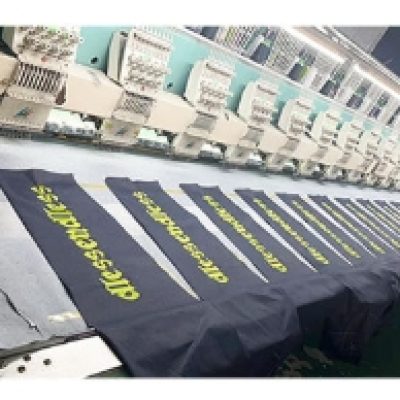
- Full Private Label Customization: We handle complete branding execution, supplying custom-embossed shank buttons, branded rivets, genuine leather or jacron waist patches, custom pocket liners, and woven labels.
- Strict Quality Assurance: Our factory implements multi-stage inspections, including raw fabric roll validation, pre-production shrinkage calibration, loose-thread clearing, and automated needle-detection scanning prior to export packing.
Frequently Asked Questions (FAQs)
What is the minimum order quantity (MOQ) for custom wide-leg denim?
Our production MOQs depend on whether you utilize our in-stock premium fabrics or require a custom-loomed weave composition. Contact our sales department with your specifications for a precise allocation overview.
How do you control sizing consistency after heavy wash cycles?
We run pre-production wash tests on fabric panels from your specific production lot to measure exact vertical and horizontal shrinkage tolerances. Our CAD pattern makers then adjust the cutting dimensions to ensure the final washed garment matches your tech pack specifications.
Can Xinen Garment develop custom hardware for our brand?
Yes. We can open molds to manufacture custom metal buttons, rivets, and zippers featuring your brand’s logo, as well as produce customized leather patches and hangtags.
What is the turnaround time for sample prototypes and bulk shipping?
Once your tech pack and hardware designs are approved, prototype development generally takes 7 to 15 business days. Upon sample sign-off and deposit confirmation, bulk production typically ranges between 30 and 45 days, depending on the complexity of your wash cycle.
Contact Our Sourcing Team
If you are ready to engineer a high-performing men’s wide-leg denim collection with an experienced, factory-direct partner, visit our official platform at www.xinengarment.com or reach out to our production managers to schedule a consultation.