
When independent fashion brands and apparel importers submit their designs to a manufacturer, one of the most frequent questions we receive is: “Should we use stretchable or non-stretchable denim?”
In the manufacturing world, there is no universally “better” fabric. The right choice depends entirely on your target demographic, the specific silhouette in your Tech Pack, and how aggressive your vintage wash recipes are. Choosing the wrong fabric for your desired fit will result in poorly draped garments, destroyed elastane fibers during production, or unwearable jeans that alienate your customers.
At Xinen Garment, we engineer and manufacture custom denim for global e-commerce sellers and premium boutiques. Here is the direct, factory-floor breakdown of stretchable versus non-stretchable jeans, helping you decide which is truly better for your brand’s next collection.
What is the Technical Difference Between Stretchable and Non-Stretchable Denim?
The technical difference lies entirely in the yarn composition: non-stretchable denim is woven exclusively from 100% rigid cotton yarns, while stretchable denim weaves synthetic elastomers (typically 1% to 3% spandex or elastane) into the cotton base.
- Non-Stretchable (Rigid) Denim: This is the traditional, heritage construction. It possesses high tensile strength and zero horizontal give. It relies purely on the mathematical precision of the CAD pattern to fit the human body correctly.
- Stretchable Denim: By wrapping a cotton sheath around an elastane core, fabric mills create a material that expands horizontally. This allows the garment to actively conform to different body shapes, prioritizing immediate comfort and mobility.
When Are Stretchable Jeans the Better Choice for a Brand?
Stretchable jeans are the better choice for brands producing skinny fits, women’s contouring denim, and mass-market e-commerce collections where minimizing sizing-related returns is the primary goal.
- The E-Commerce Buffer: For Amazon FBA and Shopify sellers, stretch denim acts as a critical sizing buffer. A 2% elastane blend allows a single size to accommodate minor variations in customer body types, drastically lowering return rates.
- Slim and Skinny Silhouettes: If your Tech Pack calls for a heavily tapered leg or a skinny fit, stretchable denim is mandatory. Using rigid 100% cotton for a tight silhouette will completely restrict the wearer’s blood flow and mobility, resulting in an unwearable product.
When Are Non-Stretchable Jeans the Better Choice for a Brand?
Non-stretchable jeans are the better choice for premium labels, streetwear brands, and workwear lines because rigid 100% cotton provides the structural drape necessary for wide-leg fits and withstands aggressive vintage washing.
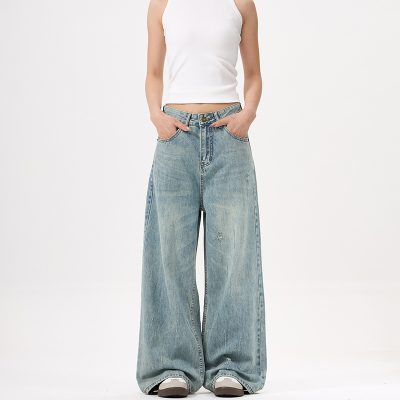
- Holding Architectural Shapes: As current trends shift heavily toward baggy jorts and structured loose jeans, rigid denim (12oz to 14oz) is essential. Stretch fabric is too soft and will collapse, clinging awkwardly to the legs. Rigid cotton forces the wide leg to drop in a clean, vertical column.
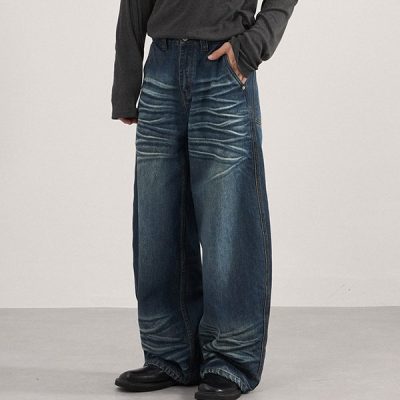
- Superior Vintage Fades: In our wet processing lab, non-stretchable cotton absorbs indigo dye and reacts to pumice stone abrasion much better than synthetic blends. It produces the most authentic high-contrast fades, whiskers, and honeycombs, allowing your brand to command a higher retail price point.
How Does the Fabric Choice Affect Factory Wet Processing?
Your fabric choice dictates the chemical and temperature limitations of the factory’s wash lab, as non-stretchable denim can survive boiling enzyme baths, whereas high heat will melt and permanently destroy the elastane in stretchable denim.
- Processing Rigid Denim: 100% cotton is virtually indestructible in the wash lab. We can use aggressive bleaching, heavy stone tumbling, and high-temperature drying to achieve complex 90s acid washes without damaging the core fabric structure.
- Processing Stretch Denim: Elastane is highly sensitive to heat and harsh chemicals. If an inexperienced factory applies a heavy bleach wash to stretch denim at the wrong temperature, the elastane core will snap. The jeans will permanently “bag out” at the knees and lose their elasticity before they even leave the factory floor.
Why Choose Xinen Garment for Your Custom Denim Production?
Choosing between stretch and rigid denim requires precise engineering. At Xinen Garment, we provide technical B2B manufacturing solutions that align your fabric choice with your financial goals and brand positioning.
- Expert Pattern Grading: Our CAD pattern makers draft entirely different blocks for stretch versus rigid fabrics. We adjust the shrinkage tolerances and ease allowances to ensure both materials fit your customers flawlessly.
- Controlled Wash Lab: We utilize strict temperature and chemical controls during wet processing. We guarantee that your stretchable jeans retain their maximum elasticity, and your non-stretchable jeans achieve authentic vintage fades without fabric degradation.
- Startup-Friendly MOQs: We empower independent brands and Amazon sellers to test both stretch and rigid styles with realistic Minimum Order Quantities (starting at 100-300 pieces per style/wash).
- Direct Factory Communication: You speak directly with the team cutting your fabric and managing your production line, bypassing trading company markups and ensuring transparent BOM (Bill of Materials) costing.
Frequently Asked Questions (FAQ)
Q: Do non-stretchable jeans stretch out over time?
A: Yes, but differently than elastane. 100% rigid cotton will naturally “relax” or stretch up to half an inch in high-tension areas (like the waist and knees) with wear, molding to the user’s body. However, unlike stretch denim, it will return to its original shape after being washed and dried.
Q: What is a good stretch percentage for men’s jeans?
A: For a comfortable men’s slim-straight or tapered fit, 1% to 2% elastane mixed with 98% or 99% cotton is the industry standard. It provides necessary mobility while maintaining the rugged appearance of real denim.
Q: Can Xinen Garment source heavy rigid denim for my brand?
A: Absolutely. We maintain deep relationships with top fabric mills and can source premium heavyweight rigid cotton (13oz to 15oz), including selvedge denim, for your heritage or streetwear collections.
Q: Which type of denim is more expensive to manufacture?
A: The cost is determined by fabric weight (oz), yarn spinning method (ring-spun vs. open-end), and wash complexity. A premium heavyweight rigid denim will cost more than a basic, lightweight fast-fashion stretch blend.