The shift from skinny to wide-leg denim has fundamentally changed the “Return Rate” logic in e-commerce and retail. While skinny jeans relied on high-stretch fabrics to mask poor fit, wide leg jeans and straight leg jeans rely on architectural precision. If the rise is off by half an inch, or the inseam doesn’t match the fabric weight, the garment fails at retail.
For women’s fashion brands, mastering these three technical pillars is the key to reducing deadstock and increasing margins.
1. Defining the Fit: Wide Leg vs. Straight Leg
As a buyer, you must define these silhouettes in your “Tech Pack” to avoid ambiguity with denim manufacturers.
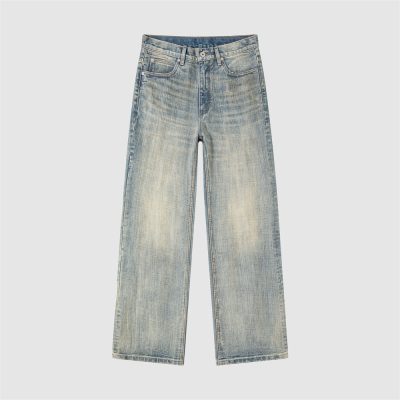
- Straight Leg Jeans: The “Safe Bet.” A consistent width from the knee down to the leg opening. These are essential for wholesale collections because they appeal to a conservative demographic and have a lower manufacturing cost due to less fabric consumption.
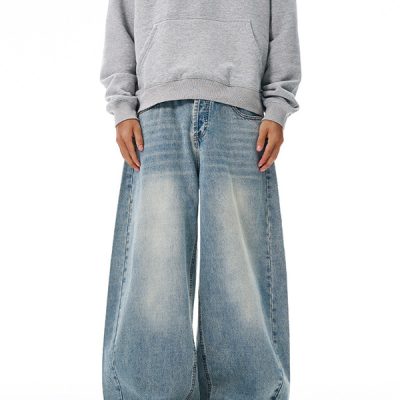
- Wide Leg Jeans: The “Margin Builder.” These flare out from the hip or the mid-thigh. They require a higher GSM (grams per square meter) fabric to ensure the leg doesn’t collapse.
The “Sweep” Specification
In bulk production, the “sweep” (leg opening) is your most important metric.
- Straight: 14–16 inches.
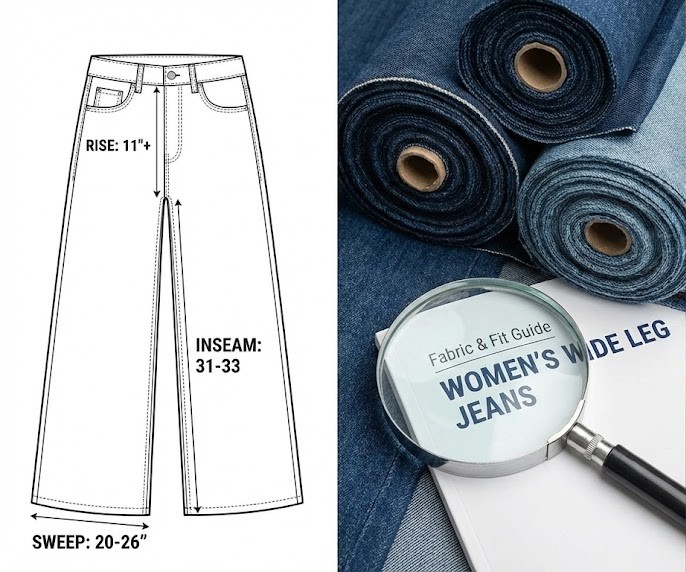
- Wide Leg: 20–26 inches.
- Extreme Wide: 28 inches+.
2. The Rise: Positioning the Waistline
The “Rise” is the distance from the crotch seam to the top of the waistband. For women’s fashion brands, the rise determines the target age demographic.
- High Rise (11″+): Currently the highest-selling spec for wide leg jeans. It anchors the voluminous fabric at the narrowest part of the waist, creating the “A-line” silhouette that consumers demand.
- Mid-Rise (9″ – 10″): Trending for straight leg jeans in the “90s Revival” categories.
- Low Rise (Below 8″): High risk. Only recommended for niche boutique labels targeting Gen-Z “Y2K” aesthetics.
Manufacturing Tip: Request “Contoured Waistbands” from your women jeans factory. A straight waistband on a high-rise wide-leg jean will almost always “gap” at the back. A contoured (curved) waistband follows the female anatomy and is a hallmark of a high-quality private label product.
3. The Inseam Strategy: Length vs. Fabric Weight
Inseam length is where many private label startups lose money. A wide-leg jean that is too short looks “accidental,” while one that is too long is unwearable without tailoring.
| Style | Recommended Inseam | Best Fabric Weight |
| Full-Length Wide Leg | 31″ – 33″ | 12oz – 14oz (Rigid) |
| Cropped Wide Leg | 24″ – 26″ | 11oz – 12oz (Comfort Stretch) |
| Classic Straight | 28″ – 30″ | 11oz – 13oz |
The “Drape” Factor: If you are ordering wide leg jeans, do not use lightweight 9oz fabric. It will look “flimsy.” To get that premium, structural look, specify a 100% cotton rigid denim or a low-stretch (1%) fabric at 12oz minimum.
4. Bulk Procurement: Vetting Your Denim Manufacturers
When communicating with a women jeans factory, buyers should look for industrial capabilities, not just low prices.
- Pattern Grading: Ask how they grade between a Size 2 and a Size 16. Poor factories just “scale up” the whole pattern, which makes the wide leg look disproportionately huge on larger sizes. Quality denim manufacturers adjust the rise and hip curves independently.
- Shrinkage Control: 14oz rigid denim shrinks differently than 11oz stretch denim. Ensure your factory conducts a “wash test” for every bulk fabric roll before cutting.
- Wash Consistency: Wide-leg styles have more surface area. This means “uneven washing” is more visible. If you are doing a “Vintage Acid Wash” or “Heavy Stone Wash,” ensure the factory uses automated washing machines to maintain consistency across the wholesale lot.
5. Summary Checklist for Boutique Labels & Importers
Before you wire the deposit for your next bulk order, verify these points:
- Fabric: Is it heavy enough to support a wide silhouette? (Target 12oz+).
- Hardware: Are you using YKK zippers? (Essential for heavyweight denim longevity).
- Rise: Is it a true High Rise (11″+) to support the wide-leg drape?
- Inseam: Does the length match the “Full Length” or “Cropped” intent?
Conclusion: The Buyer’s Advantage
The women’s fashion market is currently rewarding brands that prioritize “Shape” over “Stretch.” By mastering the technical specs of wide leg jeans—specifically the rise and the fabric weight—denim importers and boutique labels can justify higher retail price points and build stronger brand loyalty.
FAQ: Women’s Denim Sourcing & Bulk Production
Q: Why do Wide Leg Jeans sometimes have higher Minimum Order Quantities (MOQs) than Skinny Jeans?
A: The primary factor is fabric yield. The pattern pieces for wide-leg styles are 30% to 50% larger in surface area than those for skinny fits. Because women jeans factories typically purchase fabric by the roll, a single roll produces fewer units of wide-leg jeans. Consequently, for bulk orders, the fabric cost per garment and the MOQ may be slightly higher to account for this increased consumption.
Q: How can I prevent “Leg Twist” during bulk production of wide-leg styles?
A: Leg twist is a common defect in heavyweight, high-density denim. Professional denim manufacturers mitigate this by performing rigorous shrinkage tests and skew movement tests before the cutting process. For wide leg jeans, we recommend specific pattern compensation and ensuring the fabric is fully “sanforized” (mechanically pre-shrunk). This is the only way to ensure quality consistency across a wholesale shipment.
Q: What is the ideal Inseam length for Boutique Labels focusing on wide-leg styles?
A: If your target demographic primarily wears heels or platform shoes, 31–32 inches is the industry standard for a “full-length” look. For a casual, flat-shoe market, 28–29 inches (offering a cropped or standard ankle effect) often performs better in the wholesale market. For denim importers, we suggest offering a mix of two inseam lengths within the same SKU to maximize customer reach.
Q: Is high-stretch fabric suitable for Wide Leg Jeans?
A: We do not recommend it. The value of a wide-leg silhouette lies in its “structure.” High-stretch fabrics (anything over 3% elastane) tend to collapse at the thigh, losing the crisp, vertical drape that consumers expect. For private label startups, we suggest a 12oz rigid denim (100% cotton) or a “comfort stretch” (1% elastane) to maintain the architectural shape while providing slight flexibility.
Q: How can fashion brands increase retail margins using wide-leg denim?
A: Wide-leg jeans are perceived as “designer” pieces, meaning consumers have a lower price sensitivity compared to basic skinnies. By adding “Visible Complexity”—such as laser-etched whiskering, unique slub textures, or eco-friendly ozone washes—women’s fashion brands can justify a premium retail price without significantly increasing the FOB (Free on Board) cost.