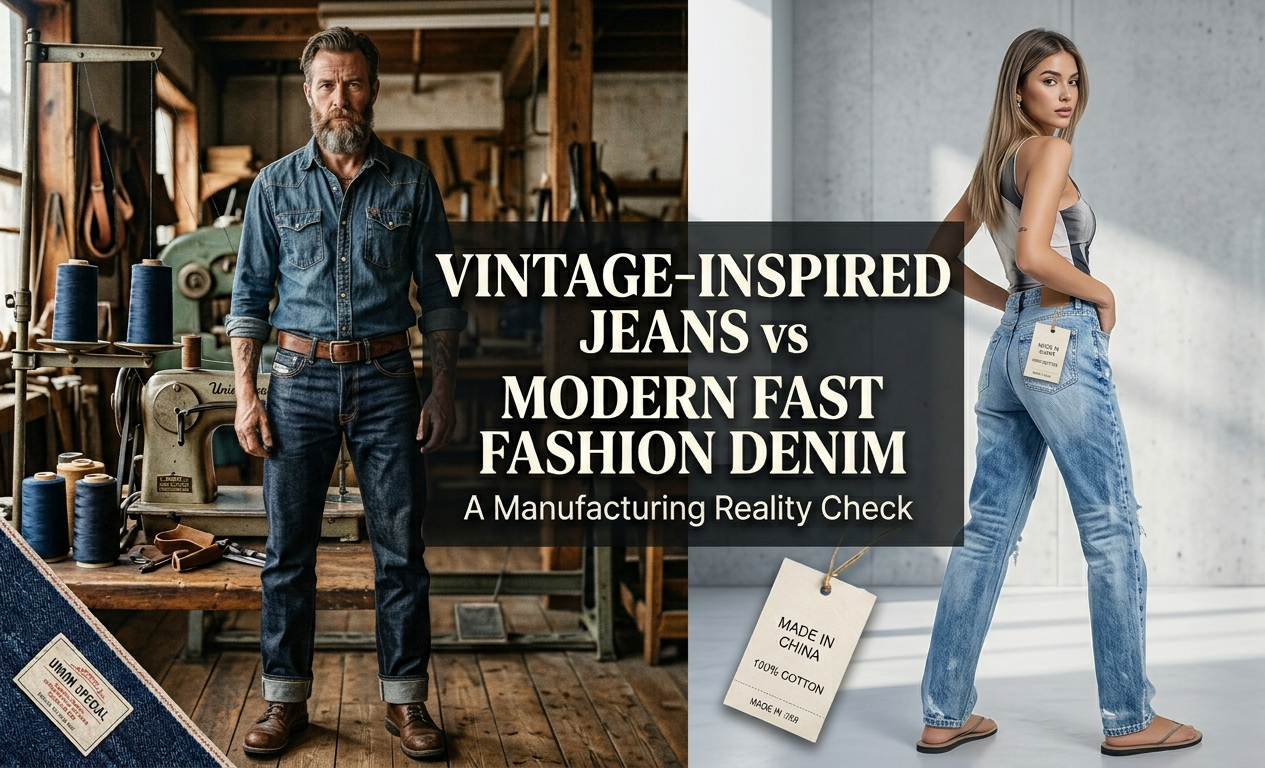
When apparel importers and independent brands submit their denim Tech Packs, they generally fall into two manufacturing tracks: vintage-inspired heritage denim or modern fast-fashion denim.
Many new brand owners confuse these two categories, assuming the only difference is the physical design. In reality, the difference lies entirely in the Bill of Materials (BOM), the yarn construction, and the wet processing timeline. If you choose the wrong manufacturing method for your target audience, you will either price yourself out of the market or destroy your brand’s reputation with low-quality garments.
At Xinen Garment, we engineer custom denim for high-end boutiques, Shopify private labels, and mass-market Amazon FBA sellers. Here is the factory-floor truth about the technical differences between vintage-inspired and fast-fashion denim, and how each impacts your profit margins.
What is the Structural Difference in the Fabric?
The structural difference lies in the yarn quality and fabric weight: vintage-inspired denim uses heavy, ring-spun 100% cotton to guarantee durability, while fast-fashion denim uses lightweight, open-end yarns heavily blended with polyester and elastane to cut raw material costs.
- Vintage-Inspired Denim: True vintage denim requires structural integrity. We typically source 12oz to 15oz heavyweight rigid cotton. The mills use “ring-spun” yarns, which have an uneven texture (slub) that creates authentic, high-contrast fading over time. It feels stiff initially but molds perfectly to the wearer’s body.
- Fast Fashion Denim: Designed for immediate comfort and rapid obsolescence. The fabric usually ranges from 9oz to 11oz. To keep the Cost Per Unit (CPU) extremely low, mills use “open-end” yarns mixed with up to 30% polyester and 2-3% elastane. This fabric is highly elastic but lacks the necessary structure to hold architectural shapes, and it will eventually sag or pill after repeated home washing.
How Does the Wet Processing (Washing) Compare?
Vintage-inspired denim requires highly skilled, labor-intensive manual wet processing to replicate years of natural wear, whereas fast fashion relies on quick, automated, single-cycle chemical washes to push volume out the door.
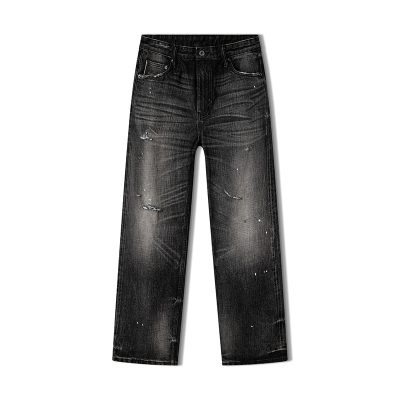
- The Vintage Wash Lab: To create an authentic 1990s vintage wash, our technicians must manually hand-sand the thighs, apply Potassium Permanganate (PP) spray to specific zones, and run the jeans through extensive pumice stone tumbling. This multi-step process takes hours per batch and creates beautiful, localized fading (whiskers and honeycombs).
- The Fast Fashion Wash: Fast fashion cannot afford manual labor. These jeans are usually dyed with cheaper synthetic indigo and run through a rapid, flat enzyme wash or a quick laser machine. The resulting fade is uniform, flat, and lacks the natural highs and lows of real vintage denim.
Which Denim Strategy is Better for E-Commerce Brands?
Fast fashion denim works best for high-volume, trend-chasing brands competing purely on price, while vintage-inspired denim is the proven strategy for brands looking to build long-term customer loyalty and command premium retail prices.
- For High-Volume Amazon Sellers: If your business model relies on moving thousands of units at a $25-$35 retail price, fast-fashion stretch denim is your only viable path. The stretch fabric reduces sizing-related return rates, and the simplified wash process keeps your factory CPU strictly controlled.
- For Shopify and Premium Private Labels: If you are building a dedicated brand community selling jeans at $80-$150+, you must use vintage-inspired manufacturing. Consumers paying premium prices expect the heavy drape, custom hardware, and authentic wash effects that only 100% cotton ring-spun denim can provide.
Why Do Vintage-Inspired Jeans Cost More to Manufacture?
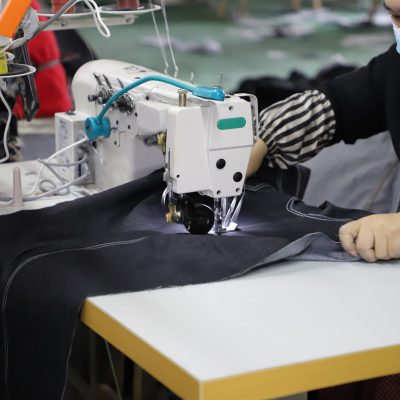
Vintage-inspired jeans cost more to manufacture because the heavyweight 100% cotton fabric has a higher yield cost, the manual wash processes require skilled labor, and the thick seams demand slower, more careful sewing machine operation.
- Heavyweight rigid denim (13oz+) wears down factory sewing needles faster and requires heavy-duty machinery.
- The extensive wash-testing required to dial in the perfect vintage fade without destroying the fabric adds significant time to the sampling and bulk production phases.
Why Choose Xinen Garment for Your Custom Denim Production?
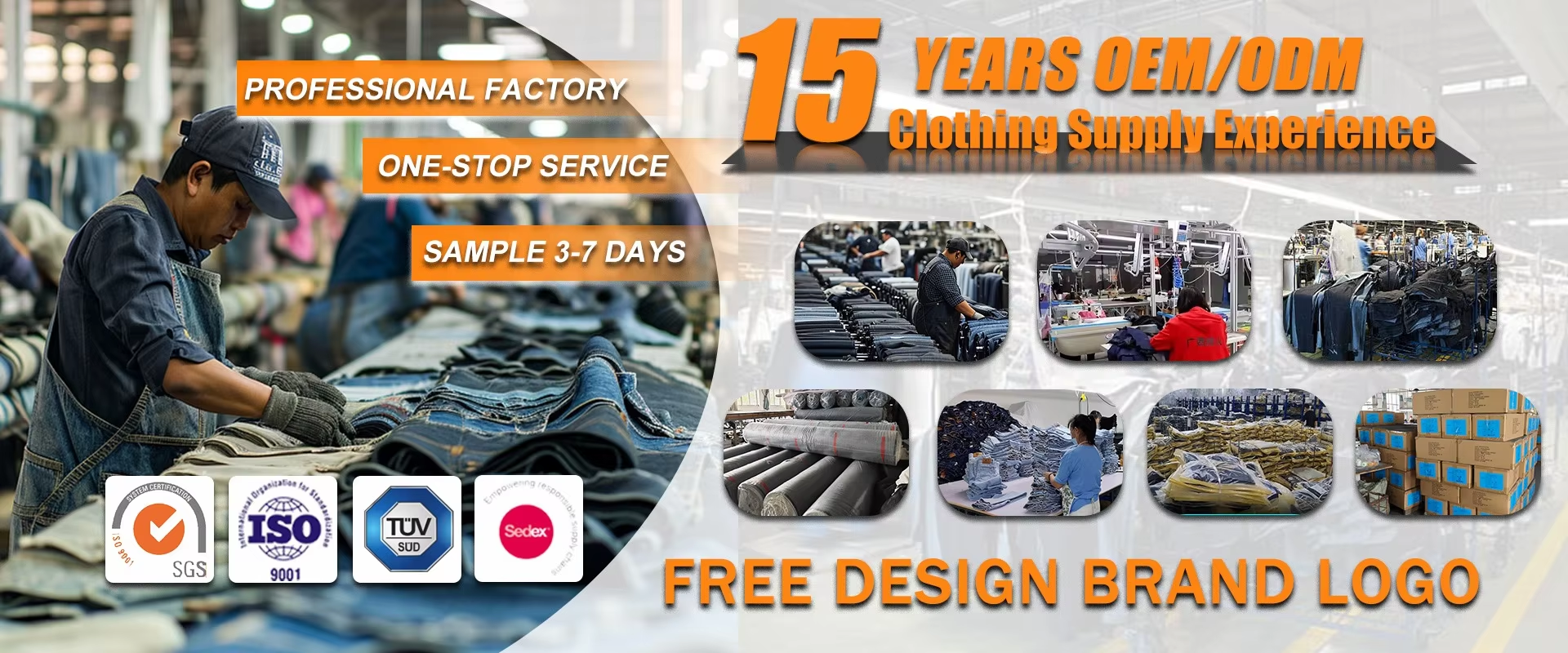
Whether you are an Amazon FBA seller needing highly consistent stretch denim to minimize returns, or a boutique importer requiring intricate vintage washes on heavy selvedge, Xinen Garment has the technical infrastructure to execute your Tech Pack flawlessly.
- Dual Sourcing Capabilities: We maintain deep supply chain connections. We source both cost-effective stretch blends for fast-moving e-commerce and premium heavyweight ring-spun cotton for heritage collections.
- In-House Wet Processing: We do not outsource our washing. Our in-house wash lab strictly controls the chemical recipes, ensuring your vintage fades are consistent from the PP sample to the final bulk delivery.
- Startup-Friendly Scaling: We offer practical Minimum Order Quantities (MOQs starting at 100-300 pieces), allowing independent brands to test premium vintage styles without crippling inventory risk.
- E-Commerce Prep Ready: From custom branded rivets to Amazon-compliant FNSKU barcoding and strict moisture-control packaging, your inventory ships directly from our factory floor ready to sell.
Frequently Asked Questions (FAQ)
Q: Can I get a vintage wash look on cheap, lightweight stretch denim?
A: You can attempt it, but it will never look authentic. Heavy stone washing and hand-sanding will simply destroy thin, highly elastic fabric. True vintage washes require a rigid or low-stretch 100% cotton base to hold the abrasion.
Q: Does fast fashion denim shrink differently than vintage-inspired denim?
A: Yes. Vintage-inspired heavy cotton undergoes significant high-temperature washing at the factory, meaning most of the shrinkage is removed before the customer buys it. Fast fashion denim, heavily reliant on elastane, can warp or lose its elasticity if the customer uses high heat in a home dryer.
Q: How do I communicate my desired fabric in my Tech Pack?
A: Do not just write “Denim.” You must specify the weight (e.g., 13oz), the composition (e.g., 100% Cotton), and the yarn type (e.g., Ring-Spun) if you want a premium vintage feel. If you need fast-fashion comfort, specify the stretch percentage (e.g., 98% Cotton / 2% Elastane).
Q: Why does the hardware on vintage jeans feel different?
A: Premium vintage manufacturing utilizes solid brass or copper shank buttons and rivets, which age and oxidize naturally. Fast fashion typically uses cheap, hollow alloy hardware to save pennies on the BOM, which often bends or breaks after repeated use.