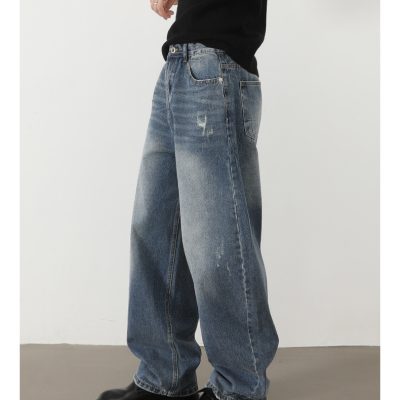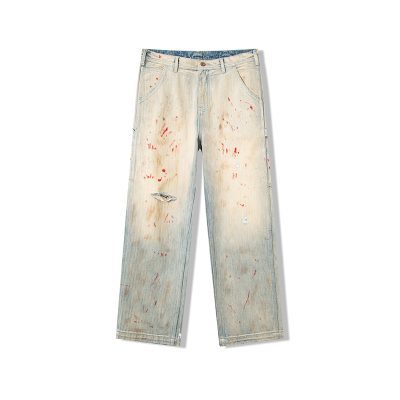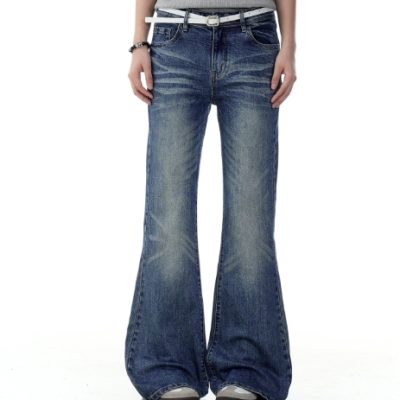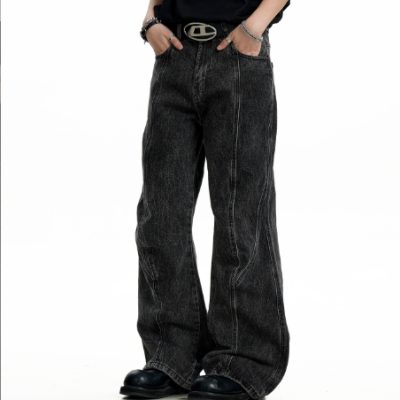
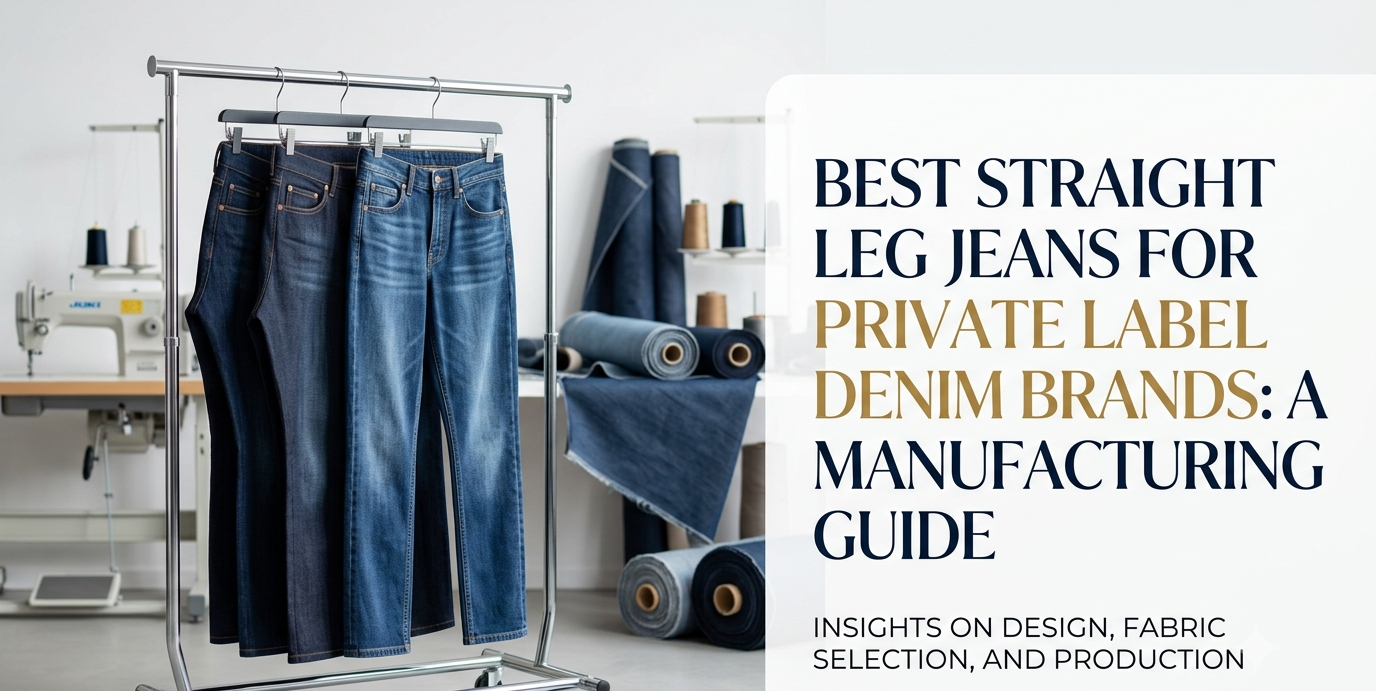
If you are launching a private label denim brand in 2026, the straight-leg jean will be the most critical SKU in your inventory. While fast-fashion labels chase fleeting trends, premium brands use the straight leg as their commercial anchor. It yields the most predictable sales volume and the lowest e-commerce return rates.
However, the “best” straight-leg jean is not created by sketching a design; it is created through strict mathematical CAD engineering and precise fabric sourcing. For wholesale importers and independent brand founders, understanding these technical specifications is the only way to protect your profit margins and justify your retail price to your end-consumers.
At Xinen Garment, we engineer custom denim for international B2B clients from our manufacturing facility in Foshan. Here is the factory-floor reality of what makes the best straight-leg jean for a private label, and how you should explain these features to your retail customers.
1. The Engineering: The Knee-to-Hem Ratio
The biggest mistake new brands make is submitting a Tech Pack without specifying the lower-block grading. A premium straight leg is defined by a perfectly vertical column from the knee down.
- The Factory Reality: In a professional CAD pattern, the Point of Measure (POM) at the knee must closely match the leg opening. If the knee is 8.5 inches, the hem should be 8.5 inches.
- How to Explain It to Your Customers: Do not just tell your customers the jeans are “comfortable.” Tell them the fit is architecturally balanced. Explain that because the leg opening does not taper aggressively inward, the jeans will drape cleanly over boots or sneakers without bunching up at the ankles, providing a tailored, sophisticated look.
2. The Fabric: Why Weight (Oz) Dictates the Silhouette
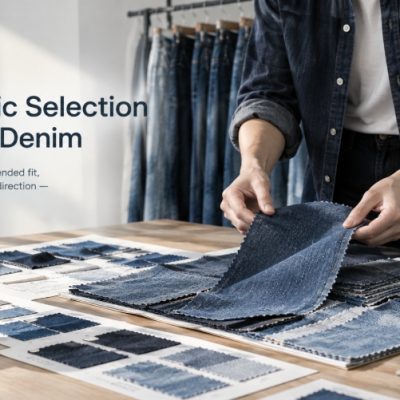
You cannot build a high-quality straight-leg jean using cheap, lightweight fabric. The straight silhouette relies on gravity and the fabric’s own structural integrity to look correct.
- The Factory Reality: If you use a 9oz to 10oz high-stretch fabric, the leg will collapse and cling to the wearer’s calves, ruining the straight profile. The best private label straight jeans are cut from 12oz to 14oz rigid cotton, or a maximum 1% elastane blend.
- How to Explain It to Your Customers: Market your fabric weight as a premium feature. Educate your buyers that 13oz denim provides “structured drape.” It means the jeans will hold their shape throughout the day without sagging in the seat or knees, ensuring they look just as sharp at 8 PM as they did at 8 AM.
3. Anti-Twist Production and Shrinkage Control
The hallmark of a low-quality jean is “leg twist”—when the outer side seam aggressively twists toward the front of the shin after the first wash cycle.
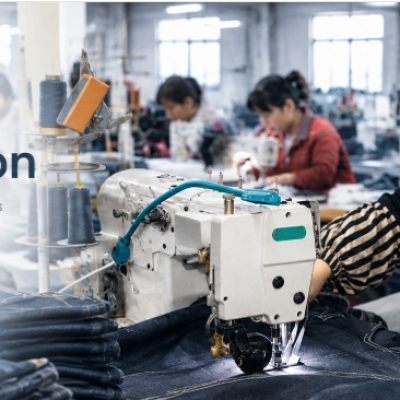
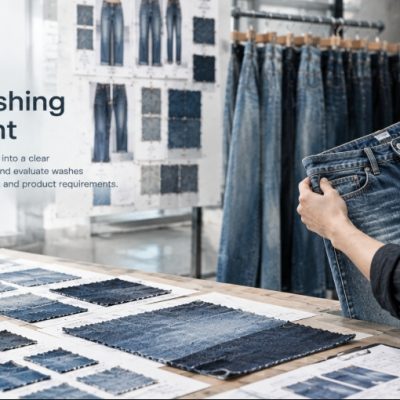
- The Factory Reality: Denim is a twill weave. When exposed to the heavy water and mechanical agitation of a vintage enzyme wash, the fabric naturally torques. A professional manufacturer actively calculates this shrinkage and skews the CAD pattern to mathematically offset the twist before the bulk fabric is even cut.
- How to Explain It to Your Customers: Highlight your brand’s durability and sizing consistency. Assure your customers that because your garments undergo rigorous pre-wash shrinkage control, a Size 32 will permanently fit like a Size 32, and the side seams will remain perfectly vertical wash after wash.
Why Build Your Private Label with Xinen Garment?
Executing a flawless straight-leg collection requires a direct relationship with a capable supply chain. Sourcing through middlemen or trading companies often leads to compromised Bill of Materials (BOM) and inconsistent wash lab results. Xinen Garment acts as your direct technical manufacturing partner.
- Direct Factory Economics: Located in China’s core garment and hardware manufacturing hub, we provide transparent factory-direct pricing. You communicate directly with the production floor, maximizing your retail margins.
- Technical Pattern Grading: Our in-house CAD team specializes in fit-balancing. We calculate the exact shrinkage rates of your chosen vintage washes to ensure your straight leg remains a “true straight.”
- Startup-Friendly Scaling (MOQ): We understand the inventory risks of launching a new brand. We offer practical Minimum Order Quantities, typically starting at 100 to 300 pieces per style, allowing you to test the market safely.
- Retail-Ready E-Commerce Logistics: From attaching your custom leather patches and molded shank buttons to applying moisture-control desiccants and Amazon-compliant FNSKU barcoding, your bulk order leaves our facility ready for immediate fulfillment.
Frequently Asked Questions (FAQ)
Q: Should my private label offer 100% cotton or stretch denim for straight fits?
A: If you are targeting the heritage or premium streetwear market, 100% rigid cotton (12oz+) is the absolute gold standard for a straight fit. If you are targeting a mass-market e-commerce demographic that demands immediate mobility, a 99% Cotton / 1% Elastane blend is the safest commercial compromise.
Q: What is the most commercial rise for a straight-leg jean?
A: The Mid-Rise (typically 9.5 to 11 inches) is the most commercially viable. It sits naturally just below the navel, accommodating the widest range of body types and minimizing fit-related e-commerce returns.
Q: Can Xinen Garment replicate the fit of a specific vintage jean I own?
A: Yes. You can send us a physical reference sample. Our technical team will reverse-engineer the garment, draft a precise CAD pattern, and source the appropriate fabric weight to match the original drape for your brand.
Q: How long does bulk production take for a private label order?
A: Developing your initial Fit Sample takes 10 to 15 days. Once you approve the final Pre-Production (PP) sample, bulk manufacturing generally requires 30 to 45 days, depending on the complexity of your wash profile.