Introduction
If you are a fashion brand, wholesaler, or retailer, choosing the right jeans factory is one of the most important decisions you will make. A good supplier gives you stable quality, on-time delivery, and peace of mind for every bulk order. A bad one can ruin your season with defects, delays, and angry customers.
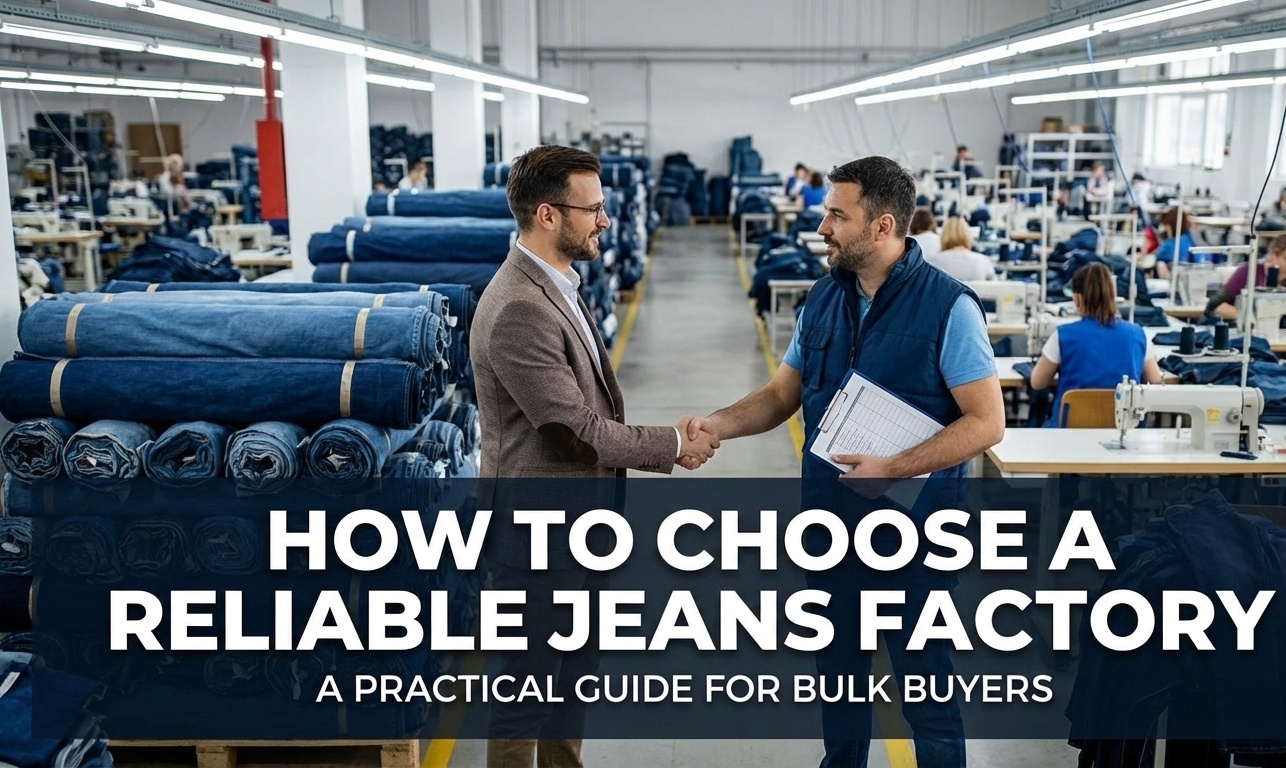
The view of a professional jeans factory, focusing on classic straight-leg denim. The goal is simple: help you ask the right questions and avoid common mistakes when you source bulk classic jeans and straight-leg jeans manufacturer.
1. Start With Your Product: Classic Straight-Leg Jeans
Before you talk to any factory, be clear about your product. “Jeans” is a very wide word. If you want to build a long-term relationship, define your main style.
For example, many of our B2B clients focus on classic straight-leg jeans. This type is always in demand because it fits many body types and works with different outfits. It is basic, timeless, and easy to sell in stores and online.
When you tell a factory you want classic straight-leg jeans, try to include:
- Waist position: high-rise or mid-rise
- Fit through hip and thigh: regular or slightly relaxed
- Leg shape: straight from knee to hem, not tapered, not flared
- Target customer: men or women, age range, market (US, EU, etc.)
The more clear you are, the easier it is for the factory to give you the right pattern, fabric, and price level.
2. The Most Important Questions to Ask a Jeans Factory
Professional buyers always ask many questions before they place a bulk order. Good questions protect your money and your brand reputation. Below are questions you should not skip.
2.1 Experience and Specialization
Ask:
- Do you specialize in jeans and denim, or do you make all kinds of garments?
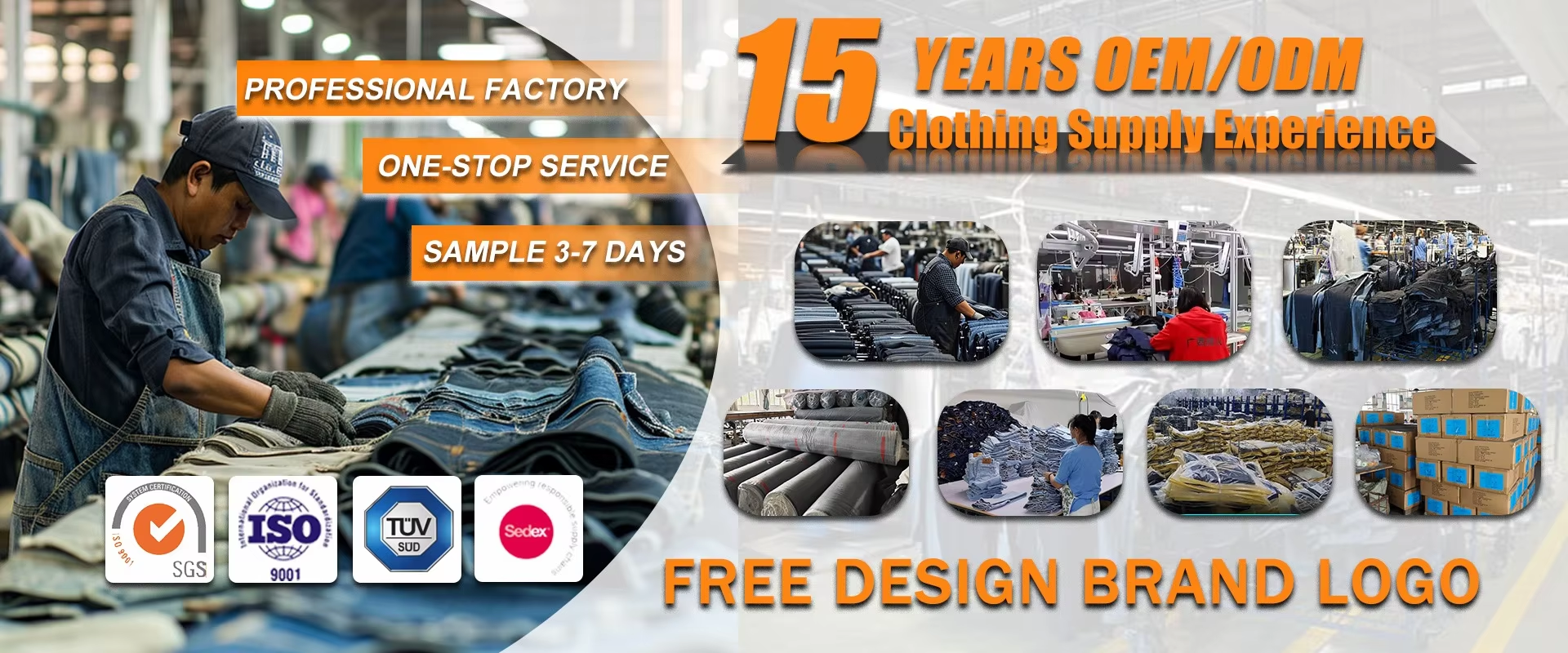
- How many years have you been producing jeans for export?
- Which markets do you mainly serve (US, EU, etc.)?
- Can you show examples of straight-leg classic jeans you have already produced?
A factory that really understands denim will know how to control shrinkage, twisting (leg torque), color consistency, and strong seams. These skills come from years of experience, not one season.
2.2 Fabric and Materials
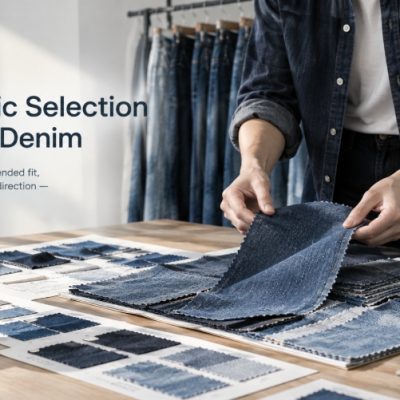
Fabric is the heart of jeans. It decides handfeel, weight, comfort, and how the jeans age over time. When you talk to a factory, discuss:
- Fabric weight: For classic straight-leg jeans, 12–14 oz denim is a very common choice. It feels solid and durable but still comfortable enough for daily wear.
- Composition:
- 100% cotton for a more rigid, vintage feeling.
- 98–99% cotton + 1–2% elastane for slight stretch and better comfort.
- Shade and wash: Deep indigo, mid-blue, or light blue. Heavy wash or clean wash.
- Special requirements: Organic cotton, recycled cotton, or other sustainable options if needed.
Ask the factory to recommend 2–3 fabric options within your target price and market level, and request fabric swatches before bulk.
2.3 Pattern and Fit
Fit is the soul of jeans. A small mistake in pattern can create a big problem in bulk orders.
Ask:
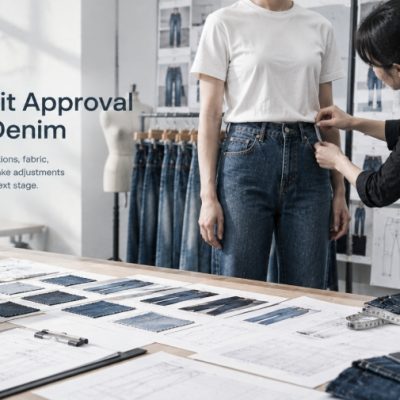
- Can you develop the pattern based on my reference sample or tech pack?
- Can you provide size specs for all sizes and adjust them to my market?
- How do you test the fit? Do you do fitting on real models or only on mannequins?
For straight-leg jeans, pay special attention to:
- Waist and hip fit: should be secure, not too tight, not sliding down.
- Thigh area: enough room for movement.
- Knee to hem: a clean straight line when standing.
A professional factory will usually offer you sample sizes to try and refine before going into bulk production.
2.4 Quality Control Process
Every factory says “good quality”, but you need to know how they control it. Ask about their QC steps:
- Do you inspect fabric before cutting (shrinkage, defects, weight)?
- Do you control cutting direction and grain to avoid leg twisting?
- Do you have in-line inspection during sewing?
- Do you perform final inspection after washing and finishing?
Also ask which standards or AQL levels they follow, and whether they are open to third-party inspection before shipment if needed.
2.5 Minimum Order Quantity (MOQ) and Flexibility
As a B2B buyer, you must balance MOQ, price, and risk.
Ask:
- What is your MOQ per style, per color, per size set?
- Can I mix sizes and washes under one MOQ?
- Is there a price difference between small trial order and mass order?
If you are a growing brand, look for a factory that can support smaller test orders first, then scale up when your sales grow.
2.6 Lead Time and On-Time Delivery
Late delivery can destroy a season, especially if you work with fashion calendars or big retail partners.
Ask:
- Sample lead time: how many days for the first proto and fit sample?
- Production lead time: from deposit and PP sample approval to shipment.
- How do you handle peak seasons, such as before back-to-school or holiday?
It is better to agree on a realistic timeline with some buffer, instead of an over-promised tight schedule that is hard to keep.
3. How to Avoid Common Problems With Bulk Jeans Orders
Many buyers worry about the same risks: poor quality, color differences, sizing issues, and late shipments. The good news is that most of these problems can be avoided with the right steps.
3.1 Always Start With Samples
Never place a large bulk order without seeing physical samples. A professional process usually includes:
- Prototype sample: to check general look and details.
- Fit sample: to confirm pattern and sizes on real people.
- Wash sample: to confirm color, shade, and washing effect.
- Pre-production (PP) sample: the final standard for bulk production.
You should sign off the PP sample in writing and keep one sealed sample on your side. The factory keeps the same sealed sample. This becomes the “golden sample” and the reference for any future quality discussion.
3.2 Test the Jeans in Real Life
For classic straight-leg jeans, do some simple but effective tests on the samples:
- Try them on different body types in your target size range.
- Sit, walk, and squat in the jeans to see comfort and recovery.
- Wash and dry them 1–3 times to check shrinkage and color fading.
If everything is fine with the sample after testing, your risk in bulk production will be much lower.
3.3 Use a Small Trial Order
If this is your first time with a factory, do a small trial order first. For example, 50–200 pieces per color or size range.
This allows you to:
- Test real quality of bulk sewing and washing, not only showroom samples.
- Observe return rate and customer feedback from your market.
- Confirm communication, packing, and shipping performance.
After a successful trial, you can confidently increase the order quantity in the next season.
3.4 Set Clear Quality Standards in Writing
Verbal promises are not enough. Put key points into your purchase contract or order confirmation:
- Fabric composition, weight, and shade.
- Size tolerance for key points (waist, hip, inseam, leg opening).
- Shrinkage limit after washing.
- Acceptable rate of defects and how to handle quality claims.
Clear standards protect both buyer and factory and reduce conflict.
4. Price Range: Working With a 10–15 USD Target
Many B2B buyers work with a wholesale cost between 10 and 15 USD per pair. With this budget, it is possible to produce good quality classic straight-leg jeans, as long as the design and process are controlled well and you do not add too many luxury details.
Here is how a factory usually thinks about your price target:
- Fabric: choose a reliable, mass-use denim (for example 12–13 oz) with stable quality.
- Wash: focus on clean, classic washes (dark, mid-blue) instead of heavy hand-sanding, complicated whiskers, or many special effects.
- Trims: use durable but simple buttons, rivets, and zippers from stable suppliers.
- Sewing: keep construction efficient but strong at key stress points.
When you tell a factory your target price, also share your expected order quantity and market position. A professional supplier can then propose:
- One “value” option: the most cost-effective solution that still meets your quality needs.
- One “upgraded” option: slightly better fabric or wash at a bit higher price.
This lets you choose the best combination of cost, quality, and positioning for your brand.
5. How a Professional Jeans Factory Works With B2B Clients
If you want a long-term partner, not just a one-time supplier, pay attention to how the factory communicates and manages projects. A strong B2B factory will usually:
- Listen carefully to your brand story, target market, and price level.
- Help you match fabric, trims, and washes to your real needs instead of pushing random items.
- Offer clear timelines for sampling and production.
- Share honest feedback when your design may cause fit or quality issues.
- Support you with photos, videos, and details for your product pages or marketing.
From our own experience, the best results come when buyers treat the factory as a partner, not only as a cheap production line. Open communication about problems and goals helps both sides grow together season by season.
6. Practical Checklist You Can Use
To make your sourcing easier, here is a simple checklist you can copy and use when talking to any jeans factory:
About the factory
- Do you specialize in jeans and denim?
- How many years have you produced jeans for export?
- Which countries do you mainly ship to?
About the product
- Can you produce classic straight-leg jeans based on my reference or tech pack?
- What fabric weights and compositions do you recommend for my market?
- Do you offer wash development for deep, mid, and light blue?
About quality
- What are your main QC steps from fabric to final packing?
- How do you control shrinkage, twisting, and color consistency?
- Can we agree on a golden sample and written quality standards?
About business terms
- What is your MOQ per color/style? Can I mix sizes?
- What is your normal sample and bulk lead time?
- What is your price range for my target quantity and quality level?
You can paste this checklist directly into your email when you contact suppliers, or use it as the structure of your first call.
Conclusion
Sourcing a reliable jeans factory does not need to be stressful. When you know what to ask and what to test, you can quickly see which supplier is truly professional.
By focusing on one clear product direction, such as classic straight-leg jeans, and by setting a realistic bulk price target, you can build a stable, long-term partnership with a factory that understands denim and understands your business.