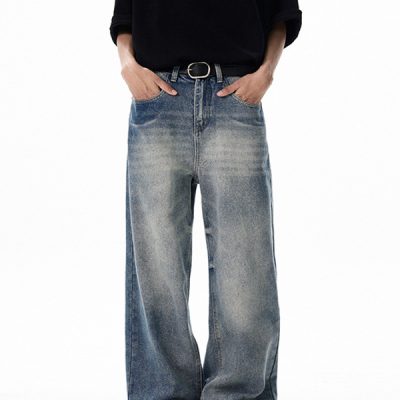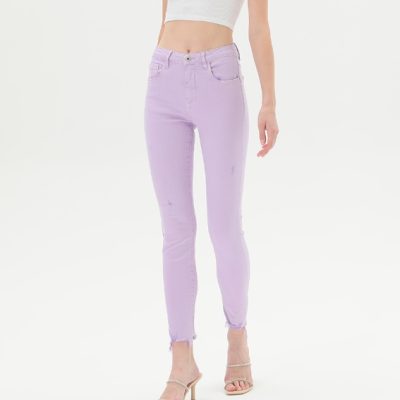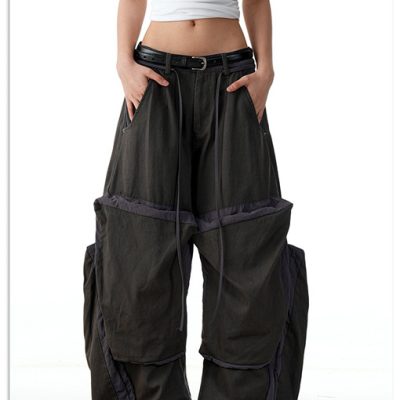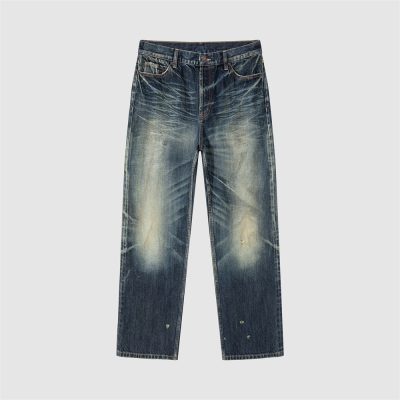
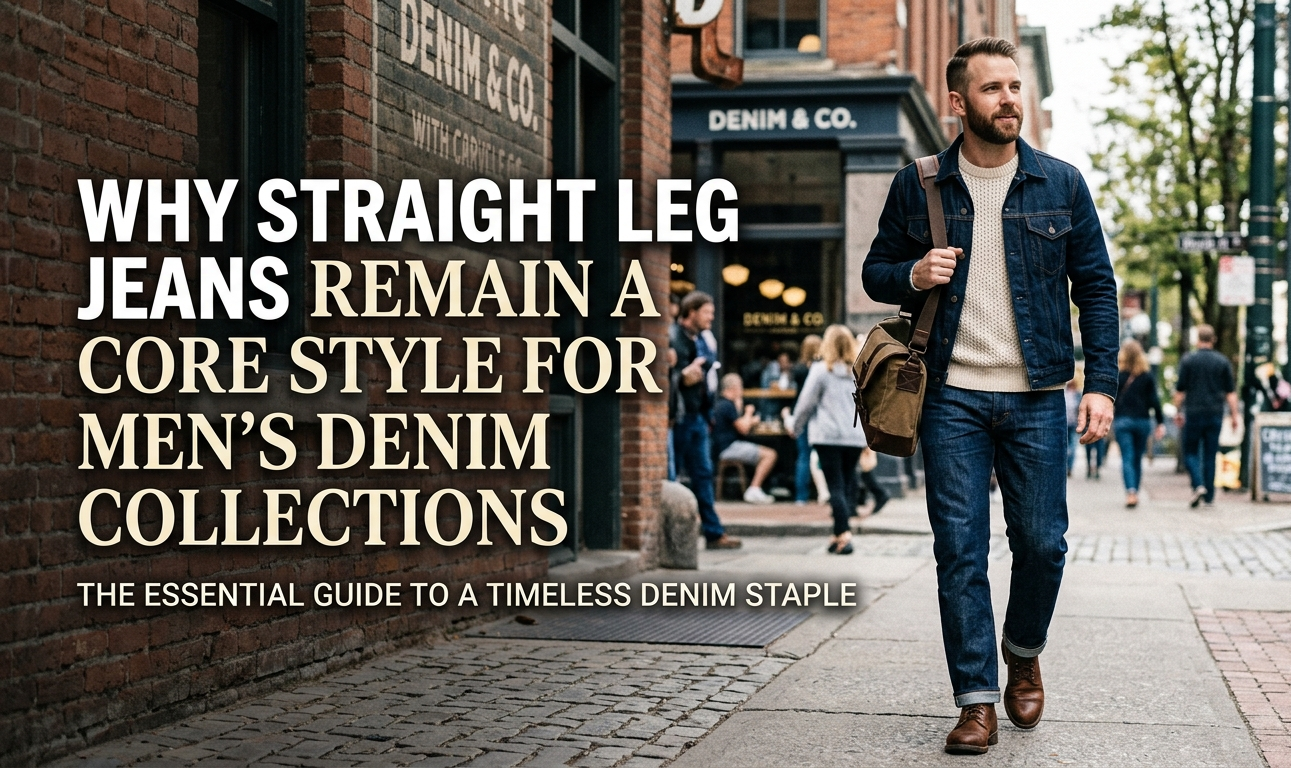
For independent apparel brands, wholesale importers, and e-commerce sellers, building a sustainable denim line requires balancing trend-driven items with stable, high-volume products. While silhouettes like “Extreme Baggy” or “Skinny” dominate social media algorithms, the Classic Straight Leg Jean remains the single most reliable commercial anchor for men’s denim collections.
From a product development and supply chain perspective, the choice to anchor your brand with straight-leg jeans is a calculated financial decision. It directly impacts your production tolerances, your manufacturing costs, and your online return rates.
At Xinen Garment, we engineer custom denim for international private labels and wholesalers. Here is the factual, factory-floor analysis of why the straight-leg jean remains an indispensable core style, and how to communicate its structural value to your B2B buyers.
1. The Financial Advantage: Minimizing E-Commerce Return Rates
The single greatest threat to an e-commerce apparel brand’s profit margin is the return rate due to sizing errors.
- Universal Proportions: Tapered or skinny fits sit tightly against the calves and thighs, meaning a minor variation in a consumer’s body type results in a garment that does not fit.
- The Sizing Buffer: A true straight-leg CAD pattern features a balanced, vertical drop from the knee to the hem. This structural “ease” provides a natural sizing buffer.
- Reduced “Bracket Buying”: Because the fit is highly predictable across different body shapes, shoppers rarely need to order multiple sizes to find the right fit, directly protecting your shipping and logistics margins.
2. Manufacturing Efficiency and Predictable Shrinkage
From a technical production standpoint, manufacturing straight-leg jeans offers distinct operational advantages over complex, highly distressed silhouettes.
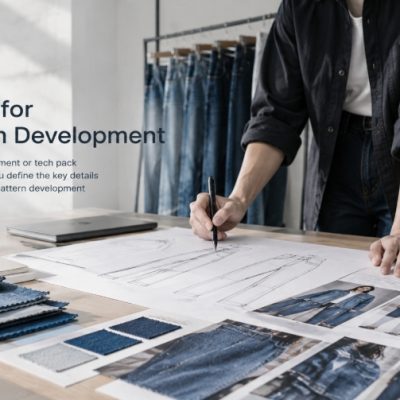
- Stable Pattern Grading: The mathematical simplicity of a straight-leg pattern—where the Point of Measure (POM) at the knee aligns closely with the leg opening—makes digital CAD grading highly stable.
- Predictable Torque Control: Denim is a twill weave that naturally wants to twist during aggressive industrial wet processing. Because straight legs use a consistent fabric width throughout the lower leg, managing fabric torque and preventing the outer side seams from twisting is significantly easier than it is in tapered or asymmetric cuts.
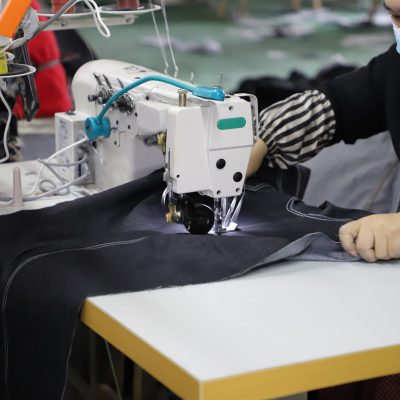
- Cost Per Unit (CPU) Optimization: Standard straight-leg construction requires fewer sewing operations and lower manual labor hours than multi-pocket cargo pants or heavily distressed streetwear styles. This keeps your base manufacturing costs predictable and your wholesale margins secure.
Technical Fit & Manufacturing Matrix
| Metric | Classic Straight Fit | Slim / Skinny Fit | Oversized / Baggy Fit |
| Recommended Fabric Weight | 12oz to 14oz | 10oz to 11.5oz | 13.5oz to 15oz |
| Fabric Composition | 100% Cotton or Low-Stretch (1%) | High-Stretch (2%–3% Elastane) | 100% Rigid Cotton |
| Pattern Complexity | Low to Moderate | Moderate | High (Balance required) |
| E-commerce Return Risk | Low | High (Calf/Thigh tightness) | Moderate (Oversized perception) |
| Production Efficiency | High | Moderate | Moderate |
3. Fabric Integrity and Wash Versatility
A core style must be adaptable across multiple seasonal collections. The straight leg acts as a blank canvas for the wash lab.
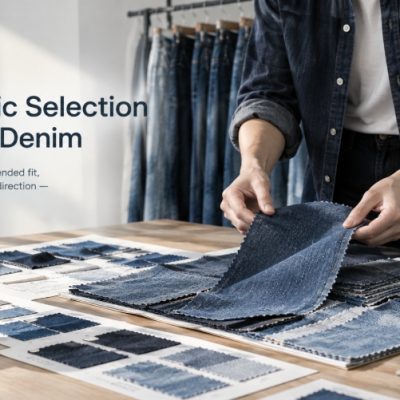
- Heavyweight Performance: Straight-leg jeans perform exceptionally well with 12oz to 14oz rigid cotton. This weight allows the fabric to fall in a clean, architectural line without collapsing at the ankle.
- Wash Compatibility: The structural strength of mid-to-heavyweight straight denim can withstand extended cycles in the wash lab. Whether your brand requires a clean dark rinse for a smart-casual line, or an intensive vintage enzyme stone-wash with hand-sanded whiskering for a streetwear aesthetic, the fabric holds its structural integrity.
Why Choose Xinen Garment for Your Core Denim Production?
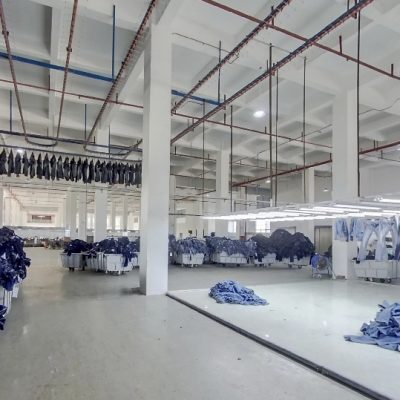
Executing a premium core line requires a source factory that prioritizes technical accuracy over marketing hype. Operating from our manufacturing facility in China, Xinen Garment delivers high-end denim customization for global B2B clients.
- Direct Factory Economics: We are a direct source manufacturer, not a trading company. You communicate directly with our production management, ensuring completely transparent Bill of Materials (BOM) costing and no hidden middleman markups.
- Advanced CAD Engineering: Our pattern makers perform rigorous pre-cut shrinkage tests for every fabric batch. If a heavy vintage wash causes 4% shrinkage, we scale the initial digital pattern by exactly 4% to guarantee the final washed garments match your Tech Pack measurements perfectly.
- Scalable Minimums (MOQs): We support independent brands and private labels with practical production runs, typically starting at 100 to 300 pieces per style/wash.
- Fulfillment Ready Logistics: We handle full final-mile preparations, including custom branded metal hardware installation, private labeling, strict moisture-control packaging, and Amazon-compliant FNSKU barcoding.
Frequently Asked Questions (FAQ)
Q: Why do straight leg jeans require heavier fabric than slim fits?
A: Slim fits rely on your body to fill out the shape, meaning they can use thinner, stretchier materials. A straight leg relies on the fabric’s own weight (12oz to 14oz) to drape vertically from the knee down. If the fabric is too light, the silhouette loses its structure and collapses.
Q: How does Xinen Garment prevent the side seams from twisting after washing?
A: “Leg twist” is caused by the natural torque of denim’s twill pattern during washing. We prevent this by mathematically balancing the front and back panel patterns in our CAD software and utilizing properly skewed raw denim before cutting.
Q: What is the typical lead time for a bulk order of straight jeans?
A: Sample development requires 10 to 15 days. Once you approve the final Pre-Production (PP) sample, bulk manufacturing takes between 30 to 45 days, depending on the complexity of the wet processing wash.
Q: Can we provide our own physical sample for you to replicate?
A: Yes. Our technical team can reverse-engineer any physical reference garment to create a digital CAD pattern, optimize the grading rules, and match the fabric weight for your brand.