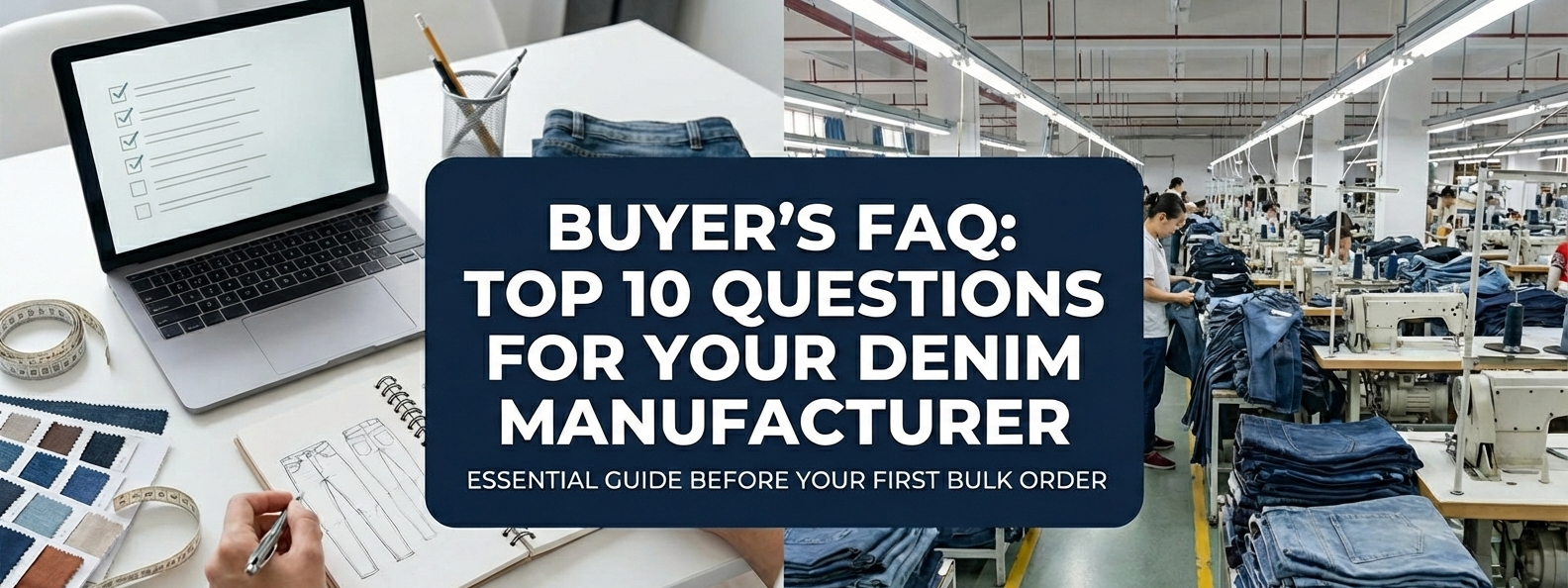
Making the jump from ordering a few samples to placing your first bulk order is the most stressful part of starting a denim brand. The financial risk is high, and the room for error is incredibly small.
A lot of new brand owners make the mistake of choosing a factory simply because they reply fast on WhatsApp or offer the lowest initial quote. That is a recipe for a bad production run. Before you wire thousands of dollars for a deposit, you need to know exactly how the factory operates behind the scenes.
Here are the top 10 questions you need to ask your denim manufacturer before you sign off on bulk production, and the answers you should be looking for.
What is Your Actual Minimum Order Quantity (MOQ) and Minimum Color Quantity (MCQ)?
You need to know the baseline volume required to work with them. But don’t just ask for the overall MOQ; ask for the MCQ (Minimum Color/Wash Quantity) and the minimum per size.
- The answer you want: A clear breakdown. For example, “Our MOQ is 300 pieces per style, but we require at least 100 pieces per wash, split across no more than 5 sizes.” This tells you exactly how you can structure your collection without getting hit with small-batch surcharges.
Do You Source the Denim Fabric and Hardware, or Do I Need to Provide Them?
Some factories are “CMT” (Cut, Make, Trim), meaning you have to buy the fabric and ship it to them. Others are “Full Package” (FOB or OEM), meaning they handle everything.
- The answer you want: If you are a new brand, you want a Full Package manufacturer who has direct relationships with denim mills and hardware suppliers. Sourcing your own 13oz selvedge denim and custom rivets as a beginner is a logistical nightmare.
How Do You Account for Fabric Shrinkage During the Wash Process?
Denim shrinks. Depending on the wash (especially heavy stone washes or bleach), it can shrink significantly. If the factory cuts the fabric at your exact target measurements and then washes it, your bulk order will end up two sizes too small.
- The answer you want: The factory should explain that they run shrinkage tests on a raw fabric swatch before making the final pattern. They should grade the pattern larger to account for the exact shrinkage percentage of your specific wash recipe.
What Wash and Finishing Techniques Are Done In-House?
The wash is what separates a cheap pair of jeans from a premium pair. Many small factories farm out their washing to third-party facilities, which means they lose control over quality and timelines.
- The answer you want: Ideally, the factory has an in-house wash facility or a dedicated, exclusive partnership with a washhouse nearby. Ask if they can do the specific finishes you need, such as laser fading, ozone washing, or hand-sanding.
How Are Sample Costs Handled Once I Place a Bulk Order?
Developing a custom denim sample is expensive because it requires stopping the production line to make a single garment. Factories usually charge 2x to 3x the bulk price for a sample.
- The answer you want: Most reputable manufacturers will deduct the cost of the sample (or at least the sample surcharge) from your final invoice once you place a bulk order that meets their MOQ.
What is Your Standard Acceptable Defect Rate, and How Do You Handle Rejects?
In garment manufacturing, a 0% defect rate does not exist. Machines break, threads snap, and human error happens. The industry standard is usually measured by an Acceptable Quality Level (AQL).
- The answer you want: A good factory will be honest about this. They should state an acceptable defect rate (usually around 2% to 3%). More importantly, they should have a clear policy on how they handle garments that fail quality control—whether they remake them, refund you, or credit your next order.
What is Your Realistic Lead Time for Both Sampling and Bulk Production?
Do not accept a vague answer like “a few weeks.” You need a hard timeline so you can plan your marketing drops and website launches.
- The answer you want: They should provide a clear, two-part timeline. For example: “Sampling takes 3-4 weeks after tech pack approval. Bulk production takes 45-60 days after the final sample is approved and the deposit is paid.” Always pad their estimate by two weeks to be safe.
What Are Your Standard Payment Terms for New Buyers?
Never pay 100% upfront for a bulk order. If a factory demands full payment before cutting fabric, walk away.
- The answer you want: The standard payment structure in the apparel industry for new clients is usually 30/70 or 50/50. You pay a 30% to 50% deposit to start production (which covers their raw material costs), and you pay the remaining balance only after the goods are finished and pass final inspection, right before they ship.
What is Your Monthly Production Capacity if My Brand Scales Quickly?
If your first drop goes viral and you suddenly need to increase your order from 300 pieces to 5,000 pieces next season, can the factory actually handle it?
- The answer you want: You want a factory that caters to medium-sized brands. If their maximum capacity is 1,000 pieces a month, you will quickly outgrow them and have to start the painful sourcing process all over again. Ensure they have the floor space and manpower to scale with your success.
Final Thoughts
Your relationship with a denim manufacturer should feel like a partnership, not a transaction. If a factory gives you vague answers, avoids your questions, or says “yes” to absolutely everything without explaining how, consider it a major red flag. Taking the time to ask these 10 questions upfront will save you from expensive, brand-damaging mistakes down the line.