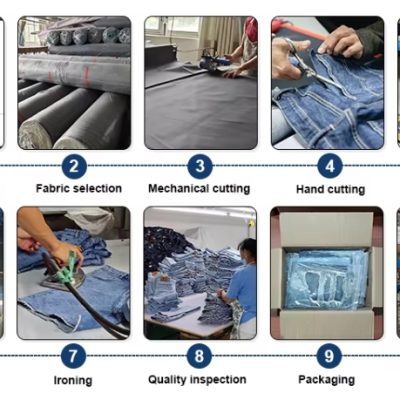
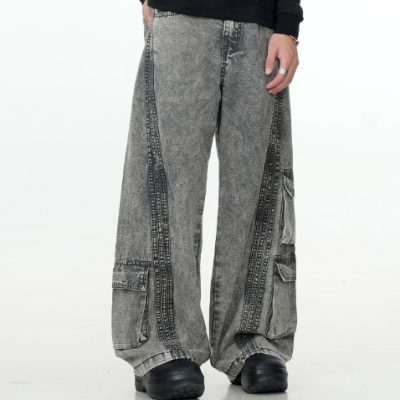
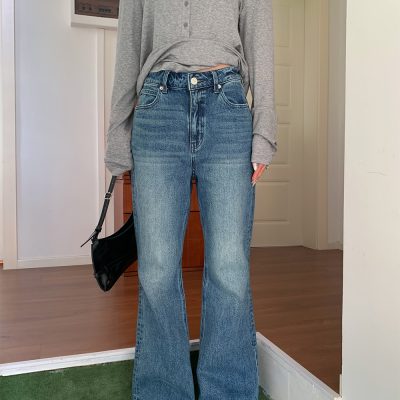
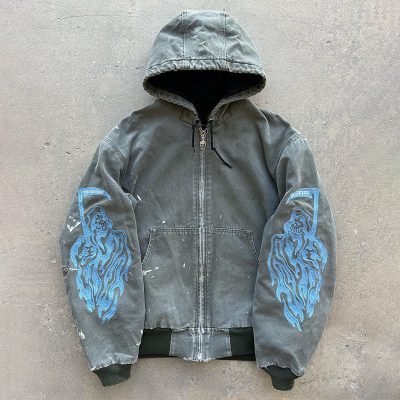
The final appearance of denim is not determined by fabric selection alone. A raw denim fabric can look, drape, and feel entirely different once it undergoes wet processing, mechanical abrasion, and specialized finishing.
Wash development is the process of translating a target aesthetic—whether a crisp dark wash, a vintage mid-blue, or a heavily distressed streetwear finish—into a repeatable, technical specification for production.
┌────────────────────────────────────────────────────────────────────────┐
│                      WASH DEVELOPMENT FRAMEWORK                        │
├───────────────┬────────────────┬───────────────┬───────────────────────┤
│ Target        │ Base Fabric    │ Garment       │ Repeatable            │
│ Reference     │ Reaction       │ Construction  │ Specification         │
│ (Photo/Garment)│ (Weave/Color)  │ (Seams/Trims) │ (Master Sample)       │
└───────────────┴────────────────┴───────────────┴───────────────────────┘
A reference photo, moodboard image, or vintage garment provides a clear visual baseline, but it is not a technical recipe. Achieving your desired look requires evaluating how your specific fabric, pattern, and seam construction react to wet processing.
At Xinen Garment, wash and finishing development is handled as a core engineering stage within our custom denim product development workflow.
Why Wash Development Matters in Custom Denim
Denim is one of the few fabrics whose ultimate character is defined after the garment is sewn. Two distinct denim fabrics subjected to the exact same wash cycle can yield completely different shades, contrast levels, and hand feels. Conversely, a single denim fabric can produce vastly different aesthetics depending on the wash formulas and abrasion methods applied.
                  ┌──────────────────────┐
                  │ Target Denim Fabric  │
                  └──────────┬───────────┘
                             │
            ┌────────────────┴────────────────┐
            ▼                                 ▼
┌──────────────────────┐          ┌──────────────────────┐
│ Light Rinse Finish   │          │ Heavy Abrasion Wash  │
├──────────────────────┤          ├──────────────────────┤
│ • Deep Indigo Hue    │          │ • Softened Vintage Blue│
│ • Crisp, Firm Hand   │          │ • High-Contrast Fading│
│ • Subtle Seam Pop    │          │ • Relaxed Drape      │
└──────────────────────┘          └──────────────────────┘
Wash development is essential to control:
- Color & Tonal Depth: Reducing raw indigo or black dye to hit precise target shades.
- Visual Contrast: Controlling the balance between dark indigo in recessed areas and lighter highlights on raised surfaces.
- Surface Character: Creating subtle slub highlights, vintage cross-hatch textures, or smooth, flat surfaces.
- Garment Softness & Hand Feel: Breaking down stiff starches in raw denim to achieve comfortable, wearable drape.
- Authentic Wear Patterns: Placing whisker highlights, honeycombs, and knee breaks in proportion to the garment’s actual fit.
What We Review Before Wash Development
Wash development does not begin in isolation. Before running wash trials, our development team reviews several core inputs to ensure the proposed finishing method matches the garment’s structural design:
1. Fabric Characteristics
- Fiber Composition: 100% cotton, cotton-poly blends, or stretch denim formulations.
- Dye Type: Pure indigo, sulfur bottom/top indigo, reactive dye, or stay-black formulations.
- Fabric Structure: Weight (oz/yd²), weave direction (right-hand twill, left-hand twill, broken twill), and slub character.
2. Garment Construction
- Seam Construction: Heavy flat-felled seams vs. open seams affect how contrast shows up on seam edges (known as “roping”).
- Pocketing & Reinforcements: Fabric linings, pocket bags, and pocket stay structures must withstand wet processing.
- Hardware & Trims: Metal tack buttons, rivets, zippers, and leather/paper patches must be compatible with the intended wash intensity.
3. Garment Fit & Silhouette
- High-rise wide-leg jeans, relaxed jackets, or fitted shorts require different proportions for localized wear, whiskering, and scraping.
4. Target Visual Direction
- Clear definition of the intended aesthetic—ranging from clean dark rinse finishes to heavily worn vintage looks.
Common Denim Wash Directions
While custom wash development allows for tailored finishing combinations, most brand projects fall into several practical wash categories:
┌────────────────────────────────────────────────────────────────────────┐
│                        PRIMARY WASH SPECTRUM                           │
├──────────────┬────────────────┬───────────────┬──────────────┬─────────┤
│ Dark / Rinse │ Mid / Vintage  │ Light Wash    │ Distressed   │ Black / │
│ Wash         │ Wash           │               │ & Aged       │ Grey    │
│ Clean & Deep │ Balanced Fade  │ High Exposure │ High Contrast│ Tonal   │
│ Tone         │ & Soft Hand    │ & Bright Blue │ & Wear Marks │ Shades  │
└──────────────┴────────────────┴───────────────┴──────────────┴─────────┘
Clean / Dark Wash
- Visual Character: Deep indigo tone with minimal fading or surface abrasion.
- Key Focus: Removing raw fabric starches to soften hand feel while maintaining a uniform, dark color.
- Best Suited For: Tailored denim, contemporary smart-casual collections, and premium raw-look denim.
Mid / Vintage Wash
- Visual Character: Authentic medium-blue shade showing natural-looking wear around seams, pockets, and thighs.
- Key Focus: Balancing color breakdown with subtle contrast highlights without compromising fabric strength.
- Best Suited For: Classic heritage fits, 90s-inspired denim, and everyday casual lines.
Light Wash
- Visual Character: Bright, desaturated sky-blue or ice-blue tones with high color reduction.
- Key Focus: Achieving a pale shade while maintaining subtle indigo undertones along thick seams and waistbands.
- Best Suited For: Summer collections, retro fashion lines, and streetwear bottoms.
Distressed / Aged Finish
- Visual Character: Noticeable wear marks, localized hand-scraping, frayed pocket edges, or structural tears.
- Key Focus: Placing hand-distressing, grinding, or destruction precisely according to the garment’s proportion and fit points.
- Best Suited For: Streetwear brands, vintage reproduction labels, and directional fashion lines.
Black & Grey Wash
- Visual Character: Ranging from charcoal black with subtle grey seam highlights to pale washed-grey tones.
- Key Focus: Managing sulfur or black dye breakdown to avoid unwanted brown, green, or red undertones during processing.
- Best Suited For: Monochromatic streetwear, contemporary denim jackets, and edgy fashion silhouettes.
Wash Development From a Reference
Brands frequently provide a physical reference garment, a vintage swatch, or high-resolution photos to establish visual direction.
┌─────────────────────────┐
│ Target Photo / Reference│
└────────────┬────────────┘
             │
             ▼
┌─────────────────────────┐
│ Technical Interpretation│ ──> Fabric / Shade / Construction Analysis
└────────────┬────────────┘
             │
             ▼
┌─────────────────────────┐
│ Physical Wash Trial     │ ──> Applied to Actual Garment Sample
└────────────┬────────────┘
             │
             ▼
┌─────────────────────────┐
│ Master Wash Spec        │ ──> Approved Reference for Production
└─────────────────────────┘
Translating a visual reference into a finished product requires careful development. Photos do not capture technical details like original fabric weight, initial dye shade, studio lighting conditions, or digital color grading.
During wash development, we analyze your reference to break down its core components:
- Base color hue and tint
- Degree of overall fading
- Intensity of seam contrast and roping
- Placement and scale of localized wear (whiskering, thigh scrapes, knee breaks)
- Surface texture and hand feel
These elements are then applied to your actual fabric and garment pattern during sample processing. Rather than guessing, physical wash swatches or prototype wash samples are produced to confirm the look before approving bulk production.
How Fabric Selection Influences the Final Wash
Fabric selection and wash development are directly connected. Choosing a denim fabric during Stage 02 sets the boundary for what the wash process can achieve.
| Fabric Factor | Influence on Wash & Finishing |
| Dye Method | Pure indigo bleaches down to a bright, clean blue. Sulfur-bottom indigo fades to a warmer, greenish-grey undertone. |
| Fabric Structure | Slub yarns create distinct vertical streaks when washed, while ring-spun yarns yield a smoother, subtle vintage grain. |
| Stretch Composition | Elastic fibers react differently to heat and processing than 100% cotton, requiring calibrated wash temperatures. |
| Fabric Weight | Heavyweight denims (13oz+) hold sharp whisker contrast and deep seam roping; lighter denims fade with a softer gradient. |
Evaluating these interactions early ensures your chosen fabric supports your intended wash direction. Explore our full range of fabric options in our Fabric Selection guide.
Connecting Wash Development with Fit and Patterning
Washing is not just an aesthetic step; it directly impacts garment dimensions and pattern calibration.
Shrinkage and Fabric Movement
Wet processing, high-temperature drying, and mechanical agitation cause denim to shrink in length and width. Synthetic fibers like elastane may also pull back, changing the final measurements.
Pattern Scaling
To compensate for wash shrinkage, patternmakers scale base patterns up based on preliminary fabric testing. The wash formula must remain consistent throughout development so the garment lands within intended size tolerances.
Wear Placement Accuracy
Whiskers and thigh scrapes must align with body anatomy. A scrape placed too low on a wide-leg pant or misaligned on a short can look unnatural. Developing the wash alongside Fit & Pattern Development and Sampling & Fit Approval ensures localized finishing sits properly on the body.
From Wash Reference to Master Wash Sample
Translating an initial wash concept into a bulk-ready reference follows a structured development workflow:
1. Reference Review ──> 2. Formula Definition ──> 3. Sample Processing ──> 4. Physical Evaluation ──> 5. Approved Master
- Reference & Requirements Review: Analyzing the target garment, photo, or moodboard alongside your confirmed garment specs.
- Wash Formula Definition: Defining necessary processing steps—such as enzyme washing, stone washing, bleaching, or hand-scraping.
- Sample Processing: Applying the trial wash formula to a prototype garment made from your bulk fabric.
- Physical Evaluation: Inspecting the washed sample for shade accuracy, contrast levels, fabric drape, and dimensional stability.
- Formula Refinement: Adjusting cycle times, processing temperatures, or manual abrasion techniques if color or texture needs tweaking.
- Master Reference Sign-Off: Confirming the approved sample to serve as the physical benchmark for bulk production quality control.
What We Review During Wash Evaluation
Evaluating a wash sample requires looking beyond basic shade color. We use this practical review checklist:
┌────────────────────────────────────────────────────────────────────────┐
│                        WASH EVALUATION CHECKLIST                       │
├──────────────┬─────────────┬──────────────┬──────────────┬─────────────┤
│ Color & Shade│ Fading      │ Surface      │ Construction │ Hand Feel   │
│ • Base Hue   │ • Gradient  │ • Texture    │ • Seam Pop   │ • Softness  │
│ • Cast/Tint  │ • Whiskers  │ • Abrasion   │ • Thread Pop │ • Stiffness │
│ • Depth      │ • Contrast  │ • Distressing│ • Hardware   │ • Drape     │
└──────────────┴─────────────┴──────────────┴──────────────┴─────────────┘
- Shade & Hue: Does the overall color cast match the intended palette under standard lighting?
- Contrast & Fading: Is the transition between high-wear areas and dark recesses smooth and natural?
- Localized Wear: Are whiskers, chevrons, and thigh scraping placed correctly relative to the pattern?
- Surface Integrity: Does the fabric surface retain structural strength without unintended tearing or pilling?
- Construction & Seams: Do seams show attractive contrast (“roping”) without seam failure or thread damage?
- Hand Feel: Does the finished garment have the soft, wearable hand feel expected by your target market?
Wash Considerations Across Different Denim Products
Wash and finishing techniques are adapted to suit specific product types and silhouettes:
Custom Jeans
- Focus on waistband contrast, hip whiskering, thigh scraping, rear pocket fading, and hem roping.
- View our Custom Jeans development options.
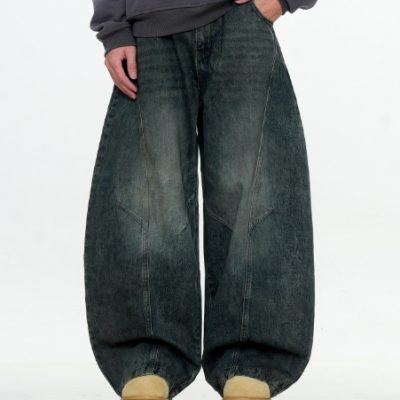
Baggy & Wide-Leg Jeans
- Focus on managing wash balance across larger surface areas to ensure consistent fading without blank spots.
- Explore our development process for Baggy & Wide-Leg Jeans.
Straight & Relaxed Jeans
- Focus on clean vertical fading, authentic knee breaks, and balanced pocket abrasion for a classic vintage aesthetic.
- Learn more about Straight & Relaxed Jeans.
Denim Shorts
- Focus on leg opening distressing, raw-edge fraying stability, pocket bag exposure, and proportional whiskering.
Denim Skirts
- Focus on front panel seam highlights, rear slit distress stability, waist-to-hip gradients, and hem abrasion.
Denim Jackets
- Focus on collar abrasion, chest pocket edge highlights, sleeve crease wear, cuff roping, and back panel wash balance.
Manual Distressing and Special Finishing Details
When a product direction calls for a worn or vintage character, localized manual techniques can be integrated into wash development:
┌────────────────────────────────────────────────────────────────────────┐
│                      LOCALIZED FINISHING TECHNIQUES                    │
├─────────────────┬──────────────────┬─────────────────┬─────────────────┤
│ Hand Scraping   │ Grinding & Fray  │ Destruction     │ Tonal Contrast  │
│ Natural thigh & │ Edge wear on     │ Targeted rips   │ Pocket / seam   │
│ seat highlights │ cuffs & pockets  │ & repairs       │ shade shifts    │
└─────────────────┴──────────────────┴─────────────────┴─────────────────┘
- Hand Scraping: Applying manual abrasion to simulate authentic wear on thighs, seat, and knees.
- Grinding & Pocket Fraying: Abrading pocket lips, cuffs, and waistbands for an aged edge look.
- Targeted Destruction: Adding localized rips, slashes, or repaired backing patches.
- 3D Whiskering: Setting permanent wear creases across the front fly and hip areas.
These localized details are documented during development so factory technicians can replicate them consistently across production runs.
Confirming Wash Approval Before Production
Once a wash sample meets your brand’s standards, it is signed off as the Master Wash Reference.
┌─────────────────────┐     ┌─────────────────────┐     ┌─────────────────────┐
│ Master Wash Sample  │ ──> │ Standardized Specs  │ ──> │ Inline Production   │
│ (Signed Benchmark)  │     │ & Formula Logs      │     │ Quality Control     │
└─────────────────────┘     └─────────────────────┘     └─────────────────────┘
This master sample is stored as the visual and technical benchmark for bulk production. During manufacturing, production pieces are compared directly against the master sample to control shade bands and finishing consistency.
Because denim washing involves wet processing and organic dyes, slight batch-to-batch variations are natural in denim production. Establishing a master sample helps define acceptable shade bands before main production begins.
Read more about downstream quality management in our Quality Control and Production Process guides.
What We Need From Your Brand for Wash Development
To begin wash development for your denim project, providing the following information helps us match your direction:
- Product Category: Jeans, jacket, skirt, shorts, or top.
- Target Wash Reference: Physical garment, vintage swatch, or clear reference photos under neutral light.
- Fabric Selection: Confirmed fabric specification or selected target swatch.
- Fit Sample / Pattern: Approved prototype or current pattern specs.
- Aesthetic Notes: Preferences regarding fading intensity, contrast level, tint/cast, and hand feel.
- Distressing Requirements: Specific notes on scraping, grinding, rips, or repaired details.
What Happens After Wash & Finishing?
With your wash and finishing specifications confirmed, your project moves into final production execution:
01 Product Brief
  └── 02 Fabric Selection
        └── 03 Fit & Pattern Development
              └── 04 Sampling & Fit Approval
                    └── 05 Wash & Finishing (Current Stage)
                          └── 06 Bulk Production
Next Step in Development
- Proceed to Stage 06: Bulk Production
Related Development Links
- Stage 01: Product Brief
- Stage 02: Fabric Selection
- Stage 03: Fit & Pattern Development
- Stage 04: Sampling & Fit Approval
- Technical Documentation: Denim Tech Pack Development
- Full Manufacturing Overview: Denim Manufacturing
Frequently Asked Questions
What is denim wash development?
Denim wash development is the process of testing and refining wet processing, chemical fading, and mechanical abrasion on a specific denim fabric and garment style. It creates a repeatable recipe to achieve a targeted color, hand feel, and surface finish in bulk production.
Can you develop a wash from a photo or reference garment?
Yes. Physical reference garments, swatches, or photos are common starting points. We analyze the shade, contrast, and wear patterns in the reference and translate them onto your bulk fabric and garment construction.
Does the same denim fabric always produce the same wash result?
No. Wash results depend on recipe duration, water temperature, mechanical friction, and chemical concentration. The same raw fabric can yield very different looks depending on how it is processed.
Does washing affect denim fit or dimensions?
Yes. Wet processing causes shrinkage and fabric relaxation. Patternmakers adjust base patterns using fabric shrinkage test data so the washed garment matches your target measurement specifications.
Can I request a vintage or distressed denim finish?
Yes. Vintage washes, hand scraping, whiskering, pocket grinding, and distressed effects can be developed and documented on your sample according to your brand’s aesthetic requirements.
Should the wash be approved before bulk production?
Yes. Establishing an approved master wash sample ensures that washing technicians have a physical standard to match during bulk production and quality control inspection.
How many wash samples are normally needed?
The number of sample rounds depends on the wash complexity, fabric behavior, and clarity of your initial reference. Many standard washes are confirmed in one or two rounds, while complex vintage or multi-stage finishes may require further refinement.
Can wash development be performed on jackets, skirts, and shorts as well as jeans?
Yes. Wash and finishing techniques apply across all denim garment categories, with formulas customized for each item’s pattern, seam structure, and wear points.
Developing a Custom Denim Wash?
A wash reference or photo is a starting point, not a complete formula. Achieving your target finish requires evaluating how your chosen fabric, garment construction, and finishing techniques work together.
Whether you have a physical reference garment or are building a wash direction from scratch, our development team is ready to review your project.
- Primary Action: Discuss Your Denim Project
- Secondary Action: Send Your Wash Reference